|
Silver company profile
Esse
Distributed in more than 40 countries, Esse formulates with probiotics, prebiotics, postbiotics, and active ingredients to restore microbial balance, reduce inflammation, and repair barrier dysfunction.
Find out more about Esse here...
Esse: News
03 Jun 2026
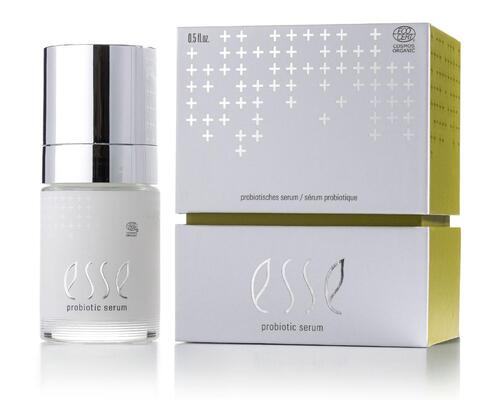
Microbiome-focused Esse Skincare has upgraded its Probiotic Serum formula with a fourth live
probiotic species.
27 Jun 2024
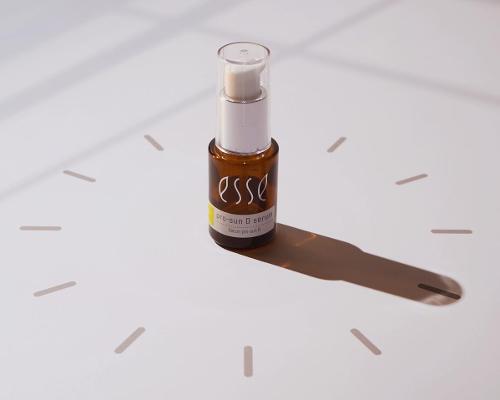
Vitamin D is a cornerstone of skin health, but with sunlight being our primary natural
source, it's crucial to exercise caution against overexposure to potent rays.
15 Nov 2023
Microbiome skincare and spa brand Esse Skincare has expanded its global footprint to reach
the US.
23 Aug 2023
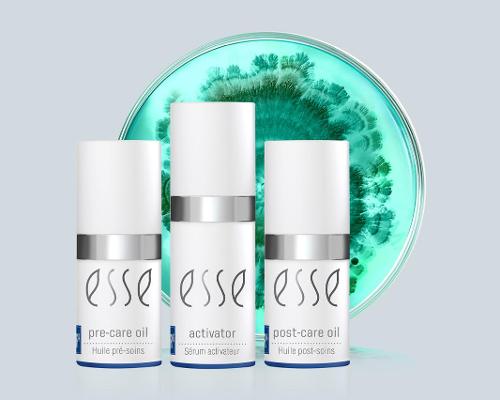
Microbiome skincare and spa brand Esse Skincare has launched three new products containing
lactobacillus bacteria to boost the effect of medical aesthetic treatments.
About Esse
About us
Esse is a professional microbiome skincare brand founded in South Africa in 2002 by organic chemist, Trevor Steyn.
Distributed in more than 40 countries, Esse formulates with probiotics, prebiotics, postbiotics, and active ingredients to restore microbial balance, reduce inflammation, and repair barrier dysfunction.
Main products and services
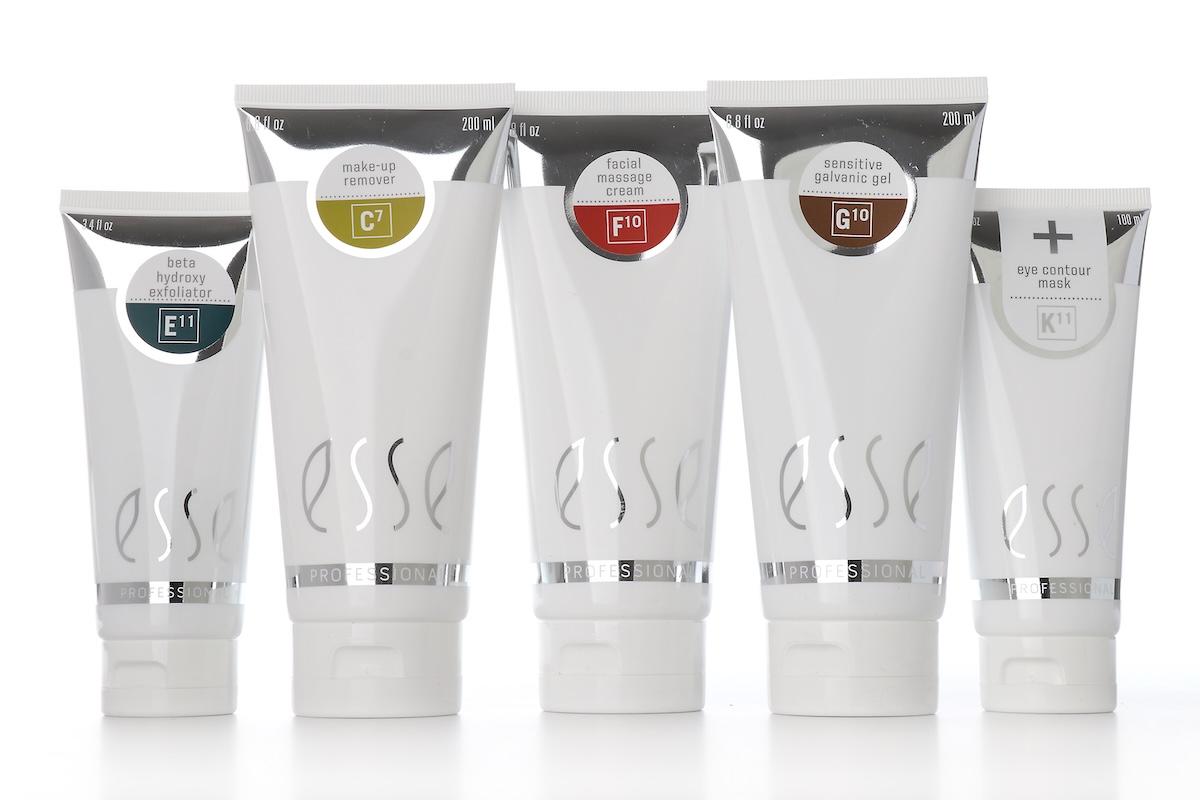
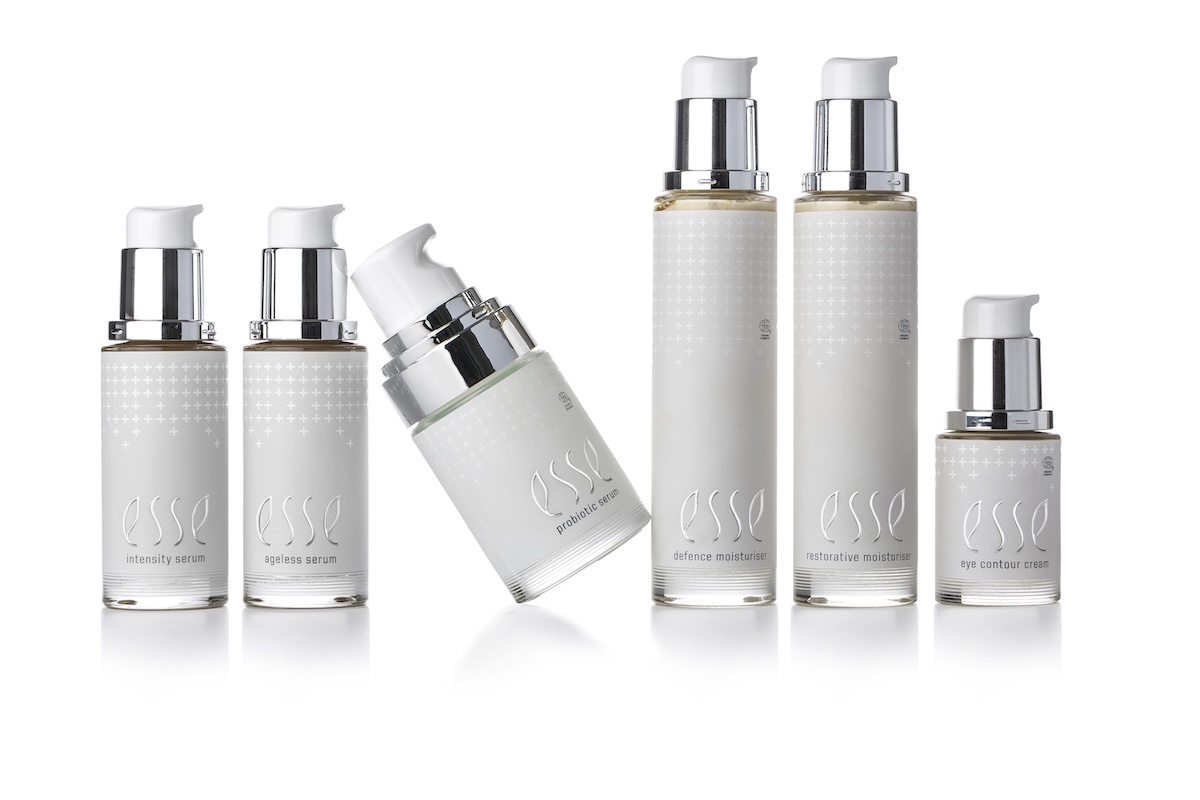
Esse offers spa operators a complete professional skincare system built around microbiome science. The range includes retail and professional-use products formulated with probiotics, prebiotics, postbiotics, and active ingredients designed to support barrier function, reduce inflammation, and improve long-term skin health.
Spa partners have access to professional facial protocols, treatment-focused products, and therapist education to support consistent client results.
Esse also provides merchandising support, launch campaigns, digital marketing assets, and business development support to help spas grow retail and treatment revenue.
The brand’s offering spans everyday skincare, advanced age-support products in the Plus range, sensitive skin solutions, and microbiome-supportive products developed for use alongside aesthetic procedures.
Esse positions itself as a science-led professional brand focused on sustainable skin health rather than quick-fix cosmetic trends.
USPs
Esse stands out through its focus on the skin microbiome and long-term skin health. While many brands use the term “probiotic” loosely, Esse was the first brand globally to launch live probiotics in skincare and continues to invest heavily in microbiome research and biotechnology.
The formulations are designed to address the root causes of accelerated skin ageing — microbial imbalance, chronic inflammation, and barrier dysfunction — rather than only treating visible symptoms. Esse combines probiotics, prebiotics, postbiotics, and active ingredients with clinically proven results and a strong sustainability philosophy.
For spa and clinic partners, Esse offers more than products. The brand provides education, treatment protocols, marketing support, and a differentiated science-led positioning that helps professionals stand out in a crowded skincare market.
Where in the world
Esse is available to skin professionals in more than 42 markets, with established networks across Southern Africa, Europe, the United Kingdom, North America, and Asia.
case study: The truth about anti-ageing: why modern life accelerates ageing
The skincare industry sells products on the promise that ageing can be stopped. It can't. Cellular ageing is inevitable, and no product changes that. We're okay with that.
What we're not okay with is when this process happens faster than it needs to.
The real enemy: accelerated ageing
Your skin cells have a limit to the number of times they can divide to regenerate skin tissue. While your skin's regenerative capacity is impressive, it is not infinite. When skin cells reach this limit, they become senescent: unable to divide, often dysfunctional, and inflammatory.
The problem? Modern life forces cells to burn through these divisions faster.
Inflammageing: when your lifestyle ages you
Modern life keeps us chronically inflamed. The result is inflammageing: inflammation that accelerates the biological processes driving ageing.
We didn't evolve for sterile environments, barrier-stripping skincare, or nutrient-poor diets. These mismatches compromise barrier function, allowing pathogen penetration that triggers chronic inflammation. Matrix metalloproteinases break down collagen and elastin. Cells divide rapidly to repair the damage, burning through to their division limit faster.
Hunter-gatherer communities show better health outcomes and slower ageing not because they use serums, but because their lifestyles match what their bodies evolved for: diverse microbes in their environments, whole foods, and a robust skin microbiome.
The microbiome connection
Your skin evolved with microbial partnerships. We now know that these microbes perform crucial roles for effectively all areas of skin health. One of the most important is that they work to help skin cells stitch together, forming a stronger and more selective barrier. When these interactions are disrupted, the barrier deteriorates, pathogens penetrate more easily, and chronic inflammation rises.
A healthy microbiome means skin that ages slower.
Biotechnology as the solution
We can't return to a hunter-gatherer context, but we can use biotechnology to mimic those conditions. This means exposure to beneficial microbes that co-evolved with human skin, probiotic extracts that communicate with our immune systems to reduce inflammation, and formulations that support rather than strip the skin's natural ecology.
A sustainable standard
The industry has split into two approaches, one that advocates aggressive interventions that force rapid cell turnover to make skin appear younger in the very short term, and the other, which slows ageing by preserving long-term skin health. Treatments that damage skin to trigger regeneration make cells divide faster, burning through to their limit sooner. What rushes to look good now ages badly later.
Esse's approach, conversely, prioritises long-term skin health. We use probiotics and postbiotics to reduce inflammation and strengthen barrier function. We incorporate essential fatty acids, antioxidants, and carefully selected botanicals that work with skin's biology.
The result? Skin that functions better, inflames less, and ages gracefully rather than prematurely.
The honest promise
Our goal is to help you age at the rate you're meant to. Because ageing isn't something to fear or fight. Accelerated ageing is.
And that's a problem we can solve.
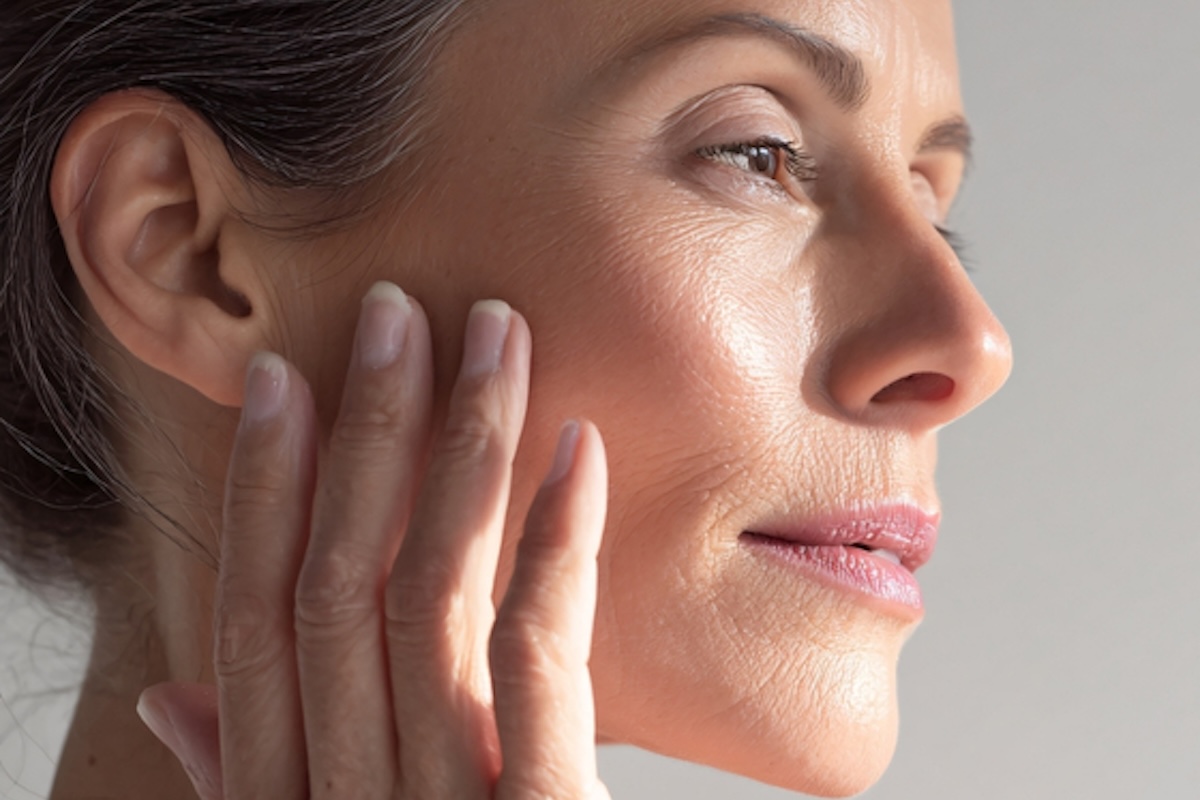
case study: The truth about anti-ageing: why modern life accelerates ageing
The truth about anti-ageing - Esse microbiome skincare Credit: Esse
The skincare industry sells products on the promise that ageing can be stopped. It can't. Cellular ageing is inevitable, and no product changes that. We're okay with that.
What we're not okay with is when this process happens faster than it needs to.
The real enemy: accelerated ageing
Your skin cells have a limit to the number of times they can divide to regenerate skin tissue. While your skin's regenerative capacity is impressive, it is not infinite. When skin cells reach this limit, they become senescent: unable to divide, often dysfunctional, and inflammatory.
The problem? Modern life forces cells to burn through these divisions faster.
Inflammageing: when your lifestyle ages you
Modern life keeps us chronically inflamed. The result is inflammageing: inflammation that accelerates the biological processes driving ageing.
We didn't evolve for sterile environments, barrier-stripping skincare, or nutrient-poor diets. These mismatches compromise barrier function, allowing pathogen penetration that triggers chronic inflammation. Matrix metalloproteinases break down collagen and elastin. Cells divide rapidly to repair the damage, burning through to their division limit faster.
Hunter-gatherer communities show better health outcomes and slower ageing not because they use serums, but because their lifestyles match what their bodies evolved for: diverse microbes in their environments, whole foods, and a robust skin microbiome.
The microbiome connection
Your skin evolved with microbial partnerships. We now know that these microbes perform crucial roles for effectively all areas of skin health. One of the most important is that they work to help skin cells stitch together, forming a stronger and more selective barrier. When these interactions are disrupted, the barrier deteriorates, pathogens penetrate more easily, and chronic inflammation rises.
A healthy microbiome means skin that ages slower.
Biotechnology as the solution
We can't return to a hunter-gatherer context, but we can use biotechnology to mimic those conditions. This means exposure to beneficial microbes that co-evolved with human skin, probiotic extracts that communicate with our immune systems to reduce inflammation, and formulations that support rather than strip the skin's natural ecology.
A sustainable standard
The industry has split into two approaches, one that advocates aggressive interventions that force rapid cell turnover to make skin appear younger in the very short term, and the other, which slows ageing by preserving long-term skin health. Treatments that damage skin to trigger regeneration make cells divide faster, burning through to their limit sooner. What rushes to look good now ages badly later.
Esse's approach, conversely, prioritises long-term skin health. We use probiotics and postbiotics to reduce inflammation and strengthen barrier function. We incorporate essential fatty acids, antioxidants, and carefully selected botanicals that work with skin's biology.
The result? Skin that functions better, inflames less, and ages gracefully rather than prematurely.
The honest promise
Our goal is to help you age at the rate you're meant to. Because ageing isn't something to fear or fight. Accelerated ageing is.
And that's a problem we can solve.
case study: The uncomfortable truth about ‘Probiotic’ skincare
Most products labelled as probiotic skincare don't contain live probiotics. They contain postbiotics, which are heat-killed bacteria or fermented extracts that lack the defining characteristic of a true probiotic: life.
This isn’t a technical oversight. It is a fundamental difference in approach that determines what these products can and cannot do for the skin.
If it's not live, it's not probiotic
The World Health Organization defines probiotics as "live microorganisms which, when administered in adequate amounts, confer a benefit on the host". Viability isn't optional. It's central to how probiotics work.
Keeping bacteria alive and stable in a skincare product is challenging, requiring careful formulation and production. As a result, most formulations include dead bacteria and fermented extracts because they are stable and convenient. These are practical choices, simplifying the manufacturing process – and while the right postbiotics can be beneficial, they don’t replace true probiotics.
Because the term “probiotic” has not been regulated in the cosmetics market, brands have used the word freely to describe products with non-living extracts, and consumers can’t clearly understand its true meaning.
How live probiotics work
Your skin evolved with microbial partnerships. These bacteria perform critical functions: they strengthen barrier proteins, regulate immune responses, and suppress pathogenic microbes. When this balance is disrupted by modern life, harsh products, and pollution (amongst others), skin ages faster.
Live probiotics restore this balance in three ways that postbiotics cannot replicate.
• They colonise your skin, occupying ecological niches that would otherwise be available to pathogens.
• They produce beneficial compounds dynamically; lactic acid and short-chain fatty acids to maintain pH, antimicrobial peptides to suppress pathogens, antioxidants to neutralise free radicals, adjusting their output to match changing skin conditions.
• They communicate directly with your skin cells and immune system, sending chemical signals that regulate inflammation, strengthen barrier proteins, and support collagen and elastin networks.
Postbiotics deliver fixed compounds. They can't colonise, adapt, or interact with your skin's biology in the same way. This is the difference between active biology and static chemistry.
Probiotic Serum. Now enhanced.
Esse launched the world's first live probiotic serum in 2015. The formulation has now been re-engineered with the addition of Bacillus coagulans for improved hydration and environmental resilience.
Esse Probiotic Serum uses a water-free, preservative-free lipid matrix designed to maintain microbial viability until application. The live bacteria remain dormant in the oil base and activate on contact with moisture on your skin, delivering their biological benefits exactly when and where they're needed.
Four species, Four mechanisms
Accelerated skin ageing isn't a single problem. It's barrier breakdown, chronic inflammation, oxidative stress, and microbial imbalance happening simultaneously. The serum addresses all four with 1 billion CFU/ml of viable bacteria across four species.
• Lactobacillus plantarum strengthens barrier function for more resilient skin and protected collagen and elastin networks.
• Lactobacillus rhamnosus regulates inflammation so it doesn't degrade skin's structural proteins or cause ongoing tissue damage.
• Lactobacillus acidophilus defends against oxidative stress by neutralising free radicals from UV exposure and pollution.
• Bacillus coagulans, the newest addition, improves hydration for plumper skin.
Together, these four species work synergistically to target the causes of accelerated ageing, not just the symptoms.
The results
Independent clinical testing over 28 days showed:
• Firmness improved by 16%
• Elasticity increased by 8%
• Hydration increased by 35%
• Wrinkle depth reduced by 14%
• Smoothness increased by 17%
These structural improvements reflect microbiome restoration and barrier repair. Measurable outcomes by 28 days. This is what active biology delivers.
The bottom line
If it's not live, it's not probiotic.
Postbiotics have their place. They deliver specific compounds that support skin function. But they're not the same as live probiotics, and the distinction matters.
Live bacteria colonise, adapt, and sustain effects over time. They restore the microbial partnerships your skin evolved with, targeting causes rather than symptoms through mechanisms that dead bacteria and fermented extracts simply cannot replicate.
Most probiotic skincare isn't delivering what its labels suggest. Esse Probiotic Serum does. Four species, one billion microbes per millilitre, independently tested, clinically proven.
Skin ages. That's inevitable. But skin as it should be - balanced, resilient, functioning optimally - ages differently.
References
1. FAO/WHO. Health and Nutritional Properties of Probiotics in Food including Powder Milk with Live Lactic Acid Bacteria. Report of a Joint FAO/WHO Expert Consultation. 2001.
2. Esse Skincare. Clinical efficacy study of Probiotic Serum. Independent dermatological testing, Dermatest GmbH. 2024.
3. Lebeer S, Oerlemans EFM, Claes I, et al. Topical Probiotics in Skin Health and Repair. Cell Reports Medicine. 2022;3(1):100521.
4. Hong JY, Kwon D, Park KY. Probiotics in Dermatology: A Comprehensive Review. Annals of Dermatology. 2025;37(4):259-271.
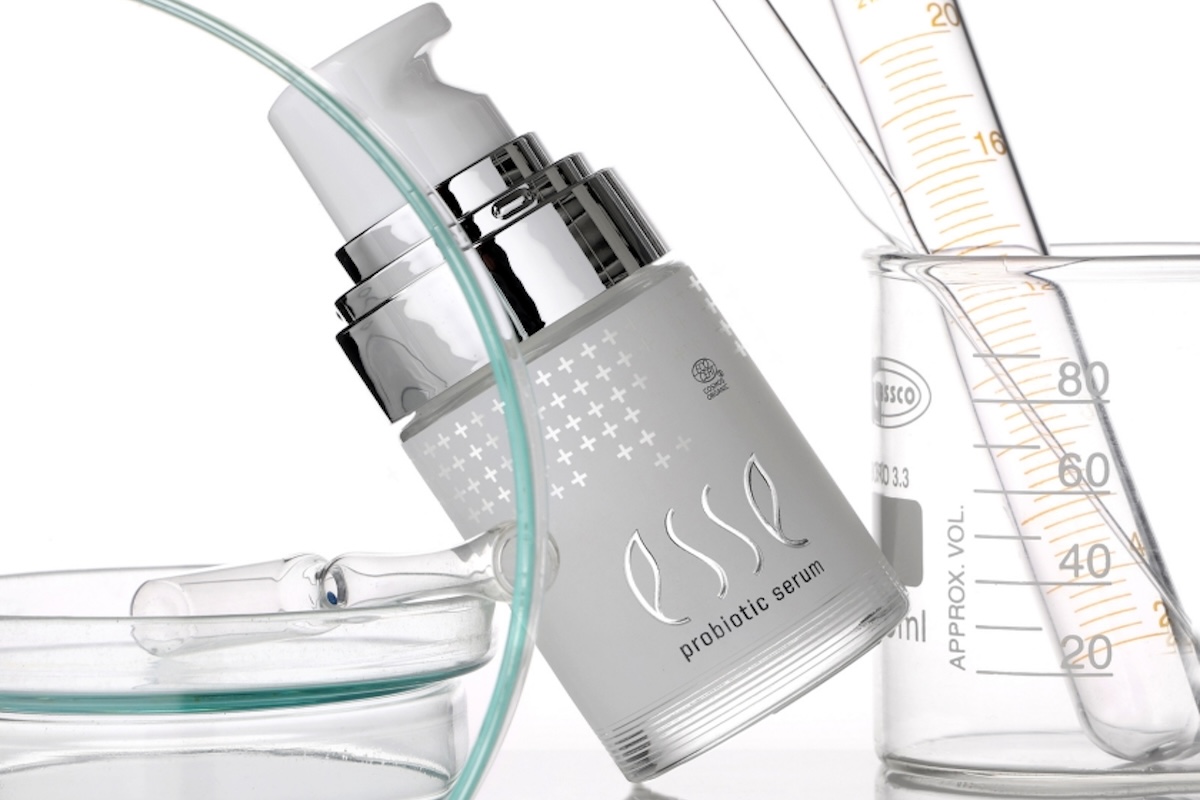
case study: The uncomfortable truth about ‘Probiotic’ skincare
If its not live its not probiotic Credit: Esse
Most products labelled as probiotic skincare don't contain live probiotics. They contain postbiotics, which are heat-killed bacteria or fermented extracts that lack the defining characteristic of a true probiotic: life.
This isn’t a technical oversight. It is a fundamental difference in approach that determines what these products can and cannot do for the skin.
If it's not live, it's not probiotic
The World Health Organization defines probiotics as "live microorganisms which, when administered in adequate amounts, confer a benefit on the host". Viability isn't optional. It's central to how probiotics work.
Keeping bacteria alive and stable in a skincare product is challenging, requiring careful formulation and production. As a result, most formulations include dead bacteria and fermented extracts because they are stable and convenient. These are practical choices, simplifying the manufacturing process – and while the right postbiotics can be beneficial, they don’t replace true probiotics.
Because the term “probiotic” has not been regulated in the cosmetics market, brands have used the word freely to describe products with non-living extracts, and consumers can’t clearly understand its true meaning.
How live probiotics work
Your skin evolved with microbial partnerships. These bacteria perform critical functions: they strengthen barrier proteins, regulate immune responses, and suppress pathogenic microbes. When this balance is disrupted by modern life, harsh products, and pollution (amongst others), skin ages faster.
Live probiotics restore this balance in three ways that postbiotics cannot replicate.
• They colonise your skin, occupying ecological niches that would otherwise be available to pathogens.
• They produce beneficial compounds dynamically; lactic acid and short-chain fatty acids to maintain pH, antimicrobial peptides to suppress pathogens, antioxidants to neutralise free radicals, adjusting their output to match changing skin conditions.
• They communicate directly with your skin cells and immune system, sending chemical signals that regulate inflammation, strengthen barrier proteins, and support collagen and elastin networks.
Postbiotics deliver fixed compounds. They can't colonise, adapt, or interact with your skin's biology in the same way. This is the difference between active biology and static chemistry.
Probiotic Serum. Now enhanced.
Esse launched the world's first live probiotic serum in 2015. The formulation has now been re-engineered with the addition of Bacillus coagulans for improved hydration and environmental resilience.
Esse Probiotic Serum uses a water-free, preservative-free lipid matrix designed to maintain microbial viability until application. The live bacteria remain dormant in the oil base and activate on contact with moisture on your skin, delivering their biological benefits exactly when and where they're needed.
Four species, Four mechanisms
Accelerated skin ageing isn't a single problem. It's barrier breakdown, chronic inflammation, oxidative stress, and microbial imbalance happening simultaneously. The serum addresses all four with 1 billion CFU/ml of viable bacteria across four species.
• Lactobacillus plantarum strengthens barrier function for more resilient skin and protected collagen and elastin networks.
• Lactobacillus rhamnosus regulates inflammation so it doesn't degrade skin's structural proteins or cause ongoing tissue damage.
• Lactobacillus acidophilus defends against oxidative stress by neutralising free radicals from UV exposure and pollution.
• Bacillus coagulans, the newest addition, improves hydration for plumper skin.
Together, these four species work synergistically to target the causes of accelerated ageing, not just the symptoms.
The results
Independent clinical testing over 28 days showed:
• Firmness improved by 16%
• Elasticity increased by 8%
• Hydration increased by 35%
• Wrinkle depth reduced by 14%
• Smoothness increased by 17%
These structural improvements reflect microbiome restoration and barrier repair. Measurable outcomes by 28 days. This is what active biology delivers.
The bottom line
If it's not live, it's not probiotic.
Postbiotics have their place. They deliver specific compounds that support skin function. But they're not the same as live probiotics, and the distinction matters.
Live bacteria colonise, adapt, and sustain effects over time. They restore the microbial partnerships your skin evolved with, targeting causes rather than symptoms through mechanisms that dead bacteria and fermented extracts simply cannot replicate.
Most probiotic skincare isn't delivering what its labels suggest. Esse Probiotic Serum does. Four species, one billion microbes per millilitre, independently tested, clinically proven.
Skin ages. That's inevitable. But skin as it should be - balanced, resilient, functioning optimally - ages differently.
References
1. FAO/WHO. Health and Nutritional Properties of Probiotics in Food including Powder Milk with Live Lactic Acid Bacteria. Report of a Joint FAO/WHO Expert Consultation. 2001.
2. Esse Skincare. Clinical efficacy study of Probiotic Serum. Independent dermatological testing, Dermatest GmbH. 2024.
3. Lebeer S, Oerlemans EFM, Claes I, et al. Topical Probiotics in Skin Health and Repair. Cell Reports Medicine. 2022;3(1):100521.
4. Hong JY, Kwon D, Park KY. Probiotics in Dermatology: A Comprehensive Review. Annals of Dermatology. 2025;37(4):259-271.
Plans for the next 12 months
Esse plans to launch a sustainable, microbiome-considered body range with professional body treatment protocols in February 2027, creating new treatment opportunities for spa partners.
Testimonial
"We chose Esse Skincare for the Red Carnation group South Africa, because it perfectly aligns with the luxury wellness experience the brand is known for. Esse’s focus on the skin microbiome, long-term skin health, and holistic wellbeing offers guests more than just a facial. it creates a results driven wellness experience that feels both modern and deeply nurturing.
"I was also drawn to Esse’s strong South African identity, sustainability values, and scientific innovation. The combination of ethical practices, advanced probiotic technology, and exceptional treatment results made it the ideal partner to elevate the spa offering while reflecting the sophistication, care, and integrity associated with the Red Carnation group."
– Joanne Lyons, group spa manager, Red Carnation South Africa
|
|
|