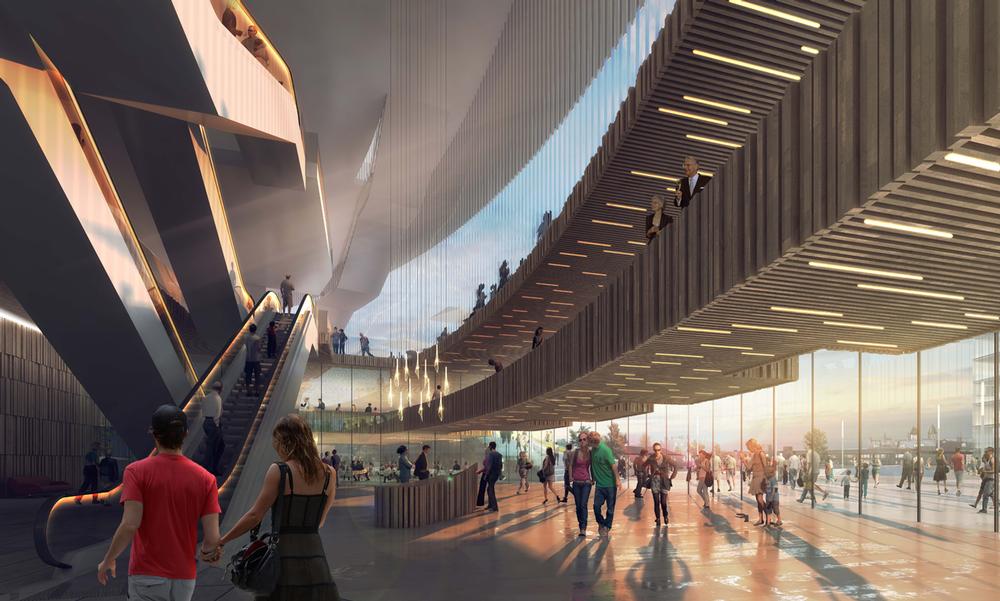
A flexible design concept secured architects Populous the prestigious £90m Bristol Arena project. Populous’ Mike Trice explains how the winning design will work in practice
By Magali Robathan | Published in Sports Management 2015 issue 2
Mike Trice previously worked as project architect for the award winning Odyssey Arena in Belfast
International architecture firm Populous was declared the winner of a design competition for the £90m Bristol Arena in March 2015. The winning team – comprising Populous, Feilden Clegg Bradley, BuroHappold and Vanguardia – was selected from a shortlist of five. When the building opens in 2017, it will mean that Bristol no longer holds the unenviable title of being the UK’s largest city without a large arena-style venue.
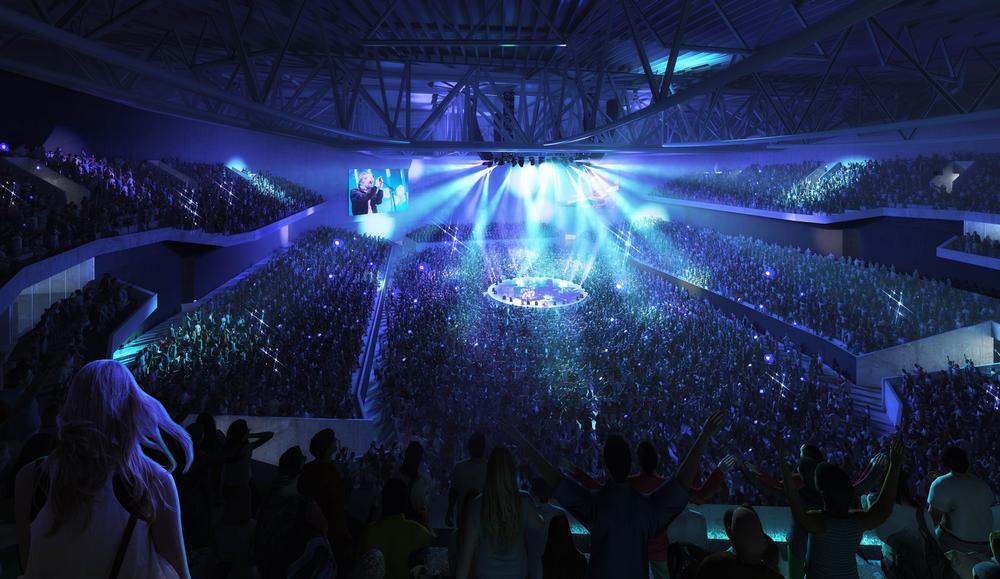
Flexibility Populous’ winning design is a flexible, horseshoe-shaped arena that can easily convert from a 12,000-seat arena to a more intimate venue for smaller events. According to Populous design principal Mike Trice, providing versatility was key to winning the bid. “Our arena ticked all the boxes on function and form; it’s an eminently operable building,” he says. “The unique thing about the way it reconfigures is that it can go from a very small venue for 4,000 people up to a big venue for up to 12,000 people. It allows any sort of band to play in it and can cope with any sort of stage configuration.
“It’s been designed to convert seamlessly, and we’ve been very deliberate about containing all the boxes within the end of the arena that’s always live. The way the roof is set out, you get a fan-shaped structure above the amphitheatre so the amphitheatre feels as though it’s been designed as a space on its own. It’s unique, the way we’ve delivered it as an architectural piece.”
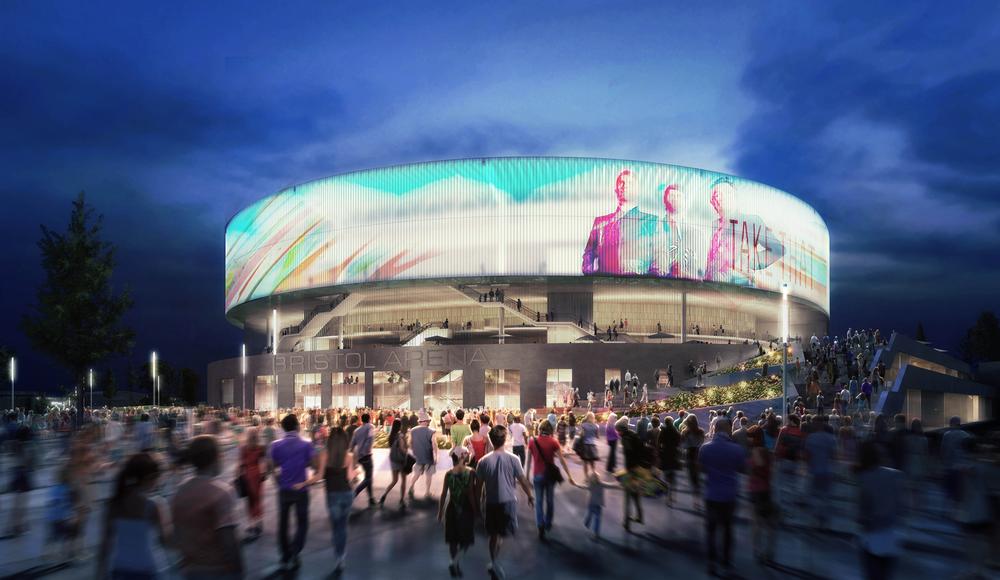
The exterior features a masonry plinth base, designed to reflect the industrial heritage of the Bristol area, with a crystalline disk above it. Trice says the disk can also be used as a marketing tool.
“We can change the colour of it, project on to it and use it to advertise events,” Trice says. “On non-event days it becomes a mirror which reflects the sky and becomes almost invisible.”
Sustainability The environmental sustainability of the building was a key factor in the design.
“We’re targeting a BREEAM ‘Excellent’ rating. Design solutions will depend on the precinct-wide energy strategy which is agreed upon by the council,” says Trice. “This could include an innovative displacement ventilation system and provision for the biggest building-based photovoltaic system in the city.
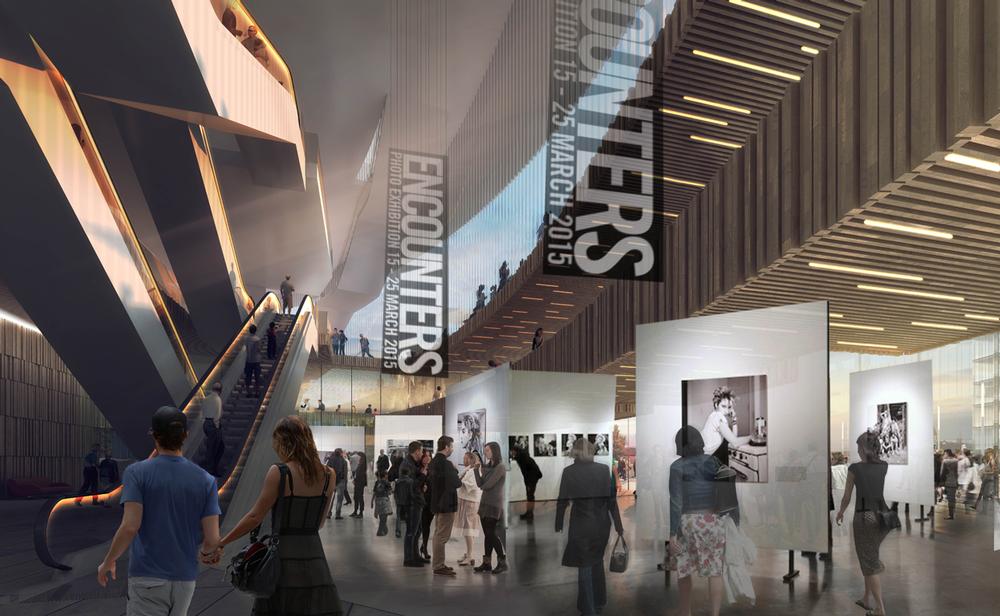
“On the social aspect of sustainability, the terraces create a new cycling and pedestrian link between the residential areas, the city and the station, establishing a connection that’s been missing.”
History Bristol Mayor and former RIBA president George Ferguson promised to bring an arena to Bristol as part of his election manifesto [he was elected Mayor in November 2012]. “It was a no brainer,” said Ferguson. “Bristol is one of the last big cities in the UK without a large arena. It means that all of our young people – and some of our older rockers – have to go to Cardiff, Southampton, Plymouth or Portsmouth. More importantly, it also means that a lot of people aren’t coming to Bristol who would otherwise come.
“This arena will strengthen Bristol’s attraction as a destination and it will be a major catalyst for the regeneration of the Bristol Temple Quarter Enterprise Zone, creating jobs and stimulating economic growth. It will bring tens of millions of pounds in additional spend to the region from business and leisure activity, increased hotel occupancy and other related spend.
“The design offers real flexibility for programming for now and into the future, giving performers and audiences a great acoustic and visual experience. Populous’ understanding of the site, combined with their knowledge of building arenas and creating great experiences, eased what initially looked like a difficult choice.”
Bristol Arena will be located on the former diesel depot site next to Bristol Temple Meads railway station in the Bristol Temple Quarter Enterprise Zone. Funded by Bristol City Council and the West of England Local Enterprise Partnership through its Economic Development Fund, the arena will be operated by global facility management giant SMG, in partnership with Live Nation. The arena is predicted to break even within 10 years.
Le Atelier by C.O.D.E. doesn't offer a standard bespoke service, it provides a highly
customised approach to designing massage beds and loungers in high-end wellness
environments. [more...]
+ More featured suppliers
COMPANY PROFILES
The Wellness
Founded in 2007, headquartered in Dubai and based in Hong Kong and Singapore, The Wellness is an int [more...]
Living Earth Crafts
For over 50 years, LEC has been manufacturing award-winning spa equipment for the world’s finest spas [more...]
A flexible design concept secured architects Populous the prestigious £90m Bristol Arena project. Populous’ Mike Trice explains how the winning design will work in practice
By Magali Robathan | Published in Sports Management 2015 issue 2
Mike Trice previously worked as project architect for the award winning Odyssey Arena in Belfast
International architecture firm Populous was declared the winner of a design competition for the £90m Bristol Arena in March 2015. The winning team – comprising Populous, Feilden Clegg Bradley, BuroHappold and Vanguardia – was selected from a shortlist of five. When the building opens in 2017, it will mean that Bristol no longer holds the unenviable title of being the UK’s largest city without a large arena-style venue.
Flexibility Populous’ winning design is a flexible, horseshoe-shaped arena that can easily convert from a 12,000-seat arena to a more intimate venue for smaller events. According to Populous design principal Mike Trice, providing versatility was key to winning the bid. “Our arena ticked all the boxes on function and form; it’s an eminently operable building,” he says. “The unique thing about the way it reconfigures is that it can go from a very small venue for 4,000 people up to a big venue for up to 12,000 people. It allows any sort of band to play in it and can cope with any sort of stage configuration.
“It’s been designed to convert seamlessly, and we’ve been very deliberate about containing all the boxes within the end of the arena that’s always live. The way the roof is set out, you get a fan-shaped structure above the amphitheatre so the amphitheatre feels as though it’s been designed as a space on its own. It’s unique, the way we’ve delivered it as an architectural piece.”
The exterior features a masonry plinth base, designed to reflect the industrial heritage of the Bristol area, with a crystalline disk above it. Trice says the disk can also be used as a marketing tool.
“We can change the colour of it, project on to it and use it to advertise events,” Trice says. “On non-event days it becomes a mirror which reflects the sky and becomes almost invisible.”
Sustainability The environmental sustainability of the building was a key factor in the design.
“We’re targeting a BREEAM ‘Excellent’ rating. Design solutions will depend on the precinct-wide energy strategy which is agreed upon by the council,” says Trice. “This could include an innovative displacement ventilation system and provision for the biggest building-based photovoltaic system in the city.
“On the social aspect of sustainability, the terraces create a new cycling and pedestrian link between the residential areas, the city and the station, establishing a connection that’s been missing.”
History Bristol Mayor and former RIBA president George Ferguson promised to bring an arena to Bristol as part of his election manifesto [he was elected Mayor in November 2012]. “It was a no brainer,” said Ferguson. “Bristol is one of the last big cities in the UK without a large arena. It means that all of our young people – and some of our older rockers – have to go to Cardiff, Southampton, Plymouth or Portsmouth. More importantly, it also means that a lot of people aren’t coming to Bristol who would otherwise come.
“This arena will strengthen Bristol’s attraction as a destination and it will be a major catalyst for the regeneration of the Bristol Temple Quarter Enterprise Zone, creating jobs and stimulating economic growth. It will bring tens of millions of pounds in additional spend to the region from business and leisure activity, increased hotel occupancy and other related spend.
“The design offers real flexibility for programming for now and into the future, giving performers and audiences a great acoustic and visual experience. Populous’ understanding of the site, combined with their knowledge of building arenas and creating great experiences, eased what initially looked like a difficult choice.”
Bristol Arena will be located on the former diesel depot site next to Bristol Temple Meads railway station in the Bristol Temple Quarter Enterprise Zone. Funded by Bristol City Council and the West of England Local Enterprise Partnership through its Economic Development Fund, the arena will be operated by global facility management giant SMG, in partnership with Live Nation. The arena is predicted to break even within 10 years.
The Standards Authority for Touch in Cancer Care (SATCC) charity has announced its first five-
day Living with Cancer and Beyond retreat, which will be held at Carden Park Hotel and Spa in
Cheshire, UK, between 1 and 5 September.
Patmos Aktis, a Luxury Collection Resort and Spa, has opened in Greece, with a renovated and
rebranded wellness offering called Ansana Wellness and Spa.
The Mauna Kea Beach Hotel, an Autograph Collection property in Hawaii, US, has opened its
22,000 sq ft indoor-outdoor Spa at Mauna Kea as the final step in the property’s overall
renovation, which has cost more than US$180 million (€166 million, £140 mill
The UK spa review and discovery platform for consumers, the Good Spa Guide, has announced
it will host the Good Spa Guide Awards 2026 during an event on 16 November at Sopwell House
Hotel in St Albans, UK.
Eighty-four per cent of consumers now say wellness is a top priority in their lives, with this
percentage increasing year on year, according to a preview presentation of McKinsey’s Future of
Wellness 2026 research report.
Mass protests have been taking place since Monday 1 June in Albania over the development of
a luxury resort by Donald Trump’s daughter Ivanka Trump and her husband Jared Kushner.
Global Wellness Day (GWD) marked its 15th anniversary on Saturday 13 June 2026, with the
theme: #JoyMagenta – a celebration of the healing qualities of simple gestures and activities
that spark joy.
Global luxury hospitality brand, Six Senses, has partnered with longevity healthcare provider,
HUM2N, to launch a clinic at Six Senses London, at The Whiteley.
As part of its first hotel partnership, Mayrlife – the medical health resort company known for its
site in Altaussee, Austria – has launched a day clinic at the Rosewood Vienna.
Premium London health club, KX Chelsea, will imminently unveil its most significant
redevelopment since its launch in 2002 to create an integrated wellness model combining
training, recovery and relaxation.
Le Atelier by C.O.D.E. doesn't offer a standard bespoke service, it provides a highly
customised approach to designing massage beds and loungers in high-end wellness
environments. [more...]
+ More featured suppliers
COMPANY PROFILES
The Wellness Founded in 2007, headquartered in Dubai and based in Hong Kong and Singapore, The Wellness is an int [more...]