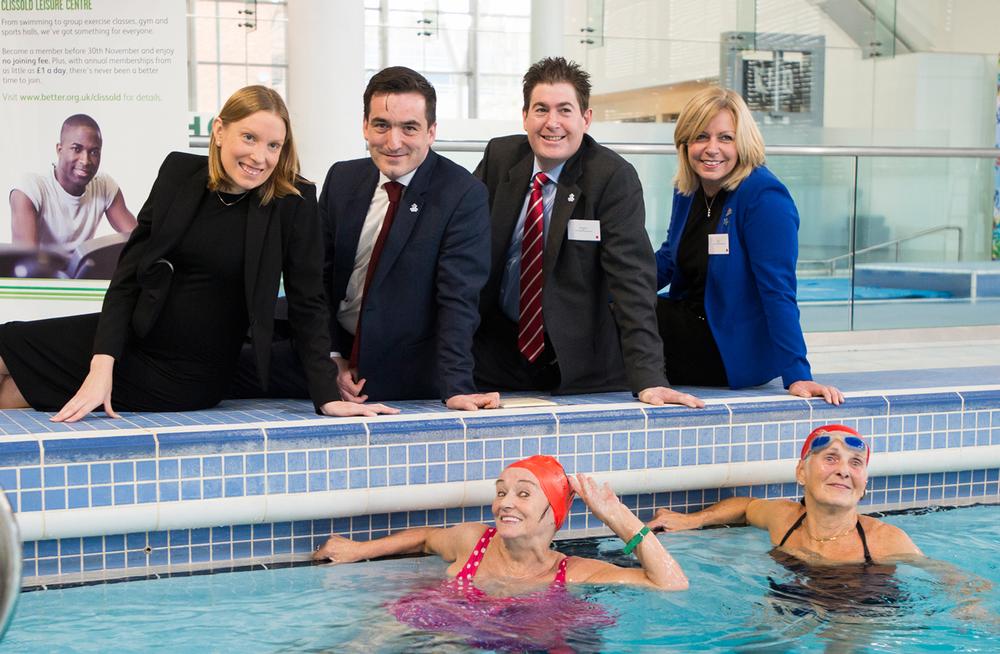
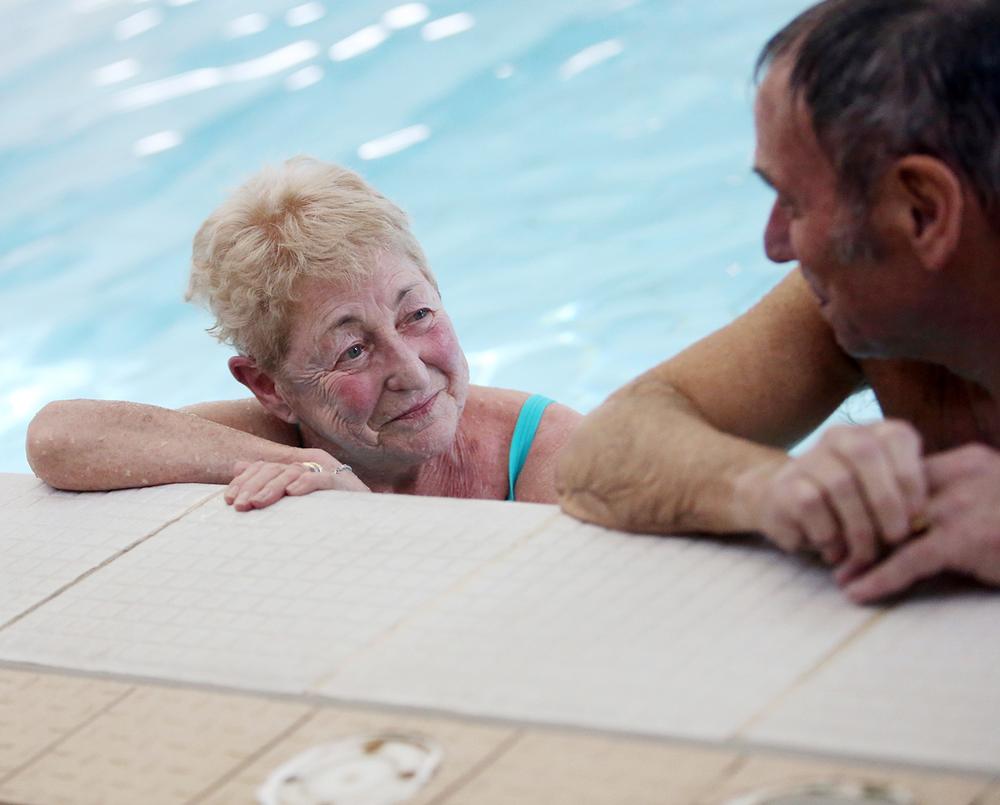
Can swimming slow down the onset of dementia? Or help people cope with depression? The answer – according to a number of studies – is yes. And, for the first time, the Amateur Swimming Association (ASA) will attempt to pull this “wealth of evidence” together to proactively demonstrate the sport’s positive effect on mental, and physical, health.
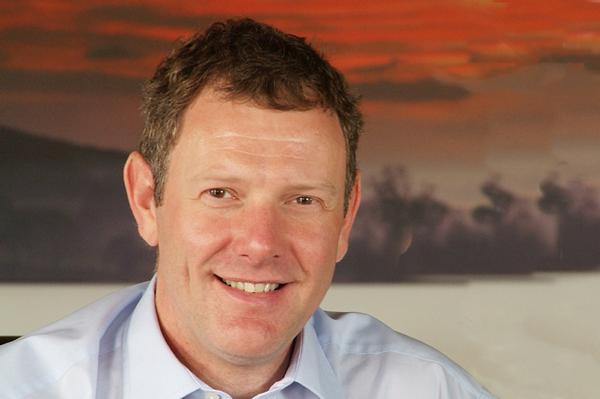
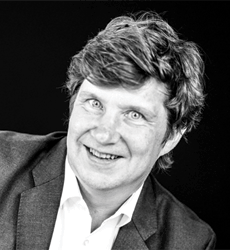
An expert panel – dubbed the Health Commission for Swimming – has been drafted in by the organisation, headed up by Health Education England chief executive Ian Cumming.
Cumming, who is a Level 3 swimming coach himself, will meet monthly with his panel of colleagues to sift through research which correlates regular swimming activity with increased wellbeing, before delivering its findings to the ASA in December.
“Many years ago I used to swim competitively – not to an incredibly high standard I have to say – but it’s something I greatly enjoyed,” he tells Sports Management. “I have been interested in the benefits of swimming personally for a period of time, beyond the obvious benefits around physical health.”
FINDING PROOF While Cumming and co will pluck out pieces of work which demonstrate swimming’s effect on weight management, physical fitness and the benefits of the cardiovascular system, he reveals that he is keen to get his teeth into the academic studies which show that swimming aids the lonely and socially excluded, or slows down dementia for the elderly.
“On top of that there’s the safety aspect as well, in terms of people actually finding themselves in water in difficulty,” he adds. “If people are able to swim then the outcomes are likely to be very different than if they are unable to swim.”
While Cumming’s experience in the pool strengthened his candidacy for the role, his credentials in the world of public health has given him a vast amount of insight into the strain the NHS currently finds itself under, and how physically activity can help ease the burden.
Alongside other arm’s length health bodies, Health Education England published a Five Year Forward Review in which one of the three main sections was about “moving people upstream” – preventing people from being ill and helping them manage their own health.
HEALTH BENEFITS Cumming explains there is an “inexorable rise” in the demand for healthcare services as a result of lifestyle choices such as the lack of a balanced diet and regular exercise. While physical activity is being increasingly seen as a preventative measure, he says that the Health Commission for Swimming represents the first time an individual sport is being examined for the health benefits it delivers.
“This piece of work directly links with what we call the ‘health gap’,” he says. “Colleagues in public health have been working for many years and have done fantastic work on linking the benefits of sport and exercise to health. To my knowledge this is the first time we’ve specifically looked at an individual sport and investigated the benefits it can achieve.”
The commission will look globally for research, with “lots of work coming out of Australia, Canada and the US”, but Cumming highlights “eminent research already available in this country”. He admits that presenting the physical benefits of swimming would prove to be slightly easier than any effect the sport has on mental health, but he points to “a lot of research in this area,” especially the monitoring of people with depression and anxiety.
“There has been some really interesting stuff done around dementia,” he says. “This is an area I do want to get into the report. There have been some suggestions that regular exercise such as swimming can stimulate parts of the brain that could slow down the progression of dementia.”
However, the panel has reserved the right to commission original research if appropriate if there are gaps in any work. The subject is too important, says Cumming, to leave any stone unturned.
“We will produce our report by early December, and it may be that our report actually identifies that we want more research to be undertaken beyond that,” he explains. “We are probably going to have meetings on a monthly basis as we move through the rest of the year, identifying the findings and putting the evidence all together.”
In the fast-paced world of fitness and wellness, where high-intensity workouts push us to
our limits and the sweat pours, the importance of efficient recovery cannot be overstated. [more...]
Can swimming slow down the onset of dementia? Or help people cope with depression? The answer – according to a number of studies – is yes. And, for the first time, the Amateur Swimming Association (ASA) will attempt to pull this “wealth of evidence” together to proactively demonstrate the sport’s positive effect on mental, and physical, health.
An expert panel – dubbed the Health Commission for Swimming – has been drafted in by the organisation, headed up by Health Education England chief executive Ian Cumming.
Cumming, who is a Level 3 swimming coach himself, will meet monthly with his panel of colleagues to sift through research which correlates regular swimming activity with increased wellbeing, before delivering its findings to the ASA in December.
“Many years ago I used to swim competitively – not to an incredibly high standard I have to say – but it’s something I greatly enjoyed,” he tells Sports Management. “I have been interested in the benefits of swimming personally for a period of time, beyond the obvious benefits around physical health.”
FINDING PROOF While Cumming and co will pluck out pieces of work which demonstrate swimming’s effect on weight management, physical fitness and the benefits of the cardiovascular system, he reveals that he is keen to get his teeth into the academic studies which show that swimming aids the lonely and socially excluded, or slows down dementia for the elderly.
“On top of that there’s the safety aspect as well, in terms of people actually finding themselves in water in difficulty,” he adds. “If people are able to swim then the outcomes are likely to be very different than if they are unable to swim.”
While Cumming’s experience in the pool strengthened his candidacy for the role, his credentials in the world of public health has given him a vast amount of insight into the strain the NHS currently finds itself under, and how physically activity can help ease the burden.
Alongside other arm’s length health bodies, Health Education England published a Five Year Forward Review in which one of the three main sections was about “moving people upstream” – preventing people from being ill and helping them manage their own health.
HEALTH BENEFITS Cumming explains there is an “inexorable rise” in the demand for healthcare services as a result of lifestyle choices such as the lack of a balanced diet and regular exercise. While physical activity is being increasingly seen as a preventative measure, he says that the Health Commission for Swimming represents the first time an individual sport is being examined for the health benefits it delivers.
“This piece of work directly links with what we call the ‘health gap’,” he says. “Colleagues in public health have been working for many years and have done fantastic work on linking the benefits of sport and exercise to health. To my knowledge this is the first time we’ve specifically looked at an individual sport and investigated the benefits it can achieve.”
The commission will look globally for research, with “lots of work coming out of Australia, Canada and the US”, but Cumming highlights “eminent research already available in this country”. He admits that presenting the physical benefits of swimming would prove to be slightly easier than any effect the sport has on mental health, but he points to “a lot of research in this area,” especially the monitoring of people with depression and anxiety.
“There has been some really interesting stuff done around dementia,” he says. “This is an area I do want to get into the report. There have been some suggestions that regular exercise such as swimming can stimulate parts of the brain that could slow down the progression of dementia.”
However, the panel has reserved the right to commission original research if appropriate if there are gaps in any work. The subject is too important, says Cumming, to leave any stone unturned.
“We will produce our report by early December, and it may be that our report actually identifies that we want more research to be undertaken beyond that,” he explains. “We are probably going to have meetings on a monthly basis as we move through the rest of the year, identifying the findings and putting the evidence all together.”
The UK spa review and discovery platform for consumers, the Good Spa Guide, has announced
it will host the Good Spa Guide Awards 2026 during an event on 16 November at Sopwell House
Hotel in St Albans, UK.
Eighty-four per cent of consumers now say wellness is a top priority in their lives, with this
percentage increasing year on year, according to a preview presentation of McKinsey’s Future of
Wellness 2026 research report.
Mass protests have been taking place since Monday 1 June in Albania over the development of
a luxury resort by Donald Trump’s daughter Ivanka Trump and her husband Jared Kushner.
Global Wellness Day (GWD) marked its 15th anniversary on Saturday 13 June 2026, with the
theme: #JoyMagenta – a celebration of the healing qualities of simple gestures and activities
that spark joy.
Global luxury hospitality brand, Six Senses, has partnered with longevity healthcare provider,
HUM2N, to launch a clinic at Six Senses London, at The Whiteley.
As part of its first hotel partnership, Mayrlife – the medical health resort company known for its
site in Altaussee, Austria – has launched a day clinic at the Rosewood Vienna.
Premium London health club, KX Chelsea, will imminently unveil its most significant
redevelopment since its launch in 2002 to create an integrated wellness model combining
training, recovery and relaxation.
Rosewood Le Guanahani St Barth, on the northeast coast of Saint Barthélemy in the French
West Indies, is offering a programme of ocean-inspired yoga classes between 8-14 June to
celebrate Global Wellness Day (GWD).
Hotel de France, located on the British Isle of Jersey, has created a wellness retreat package
that includes a hot yoga session that will take place in Jersey Zoo’s butterfly sanctuary.
The Ritz-Carlton, Langkawi, in Malaysia, has revealed a schedule for Global Wellness Day
(GWD) that includes guided rainforest walks, mindful movement and guided coastal meditation
experiences.
In the fast-paced world of fitness and wellness, where high-intensity workouts push us to
our limits and the sweat pours, the importance of efficient recovery cannot be overstated. [more...]