With the Rio Paralympics and the launch of an ambitious new strategy, 2016 is shaping up to be a busy year for the British Paralympic Association.
The chief executive talks to Matthew Campelli about what lies ahead
By Matthew Campelli | Published in Sports Management Sep 2016 issue 126
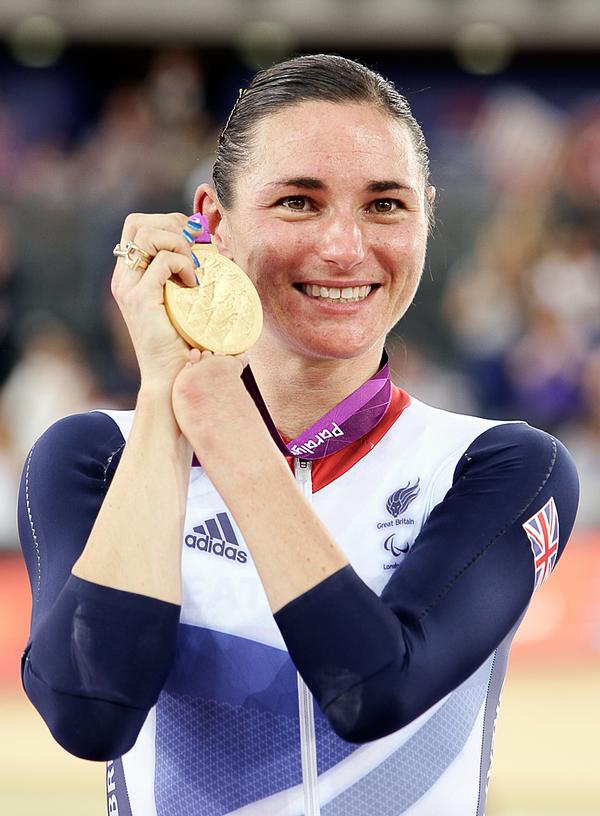
London 2012 was a watershed moment for the Paralympics and para-sport in general. While the trajectory of the Games in terms of quality and interest had been on an upward curve for some years, the impact of London 2012 set an entirely new benchmark for disability sport.
Shortly after the conclusion of the London Games, International Paralympic Committee (IPC) board member Miguel Sagarra commented that 2012 was a “landmark year”, adding: “Never has the profile of sport for persons with a disability and its athletes been higher.”
In Britain, public service broadcaster Channel 4 recorded some of its biggest audiences in over a decade after winning the exclusive rights to air the Games. The interest even cajoled US broadcaster NBC to acquire the future rights to the Paralympics after the London 2012 Games were ignored by America altogether.
The movement is undoubtedly growing, and the quality of performance at the upcoming Rio Games is expected to surpass London four years ago.
READY FOR RIO Team GB, according to UK Sport, should be one of the nations looking to step up a level, despite bagging an impressive 120 medals in London. The elite sport quango has set an upper target of 165, although somewhere between the two numbers is more feasible.
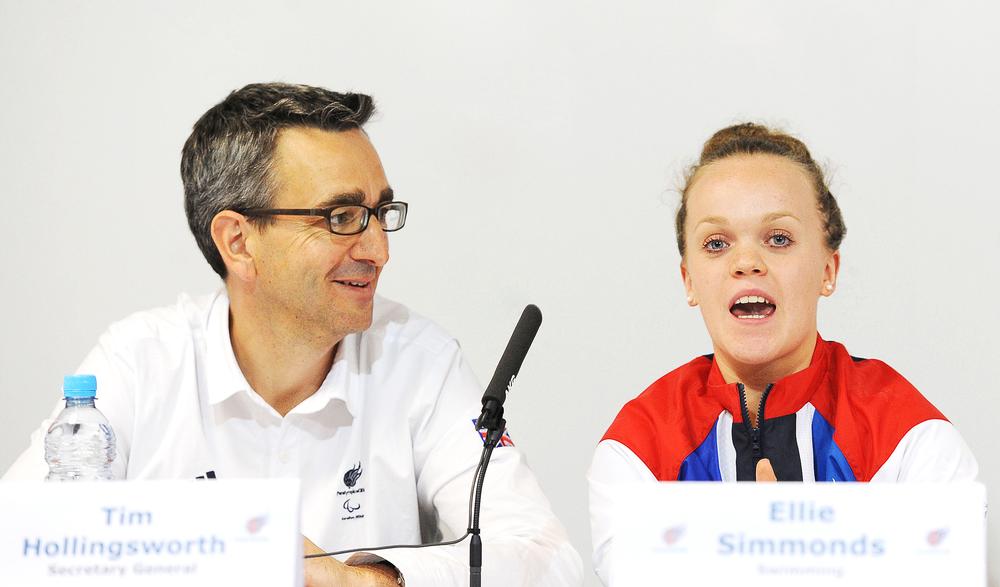
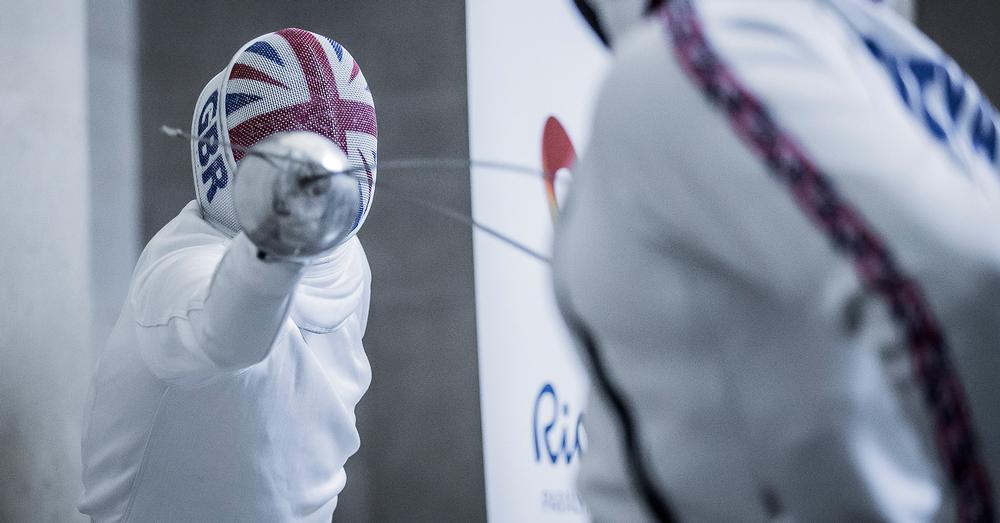
Overseeing the team’s preparations as they set their focus on making history is Tim Hollingsworth, CEO of the British Paralympic Association (BPA) – the organisation which selects and prepares Team GB athletes for the Games.
While Hollingsworth experienced the joy that was London 2012 after joining the previous year, he is in the process of treading new ground, leading a team of 258 athletes to an away Games for the first time.
However, he appears calm and utterly focused on the task at hand. “I’d say we’re feeling confident in our preparation, but there’s not a complacency about the outcome,” he tells Sports Management.
“I’m choosing my words carefully, but we’ve never done more to prepare for an away Games than we have with the whole Paralympic set-up, including the BPA, the national governing bodies (NGBs), UK Sport or the commercial organisations involved.
“I think it’s unquestionable that the increase in funding provided by UK Sport for the Rio cycle has driven the NGBs to have a greater sense of their ability to professionalise and run world-class training programmes for their athletes – and we’ve overlaid that with a far greater focus on team preparation.”
Hollingsworth has his feet on the ground, however. He knows sport is “an unknown” and that “you can never be certain of success”, particularly when the standards of Paralympic sport are rising rapidly and more athletes are becoming professional.
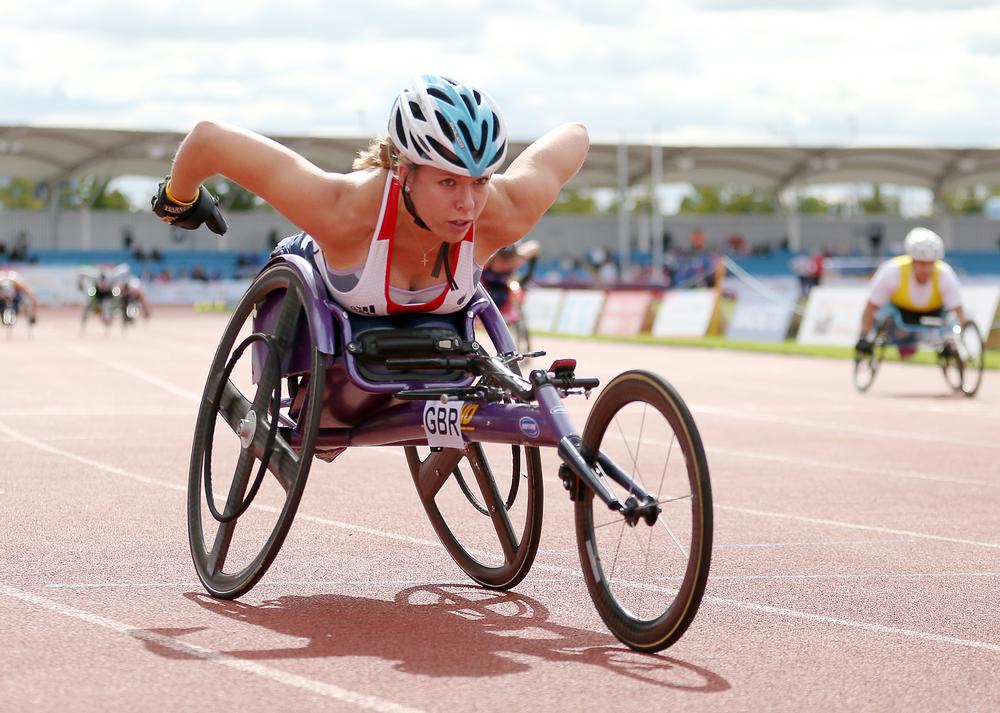
“To be complacent would be a folly,” he adds matter-of-factly, “because you simply cannot take anything for granted. I could sit here and say it would be extraordinary if Hannah Cockroft was beaten over 100m in her class – and I think it would be – but you still can’t say for certain that it won’t happen.”
The rise in standards of British Paralympic sport is part of a wider surge in quality following the injection of millions of pounds of public and National Lottery money following the poor showing at the Atlanta 1996 Games. Funding created a world-class sporting system which elevated Team GB and Paralympics GB to third place at London 2012. UK Sport director of performance Simon Timson has previously stated that the success is not going unnoticed, and that “copycat systems are springing up all over the world”. A similar thing is happening in the world of preparation.
Hollingsworth says: “I think the British Olympic Association (BOA) would reflect that as well. We have a proud sense of our place in the Paralympic movement. We are its birthplace, and we had the ability through the London Games to get a step ahead with our system and funding.
“We are looked at by other Paralympic nations – those looking to replicate our approach,” he adds. “It’s an interesting one because actually 98 per cent of me is delighted, as I want the Paralympic movement to be professional. Two per cent of me wishes they weren’t because we want to win all the medals.”
The rapid progress of other nations has forced the BPA to step it up a notch, which is reflected in the aims of its latest five-year strategy Inspiring Excellence, which was published in July 2016.
One of the five desired outcomes was to refine the organisation’s ‘best prepared’ approach to Paralympic events, with an emphasis on developing an “optimal Games preparation strategy” to help athletes perform at their peak when it matters most.
WIDER BENEFITS While Hollingsworth drives home the point about giving athletes the best chance of picking up medals, he’s keen to mention the benefits to wider society.
“The performances put the Paralympics at the vanguard of a more positive and inclusive society and challenge perceptions about disability,” he says. “It creates a positive agenda more than any other competition.” When the former UK Sport executive was handed the role five years ago, he spoke of the organisation and the 2012 Paralympics as being the catalysts in driving better quality facilities, coaching and opportunities for disabled athletes, despite not being funded to take on those responsibilities.
“What we’re trying to do is create impetus through excellence, and that is where the virtuous circle in sport comes from, where the more success you have at the top drives people to participate, which creates the next generation of athletes,” he explains.
“By raising the profile of the Paralympics we can create within government, funding agencies, societies, communities and local authorities a more receptive audience, and have them thinking about whether or not they’re delivering at that level.”
To crystallise his point, Hollingsworth highlights the increased opportunities and facilities being provided by disability-specific sports clubs over the last four years, with wheelchair basketball, wheelchair rugby and boccia all coming to the fore. However, the chief executive concedes there is “still some way to go” in terms of physical accessibility within mainstream sporting infrastructure, and more worryingly, a “lack of cumulative evidence” to suggest a change in perception at mainstream sports clubs for disabled participants.
GETTING GOVERNMENT ONSIDE Looking to the future, Hollingsworth is confident that the legacy of London will improve the landscape in that respect, and he’s heartened by the publication of the government’s new sport strategy, which puts the engagement and participation of inactive individuals – such as disabled people – at the very heart of its future outcomes and priorities.
While Sporting Future appears to be clear in its ambition of making sure sport has a genuine social impact, the BPA’s strategy had earmarked one of its key pillars as “consistently demonstrating the positive impact of para-sport to governments”. But following the overwhelming success of the elite athletes during London 2012, and proven health and social benefits at grassroots level since, hasn’t the case already been emphatically made?
“Government is a permanent business of reinforcement,” says Hollingsworth. “You can’t simply assume – circumstances change.
“One of the things you have to do, first of all, is build a reputation for credibility when seeking to influence government policy on key issues.
“We’ve shown that we’re able to do that. I think that’s definitely happened over the last four years – in fact, since we won the bid in 2005.
“The government sees the Paralympics as part of mainstream sporting excellence in this country.”
To illustrate his point, he reveals that secretary of state for disabled people Penny Mordaunt will be joining sports minister Tracey Crouch at the Games in Rio, partially demonstrating the government’s cross-departmental approach to sport and physical activity.
So who, according to Hollingsworth, should Crouch, Mordaunt and the millions of other viewers, be looking out for as potential medal hopefuls.
“We won medals in 13 sports in London, and if I have to make one confident prediction I think if things go according to plan we’ll have more medals across more sports,” he says. “The target is one more than 120 so, to be frank, everyone has to deliver.”
In the fast-paced world of fitness and wellness, where high-intensity workouts push us to
our limits and the sweat pours, the importance of efficient recovery cannot be overstated. [more...]
Le Atelier by C.O.D.E. doesn't offer a standard bespoke service, it provides a highly
customised approach to designing massage beds and loungers in high-end wellness
environments. [more...]
+ More featured suppliers
COMPANY PROFILES
Barr + Wray Ltd
Barr + Wray has more than 60 years’ experience in the design and delivery of world-class spa and wel [more...]
Lovinfit Group
Lovinfit Group was founded in Parma, Italy in 2016 by a team of doctors, wellness and sports profess [more...]
With the Rio Paralympics and the launch of an ambitious new strategy, 2016 is shaping up to be a busy year for the British Paralympic Association.
The chief executive talks to Matthew Campelli about what lies ahead
By Matthew Campelli | Published in Sports Management Sep 2016 issue 126
London 2012 was a watershed moment for the Paralympics and para-sport in general. While the trajectory of the Games in terms of quality and interest had been on an upward curve for some years, the impact of London 2012 set an entirely new benchmark for disability sport.
Shortly after the conclusion of the London Games, International Paralympic Committee (IPC) board member Miguel Sagarra commented that 2012 was a “landmark year”, adding: “Never has the profile of sport for persons with a disability and its athletes been higher.”
In Britain, public service broadcaster Channel 4 recorded some of its biggest audiences in over a decade after winning the exclusive rights to air the Games. The interest even cajoled US broadcaster NBC to acquire the future rights to the Paralympics after the London 2012 Games were ignored by America altogether.
The movement is undoubtedly growing, and the quality of performance at the upcoming Rio Games is expected to surpass London four years ago.
READY FOR RIO Team GB, according to UK Sport, should be one of the nations looking to step up a level, despite bagging an impressive 120 medals in London. The elite sport quango has set an upper target of 165, although somewhere between the two numbers is more feasible.
Overseeing the team’s preparations as they set their focus on making history is Tim Hollingsworth, CEO of the British Paralympic Association (BPA) – the organisation which selects and prepares Team GB athletes for the Games.
While Hollingsworth experienced the joy that was London 2012 after joining the previous year, he is in the process of treading new ground, leading a team of 258 athletes to an away Games for the first time.
However, he appears calm and utterly focused on the task at hand. “I’d say we’re feeling confident in our preparation, but there’s not a complacency about the outcome,” he tells Sports Management.
“I’m choosing my words carefully, but we’ve never done more to prepare for an away Games than we have with the whole Paralympic set-up, including the BPA, the national governing bodies (NGBs), UK Sport or the commercial organisations involved.
“I think it’s unquestionable that the increase in funding provided by UK Sport for the Rio cycle has driven the NGBs to have a greater sense of their ability to professionalise and run world-class training programmes for their athletes – and we’ve overlaid that with a far greater focus on team preparation.”
Hollingsworth has his feet on the ground, however. He knows sport is “an unknown” and that “you can never be certain of success”, particularly when the standards of Paralympic sport are rising rapidly and more athletes are becoming professional.
“To be complacent would be a folly,” he adds matter-of-factly, “because you simply cannot take anything for granted. I could sit here and say it would be extraordinary if Hannah Cockroft was beaten over 100m in her class – and I think it would be – but you still can’t say for certain that it won’t happen.”
The rise in standards of British Paralympic sport is part of a wider surge in quality following the injection of millions of pounds of public and National Lottery money following the poor showing at the Atlanta 1996 Games. Funding created a world-class sporting system which elevated Team GB and Paralympics GB to third place at London 2012. UK Sport director of performance Simon Timson has previously stated that the success is not going unnoticed, and that “copycat systems are springing up all over the world”. A similar thing is happening in the world of preparation.
Hollingsworth says: “I think the British Olympic Association (BOA) would reflect that as well. We have a proud sense of our place in the Paralympic movement. We are its birthplace, and we had the ability through the London Games to get a step ahead with our system and funding.
“We are looked at by other Paralympic nations – those looking to replicate our approach,” he adds. “It’s an interesting one because actually 98 per cent of me is delighted, as I want the Paralympic movement to be professional. Two per cent of me wishes they weren’t because we want to win all the medals.”
The rapid progress of other nations has forced the BPA to step it up a notch, which is reflected in the aims of its latest five-year strategy Inspiring Excellence, which was published in July 2016.
One of the five desired outcomes was to refine the organisation’s ‘best prepared’ approach to Paralympic events, with an emphasis on developing an “optimal Games preparation strategy” to help athletes perform at their peak when it matters most.
WIDER BENEFITS While Hollingsworth drives home the point about giving athletes the best chance of picking up medals, he’s keen to mention the benefits to wider society.
“The performances put the Paralympics at the vanguard of a more positive and inclusive society and challenge perceptions about disability,” he says. “It creates a positive agenda more than any other competition.” When the former UK Sport executive was handed the role five years ago, he spoke of the organisation and the 2012 Paralympics as being the catalysts in driving better quality facilities, coaching and opportunities for disabled athletes, despite not being funded to take on those responsibilities.
“What we’re trying to do is create impetus through excellence, and that is where the virtuous circle in sport comes from, where the more success you have at the top drives people to participate, which creates the next generation of athletes,” he explains.
“By raising the profile of the Paralympics we can create within government, funding agencies, societies, communities and local authorities a more receptive audience, and have them thinking about whether or not they’re delivering at that level.”
To crystallise his point, Hollingsworth highlights the increased opportunities and facilities being provided by disability-specific sports clubs over the last four years, with wheelchair basketball, wheelchair rugby and boccia all coming to the fore. However, the chief executive concedes there is “still some way to go” in terms of physical accessibility within mainstream sporting infrastructure, and more worryingly, a “lack of cumulative evidence” to suggest a change in perception at mainstream sports clubs for disabled participants.
GETTING GOVERNMENT ONSIDE Looking to the future, Hollingsworth is confident that the legacy of London will improve the landscape in that respect, and he’s heartened by the publication of the government’s new sport strategy, which puts the engagement and participation of inactive individuals – such as disabled people – at the very heart of its future outcomes and priorities.
While Sporting Future appears to be clear in its ambition of making sure sport has a genuine social impact, the BPA’s strategy had earmarked one of its key pillars as “consistently demonstrating the positive impact of para-sport to governments”. But following the overwhelming success of the elite athletes during London 2012, and proven health and social benefits at grassroots level since, hasn’t the case already been emphatically made?
“Government is a permanent business of reinforcement,” says Hollingsworth. “You can’t simply assume – circumstances change.
“One of the things you have to do, first of all, is build a reputation for credibility when seeking to influence government policy on key issues.
“We’ve shown that we’re able to do that. I think that’s definitely happened over the last four years – in fact, since we won the bid in 2005.
“The government sees the Paralympics as part of mainstream sporting excellence in this country.”
To illustrate his point, he reveals that secretary of state for disabled people Penny Mordaunt will be joining sports minister Tracey Crouch at the Games in Rio, partially demonstrating the government’s cross-departmental approach to sport and physical activity.
So who, according to Hollingsworth, should Crouch, Mordaunt and the millions of other viewers, be looking out for as potential medal hopefuls.
“We won medals in 13 sports in London, and if I have to make one confident prediction I think if things go according to plan we’ll have more medals across more sports,” he says. “The target is one more than 120 so, to be frank, everyone has to deliver.”
Global Wellness Day (GWD) marked its 15th anniversary on Saturday 13 June 2026, with the
theme: #JoyMagenta – a celebration of the healing qualities of simple gestures and activities
that spark joy.
Global luxury hospitality brand, Six Senses, has partnered with longevity healthcare provider,
HUM2N, to launch a clinic at Six Senses London, at The Whiteley.
As part of its first hotel partnership, Mayrlife – the medical health resort company known for its
site in Altaussee, Austria – has launched a day clinic at the Rosewood Vienna.
Premium London health club, KX Chelsea, will imminently unveil its most significant
redevelopment since its launch in 2002 to create an integrated wellness model combining
training, recovery and relaxation.
Rosewood Le Guanahani St Barth, on the northeast coast of Saint Barthélemy in the French
West Indies, is offering a programme of ocean-inspired yoga classes between 8-14 June to
celebrate Global Wellness Day (GWD).
Hotel de France, located on the British Isle of Jersey, has created a wellness retreat package
that includes a hot yoga session that will take place in Jersey Zoo’s butterfly sanctuary.
The Ritz-Carlton, Langkawi, in Malaysia, has revealed a schedule for Global Wellness Day
(GWD) that includes guided rainforest walks, mindful movement and guided coastal meditation
experiences.
Longevitix, a clinical platform for preventive and longevity medicine, has launched its AI-
powered intelligence system to help physicians deliver continuous, personalised longevity-
focused care at scale.
Atmantan Wellness Centre, an integrative wellness destination in Mulshi, near Pune in India, is
expanding its portfolio by adding a new centre in Hyderabad that will launch between 2028 and
2029.
In the fast-paced world of fitness and wellness, where high-intensity workouts push us to
our limits and the sweat pours, the importance of efficient recovery cannot be overstated. [more...]
Le Atelier by C.O.D.E. doesn't offer a standard bespoke service, it provides a highly
customised approach to designing massage beds and loungers in high-end wellness
environments. [more...]
+ More featured suppliers
COMPANY PROFILES
Barr + Wray Ltd Barr + Wray has more than 60 years’ experience in the design and delivery of world-class spa and wel [more...]