The Irish-born designer behind some of the world’s most renowned spas and hotels explains why she’s driven to make a positive impact, in architecture and in life
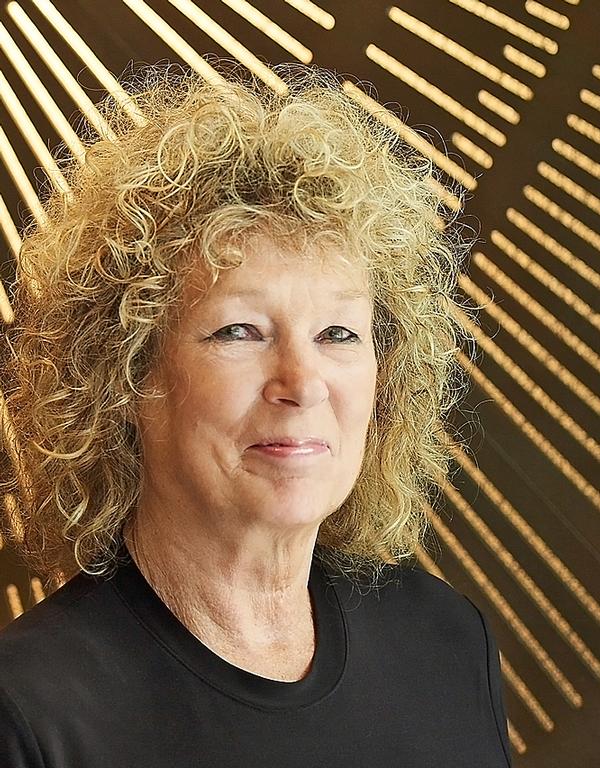
Clodagh has a holistic approach to hospitality and resort design
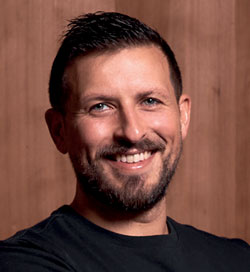
Since leaving school at 17, dropping her last name and setting up her own fashion label, Irish-born Clodagh has done things her own way, working on everything from make-up packaging to internationally renowned commercial, residential and hospitality projects. Over the past 30 years, her New York-based studio – employing just 20 professionals – has made its name by combining cutting-edge technology and innovative materials with ancient techniques such as feng shui to create environments that are not only sustainable, but also conducive to human wellbeing.
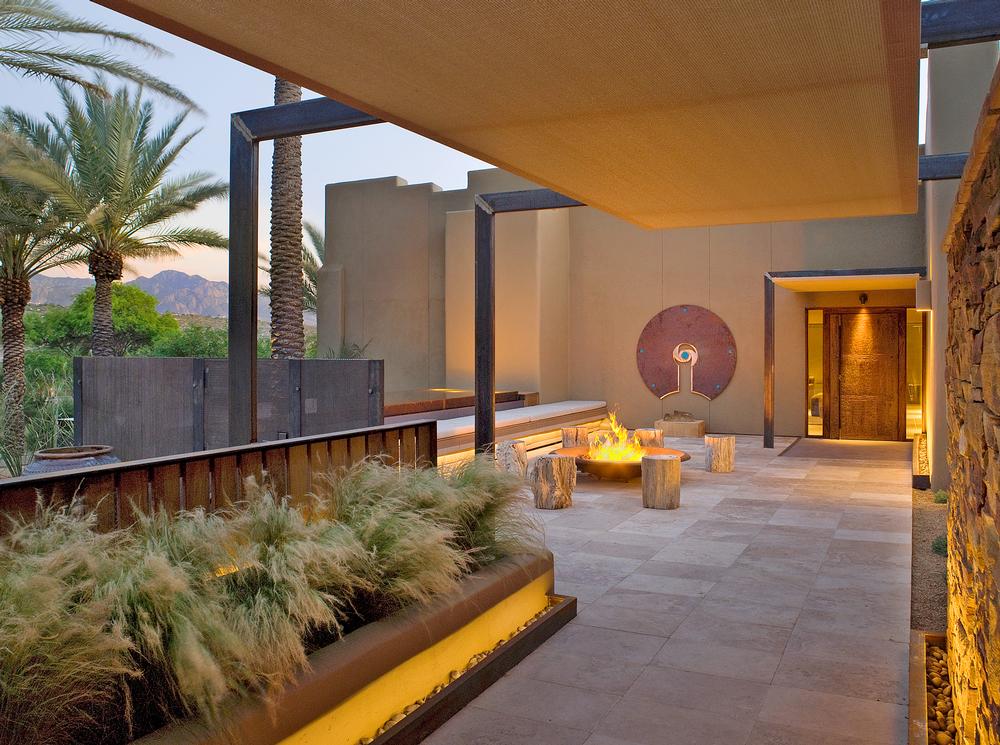
While Clodagh embraces all fields of design, it is her work in leisure that has brought her to a wider audience – from hotels and resorts for the likes of Six Senses and Hyatt to world-class spas such as Miraval Life in Balance Spa in Arizona. In 2007 she received the International Spa Association’s ISPA Visionary Award in recognition of her contribution to the industry.
Beyond her work as a designer, Clodagh is a keen philanthropist and an advocate for education and wellbeing in the developing world. She especially supports organisations who aim to bring education to children in remote and marginalised places.
What sets your practice apart from its rivals? I don’t feel we have rivals. Rudolf Nureyev once said: ‘I do not try to dance better than anybody else; I only try to dance better than myself.’ Sometimes I see an amazing project by somebody I adore and I think, I’ll never be as good as that. But that’s not rivalry; that’s a little green, Irish twinge of envy.
Let me rephrase: what makes your practice unique? Our deep integration of all the modalities: that we don’t specialise. We can take on a branding project, a video or graphic project, a large hotel or resort, a restaurant or a tiny apartment, and each one informs the other. I always say that if I were a doctor, I would be in integrative medicine. Also, with our projects we really believe that every area, including the landscaping, is a small part of a big whole that has to work together. If you remove a lug or a screw, the machine breaks down. I’m not compartmentalised.
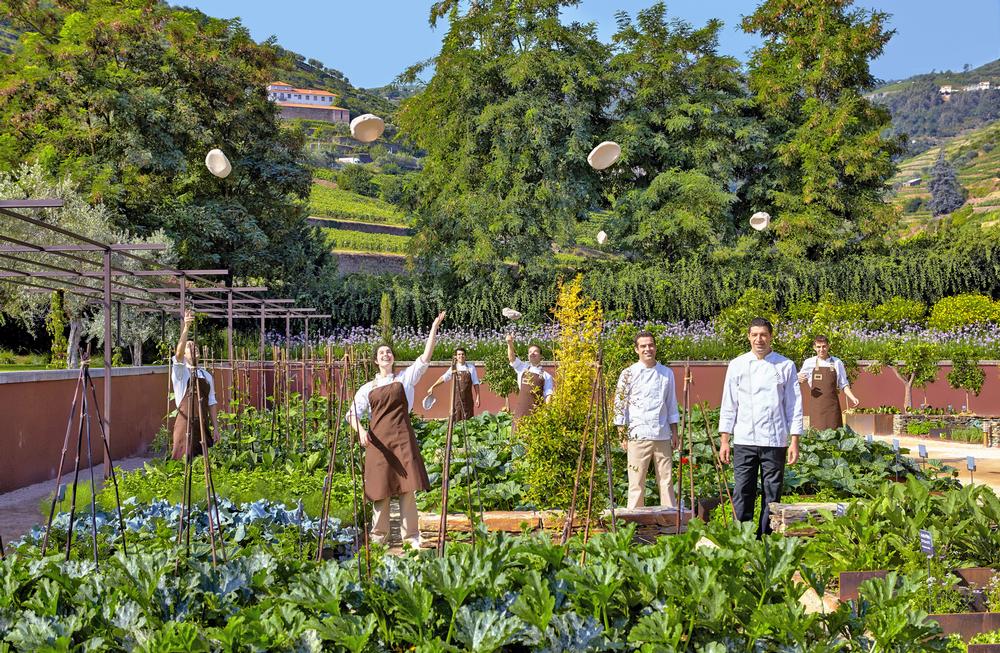
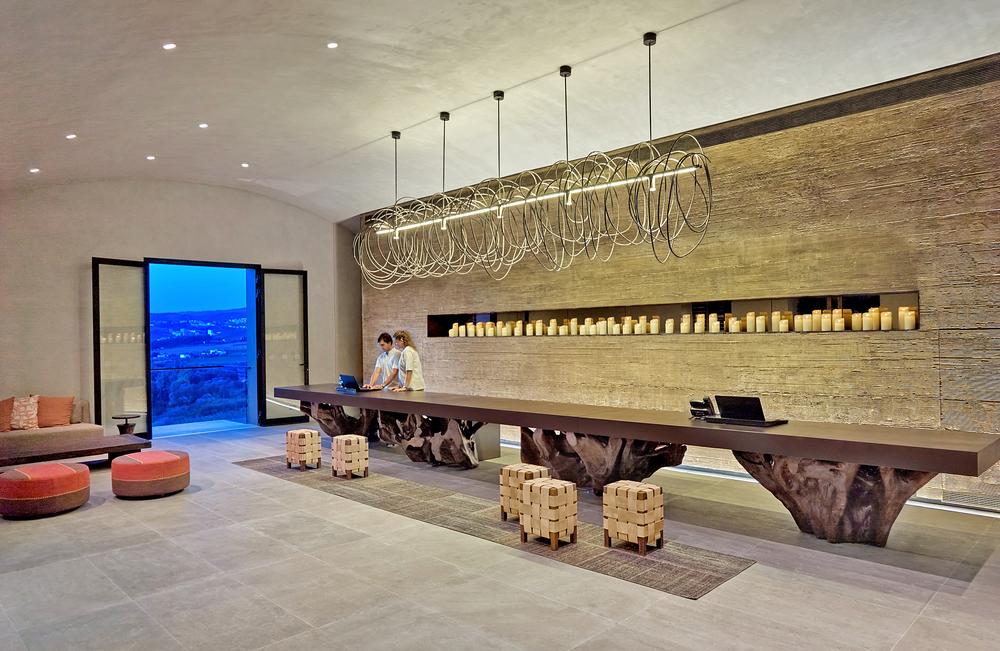
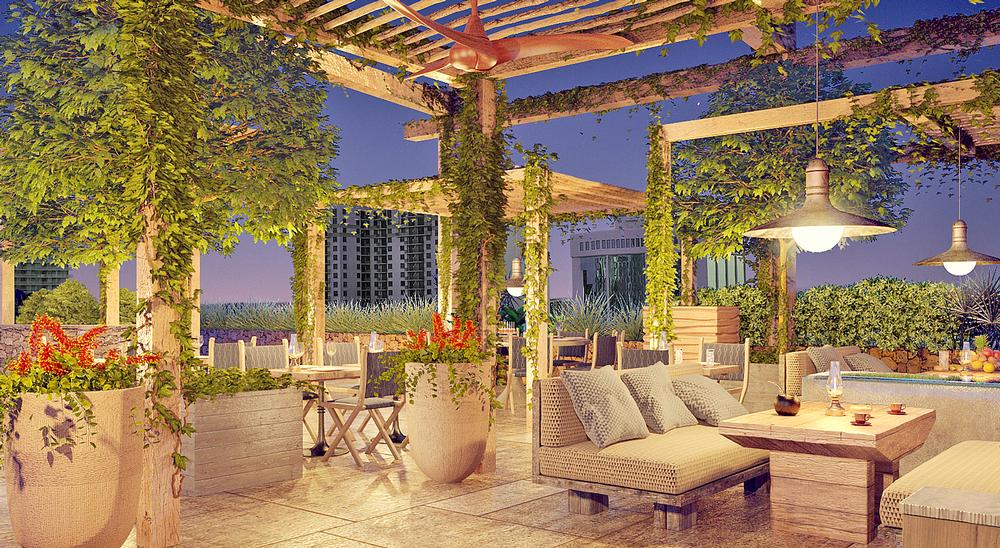
What leisure projects are you currently working on? We’ve recently completed a Six Senses resort and spa in the Douro Valley, Portugal’s wine-growing region. It’s a renovation of an existing property in an extraordinary setting and combines a real sense of place with contemporary freshness, luxury and fun. We’re also doing a Park Hyatt in Brazil’s magnificent Iguacu Falls region, opening in 2017, against the backdrop of these enormous falls and practically untouched forest. Our focus there will be on extracting the DNA of the location and providing rich, local experiences. And we’ve just completed the East Hotel in Miami for the Swire Group, opening in 2016, their first East in the West.
Why is leisure architecture important? It enhances people’s lives. There’s a lot of stress out there and leisure architecture helps people to relax and de-stress. It brings joy. That really is what it’s all about: bringing joy to people. When I see little kids playing in a place we’ve designed, bouncing around and screaming with laughter, I think, that’s it. Or when I see a couple holding hands, I think, that’s it, that’s it.
Who or what is the next big thing in architecture or design? The use of light, because without light we’re nothing. No matter how fabulously I design something, if the lighting isn’t right, it’s worthless. We’ve done a lot of research into circadian rhythms and how different kinds of light can help people to wake up and go to bed and feel happy, and we’re very conscious of the mood we want to create. A company called Pegasus has a lighting system using technology developed by NASA, which responds to what’s going on in your body. It’s beyond belief. So lighting that works and lighting that matches your mood – that’s going to be major.
What’s the biggest opportunity for leisure architecture? Mixed-use buildings, whether it’s a hotel with residences or partially serviced apartments; that will be big because it helps developers with their finances. Also, mixed-use buildings with a spa or a restaurant that’s open to the public and has a separate entrance. We’re all in the hospitality business really; a residential building is hospitality. The lines are getting more and more blurred and that’s great.
How important is sustainability? I was an early environmentalist. I grew up in the country, without electricity and eating homegrown food, and when I started my fashion business, I resolutely used natural materials: I visited the weavers, the crochet-makers, the linen-makers. I’m now working with a group of industry leaders called Future Green on how we can make hotels and other leisure properties more environmentally sound. I’m also on the Sustainable Furnishing Council. And in the studio, we really try to put our specifications where our feelings are. We’re far from perfect, but we’re driving in the right direction.
You’re an architectural designer rather than an architect. What advantages does that give you? The advantage it gives me is that – because I never learned the rules – I don’t know what can’t be done and I can really think very freely. Another advantage is that the architects in my studio can constantly challenge me, because I’m not a threat.
Which single experience has most defined your career? Breaking my back when I was 15 years old. I came from a very uptight, Protestant, downwardly-mobile aristocratic family. I was good at Latin and maths, so my family decided I would go to Trinity College in Dublin and become a professor: that was the route mapped out for me by my father.
However, there’s something about breaking your back and lying on your back for months that makes you challenge everything. One morning, I saw a little ad in the back of the Irish Times saying, ‘Why not be a fashion designer?’ and I thought, ‘Why not?’ And that’s been my motto ever since. My father locked me out of the house when I started my design business, then let me in again seven months later when the Irish Times published a big article about my first collection.
What other designers or architects do you admire? I love Tadao Ando. His work is not an architectural statement but architecture that works inside and out equally well. I think his buildings are silent and comforting and utterly beautiful. Also, I love concrete, and he does amazing work with concrete.
What are your pet hates in architecture? I resile from buildings that are about the building and not about what goes on inside. There are a lot of projects where the architect and the interior people might have been on different planets, and I really dislike that. It shows a lack of respect and collaboration. There has been a movement towards big companies commissioning buildings, where the building sets itself apart to the extent that it doesn’t work. I think design and architecture should work.
What would you like to be remembered for? For a philosophy of total design that takes into consideration not only the spaces I work in, but also the people I service. It’s all about connecting and making a positive impact; I call it the red thread going around the world. I’m also very passionate about my philanthropic work with an educational charity in Kenya called The Thorn Tree Project and a conservation charity called Ape Action in Cameroon. I’d like to think that I’ve been a small signpost on the road to environmentalism and caring for the world, but also that I’ve made people happier.
The Irish-born designer behind some of the world’s most renowned spas and hotels explains why she’s driven to make a positive impact, in architecture and in life
Clodagh has a holistic approach to hospitality and resort design
Since leaving school at 17, dropping her last name and setting up her own fashion label, Irish-born Clodagh has done things her own way, working on everything from make-up packaging to internationally renowned commercial, residential and hospitality projects. Over the past 30 years, her New York-based studio – employing just 20 professionals – has made its name by combining cutting-edge technology and innovative materials with ancient techniques such as feng shui to create environments that are not only sustainable, but also conducive to human wellbeing.
While Clodagh embraces all fields of design, it is her work in leisure that has brought her to a wider audience – from hotels and resorts for the likes of Six Senses and Hyatt to world-class spas such as Miraval Life in Balance Spa in Arizona. In 2007 she received the International Spa Association’s ISPA Visionary Award in recognition of her contribution to the industry.
Beyond her work as a designer, Clodagh is a keen philanthropist and an advocate for education and wellbeing in the developing world. She especially supports organisations who aim to bring education to children in remote and marginalised places.
What sets your practice apart from its rivals? I don’t feel we have rivals. Rudolf Nureyev once said: ‘I do not try to dance better than anybody else; I only try to dance better than myself.’ Sometimes I see an amazing project by somebody I adore and I think, I’ll never be as good as that. But that’s not rivalry; that’s a little green, Irish twinge of envy.
Let me rephrase: what makes your practice unique? Our deep integration of all the modalities: that we don’t specialise. We can take on a branding project, a video or graphic project, a large hotel or resort, a restaurant or a tiny apartment, and each one informs the other. I always say that if I were a doctor, I would be in integrative medicine. Also, with our projects we really believe that every area, including the landscaping, is a small part of a big whole that has to work together. If you remove a lug or a screw, the machine breaks down. I’m not compartmentalised.
What leisure projects are you currently working on? We’ve recently completed a Six Senses resort and spa in the Douro Valley, Portugal’s wine-growing region. It’s a renovation of an existing property in an extraordinary setting and combines a real sense of place with contemporary freshness, luxury and fun. We’re also doing a Park Hyatt in Brazil’s magnificent Iguacu Falls region, opening in 2017, against the backdrop of these enormous falls and practically untouched forest. Our focus there will be on extracting the DNA of the location and providing rich, local experiences. And we’ve just completed the East Hotel in Miami for the Swire Group, opening in 2016, their first East in the West.
Why is leisure architecture important? It enhances people’s lives. There’s a lot of stress out there and leisure architecture helps people to relax and de-stress. It brings joy. That really is what it’s all about: bringing joy to people. When I see little kids playing in a place we’ve designed, bouncing around and screaming with laughter, I think, that’s it. Or when I see a couple holding hands, I think, that’s it, that’s it.
Who or what is the next big thing in architecture or design? The use of light, because without light we’re nothing. No matter how fabulously I design something, if the lighting isn’t right, it’s worthless. We’ve done a lot of research into circadian rhythms and how different kinds of light can help people to wake up and go to bed and feel happy, and we’re very conscious of the mood we want to create. A company called Pegasus has a lighting system using technology developed by NASA, which responds to what’s going on in your body. It’s beyond belief. So lighting that works and lighting that matches your mood – that’s going to be major.
What’s the biggest opportunity for leisure architecture? Mixed-use buildings, whether it’s a hotel with residences or partially serviced apartments; that will be big because it helps developers with their finances. Also, mixed-use buildings with a spa or a restaurant that’s open to the public and has a separate entrance. We’re all in the hospitality business really; a residential building is hospitality. The lines are getting more and more blurred and that’s great.
How important is sustainability? I was an early environmentalist. I grew up in the country, without electricity and eating homegrown food, and when I started my fashion business, I resolutely used natural materials: I visited the weavers, the crochet-makers, the linen-makers. I’m now working with a group of industry leaders called Future Green on how we can make hotels and other leisure properties more environmentally sound. I’m also on the Sustainable Furnishing Council. And in the studio, we really try to put our specifications where our feelings are. We’re far from perfect, but we’re driving in the right direction.
You’re an architectural designer rather than an architect. What advantages does that give you? The advantage it gives me is that – because I never learned the rules – I don’t know what can’t be done and I can really think very freely. Another advantage is that the architects in my studio can constantly challenge me, because I’m not a threat.
Which single experience has most defined your career? Breaking my back when I was 15 years old. I came from a very uptight, Protestant, downwardly-mobile aristocratic family. I was good at Latin and maths, so my family decided I would go to Trinity College in Dublin and become a professor: that was the route mapped out for me by my father.
However, there’s something about breaking your back and lying on your back for months that makes you challenge everything. One morning, I saw a little ad in the back of the Irish Times saying, ‘Why not be a fashion designer?’ and I thought, ‘Why not?’ And that’s been my motto ever since. My father locked me out of the house when I started my design business, then let me in again seven months later when the Irish Times published a big article about my first collection.
What other designers or architects do you admire? I love Tadao Ando. His work is not an architectural statement but architecture that works inside and out equally well. I think his buildings are silent and comforting and utterly beautiful. Also, I love concrete, and he does amazing work with concrete.
What are your pet hates in architecture? I resile from buildings that are about the building and not about what goes on inside. There are a lot of projects where the architect and the interior people might have been on different planets, and I really dislike that. It shows a lack of respect and collaboration. There has been a movement towards big companies commissioning buildings, where the building sets itself apart to the extent that it doesn’t work. I think design and architecture should work.
What would you like to be remembered for? For a philosophy of total design that takes into consideration not only the spaces I work in, but also the people I service. It’s all about connecting and making a positive impact; I call it the red thread going around the world. I’m also very passionate about my philanthropic work with an educational charity in Kenya called The Thorn Tree Project and a conservation charity called Ape Action in Cameroon. I’d like to think that I’ve been a small signpost on the road to environmentalism and caring for the world, but also that I’ve made people happier.
A recent survey by the UK Spa Association (UKSA) into the industry’s approach to cancer care
has revealed that almost half of participating respondents (46 per cent) are unaware that
cancer is a disability and guests with a cancer diagnosis must be given
Mexican operator, Solmar Hotels and Resorts, is hosting a series of events in celebration of
Global Wellness Day, including a Temazcal ceremony at its Playa Grande Resort and Spa in Los
Cabos.
Mandarin Oriental has announced a standalone residence brand, Mansions, which will debut at
Emirates Palace, Mandarin Oriental Mansions, Abu Dhabi, in 2029.
Four Seasons Resort The Nam Hai in Hoi An, Vietnam, has put together a Global Wellness Day
(GWD) agenda with activations rooted in nature and shaped by four pillars of Joy – in
alignment with the day’s theme #JoyMagenta.
The Global Wellness Summit (GWS) will celebrate its 20th anniversary at the 2026 event in
Phuket, Thailand, later this year with the theme: The Science, Art and Soul of Wellness.
Auko, an all-inclusive development, is opening in Phong Nha in Vietnam in Q3 2026, with a
series of 30 tented eco-lodges and wellness hospitality operations by Lumina Wellbeing.
Therme Manchester’s 28-acre development, which will include interconnected glass pavilions
that measure 65,000sq m, will be the largest bathing and wellbeing attraction in the world once
complete, according to prof David Russell, CEO of Therme UK.
Naples Beach Club, a Four Seasons Resort, has opened a 2,800sq m spa called The Sanctuary,
with the design and concept inspired by the Native American people that populated Florida’s
Southwest coast – the Calusa.