Jason Torrance, policy director at
Sustrans, says sport is linked
to transport planning
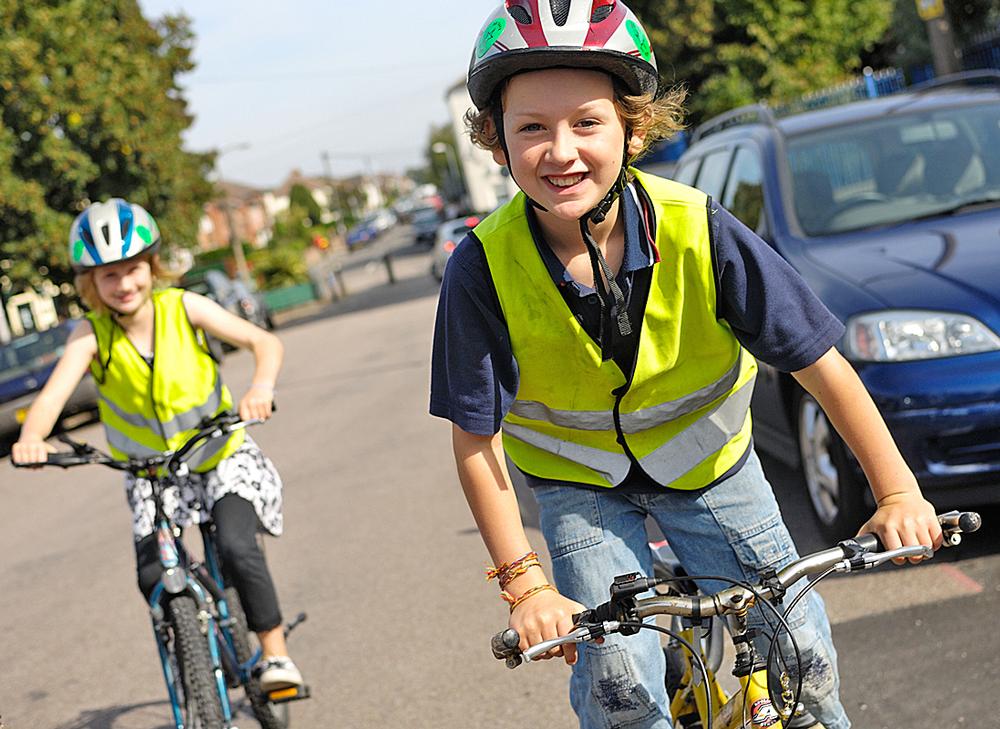
We’ve worked really hard over the past six years to ensure cycling and walking are a priority for the government,” says Jason Torrance, policy director at transport charity Sustrans. “The introduction of a walking and cycling investment strategy (WCIS) last year is an example of what our work can achieve.”
The inclusion of the WCIS means the secretary of state for transport is now required by law to set out a strategy for cycling infrastructure. More importantly, it also requires the government to provide funding to meet the plans.
This was a significant win for Sustrans, which lobbies – and partners with – governments, councils and businesses to encourage active transport.
“There’s now a legal obligation for government to set targets and investment for cycling and walking,” Torrance says. “It’s a historic opportunity to guarantee the long-term funding that will extend travel choice, help ease congestion and improve our health and also improve the environment.”
Despite the breakthrough, however, there’s still a long way to go, Torrance adds: “Physical activity still takes a back seat in government planning. The broad commitments aren’t backed up by investment, which means there are limited plans to actually improve opportunities for people to get more active.”
According to government figures, investment in cycling in England outside London stands at £1.40 per person per year, while the Get Britain Cycling report, from the All Party Parliamentary Cycling Group, recommends an investment of £10 per person per year.
“Words are one thing – action and investment to make those actions happen are a different thing entirely,” Torrance adds. “Between 2015 and 2016 alone, we’ve seen investment in cycling, walking and public transport being reduced by about a third.”
GIVING EVIDENCE The government’s stance might change if it trawled through the abundance of research on the benefits of active transport to public health and the Treasury.
These include a study by the University of East Anglia (UEA), which looked at 18 years of data on 18,000 commuters aged between 18 and 64 in the UK. The research shows that people who stopped driving and started walking or cycling to work benefited from improved wellbeing. In particular, active commuters felt better able to concentrate and were less under strain than if they travelled by car.
UEA’s lead researcher Adam Martin said: “We found that switching from the car to walking, cycling or public transport is associated with an average reduction of 0.32 BMI, which equates to a difference of about 1 kg for the average person.
“This might sound like a relatively small proportion of their total weight, but we also found that the longer the commute, the stronger the association. For those with a commute of more than 30 minutes, there was an average reduction of 2.25 BMI units, or around 7 kg (over one stone) for the average person.”
As well as improving public health, a focus on active transport would also improve finances. A report in The Lancet – entitled Effects of increasing active travel in urban England and Wales on costs to the NHS – calculated that £17bn could be saved by an increase in cycling and walking over a 20-year period.
“This and many other studies are part of a strong evidence base on the economic benefits an increase in physical activity would deliver,” Torrance says.
WORKING TOGETHER According to Torrance, there are synergies between the sports sector and Sustrans. The charity works alongside activity providers and has partnered with the Designed to Move (DTM) initiative. This scheme brings together public, private, and civil sector organisations who are dedicated to ending the growing epidemic of physical inactivity.
“One of the things we did with the DTM initiative was set up a physical activity commission in 2014,” Torrance says. “We partnered with Nike, the Lawn Tennis Association, the English Premier League and British Heart Foundation to bring together experts, to ask questions and make recommendations as to how the health of the nation could be improved.”
Torrance is keen to see sports clubs use their expertise in getting people active by extending their reach outside the pitches, pools and sports halls. He highlights bike buddy schemes, cycle to work schemes, pool bike loans and walking meetings as ways to make customers and staff more active outside the facilities they manage. And Sustrans is there to help with any advice, he adds.
“The key synergy between Sustrans and sport is enabling physical activity,” he says. “We have common cause to improve lifestyles. I’d encourage everyone to get involved by becoming advocates for active transport.”
Reference: Does active commuting improve psychological wellbeing? Evidence from the British Household Survey: www.leisuremedia.com/sustrans/
In today’s premium spa environment, every detail shapes the guest experience – right down to
the softness of towels and the freshness of linens. [more...]
+ More featured suppliers
COMPANY PROFILES
Voya Organic Beauty
Voya Organic Beauty, founded in 2006 in Ireland by Mark Walton and Kira Guckian Walton, is a private [more...]
Blu Spas, Inc.
Blu is a full-service firm offering project feasibility, planning and design as well as operational [more...]
Jason Torrance, policy director at
Sustrans, says sport is linked
to transport planning
We’ve worked really hard over the past six years to ensure cycling and walking are a priority for the government,” says Jason Torrance, policy director at transport charity Sustrans. “The introduction of a walking and cycling investment strategy (WCIS) last year is an example of what our work can achieve.”
The inclusion of the WCIS means the secretary of state for transport is now required by law to set out a strategy for cycling infrastructure. More importantly, it also requires the government to provide funding to meet the plans.
This was a significant win for Sustrans, which lobbies – and partners with – governments, councils and businesses to encourage active transport.
“There’s now a legal obligation for government to set targets and investment for cycling and walking,” Torrance says. “It’s a historic opportunity to guarantee the long-term funding that will extend travel choice, help ease congestion and improve our health and also improve the environment.”
Despite the breakthrough, however, there’s still a long way to go, Torrance adds: “Physical activity still takes a back seat in government planning. The broad commitments aren’t backed up by investment, which means there are limited plans to actually improve opportunities for people to get more active.”
According to government figures, investment in cycling in England outside London stands at £1.40 per person per year, while the Get Britain Cycling report, from the All Party Parliamentary Cycling Group, recommends an investment of £10 per person per year.
“Words are one thing – action and investment to make those actions happen are a different thing entirely,” Torrance adds. “Between 2015 and 2016 alone, we’ve seen investment in cycling, walking and public transport being reduced by about a third.”
GIVING EVIDENCE The government’s stance might change if it trawled through the abundance of research on the benefits of active transport to public health and the Treasury.
These include a study by the University of East Anglia (UEA), which looked at 18 years of data on 18,000 commuters aged between 18 and 64 in the UK. The research shows that people who stopped driving and started walking or cycling to work benefited from improved wellbeing. In particular, active commuters felt better able to concentrate and were less under strain than if they travelled by car.
UEA’s lead researcher Adam Martin said: “We found that switching from the car to walking, cycling or public transport is associated with an average reduction of 0.32 BMI, which equates to a difference of about 1 kg for the average person.
“This might sound like a relatively small proportion of their total weight, but we also found that the longer the commute, the stronger the association. For those with a commute of more than 30 minutes, there was an average reduction of 2.25 BMI units, or around 7 kg (over one stone) for the average person.”
As well as improving public health, a focus on active transport would also improve finances. A report in The Lancet – entitled Effects of increasing active travel in urban England and Wales on costs to the NHS – calculated that £17bn could be saved by an increase in cycling and walking over a 20-year period.
“This and many other studies are part of a strong evidence base on the economic benefits an increase in physical activity would deliver,” Torrance says.
WORKING TOGETHER According to Torrance, there are synergies between the sports sector and Sustrans. The charity works alongside activity providers and has partnered with the Designed to Move (DTM) initiative. This scheme brings together public, private, and civil sector organisations who are dedicated to ending the growing epidemic of physical inactivity.
“One of the things we did with the DTM initiative was set up a physical activity commission in 2014,” Torrance says. “We partnered with Nike, the Lawn Tennis Association, the English Premier League and British Heart Foundation to bring together experts, to ask questions and make recommendations as to how the health of the nation could be improved.”
Torrance is keen to see sports clubs use their expertise in getting people active by extending their reach outside the pitches, pools and sports halls. He highlights bike buddy schemes, cycle to work schemes, pool bike loans and walking meetings as ways to make customers and staff more active outside the facilities they manage. And Sustrans is there to help with any advice, he adds.
“The key synergy between Sustrans and sport is enabling physical activity,” he says. “We have common cause to improve lifestyles. I’d encourage everyone to get involved by becoming advocates for active transport.”
Reference: Does active commuting improve psychological wellbeing? Evidence from the British Household Survey: www.leisuremedia.com/sustrans/
Global Wellness Day (GWD) marked its 15th anniversary on Saturday 13 June 2026, with the
theme: #JoyMagenta – a celebration of the healing qualities of simple gestures and activities
that spark joy.
Global luxury hospitality brand, Six Senses, has partnered with longevity healthcare provider,
HUM2N, to launch a clinic at Six Senses London, at The Whiteley.
As part of its first hotel partnership, Mayrlife – the medical health resort company known for its
site in Altaussee, Austria – has launched a day clinic at the Rosewood Vienna.
Premium London health club, KX Chelsea, will imminently unveil its most significant
redevelopment since its launch in 2002 to create an integrated wellness model combining
training, recovery and relaxation.
Rosewood Le Guanahani St Barth, on the northeast coast of Saint Barthélemy in the French
West Indies, is offering a programme of ocean-inspired yoga classes between 8-14 June to
celebrate Global Wellness Day (GWD).
Hotel de France, located on the British Isle of Jersey, has created a wellness retreat package
that includes a hot yoga session that will take place in Jersey Zoo’s butterfly sanctuary.
The Ritz-Carlton, Langkawi, in Malaysia, has revealed a schedule for Global Wellness Day
(GWD) that includes guided rainforest walks, mindful movement and guided coastal meditation
experiences.
Longevitix, a clinical platform for preventive and longevity medicine, has launched its AI-
powered intelligence system to help physicians deliver continuous, personalised longevity-
focused care at scale.
Atmantan Wellness Centre, an integrative wellness destination in Mulshi, near Pune in India, is
expanding its portfolio by adding a new centre in Hyderabad that will launch between 2028 and
2029.
In today’s premium spa environment, every detail shapes the guest experience – right down to
the softness of towels and the freshness of linens. [more...]
+ More featured suppliers
COMPANY PROFILES
Voya Organic Beauty Voya Organic Beauty, founded in 2006 in Ireland by Mark Walton and Kira Guckian Walton, is a private [more...]