Yes! Send me the FREE digital editions of Spa Business and Spa Business insider magazines and the FREE weekly Spa Business and Spa Business insider ezines and breaking news alerts!
At a time when public sector budgets are under pressure and grants
can be wrapped in red tape, crowdfunding offers an attractive option
for sports clubs, individuals and teams who need capital investment
By Tom Walker | Published in Leisure Management 2016 issue 1
Crowdfunding offers an attractive option
for sports clubs
An increasing number of athletes, sports clubs and organisations – from grassroots to elite level – are turning to crowdfunding when facing a big plan and a small bank balance.
In the past few years, money pledged online by the general public has sent athletes to the Sochi 2014 Olympic Games, funded facility projects for professional sports clubs and secured the future of community clubs by providing improved spaces.
The types of crowdfunding available are divided into four categories. Donation crowdfunding provides a straightforward financial contribution to a project, while reward crowdfunding – perhaps the most popular among sports projects – offers donors something tangible in return for their money, such as a piece of memorabilia, a product or an exclusive experience with an athlete or club.
There are also financially incentivised methods. Loan-based crowdfunding allows a club or organisation to borrow money from people by paying interest, while equity-based crowdfunding offers a share or stake in the business in return for investment.
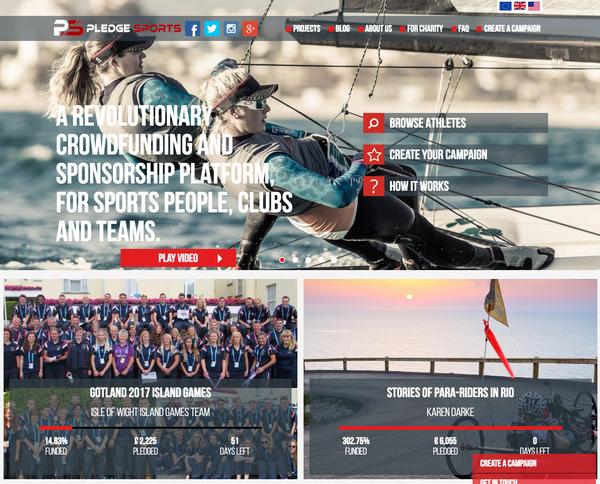
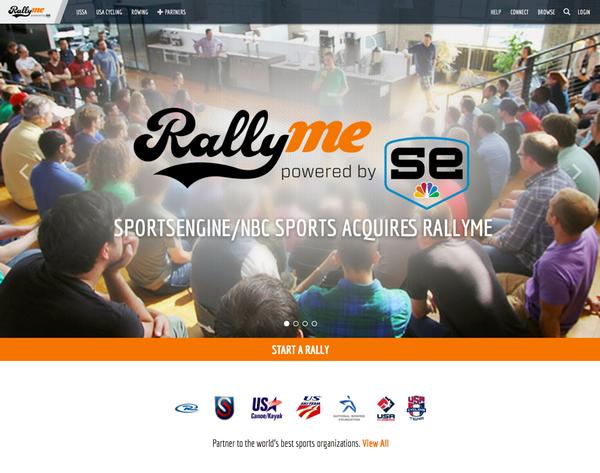
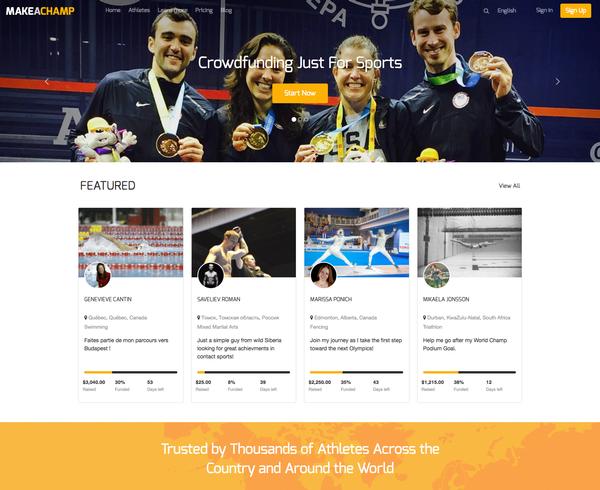
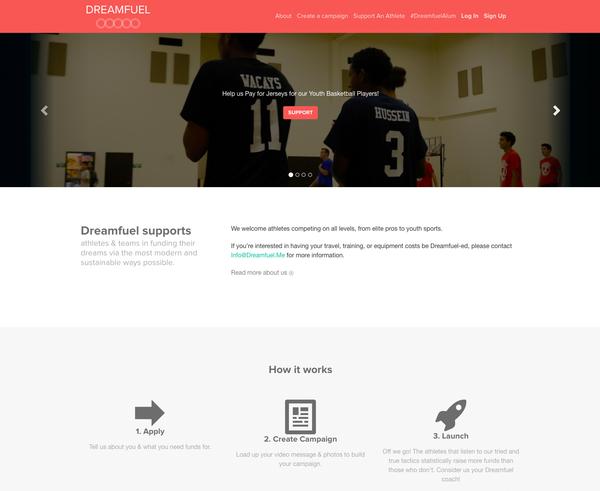
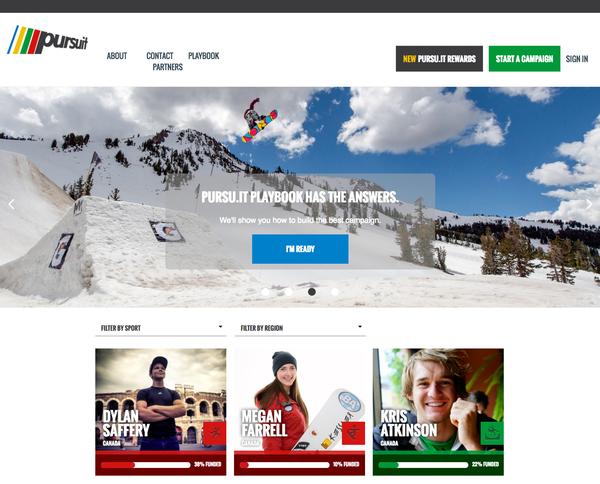
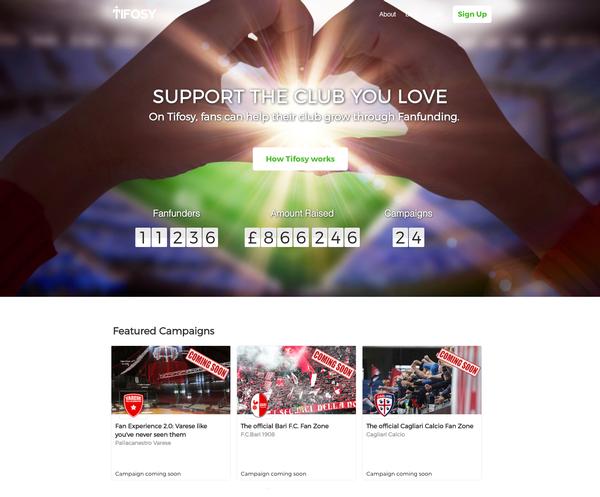
While most of the major crowdfunding platforms – Kickstarter, Indiegogo and Crowdfunder – all welcome sports projects, there are now a number of sports-specific platforms to consider: Pledgesports, Rallyme, MakeAChamp, Dreamfuel, Pursu and Tifosy.
VALUE CREATION The global crowdfunding market is now worth more than US$30bn annually, according to research by Massolution. The UK is a clear market leader in Europe in the sector and of the total US$2.5bn raised through crowdfunding across Europe in 2014, nearly US$2bn was generated in the UK.
“Crowdfunding has gained huge momentum,” says Irish entrepreneur Richard Pearson, who launched the PledgeSports.org platform in 2014. “Equity crowdfunding in the UK alone tripled to reach £84m in 2014 and there’s no ceiling to this industry.”
GOING POMPEY For professional clubs that lack the financial riches of a Manchester United or Chelsea, a crowdfunding project can provide a vehicle for success. One of the largest ever UK projects was completed by English League Two club Portsmouth FC. The club raised £270,000 through crowdfunding, enabling it to build a permanent home for its youth academy in 2015 and increasing its ability to attract and develop young talent.
Using the specialist football funding site Tifosy as its platform, the club went down the crowdfunding route in response to feedback from fans for the organisation of more fan-funded projects.
“We kept fans up to date all the way along and made sure the interest never waned ,” says Portsmouth FC’s Colin Farmery, who project managed the initiative. “Our campaign was perfect for crowdfunding because it was a clearly defined, concrete project.”
Portsmouth’s campaign also proved that, while clubs can always rely on passionate supporters to put their hands in their pockets, contributions to a worthy cause can also come from unexpected sources.
“We received contributions from 39 countries for the Portsmouth campaign,” says Fausto Zanetton, co-founder of Tifosy. “It shows that football fans care deeply about the game and will often choose to help out another club in need.”
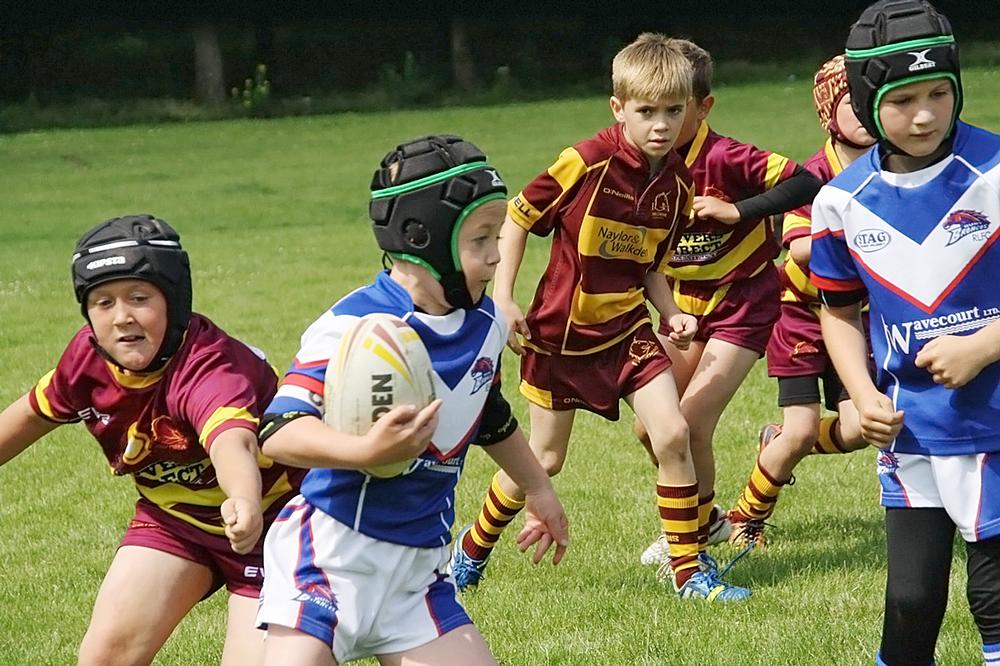
GRASSROOTS For community clubs, a successful crowdfunding project can be transformative. The Bury Broncos Rugby League Club in Manchester raised £3,800 on crowdfunder.co.uk to help convert an old cricket pavilion into a new sports hub. The amount needed was too small to warrant a funding bid, so a crowdfunding campaign was deemed the best option.
According to sports marketing consultant and academic Alan Seymour, crowdfunding is a great way for smaller clubs and community groups to get projects off the ground. He points out, however, that in a crowded space, a project has to stand out to have any chance of success.
“Crowdfunding is all about awareness, connections, networks and – above all – distinguishing yourself from the crowd,” he says. “You need a strategic plan for your crowdfunding. First impressions count, so it should be approached as if making an elevator pitch.
Seymour suggests making the rules of engagement clear from the start. “The key is succinct summaries of who you are, what you need, where you’re going and how it benefits all stakeholders,” he says. “Creating a win-win scenario is the priority.”
Le Atelier by C.O.D.E. doesn't offer a standard bespoke service, it provides a highly
customised approach to designing massage beds and loungers in high-end wellness
environments. [more...]
+ More featured suppliers
COMPANY PROFILES
Nilo Spa Design
Nilo SPA Design, part of the Maletti group, has led the Beauty & Wellness sector for over 35 years p [more...]
AKT Group
AKT Group is the Franco–Italian parent company of SKYY, C.O.D.E. and AKTMe, operating as an integrat [more...]
At a time when public sector budgets are under pressure and grants
can be wrapped in red tape, crowdfunding offers an attractive option
for sports clubs, individuals and teams who need capital investment
By Tom Walker | Published in Leisure Management 2016 issue 1
Crowdfunding offers an attractive option
for sports clubs
An increasing number of athletes, sports clubs and organisations – from grassroots to elite level – are turning to crowdfunding when facing a big plan and a small bank balance.
In the past few years, money pledged online by the general public has sent athletes to the Sochi 2014 Olympic Games, funded facility projects for professional sports clubs and secured the future of community clubs by providing improved spaces.
The types of crowdfunding available are divided into four categories. Donation crowdfunding provides a straightforward financial contribution to a project, while reward crowdfunding – perhaps the most popular among sports projects – offers donors something tangible in return for their money, such as a piece of memorabilia, a product or an exclusive experience with an athlete or club.
There are also financially incentivised methods. Loan-based crowdfunding allows a club or organisation to borrow money from people by paying interest, while equity-based crowdfunding offers a share or stake in the business in return for investment.
While most of the major crowdfunding platforms – Kickstarter, Indiegogo and Crowdfunder – all welcome sports projects, there are now a number of sports-specific platforms to consider: Pledgesports, Rallyme, MakeAChamp, Dreamfuel, Pursu and Tifosy.
VALUE CREATION The global crowdfunding market is now worth more than US$30bn annually, according to research by Massolution. The UK is a clear market leader in Europe in the sector and of the total US$2.5bn raised through crowdfunding across Europe in 2014, nearly US$2bn was generated in the UK.
“Crowdfunding has gained huge momentum,” says Irish entrepreneur Richard Pearson, who launched the PledgeSports.org platform in 2014. “Equity crowdfunding in the UK alone tripled to reach £84m in 2014 and there’s no ceiling to this industry.”
GOING POMPEY For professional clubs that lack the financial riches of a Manchester United or Chelsea, a crowdfunding project can provide a vehicle for success. One of the largest ever UK projects was completed by English League Two club Portsmouth FC. The club raised £270,000 through crowdfunding, enabling it to build a permanent home for its youth academy in 2015 and increasing its ability to attract and develop young talent.
Using the specialist football funding site Tifosy as its platform, the club went down the crowdfunding route in response to feedback from fans for the organisation of more fan-funded projects.
“We kept fans up to date all the way along and made sure the interest never waned ,” says Portsmouth FC’s Colin Farmery, who project managed the initiative. “Our campaign was perfect for crowdfunding because it was a clearly defined, concrete project.”
Portsmouth’s campaign also proved that, while clubs can always rely on passionate supporters to put their hands in their pockets, contributions to a worthy cause can also come from unexpected sources.
“We received contributions from 39 countries for the Portsmouth campaign,” says Fausto Zanetton, co-founder of Tifosy. “It shows that football fans care deeply about the game and will often choose to help out another club in need.”
GRASSROOTS For community clubs, a successful crowdfunding project can be transformative. The Bury Broncos Rugby League Club in Manchester raised £3,800 on crowdfunder.co.uk to help convert an old cricket pavilion into a new sports hub. The amount needed was too small to warrant a funding bid, so a crowdfunding campaign was deemed the best option.
According to sports marketing consultant and academic Alan Seymour, crowdfunding is a great way for smaller clubs and community groups to get projects off the ground. He points out, however, that in a crowded space, a project has to stand out to have any chance of success.
“Crowdfunding is all about awareness, connections, networks and – above all – distinguishing yourself from the crowd,” he says. “You need a strategic plan for your crowdfunding. First impressions count, so it should be approached as if making an elevator pitch.
Seymour suggests making the rules of engagement clear from the start. “The key is succinct summaries of who you are, what you need, where you’re going and how it benefits all stakeholders,” he says. “Creating a win-win scenario is the priority.”
The UK spa review and discovery platform for consumers, the Good Spa Guide, has announced
it will host the Good Spa Guide Awards 2026 during an event on 16 November at Sopwell House
Hotel in St Albans, UK.
Eighty-four per cent of consumers now say wellness is a top priority in their lives, with this
percentage increasing year on year, according to a preview presentation of McKinsey’s Future of
Wellness 2026 research report.
Mass protests have been taking place since Monday 1 June in Albania over the development of
a luxury resort by Donald Trump’s daughter Ivanka Trump and her husband Jared Kushner.
Global Wellness Day (GWD) marked its 15th anniversary on Saturday 13 June 2026, with the
theme: #JoyMagenta – a celebration of the healing qualities of simple gestures and activities
that spark joy.
Global luxury hospitality brand, Six Senses, has partnered with longevity healthcare provider,
HUM2N, to launch a clinic at Six Senses London, at The Whiteley.
As part of its first hotel partnership, Mayrlife – the medical health resort company known for its
site in Altaussee, Austria – has launched a day clinic at the Rosewood Vienna.
Premium London health club, KX Chelsea, will imminently unveil its most significant
redevelopment since its launch in 2002 to create an integrated wellness model combining
training, recovery and relaxation.
Rosewood Le Guanahani St Barth, on the northeast coast of Saint Barthélemy in the French
West Indies, is offering a programme of ocean-inspired yoga classes between 8-14 June to
celebrate Global Wellness Day (GWD).
Hotel de France, located on the British Isle of Jersey, has created a wellness retreat package
that includes a hot yoga session that will take place in Jersey Zoo’s butterfly sanctuary.
The Ritz-Carlton, Langkawi, in Malaysia, has revealed a schedule for Global Wellness Day
(GWD) that includes guided rainforest walks, mindful movement and guided coastal meditation
experiences.
Le Atelier by C.O.D.E. doesn't offer a standard bespoke service, it provides a highly
customised approach to designing massage beds and loungers in high-end wellness
environments. [more...]
+ More featured suppliers
COMPANY PROFILES
Nilo Spa Design Nilo SPA Design, part of the Maletti group, has led the Beauty & Wellness sector for over 35 years p [more...]