Mental health issues affect 25 per cent of the population, and research shows exercise can be more effective than medication – as well as helping prevent issues occurring in the first place. So how can the health and fitness industry reach out to those who are suffering? Kath Hudson reports
By Kath Hudson | Published in Health Club Management 2017 issue 2
Although I’ve suffered from depression in the past, the only time I’ve needed to take medication was when I stopped exercising. When I did get back to exercise, while the physical benefits took around a year to become obvious, the mental health benefits were practically immediate.
So why doesn’t the health and fitness industry use this as a marketing tool? Why the unwavering focus on weight and physical appearance, which so frequently ends in disappointment – why not instead celebrate the fact that exercise will boost resilience, sleeping patterns, coping mechanisms, self-esteem and sense of wellbeing?
A shift in focus could lead to clubs connecting with, and helping, many more people – those who don’t understand what a profound and positive impact exercise can have on mental health.
Because this is a huge issue nationally: figures from the Centre for Mental Health show that work-related stress, anxiety and depression contribute to 35 per cent of all work-related ill health cases, making the financial cost to British businesses an estimated £26bn a year. This is a great opportunity for the fitness sector to reach out to the business community with innovative solutions.
So what could, and should, health and fitness operators be doing to proactively help people with mental health issues? We ask our panel of experts.
In my opinion, exercise is the number one preventative measure for mental health and there’s a strong evidence base to show its efficacy, so it’s very important for operators to really engage with this market.
There are three areas in which health and fitness providers could help. Firstly, encouraging clients to think about looking after their mental health in the same way they do their physical health. The Five Steps to Wellbeing programme is a great way of doing this: connect with other people, be active, keep learning new skills, give to others and be mindful.
Secondly, make sure your organisation is mental health aware. Signing up to the Sport and Recreation Alliance’s mental health charter is a strong platform to help create an action plan, and we’re delighted that more than 350 organisations have signed up so far.
Thirdly, connecting with MIND’s Get Set to Go programme is an easy way of engaging with this market. This campaign works to signpost people towards exercise opportunities and helps to remove the barriers.
People with mental health issues are often low in self-esteem and confidence, and have preconceptions that gyms are intimidating places, so it’s of paramount importance to be open and welcoming. It might also be appropriate to run a few sessions aimed purely at those with mental health issues. One free taster session might be the turning point they need.
"Run a few sessions aimed purely at those with mental health issues. One free taster session might be the turning point they need" – Paul Farmer
Marcus HuntHealth and wellbeing manager EuropeUnilever
Marcus Hunt
The benefits of being active on our mental health and happiness are still relatively unreported, and not widely regarded as a reason to be more active. The fitness industry can help to spread this message by talking to companies and providing innovative ideas on engaging more people in physical activity.
At Unilever, we believe an employee’s wellbeing is paramount – this is fundamental to our global Unilever Sustainability Living Plan. We know that being physically active is as important for our employees’ mental wellbeing as their physical wellbeing, and we must continue to share this important message. Having key educational themes and myth-busting discussions around physical activity can enable behaviour change, and the workplace is a perfect opportunity for this.
Within our UK business, we have a number of gyms in our offices, factories and R&D sites, but we’ve also diversified this offering to include Gentle Gym classes, mindfulness sessions and we recently launched our Active U programme. The purpose of this programme is to encourage our employees to be active daily, through ideas such as non-sitting meetings, warming up for work and learning more about their functional capacity and how to be fitter for the future.
Active U has four key themes: active workplace, transport, health and happiness. Our ‘activity gurus’ are always on-hand to discuss how to be more active at home, around the workplace and during a commute. We also place great emphasis on how important being active is for happiness, and we champion this as part of our award-winning mental health programme.
"Having key educational themes and myth-busting discussions around physical activity can enable behaviour change" – Marcus Hunt
shutterstock
Fitness staff should be trained to recognise the symptoms of mental health problems
Steve PhillipsDirector of PT & community engagement,HPT5
Steve Phillips
The fitness industry is currently letting personal trainers and fitness instructors down, because we aren’t empowering them to talk about mental health. It’s an ignored subject that doesn’t feature in standard industry training.
Swedish research has proved that exercise is more effective than medication in alleviating the symptoms of mental health, but we don’t let people know that we can help them!
We shouldn’t be calling people with mental health issues a ‘special population’ – this is a quarter of the population, and many others are suffering from post-natal depression, anxiety or stress and don’t even realise they have a condition.
If someone is feeling low, they don’t necessarily want to be pushed hard physically (although some do). For many people, the idea of exercise is scary and can create added anxiety, so the key focus is to just get them out of the house. Sometimes they just need to walk and talk.
Going forward, the industry needs to provide a mix of exercise, meditation and cognitive behavioural therapy, and there must be training qualifications linked to all this that are recognised by REPS and CIMPSA. In the meantime, it’s easier than you think to connect with, and help, people with mental health issues. For example, many new mums feel overwhelmed even if they don’t consider they’re suffering from post-natal depression, so launch a group, invite them to come into the club with their babies and just talk, and then introduce exercise.
"We shouldn’t be calling people with mental health issues a ‘special population’. This is a quarter of the population" – Steve Phillips
shutterstock
Health clubs could offer group support to overwhelmed new mothers
Chris HarbronDirector of emotional wellbeingNuffield Health
Chris Harbron
Following the acquisition of a cognitive behavioural therapy business, Nuffield Health has recently launched an emotional wellbeing service aimed at supporting those suffering from stress, anxiety and depression. Launching initially to businesses for their employees, the service will then roll out in the next few months through our 111 consumer fitness and wellbeing gyms and will be available to all, regardless of a gym membership.
Emotional health is just as important as our physical health, and our focus at Nuffield Health is on the overall wellbeing of the individual. All front-line staff will be trained to recognise the signs and symptoms of mental health problems, begin a conversation about it, and signpost the individual to additional support. As such, we’re looking to create a culture where open dialogue about emotional wellbeing and physical wellbeing is encouraged, supported and expected.
Thinking and acting towards people as if they’re abnormal is one of the key issues that creates stigma around mental health. Understanding and empathy can make all the difference: making it normal to talk about ups and downs can make people feel comfortable to ask for help if they experience a problem. Suicide is a leading cause of death in both men and women, but rates are around three times higher in men. Supporting them to talk about their emotions, as well as spotting signs of more significant distress, is important.
"We’re looking to create a culture where open dialogue about emotional and physical wellbeing is encouraged, supported and expected" – Chris Harbron
Debbie LawrenceQualification leadVTCT
Debbie Lawrence
There’s still so much stigma around mental health, and although the Time to Change campaign has done a lot to raise awareness, it’s still a very misunderstood area.
The first steps are the normalisation and acceptance of mental health as something that affects everyone. Being able to speak openly, in an empathetic environment and without being judged, is the key to acceptance. However, this requires strong soft skills and trust, so some extra staff training in mental health awareness may be needed – it’s crucial the instructor is empathetic and caring.
Mental health issues often lower energy and mood, so beasting sessions at the gym are generally not appropriate. A more holistic approach is needed, balancing emotional, mental, physical, medical and social wellbeing.
People with more severe and enduring conditions will be harder to reach, and operators may need to be prepared to reach out into the community, with walking groups or sessions in village halls.
There are some great examples of community-based programmes, including the Welsh national exercise referral scheme and the Bristol Active Living project, which provided a whole range of services, supporting people with mental health issues to participate in a range of activities.
"Extra staff training in mental health awareness may be needed. It’s crucial the instructor is empathetic and caring" – Debbie Lawrence
shutterstock
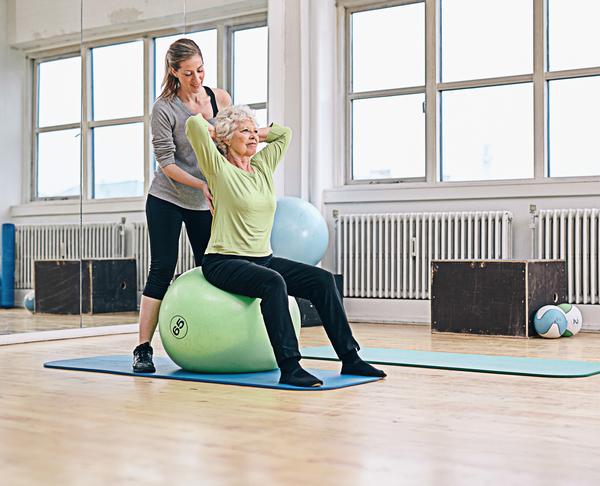
Mental health issues can lead
to lower energy levels, so a
gentler exercise approach
may be needed
Le Atelier by C.O.D.E. doesn't offer a standard bespoke service, it provides a highly
customised approach to designing massage beds and loungers in high-end wellness
environments. [more...]
Mental health issues affect 25 per cent of the population, and research shows exercise can be more effective than medication – as well as helping prevent issues occurring in the first place. So how can the health and fitness industry reach out to those who are suffering? Kath Hudson reports
By Kath Hudson | Published in Health Club Management 2017 issue 2
Although I’ve suffered from depression in the past, the only time I’ve needed to take medication was when I stopped exercising. When I did get back to exercise, while the physical benefits took around a year to become obvious, the mental health benefits were practically immediate.
So why doesn’t the health and fitness industry use this as a marketing tool? Why the unwavering focus on weight and physical appearance, which so frequently ends in disappointment – why not instead celebrate the fact that exercise will boost resilience, sleeping patterns, coping mechanisms, self-esteem and sense of wellbeing?
A shift in focus could lead to clubs connecting with, and helping, many more people – those who don’t understand what a profound and positive impact exercise can have on mental health.
Because this is a huge issue nationally: figures from the Centre for Mental Health show that work-related stress, anxiety and depression contribute to 35 per cent of all work-related ill health cases, making the financial cost to British businesses an estimated £26bn a year. This is a great opportunity for the fitness sector to reach out to the business community with innovative solutions.
So what could, and should, health and fitness operators be doing to proactively help people with mental health issues? We ask our panel of experts.
In my opinion, exercise is the number one preventative measure for mental health and there’s a strong evidence base to show its efficacy, so it’s very important for operators to really engage with this market.
There are three areas in which health and fitness providers could help. Firstly, encouraging clients to think about looking after their mental health in the same way they do their physical health. The Five Steps to Wellbeing programme is a great way of doing this: connect with other people, be active, keep learning new skills, give to others and be mindful.
Secondly, make sure your organisation is mental health aware. Signing up to the Sport and Recreation Alliance’s mental health charter is a strong platform to help create an action plan, and we’re delighted that more than 350 organisations have signed up so far.
Thirdly, connecting with MIND’s Get Set to Go programme is an easy way of engaging with this market. This campaign works to signpost people towards exercise opportunities and helps to remove the barriers.
People with mental health issues are often low in self-esteem and confidence, and have preconceptions that gyms are intimidating places, so it’s of paramount importance to be open and welcoming. It might also be appropriate to run a few sessions aimed purely at those with mental health issues. One free taster session might be the turning point they need.
"Run a few sessions aimed purely at those with mental health issues. One free taster session might be the turning point they need" – Paul Farmer
Marcus HuntHealth and wellbeing manager EuropeUnilever
Marcus Hunt
The benefits of being active on our mental health and happiness are still relatively unreported, and not widely regarded as a reason to be more active. The fitness industry can help to spread this message by talking to companies and providing innovative ideas on engaging more people in physical activity.
At Unilever, we believe an employee’s wellbeing is paramount – this is fundamental to our global Unilever Sustainability Living Plan. We know that being physically active is as important for our employees’ mental wellbeing as their physical wellbeing, and we must continue to share this important message. Having key educational themes and myth-busting discussions around physical activity can enable behaviour change, and the workplace is a perfect opportunity for this.
Within our UK business, we have a number of gyms in our offices, factories and R&D sites, but we’ve also diversified this offering to include Gentle Gym classes, mindfulness sessions and we recently launched our Active U programme. The purpose of this programme is to encourage our employees to be active daily, through ideas such as non-sitting meetings, warming up for work and learning more about their functional capacity and how to be fitter for the future.
Active U has four key themes: active workplace, transport, health and happiness. Our ‘activity gurus’ are always on-hand to discuss how to be more active at home, around the workplace and during a commute. We also place great emphasis on how important being active is for happiness, and we champion this as part of our award-winning mental health programme.
"Having key educational themes and myth-busting discussions around physical activity can enable behaviour change" – Marcus Hunt
shutterstock
Fitness staff should be trained to recognise the symptoms of mental health problems
Steve PhillipsDirector of PT & community engagement,HPT5
Steve Phillips
The fitness industry is currently letting personal trainers and fitness instructors down, because we aren’t empowering them to talk about mental health. It’s an ignored subject that doesn’t feature in standard industry training.
Swedish research has proved that exercise is more effective than medication in alleviating the symptoms of mental health, but we don’t let people know that we can help them!
We shouldn’t be calling people with mental health issues a ‘special population’ – this is a quarter of the population, and many others are suffering from post-natal depression, anxiety or stress and don’t even realise they have a condition.
If someone is feeling low, they don’t necessarily want to be pushed hard physically (although some do). For many people, the idea of exercise is scary and can create added anxiety, so the key focus is to just get them out of the house. Sometimes they just need to walk and talk.
Going forward, the industry needs to provide a mix of exercise, meditation and cognitive behavioural therapy, and there must be training qualifications linked to all this that are recognised by REPS and CIMPSA. In the meantime, it’s easier than you think to connect with, and help, people with mental health issues. For example, many new mums feel overwhelmed even if they don’t consider they’re suffering from post-natal depression, so launch a group, invite them to come into the club with their babies and just talk, and then introduce exercise.
"We shouldn’t be calling people with mental health issues a ‘special population’. This is a quarter of the population" – Steve Phillips
shutterstock
Health clubs could offer group support to overwhelmed new mothers
Chris HarbronDirector of emotional wellbeingNuffield Health
Chris Harbron
Following the acquisition of a cognitive behavioural therapy business, Nuffield Health has recently launched an emotional wellbeing service aimed at supporting those suffering from stress, anxiety and depression. Launching initially to businesses for their employees, the service will then roll out in the next few months through our 111 consumer fitness and wellbeing gyms and will be available to all, regardless of a gym membership.
Emotional health is just as important as our physical health, and our focus at Nuffield Health is on the overall wellbeing of the individual. All front-line staff will be trained to recognise the signs and symptoms of mental health problems, begin a conversation about it, and signpost the individual to additional support. As such, we’re looking to create a culture where open dialogue about emotional wellbeing and physical wellbeing is encouraged, supported and expected.
Thinking and acting towards people as if they’re abnormal is one of the key issues that creates stigma around mental health. Understanding and empathy can make all the difference: making it normal to talk about ups and downs can make people feel comfortable to ask for help if they experience a problem. Suicide is a leading cause of death in both men and women, but rates are around three times higher in men. Supporting them to talk about their emotions, as well as spotting signs of more significant distress, is important.
"We’re looking to create a culture where open dialogue about emotional and physical wellbeing is encouraged, supported and expected" – Chris Harbron
Debbie LawrenceQualification leadVTCT
Debbie Lawrence
There’s still so much stigma around mental health, and although the Time to Change campaign has done a lot to raise awareness, it’s still a very misunderstood area.
The first steps are the normalisation and acceptance of mental health as something that affects everyone. Being able to speak openly, in an empathetic environment and without being judged, is the key to acceptance. However, this requires strong soft skills and trust, so some extra staff training in mental health awareness may be needed – it’s crucial the instructor is empathetic and caring.
Mental health issues often lower energy and mood, so beasting sessions at the gym are generally not appropriate. A more holistic approach is needed, balancing emotional, mental, physical, medical and social wellbeing.
People with more severe and enduring conditions will be harder to reach, and operators may need to be prepared to reach out into the community, with walking groups or sessions in village halls.
There are some great examples of community-based programmes, including the Welsh national exercise referral scheme and the Bristol Active Living project, which provided a whole range of services, supporting people with mental health issues to participate in a range of activities.
"Extra staff training in mental health awareness may be needed. It’s crucial the instructor is empathetic and caring" – Debbie Lawrence
shutterstock
Mental health issues can lead
to lower energy levels, so a
gentler exercise approach
may be needed
Global Wellness Day (GWD) marked its 15th anniversary on Saturday 13 June 2026, with the
theme: #JoyMagenta – a celebration of the healing qualities of simple gestures and activities
that spark joy.
Global luxury hospitality brand, Six Senses, has partnered with longevity healthcare provider,
HUM2N, to launch a clinic at Six Senses London, at The Whiteley.
As part of its first hotel partnership, Mayrlife – the medical health resort company known for its
site in Altaussee, Austria – has launched a day clinic at the Rosewood Vienna.
Premium London health club, KX Chelsea, will imminently unveil its most significant
redevelopment since its launch in 2002 to create an integrated wellness model combining
training, recovery and relaxation.
Rosewood Le Guanahani St Barth, on the northeast coast of Saint Barthélemy in the French
West Indies, is offering a programme of ocean-inspired yoga classes between 8-14 June to
celebrate Global Wellness Day (GWD).
Hotel de France, located on the British Isle of Jersey, has created a wellness retreat package
that includes a hot yoga session that will take place in Jersey Zoo’s butterfly sanctuary.
The Ritz-Carlton, Langkawi, in Malaysia, has revealed a schedule for Global Wellness Day
(GWD) that includes guided rainforest walks, mindful movement and guided coastal meditation
experiences.
Longevitix, a clinical platform for preventive and longevity medicine, has launched its AI-
powered intelligence system to help physicians deliver continuous, personalised longevity-
focused care at scale.
Atmantan Wellness Centre, an integrative wellness destination in Mulshi, near Pune in India, is
expanding its portfolio by adding a new centre in Hyderabad that will launch between 2028 and
2029.
Le Atelier by C.O.D.E. doesn't offer a standard bespoke service, it provides a highly
customised approach to designing massage beds and loungers in high-end wellness
environments. [more...]