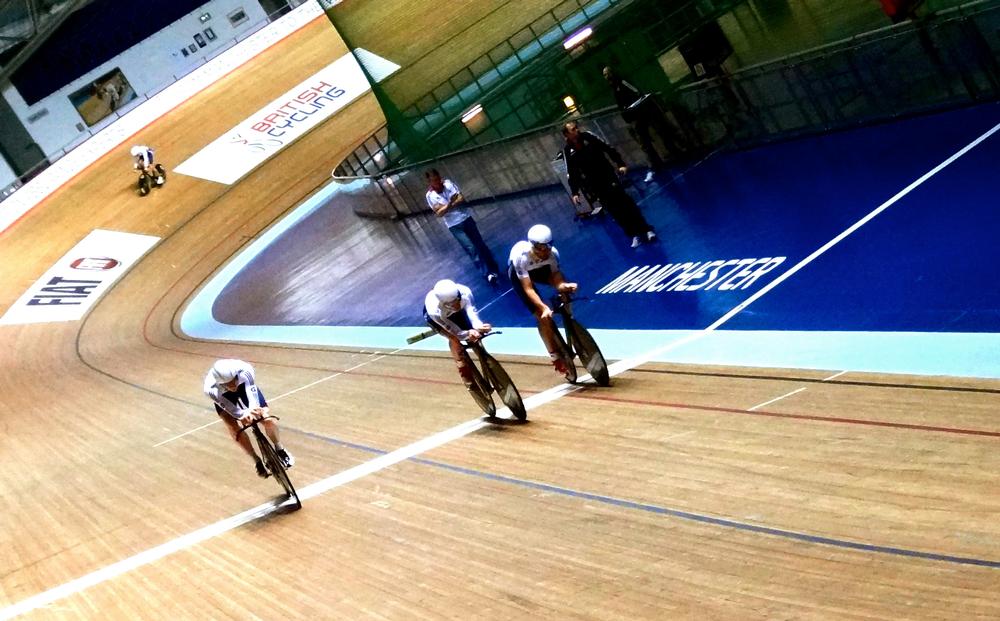
The successful National Cycling Centre has been dubbed the ‘medal factory’
The performance of our GB Olympians and Paralympians in Rio was nothing short of astounding. Clearly much has to be attributed to the commitment and determination of the athletes and the essential support and funding from UK Sport throughout the Olympic cycle, but how important has the role of facilities been in this success?
I take pride in the fact that almost half the medalling Olympians based their training at facilities designed by FaulknerBrowns. These include EIS Sheffield, Lee Valley White Water Centre, Weymouth & Portland National Sailing Academy and The National Cycling Centre, Manchester.
The medal factory The latter has even been dubbed the ‘medal factory’, such is the facility’s success year-on-year in producing winning athletes. The analogy used here is an interesting one to explore. Typically, when we think of the term ‘factory’ we imagine a building that receives raw materials and applies a controlled sequence of processes to create an end product. Experts in white coats analyse the process to search for incremental improvements and innovations that provide further efficiencies.
Specialist expertise If we substitute the term ‘raw materials’ for ‘talented medal prospects’, and apply a dedicated four year training process, then the end products we achieve are medal winners. As with the industrial analogy, the role of specialist expertise in the search for incremental improvement has proven key to the success of Britain’s athletes.
This is evident in the design of our ‘medal factories’. The sawtooth roof at EIS Sheffield, which nods to the industrial aesthetic of the Don Valley, may give it the appearance of a factory; however, it’s the innovation inside that makes the difference. This facility, and others like it, were built with attention paid to the needs of athletes, the fields of play and supporting areas such as sports science.
Inherent in these designs is the flexibility to accommodate technological advances and changes in training approach, as our understanding evolves.
It’s easy to get carried away when we talk about sports factories and the success of our athletes, but it’s also important to consider how this fits with the Sporting Futures strategy and a more holistic view of community sport and wellbeing.
Community use The reality is that even the hardest working factories for sport have significant amounts of community usage. The secret lies in formulating an approach which allows for the needs of both to be met, with the flexibility to allow different skill bases to coexist in the same building.
While this formula is forever being refined, we have two major facilities opening soon which embody this synergy – the National Indoor Arena in Dublin and Sportcampus Zuiderpark in The Hague. Both are a major base for performance sport and it will be interesting to see if the Dutch and Irish enjoy similar success.
Just like a factory owner, as an industry we must challenge our understanding of the product we produce, to develop innovations that can bring tangible benefits.
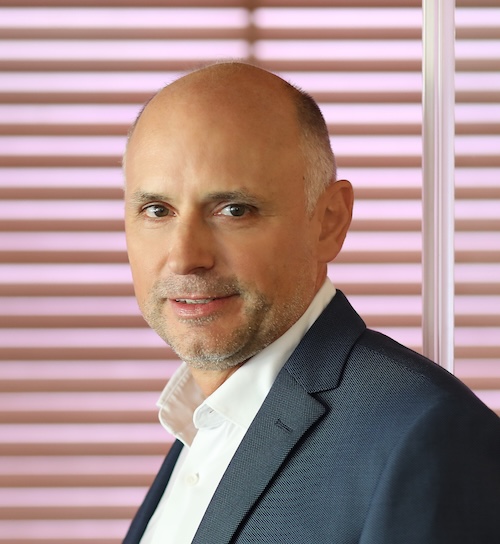
Mike Hall is a partner at architecture practice FaulknerBrowns.
In the fast-paced world of fitness and wellness, where high-intensity workouts push us to
our limits and the sweat pours, the importance of efficient recovery cannot be overstated. [more...]
The successful National Cycling Centre has been dubbed the ‘medal factory’
The performance of our GB Olympians and Paralympians in Rio was nothing short of astounding. Clearly much has to be attributed to the commitment and determination of the athletes and the essential support and funding from UK Sport throughout the Olympic cycle, but how important has the role of facilities been in this success?
I take pride in the fact that almost half the medalling Olympians based their training at facilities designed by FaulknerBrowns. These include EIS Sheffield, Lee Valley White Water Centre, Weymouth & Portland National Sailing Academy and The National Cycling Centre, Manchester.
The medal factory The latter has even been dubbed the ‘medal factory’, such is the facility’s success year-on-year in producing winning athletes. The analogy used here is an interesting one to explore. Typically, when we think of the term ‘factory’ we imagine a building that receives raw materials and applies a controlled sequence of processes to create an end product. Experts in white coats analyse the process to search for incremental improvements and innovations that provide further efficiencies.
Specialist expertise If we substitute the term ‘raw materials’ for ‘talented medal prospects’, and apply a dedicated four year training process, then the end products we achieve are medal winners. As with the industrial analogy, the role of specialist expertise in the search for incremental improvement has proven key to the success of Britain’s athletes.
This is evident in the design of our ‘medal factories’. The sawtooth roof at EIS Sheffield, which nods to the industrial aesthetic of the Don Valley, may give it the appearance of a factory; however, it’s the innovation inside that makes the difference. This facility, and others like it, were built with attention paid to the needs of athletes, the fields of play and supporting areas such as sports science.
Inherent in these designs is the flexibility to accommodate technological advances and changes in training approach, as our understanding evolves.
It’s easy to get carried away when we talk about sports factories and the success of our athletes, but it’s also important to consider how this fits with the Sporting Futures strategy and a more holistic view of community sport and wellbeing.
Community use The reality is that even the hardest working factories for sport have significant amounts of community usage. The secret lies in formulating an approach which allows for the needs of both to be met, with the flexibility to allow different skill bases to coexist in the same building.
While this formula is forever being refined, we have two major facilities opening soon which embody this synergy – the National Indoor Arena in Dublin and Sportcampus Zuiderpark in The Hague. Both are a major base for performance sport and it will be interesting to see if the Dutch and Irish enjoy similar success.
Just like a factory owner, as an industry we must challenge our understanding of the product we produce, to develop innovations that can bring tangible benefits.
Mike Hall is a partner at architecture practice FaulknerBrowns.
The Standards Authority for Touch in Cancer Care (SATCC) charity has announced its first five-
day Living with Cancer and Beyond retreat, which will be held at Carden Park Hotel and Spa in
Cheshire, UK, between 1 and 5 September.
Patmos Aktis, a Luxury Collection Resort and Spa, has opened in Greece, with a renovated and
rebranded wellness offering called Ansana Wellness and Spa.
The Mauna Kea Beach Hotel, an Autograph Collection property in Hawaii, US, has opened its
22,000 sq ft indoor-outdoor Spa at Mauna Kea as the final step in the property’s overall
renovation, which has cost more than US$180 million (€166 million, £140 mill
The UK spa review and discovery platform for consumers, the Good Spa Guide, has announced
it will host the Good Spa Guide Awards 2026 during an event on 16 November at Sopwell House
Hotel in St Albans, UK.
Eighty-four per cent of consumers now say wellness is a top priority in their lives, with this
percentage increasing year on year, according to a preview presentation of McKinsey’s Future of
Wellness 2026 research report.
Mass protests have been taking place since Monday 1 June in Albania over the development of
a luxury resort by Donald Trump’s daughter Ivanka Trump and her husband Jared Kushner.
Global Wellness Day (GWD) marked its 15th anniversary on Saturday 13 June 2026, with the
theme: #JoyMagenta – a celebration of the healing qualities of simple gestures and activities
that spark joy.
Global luxury hospitality brand, Six Senses, has partnered with longevity healthcare provider,
HUM2N, to launch a clinic at Six Senses London, at The Whiteley.
As part of its first hotel partnership, Mayrlife – the medical health resort company known for its
site in Altaussee, Austria – has launched a day clinic at the Rosewood Vienna.
Premium London health club, KX Chelsea, will imminently unveil its most significant
redevelopment since its launch in 2002 to create an integrated wellness model combining
training, recovery and relaxation.
In the fast-paced world of fitness and wellness, where high-intensity workouts push us to
our limits and the sweat pours, the importance of efficient recovery cannot be overstated. [more...]