Yes! Send me the FREE digital editions of Spa Business and Spa Business insider magazines and the FREE weekly Spa Business and Spa Business insider ezines and breaking news alerts!
Following the release of a new report on mental health in the workplace, ukactive’s public affairs director Huw Edwards, highlights physical activity’s role in workplace wellbeing
By Huw Edwards | Published in Health Club Management 2017 issue 11
Employees who exercise can experience better mental wellbeing at home and work / shutterstock
There has been a lot of fanfare and attention on the much-needed new report into mental wellbeing in the workplace, Thriving at Work, led by Paul Farmer, CEO of the mental health charity Mind, and Lord Dennis Stevenson. The attention is fully merited as the report thoroughly sets out the occupational impact of mental illness and proposes solutions that employers are able to implement.
THE FINANCIAL IMPACT According to the report, the annual cost of poor mental health to the UK economy is up to £99bn, of which about £42bn is borne by employers. The authors found that approximately 15 per cent of people at work have symptoms of an existing mental health condition, suggesting that, given the right support, they can thrive in employment.
The report also links current failures to the UK’s relatively poor productivity. An analysis by Deloitte, examining existing workplace mental health interventions, identified the potential to generate a return to business of between £1.50 and £9 for every £1 invested.
MAKING A PLAN This is a comprehensive piece of work and should be welcomed. It comes up with worthy suggestions for change: open conversations about mental health in the workplace, monitoring employee mental health and wellbeing, and developing an effective mental health at work plan.
It also wants to make Statutory Sick Pay more flexible to help with a phased return to work for those who are starting to recover from an illness, and for employers to accept sick notes from mental health nurses as well as doctors.
One observation is that the weight of expectation does fall heavily on the employer, so can the government do more by providing a better landscape to encourage employers further?
THE ROLE OF PHYSICAL ACTIVITY What the report doesn’t address is the role of physical activity in this vision, which is surprising given that the government has already acknowledged the significant part our sector has to play in this agenda. Sporting Future outlines the government’s clear commitment to “work with others to establish a network of employers that will bring together organisations keen to support and encourage their staff to be more physically active”.
Two years on, we await news on the development of this network, knowing that both the physical activity and business sectors remain keen to support its development. Furthermore, the government has the ability to use the tax system to create incentives that help workers access gym membership and home equipment deals, a case we at ukactive continue to make to it.
The connection of this commitment back to the report is clear: evidence shows that people who exercise regularly have improved self-esteem and reduced stress and anxiety, something that has been recognised within NICE guidelines. The workplace should be no different.
It’s time for the government to show greater emphasis on delivering a partnership between the business community and our sector, so the role of physical activity in supporting mental wellbeing is fully recognised and utilised.
Le Atelier by C.O.D.E. doesn't offer a standard bespoke service, it provides a highly
customised approach to designing massage beds and loungers in high-end wellness
environments. [more...]
+ More featured suppliers
COMPANY PROFILES
Saskia Spa
Founded in 2014, Saskia Spa continues to evolve as a professional luxury skincare brand. It forms pa [more...]
Following the release of a new report on mental health in the workplace, ukactive’s public affairs director Huw Edwards, highlights physical activity’s role in workplace wellbeing
By Huw Edwards | Published in Health Club Management 2017 issue 11
Employees who exercise can experience better mental wellbeing at home and work / shutterstock
There has been a lot of fanfare and attention on the much-needed new report into mental wellbeing in the workplace, Thriving at Work, led by Paul Farmer, CEO of the mental health charity Mind, and Lord Dennis Stevenson. The attention is fully merited as the report thoroughly sets out the occupational impact of mental illness and proposes solutions that employers are able to implement.
THE FINANCIAL IMPACT According to the report, the annual cost of poor mental health to the UK economy is up to £99bn, of which about £42bn is borne by employers. The authors found that approximately 15 per cent of people at work have symptoms of an existing mental health condition, suggesting that, given the right support, they can thrive in employment.
The report also links current failures to the UK’s relatively poor productivity. An analysis by Deloitte, examining existing workplace mental health interventions, identified the potential to generate a return to business of between £1.50 and £9 for every £1 invested.
MAKING A PLAN This is a comprehensive piece of work and should be welcomed. It comes up with worthy suggestions for change: open conversations about mental health in the workplace, monitoring employee mental health and wellbeing, and developing an effective mental health at work plan.
It also wants to make Statutory Sick Pay more flexible to help with a phased return to work for those who are starting to recover from an illness, and for employers to accept sick notes from mental health nurses as well as doctors.
One observation is that the weight of expectation does fall heavily on the employer, so can the government do more by providing a better landscape to encourage employers further?
THE ROLE OF PHYSICAL ACTIVITY What the report doesn’t address is the role of physical activity in this vision, which is surprising given that the government has already acknowledged the significant part our sector has to play in this agenda. Sporting Future outlines the government’s clear commitment to “work with others to establish a network of employers that will bring together organisations keen to support and encourage their staff to be more physically active”.
Two years on, we await news on the development of this network, knowing that both the physical activity and business sectors remain keen to support its development. Furthermore, the government has the ability to use the tax system to create incentives that help workers access gym membership and home equipment deals, a case we at ukactive continue to make to it.
The connection of this commitment back to the report is clear: evidence shows that people who exercise regularly have improved self-esteem and reduced stress and anxiety, something that has been recognised within NICE guidelines. The workplace should be no different.
It’s time for the government to show greater emphasis on delivering a partnership between the business community and our sector, so the role of physical activity in supporting mental wellbeing is fully recognised and utilised.
The Standards Authority for Touch in Cancer Care (SATCC) charity has announced its first five-
day Living with Cancer and Beyond retreat, which will be held at Carden Park Hotel and Spa in
Cheshire, UK, between 1 and 5 September.
Patmos Aktis, a Luxury Collection Resort and Spa, has opened in Greece, with a renovated and
rebranded wellness offering called Ansana Wellness and Spa.
The Mauna Kea Beach Hotel, an Autograph Collection property in Hawaii, US, has opened its
22,000 sq ft indoor-outdoor Spa at Mauna Kea as the final step in the property’s overall
renovation, which has cost more than US$180 million (€166 million, £140 mill
The UK spa review and discovery platform for consumers, the Good Spa Guide, has announced
it will host the Good Spa Guide Awards 2026 during an event on 16 November at Sopwell House
Hotel in St Albans, UK.
Eighty-four per cent of consumers now say wellness is a top priority in their lives, with this
percentage increasing year on year, according to a preview presentation of McKinsey’s Future of
Wellness 2026 research report.
Mass protests have been taking place since Monday 1 June in Albania over the development of
a luxury resort by Donald Trump’s daughter Ivanka Trump and her husband Jared Kushner.
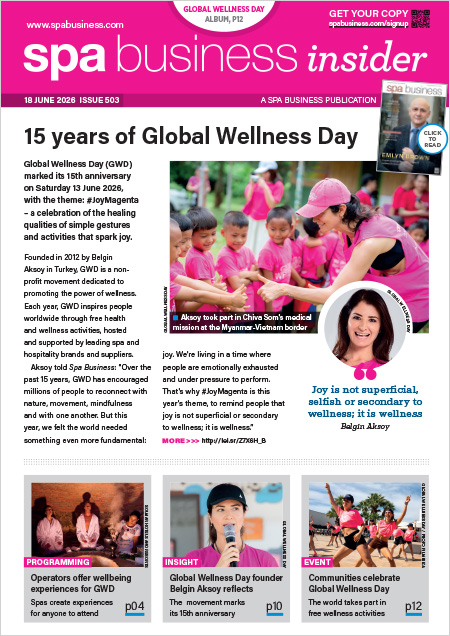
Global Wellness Day (GWD) marked its 15th anniversary on Saturday 13 June 2026, with the
theme: #JoyMagenta – a celebration of the healing qualities of simple gestures and activities
that spark joy.
Global luxury hospitality brand, Six Senses, has partnered with longevity healthcare provider,
HUM2N, to launch a clinic at Six Senses London, at The Whiteley.
As part of its first hotel partnership, Mayrlife – the medical health resort company known for its
site in Altaussee, Austria – has launched a day clinic at the Rosewood Vienna.
Premium London health club, KX Chelsea, will imminently unveil its most significant
redevelopment since its launch in 2002 to create an integrated wellness model combining
training, recovery and relaxation.
Le Atelier by C.O.D.E. doesn't offer a standard bespoke service, it provides a highly
customised approach to designing massage beds and loungers in high-end wellness
environments. [more...]
+ More featured suppliers
COMPANY PROFILES
Saskia Spa Founded in 2014, Saskia Spa continues to evolve as a professional luxury skincare brand. It forms pa [more...]