A new documentary film, The Game Changers, dispels the myth that meat is the best type of protein to build muscle mass or to power the body of an elite athlete. How much protein should we be eating and from which sources, and are protein supplements necessary? Kath Hudson reports
By Kath Hudson | Published in Health Club Management 2019 issue 2
On average in the UK, people eat almost twice as much protein as they need, says the British Heart Foundation / shutterstock
While there is wide public awareness, even an aversion, to both fat and carbs, protein has generally enjoyed the reputation of being a great food, especially among the gym-going population. Frequently, people who are training believe they need to load up on protein in order to both gain muscle mass, and speed up recovery. What they probably don’t realise is they are eating too much of it and that, depending on the sources, it could be detrimental to their health, or simply a waste of money.
When I took up triathlon I started drinking recovery drinks every time I exercised, regardless of the length or intensity, because I feared my pescatarian diet was inadequate. I now realise this was unnecessary and actually led to weight gain. Half a tin of tuna along with the milk I have on cereal was more than enough to support my training. How many other gym goers are making the same mistake? And although protein shakes are a great source of secondary income for gyms, are they being sold to people who don’t need them?
The Game Changers film is illuminating, dispelling the protein myth and showing what elite athletes can achieve without animal protein in their diet. There is a serious side to this debate: as there is growing evidence to show that animal protein can lead to kidney disease, cancer and osteoporosis, operators need to be very careful about the recommendations they are making.
Victoria Taylor, British Heart Foundation: senior dietitian
Justin Mendleton
Eating too much protein isn’t automatically a problem, but it does depend on the source. There is a large amount of research linking high consumption of red and processed meat with bowel cancer and a growing amount of evidence that links it to stomach and pancreatic cancer. Therefore, it is a good idea to limit red and processed meat and to increase protein from plant-based sources, like peas, beans and lentils, plus two portions of fish a week.
In the UK, on average, we eat almost double the protein we need. The average woman needs about 45g a day and men need 55g. It’s roughly the equivalent of two portions of meat, fish, tofu or nuts per day.
The Mediterranean diet, which is often associated with helping to prevent heart and circulatory disease, includes only small amounts of meat, with more emphasis on plant-based protein sources”
Higher consumption of meat has been linked to increased risks of coronary heart disease, diabetes, some cancers and a shorter life span. The Mediterranean diet, which is often associated with helping to prevent heart and circulatory disease, includes only small amounts of meat, with more emphasis on plant-based protein sources.
James Wilks, The Game Changers movie: producer and elite athlete
James Wilks
We often think of protein as if it were isolated, but it comes as part of a package. Animal protein comes with an array of harmful compounds. Some are well-known (i.e. saturated fat, cholesterol) and others less so (i.e. bacterial endotoxins, heterocyclic amines), but all are problematic. Plant protein also comes in a package with well-known (i.e. fibre, vitamin C) and less known compounds (i.e. flavonoids, lignans), but in this case, all players promote health.
Rather than demonise or deify all dietary protein, it serves us to dig one layer deeper and question the source. While research demonstrates that diets heavy in animal protein increase risk of disease, people who eat more plant protein gain protection.
To illustrate, a 2014 study in Cell Metabolism found that middle-aged men and women who ate the most animal protein increased their overall risk of death by 75 per cent and their risk of death from cancer and diabetes by 400 per cent. Plant protein on the other hand, had no such effect.
“Rather than demonise or deify all dietary protein, it serves us to dig one layer deeper and question the source”
Protein rebuilds muscle and, when sourced appropriately, confers benefits to health club patrons. Facilities can offer plant-based protein shakes, increasing profits and the health of its members alike, but offering milk-based products undermines this synergy. To quote the title of a 2009 paper from Free Radical Biology & Medicine, “Antioxidant activity of blueberry fruit is impaired by association with milk.”
Antioxidants promote recovery and bolster health, so blocking their absorption helps no one. Since exercising individuals seek out protein following a workout, offer them a plant-based source to support everyone’s bottom line.
Professor Philip J Atherton, University of Nottingham: chair of clinical, metabolic and molecular physiology
Professor Philip J Atherton
There is evidence to suggest that taking some form of protein supplement can have a positive effect on muscle mass gains, and perhaps recovery in response to exercise training. However, there is very limited research to definitively prove how much people should consume in addition to their existing diet.
If they are already eating sufficient protein, a supplement will likely be pointless. The body can only store a finite amount of protein and if the muscles are beyond the threshold of utilisation for a given meal, the excess protein will be diverted away, broken down and excreted.
“There is very limited research to definitively prove how much people should consume in addition to their existing diet. If they are already eating sufficient protein, a supplement will likely be pointless”
Many people are unaware of exactly how much protein they consume each day and the only way gym operators can practically assess this in order to appropriately recommend supplements (in the face of insufficient intake) is to ask their members to fill in a food diary. I’d advise people to go back to the fundamentals and gain an awareness of how much protein they have in their diet and ensure it’s in line with current guidelines.
Although there is some research that links eating protein to cancer, because of claims of stimulating cancer cells, or causing osteoporosis by leaching bone minerals, most of the ‘evidence’ is built around theoretical frameworks and scant epidemiology.
Jason Fligg, Sport and Exercise Performance: founder and performance nutritionist
Jason Fligg
My clients often show signs of misguidance concerning protein intake. Frequently, they are under-eating on their recommended daily intake for protein and to meet the physiological demands of their sport.
Nutrition is highly individualised and should be tailored for goals and specific targets, such as reducing body fat or increasing lean muscle tissue, and protein intake should reflect this.
Higher amounts of protein intake are required for the athletic population, particularly those participating in resistance and endurance based exercise. This is due to the stress on the body during intense exercise bouts, requiring an increase in protein to synthesise new muscle and repair muscle damage.
“Although supplements do serve a purpose they should be consumed with the risks highlighted to the athlete and not presented as magic potions”
As a performance nutritionist and a UK anti-doping advisor, I always look to promote a food first approach with my clients/athletes, promoting the consumption of a nutrient-rich diet and significantly reducing the risk of doping offences.
Although supplements do serve a purpose, they should be consumed with the risks highlighted to the athlete and not presented as magic potions, transforming you to where you want to go quicker.
To see real gains, people need a consistent nutrient-rich dietary consumption, tailored to their goals. I focus on helping my clients make lifestyle changes, as well as educating them on supplement use and informing them of food-first approaches.
Since everyone needs an individualised approach, clients seeking changes to their body composition should be signposted to registered nutritionists or dieticians.
Kiri Elliott, British Dietetic Association: senior dietitian & spokesperson
Kiri Elliott
There tends to be high protein consumption among young gym goers, especially those looking to gain muscle mass. They often believe they are not getting adequate protein from their diet and that the vitamins and minerals in supplements are also beneficial.
Active people do require more protein than sedentary people, so we recommend the consumption of between 1.2g and 1.6g per kilo of bodyweight each day for people who are regularly working out. A small number of people including some elite athletes or those who are training very intensely may even require more than this.
Extra protein is not used efficiently by the body and is excreted. Whilst there is some research that shows high intakes could impose a burden on the bones, kidneys and liver, risks of calcium in urine and bone fracture are associated with high intakes of protein when the protein is from animal sources rather than vegetable sources.
“It’s worth remembering that although high intakes of red meat are also associated with certain cancers, red meat is a good source of a variety of nutrients so can form part of a healthy, balanced diet, we just don’t need to eat it every day”
Research in New Zealand, for their national guidelines, showed there were no long term risks posed to people’s health when eating up to 2.8g of protein per kilo of bodyweight. It would be hard to consume that amount of protein without supplements. Further investigation with large randomised controlled studies could provide more definitive evidence on health risks of high protein diets. It’s worth remembering that although high intakes of red meat are also associated with certain cancers, red meat is a good source of a variety of nutrients so can form part of a healthy, balanced diet, we just don’t need to eat it every day. Aim to eat no more than about three portions a week, which is around 350–500g cooked weight a week.
Our advice would always be to get protein from food sources first, however other factors do need to be taken into account. If people are busy and training multiple times a week, then it could be more convenient to have a protein supplement as opposed to real food, especially as there is a short window after exercise when it is optimum to take on protein to rebuild muscle.
The use of protein supplements when exercising to lose weight can also help to build lean tissue and to lose fat mass rather than muscle mass.
While animal products offer high levels of protein, eating too much has been associated with an increased risk of disease PHOTO: SHUTTERSTOCK
A new documentary film, The Game Changers, dispels the myth that meat is the best type of protein to build muscle mass or to power the body of an elite athlete. How much protein should we be eating and from which sources, and are protein supplements necessary? Kath Hudson reports
By Kath Hudson | Published in Health Club Management 2019 issue 2
On average in the UK, people eat almost twice as much protein as they need, says the British Heart Foundation / shutterstock
While there is wide public awareness, even an aversion, to both fat and carbs, protein has generally enjoyed the reputation of being a great food, especially among the gym-going population. Frequently, people who are training believe they need to load up on protein in order to both gain muscle mass, and speed up recovery. What they probably don’t realise is they are eating too much of it and that, depending on the sources, it could be detrimental to their health, or simply a waste of money.
When I took up triathlon I started drinking recovery drinks every time I exercised, regardless of the length or intensity, because I feared my pescatarian diet was inadequate. I now realise this was unnecessary and actually led to weight gain. Half a tin of tuna along with the milk I have on cereal was more than enough to support my training. How many other gym goers are making the same mistake? And although protein shakes are a great source of secondary income for gyms, are they being sold to people who don’t need them?
The Game Changers film is illuminating, dispelling the protein myth and showing what elite athletes can achieve without animal protein in their diet. There is a serious side to this debate: as there is growing evidence to show that animal protein can lead to kidney disease, cancer and osteoporosis, operators need to be very careful about the recommendations they are making.
Victoria Taylor, British Heart Foundation: senior dietitian
Justin Mendleton
Eating too much protein isn’t automatically a problem, but it does depend on the source. There is a large amount of research linking high consumption of red and processed meat with bowel cancer and a growing amount of evidence that links it to stomach and pancreatic cancer. Therefore, it is a good idea to limit red and processed meat and to increase protein from plant-based sources, like peas, beans and lentils, plus two portions of fish a week.
In the UK, on average, we eat almost double the protein we need. The average woman needs about 45g a day and men need 55g. It’s roughly the equivalent of two portions of meat, fish, tofu or nuts per day.
The Mediterranean diet, which is often associated with helping to prevent heart and circulatory disease, includes only small amounts of meat, with more emphasis on plant-based protein sources”
Higher consumption of meat has been linked to increased risks of coronary heart disease, diabetes, some cancers and a shorter life span. The Mediterranean diet, which is often associated with helping to prevent heart and circulatory disease, includes only small amounts of meat, with more emphasis on plant-based protein sources.
James Wilks, The Game Changers movie: producer and elite athlete
James Wilks
We often think of protein as if it were isolated, but it comes as part of a package. Animal protein comes with an array of harmful compounds. Some are well-known (i.e. saturated fat, cholesterol) and others less so (i.e. bacterial endotoxins, heterocyclic amines), but all are problematic. Plant protein also comes in a package with well-known (i.e. fibre, vitamin C) and less known compounds (i.e. flavonoids, lignans), but in this case, all players promote health.
Rather than demonise or deify all dietary protein, it serves us to dig one layer deeper and question the source. While research demonstrates that diets heavy in animal protein increase risk of disease, people who eat more plant protein gain protection.
To illustrate, a 2014 study in Cell Metabolism found that middle-aged men and women who ate the most animal protein increased their overall risk of death by 75 per cent and their risk of death from cancer and diabetes by 400 per cent. Plant protein on the other hand, had no such effect.
“Rather than demonise or deify all dietary protein, it serves us to dig one layer deeper and question the source”
Protein rebuilds muscle and, when sourced appropriately, confers benefits to health club patrons. Facilities can offer plant-based protein shakes, increasing profits and the health of its members alike, but offering milk-based products undermines this synergy. To quote the title of a 2009 paper from Free Radical Biology & Medicine, “Antioxidant activity of blueberry fruit is impaired by association with milk.”
Antioxidants promote recovery and bolster health, so blocking their absorption helps no one. Since exercising individuals seek out protein following a workout, offer them a plant-based source to support everyone’s bottom line.
Professor Philip J Atherton, University of Nottingham: chair of clinical, metabolic and molecular physiology
Professor Philip J Atherton
There is evidence to suggest that taking some form of protein supplement can have a positive effect on muscle mass gains, and perhaps recovery in response to exercise training. However, there is very limited research to definitively prove how much people should consume in addition to their existing diet.
If they are already eating sufficient protein, a supplement will likely be pointless. The body can only store a finite amount of protein and if the muscles are beyond the threshold of utilisation for a given meal, the excess protein will be diverted away, broken down and excreted.
“There is very limited research to definitively prove how much people should consume in addition to their existing diet. If they are already eating sufficient protein, a supplement will likely be pointless”
Many people are unaware of exactly how much protein they consume each day and the only way gym operators can practically assess this in order to appropriately recommend supplements (in the face of insufficient intake) is to ask their members to fill in a food diary. I’d advise people to go back to the fundamentals and gain an awareness of how much protein they have in their diet and ensure it’s in line with current guidelines.
Although there is some research that links eating protein to cancer, because of claims of stimulating cancer cells, or causing osteoporosis by leaching bone minerals, most of the ‘evidence’ is built around theoretical frameworks and scant epidemiology.
Jason Fligg, Sport and Exercise Performance: founder and performance nutritionist
Jason Fligg
My clients often show signs of misguidance concerning protein intake. Frequently, they are under-eating on their recommended daily intake for protein and to meet the physiological demands of their sport.
Nutrition is highly individualised and should be tailored for goals and specific targets, such as reducing body fat or increasing lean muscle tissue, and protein intake should reflect this.
Higher amounts of protein intake are required for the athletic population, particularly those participating in resistance and endurance based exercise. This is due to the stress on the body during intense exercise bouts, requiring an increase in protein to synthesise new muscle and repair muscle damage.
“Although supplements do serve a purpose they should be consumed with the risks highlighted to the athlete and not presented as magic potions”
As a performance nutritionist and a UK anti-doping advisor, I always look to promote a food first approach with my clients/athletes, promoting the consumption of a nutrient-rich diet and significantly reducing the risk of doping offences.
Although supplements do serve a purpose, they should be consumed with the risks highlighted to the athlete and not presented as magic potions, transforming you to where you want to go quicker.
To see real gains, people need a consistent nutrient-rich dietary consumption, tailored to their goals. I focus on helping my clients make lifestyle changes, as well as educating them on supplement use and informing them of food-first approaches.
Since everyone needs an individualised approach, clients seeking changes to their body composition should be signposted to registered nutritionists or dieticians.
Kiri Elliott, British Dietetic Association: senior dietitian & spokesperson
Kiri Elliott
There tends to be high protein consumption among young gym goers, especially those looking to gain muscle mass. They often believe they are not getting adequate protein from their diet and that the vitamins and minerals in supplements are also beneficial.
Active people do require more protein than sedentary people, so we recommend the consumption of between 1.2g and 1.6g per kilo of bodyweight each day for people who are regularly working out. A small number of people including some elite athletes or those who are training very intensely may even require more than this.
Extra protein is not used efficiently by the body and is excreted. Whilst there is some research that shows high intakes could impose a burden on the bones, kidneys and liver, risks of calcium in urine and bone fracture are associated with high intakes of protein when the protein is from animal sources rather than vegetable sources.
“It’s worth remembering that although high intakes of red meat are also associated with certain cancers, red meat is a good source of a variety of nutrients so can form part of a healthy, balanced diet, we just don’t need to eat it every day”
Research in New Zealand, for their national guidelines, showed there were no long term risks posed to people’s health when eating up to 2.8g of protein per kilo of bodyweight. It would be hard to consume that amount of protein without supplements. Further investigation with large randomised controlled studies could provide more definitive evidence on health risks of high protein diets. It’s worth remembering that although high intakes of red meat are also associated with certain cancers, red meat is a good source of a variety of nutrients so can form part of a healthy, balanced diet, we just don’t need to eat it every day. Aim to eat no more than about three portions a week, which is around 350–500g cooked weight a week.
Our advice would always be to get protein from food sources first, however other factors do need to be taken into account. If people are busy and training multiple times a week, then it could be more convenient to have a protein supplement as opposed to real food, especially as there is a short window after exercise when it is optimum to take on protein to rebuild muscle.
The use of protein supplements when exercising to lose weight can also help to build lean tissue and to lose fat mass rather than muscle mass.
While animal products offer high levels of protein, eating too much has been associated with an increased risk of disease PHOTO: SHUTTERSTOCK
People taking GLP-1 weight loss medications such as Ozempic, Wegovy, Mounjaro and Zepbound
may be losing weight, but they’re also becoming less physically active, according to new
research presented at the ENDO 2026 annual meeting of the Endocrine Society
Abu Dhabi-based investment firm Mubadala Capital has made a binding, fully financed
€1 billion
offer to acquire Pierre and Vacances SA, the European holiday resort operator behind the
continental European Center Parcs business.
Global retreat trade show, Synergy The Retreat Show, has launched a resource called The
Source, which hosts an open-access online Transformation Series programme.
The Standards Authority for Touch in Cancer Care (SATCC) charity has announced its first five-
day Living with Cancer and Beyond retreat, which will be held at Carden Park Hotel and Spa in
Cheshire, UK, between 1 and 5 September.
Patmos Aktis, a Luxury Collection Resort and Spa, has opened in Greece, with a renovated and
rebranded wellness offering called Ansana Wellness and Spa.
The Mauna Kea Beach Hotel, an Autograph Collection property in Hawaii, US, has opened its
22,000 sq ft indoor-outdoor Spa at Mauna Kea as the final step in the property’s overall
renovation, which has cost more than US$180 million (€166 million, £140 mill
The UK spa review and discovery platform for consumers, the Good Spa Guide, has announced
it will host the Good Spa Guide Awards 2026 during an event on 16 November at Sopwell House
Hotel in St Albans, UK.
Eighty-four per cent of consumers now say wellness is a top priority in their lives, with this
percentage increasing year on year, according to a preview presentation of McKinsey’s Future of
Wellness 2026 research report.
Mass protests have been taking place since Monday 1 June in Albania over the development of
a luxury resort by Donald Trump’s daughter Ivanka Trump and her husband Jared Kushner.
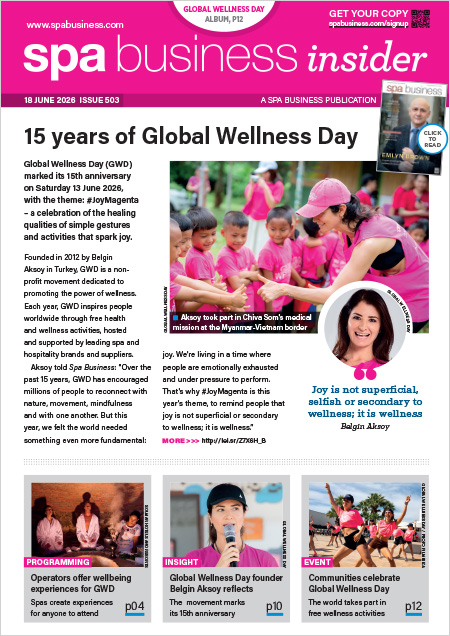
Global Wellness Day (GWD) marked its 15th anniversary on Saturday 13 June 2026, with the
theme: #JoyMagenta – a celebration of the healing qualities of simple gestures and activities
that spark joy.