Yes! Send me the FREE digital editions of Spa Business and Spa Business insider magazines and the FREE weekly Spa Business and Spa Business insider ezines and breaking news alerts!
The number of inactive children is slowly decreasing – by 3.9 per cent over the past year
Almost half of children and young people (46.8 per cent) in England are currently doing the recommended average of 60 or more minutes of physical activity a day.
The figure, from the second annual Active Lives Children and Young People Survey, shows there has been a rise of 3.6 per cent in the number of active children over the last year.
In total, 3.3 million children are now meeting the new recommended Chief Medical Officer Guidelines – an increase of 279,600 when compared with 2018. Crucially, the figures show that there has been a rise in children getting active outside of school, with 57 per cent now doing an average of 30 minutes or more a day outside of school (up 4.6 per cent in the last year), compared to 40 per cent being active at school. Activities that have seen a particular increase in popularity outside of school include active play, team sports and walking. At the other end of the scale, 2.1 million children and young people (29.0 per cent) are doing less than 30 minutes of physical activity a day. This means that the number of inactive children is slowly decreasing – by 3.9 per cent over the last year. Another 1.7 million (24.2 per cent) children are ‘fairly active’ taking part in average of 30-59 minutes a day.
There is a persistent inequality factor in activity levels, with children from the most affluent families more active (54 per cent) compared to the least affluent families (42 per cent) – while boys remain more active than girls at every age from five up.
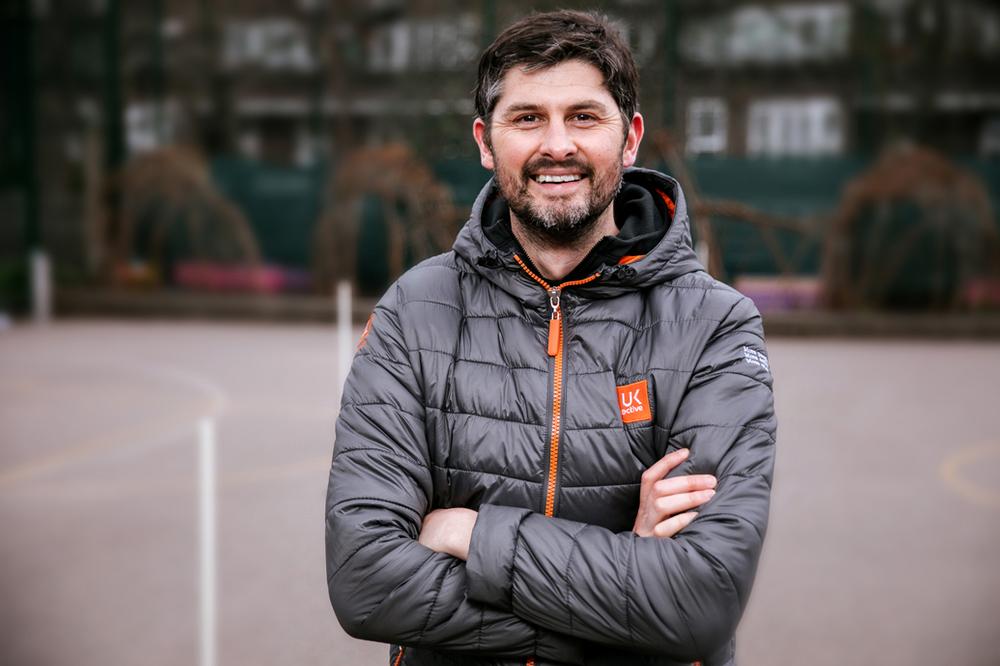
Commenting on the figures, Jack Shakespeare, director of children, families and research at ukactive, said the figures show that increasing exercise opportunities outside of school is working.
"The report shows that out-of-school provision is helping children to be more active," he said. "ukactive’s members are clearly playing a lead role in delivering out-of-school provision and we remain committed to working side by side with Sport England to make this available to all, regardless of gender, race or affluence."
Shakespeare added, however, that the persistent gaps in activity levels that remain between genders – and affluence – need to be addressed.
"While it is positive to learn that activity levels are increasing for some children and young people, it is clear that stark inequalities remain entrenched for many children across the UK. It is unacceptable that physical activity levels are lower among girls, children from poorer backgrounds, and those who are black, Asian or from a minority ethnic group.
"The new Tory government must make physical activity opportunities for all children and young people an urgent priority, not just for the physical health of the next generation but for their mental and social health too.
"Our research shows that during the summer holidays children’s fitness levels fall by around 74 per cent, and by even more in areas of high deprivation. However, 39 per cent of community sports facilities remain locked behind school gates. The government has a duty to protect the most vulnerable in society.”
The Spa Life UK Convention returns from 21–23 June 2026 at Whittlebury Park Hotel, Spa &
Golf Resort, bringing together spa managers, directors and owners for two days of focused
education, meaningful connection and commercial insight. [more...]
The number of inactive children is slowly decreasing – by 3.9 per cent over the past year
Almost half of children and young people (46.8 per cent) in England are currently doing the recommended average of 60 or more minutes of physical activity a day.
The figure, from the second annual Active Lives Children and Young People Survey, shows there has been a rise of 3.6 per cent in the number of active children over the last year.
In total, 3.3 million children are now meeting the new recommended Chief Medical Officer Guidelines – an increase of 279,600 when compared with 2018. Crucially, the figures show that there has been a rise in children getting active outside of school, with 57 per cent now doing an average of 30 minutes or more a day outside of school (up 4.6 per cent in the last year), compared to 40 per cent being active at school. Activities that have seen a particular increase in popularity outside of school include active play, team sports and walking. At the other end of the scale, 2.1 million children and young people (29.0 per cent) are doing less than 30 minutes of physical activity a day. This means that the number of inactive children is slowly decreasing – by 3.9 per cent over the last year. Another 1.7 million (24.2 per cent) children are ‘fairly active’ taking part in average of 30-59 minutes a day.
There is a persistent inequality factor in activity levels, with children from the most affluent families more active (54 per cent) compared to the least affluent families (42 per cent) – while boys remain more active than girls at every age from five up.
Commenting on the figures, Jack Shakespeare, director of children, families and research at ukactive, said the figures show that increasing exercise opportunities outside of school is working.
"The report shows that out-of-school provision is helping children to be more active," he said. "ukactive’s members are clearly playing a lead role in delivering out-of-school provision and we remain committed to working side by side with Sport England to make this available to all, regardless of gender, race or affluence."
Shakespeare added, however, that the persistent gaps in activity levels that remain between genders – and affluence – need to be addressed.
"While it is positive to learn that activity levels are increasing for some children and young people, it is clear that stark inequalities remain entrenched for many children across the UK. It is unacceptable that physical activity levels are lower among girls, children from poorer backgrounds, and those who are black, Asian or from a minority ethnic group.
"The new Tory government must make physical activity opportunities for all children and young people an urgent priority, not just for the physical health of the next generation but for their mental and social health too.
"Our research shows that during the summer holidays children’s fitness levels fall by around 74 per cent, and by even more in areas of high deprivation. However, 39 per cent of community sports facilities remain locked behind school gates. The government has a duty to protect the most vulnerable in society.”
Global Wellness Day (GWD) will mark its 15th anniversary on Saturday 13 June 2026, with the
theme: #JoyMagenta – a celebration of the healing qualities of simple gestures and activities
that spark joy.
Global luxury hospitality brand, Six Senses, has partnered with longevity healthcare provider,
HUM2N, to launch a clinic at Six Senses London, at The Whiteley.
As part of its first hotel partnership, Mayrlife – the medical health resort company known for its
site in Altaussee, Austria – has launched a day clinic at the Rosewood Vienna.
Premium London health club, KX Chelsea, will imminently unveil its most significant
redevelopment since its launch in 2002 to create an integrated wellness model combining
training, recovery and relaxation.
Rosewood Le Guanahani St Barth, on the northeast coast of Saint Barthélemy in the French
West Indies, is offering a programme of ocean-inspired yoga classes between 8-14 June to
celebrate Global Wellness Day (GWD).
Hotel de France, located on the British Isle of Jersey, has created a wellness retreat package
that includes a hot yoga session that will take place in Jersey Zoo’s butterfly sanctuary.
The Ritz-Carlton, Langkawi, in Malaysia, has revealed a schedule for Global Wellness Day
(GWD) that includes guided rainforest walks, mindful movement and guided coastal meditation
experiences.
Longevitix, a clinical platform for preventive and longevity medicine, has launched its AI-
powered intelligence system to help physicians deliver continuous, personalised longevity-
focused care at scale.
Atmantan Wellness Centre, an integrative wellness destination in Mulshi, near Pune in India, is
expanding its portfolio by adding a new centre in Hyderabad that will launch between 2028 and
2029.
A recent survey by the UK Spa Association (UKSA) into the industry’s approach to cancer care
has revealed that almost half of participating respondents (46 per cent) are unaware that
cancer is a disability and guests with a cancer diagnosis must be given
The Spa Life UK Convention returns from 21–23 June 2026 at Whittlebury Park Hotel, Spa &
Golf Resort, bringing together spa managers, directors and owners for two days of focused
education, meaningful connection and commercial insight. [more...]