In the aftermath of the pandemic, people will be more aware of the importance of their health and the strength of their immune system.
Can fit tech alert users to potential immunodeficiencies or symptoms? And might these products assist governments? We asked industry leaders for their predictions
Polar devices log a wide range of metrics, including heart rate variation and respiration
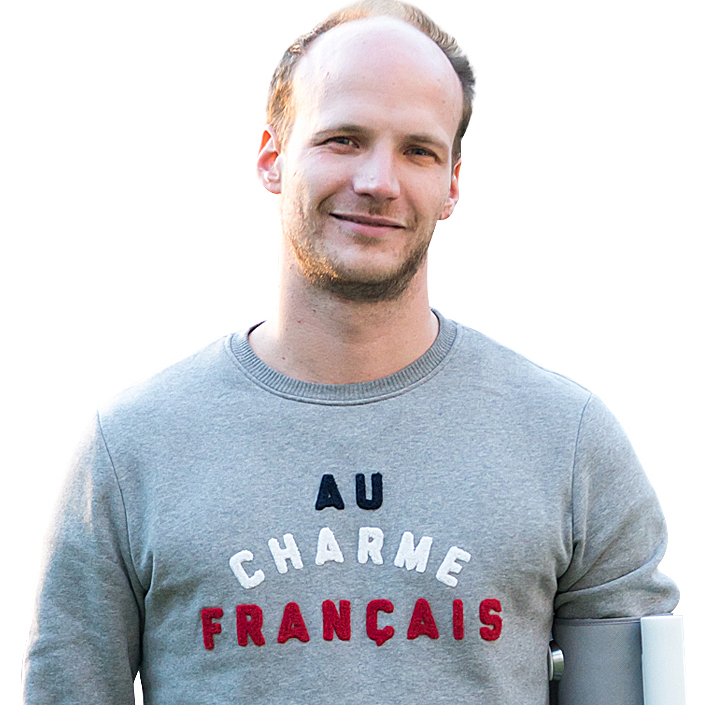
Tom Fowler, US president, Polar
The adoption of wearables to monitor health status was increasing pre-COVID-19 and the pandemic has been a massive catalyst for a greater shift in this direction.
Polar has seen this reflected in the volume of sales of devices and – importantly – in the data our users have been activating.
We’ve worked for years with pro athletes, coaches and scientists in the area of rest and recovery. This work has focused on optimising athletic performance.
It turns out that the data sets for these elite performers are identical to the data sets that can benefit the general consumer in terms of health maintenance.
Here’s an example of what is possible today with Polar devices. While you sleep, your device can monitor your resting heart rate (HR), heart rate variation (HRV) and respiration rate. You can compare each night’s numbers to your normal baseline. Is your HR lower or higher than normal? How about your HRV and respiration rate?
If you experience four or five days of truly bad numbers, this will be a strong indication that something is amiss. Perhaps it’s just a super-charged work schedule, too much caffeine and alcohol, or too much travelling. Or perhaps the root cause is that you’re incubating an illness that has yet to emerge. Either way, you can see that you need to take extra care of yourself.
At the government level, this is a key opportunity for controlling future pandemics.
I’m strongly optimistic that wearables are increasingly going
to be key tools in health, wellness and disease management
If large populations self-monitored and the system flagged deteriorating individuals before they became symptomatic, infected individuals could be tested, receive care and be quarantined before they unwittingly spread the contagion. Similarly, for frontline health workers, early identification of asymptomatic personnel could get them out of the rotation and into care early. This is exactly what Elysian Labs is doing, in partnership with Polar, for the US Army.
Today, we can measure HR, HRV, respiration rate, blood oxygenation and core temperature from commonly available devices. Add blood pressure to that mix and you have a powerful suite of biometrics. The data piece is relatively easy. The big question is how to properly interpret that data. What does a given data set mean for a single individual? How specific and bespoke can that guidance be?
Time will tell of course, but I’m strongly optimistic that wearables are increasingly going to be key tools in health, wellness and disease management.
Mathieu Letombe, CEO, Withings
With the current pandemic causing doctors’ offices to limit patient visits, many people have turned to at-home technologies to monitor their health levels remotely. This transition has highlighted the valuable capabilities and potential of connected home devices, including wearable activity trackers.
Using a range of devices, people can monitor their health, sleep and activity levels anywhere. This includes tracking valuable insights like heart rate monitoring, and atrial fibrillation (AFib) detection.
The ability to monitor a range of health levels daily through wearables allows people and their physicians to better understand their overall health and be able to identify major issues early. Additionally, monitoring people’s health levels from day to night also provides valuable insights into health trends and potential issues, which can be used by medical institutions, providers and other health organisations to create long-term solutions.
We’re looking forward to bringing our next wearable device
to market – Scanwatch – which brings medical-grade AFib
and sleep apnoea detection capabilities to the wrist
As we continue our efforts in helping people to monitor their health, we’re looking forward to bringing our next wearable device, ScanWatch, to market. ScanWatch brings medical-grade AFib and sleep apnoea detection capabilities to the wrist. The sleep apnoea tracking capabilities are possible through a blood oxygen saturation (SpO2) sensor, which can also be useful for monitoring other issues outside of sleep apnoea.
Eddie Fletcher, Lead sport scientist, Wattbike
Utilising the right fitness technology, which can accurately test, benchmark and track key performance indicators, can result in a marked improvement in health and fitness, improving a person’s ability to prevent complications from illness.
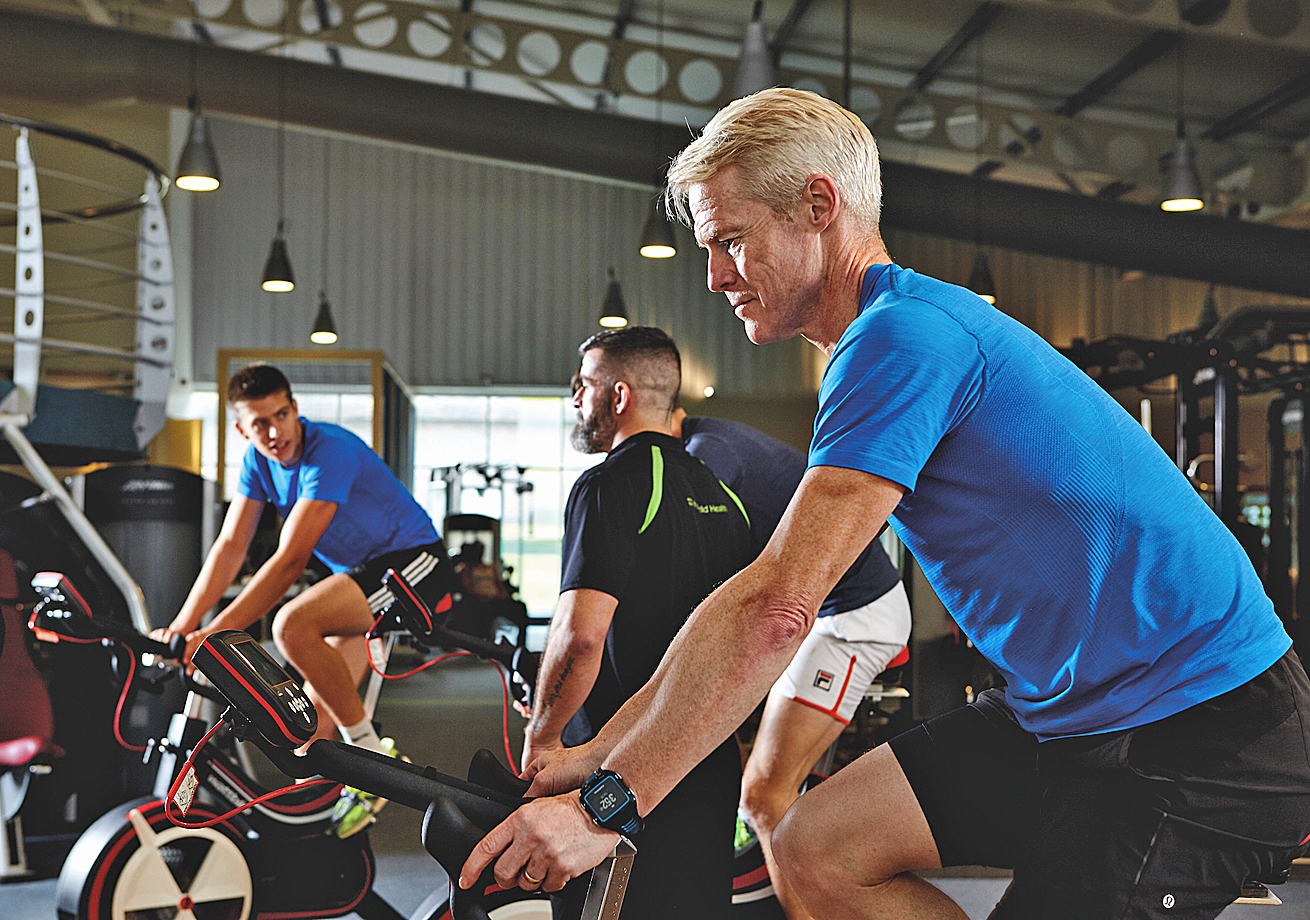
The Cardiorespiratory Fitness test (CRF), which is built into the Wattbike, is a measure of VO2max, used to record current health and fitness benchmarks.
From this score, personalised, effective training plans can be assigned that will improve CRF scores, and – in turn – overall health.
As CRF scores improve, training plans become more advanced, ensuring there’s continual progression.
This test is designed to both identify current health concerns and potential risks, with tailored lifestyle coaching to help users improve their health for the long-term.
There’s huge scope for how the CRF test can help individuals, governments and the medical profession in the fight against obesity, which is one of the biggest risk factors for dying of COVID-19.
Discovery Vitality developed a health assessment programme in partnership with Wattbike that was delivered across over 450 different venues in South Africa and last year, approximately 100k assessments were completed.
Our test is designed to
both identify current
health concerns and
potential future risks
Governments need to be rallied and key decision makers need to act on the facts. Most importantly, it’s people in sedentary populations who need to be targeted and engaged in order to encourage them to benchmark, track and improve their health.
Technology will continue to drive rapid advancements in health monitoring. Health tracking will just become a part of every day, reaching outside the four walls of a gym facility.
Wattbike’s CRF test comes with tailored lifestyle coaching
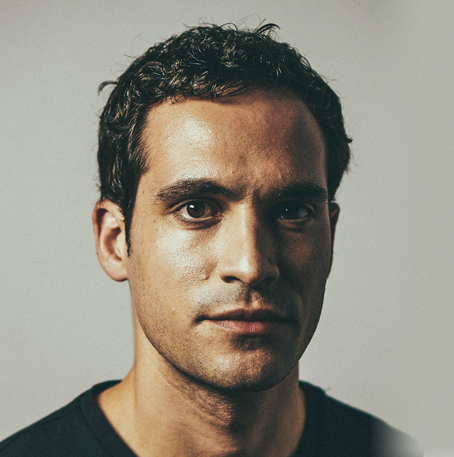
Will Ahmed, CEO, Whoop
We believe Whoop has the potential to predict illness and demonstrate secrets your body is trying to tell you that you otherwise can’t feel.
This is going to become more important in society as we come to terms with the fact that a virus can keep everyone indoors or make people sick, and that you could be asymptomatic and not know you have it.
We feel it’s our responsibility to examine these areas, because we can measure things in your body that you can’t feel, and illness is a huge component of that.
When thinking about something like our current medical system and how we’ve treated doctors’ appointments, we’ve found the snapshots of your body that the GP gets are only as useful as photos. They give you a glimpse into a moment in time, but they don’t tell the complete story.
The snapshots of your body that the GP gets are only
as useful as photos. They give you a glimpse of a
moment in time, but they don’t tell the complete story
If you’re trying to understand if someone is sick or has an underlying issue, you need continuous data and that’s where doctors should – and inevitably will – use data from wearables to help patients.
In this way, technology can play a big role in helping society, government and employers to manage their populations in an empowering way.
Whoop also helps people understand their own bodies and that, in turn, can make them more self-aware and healthier.
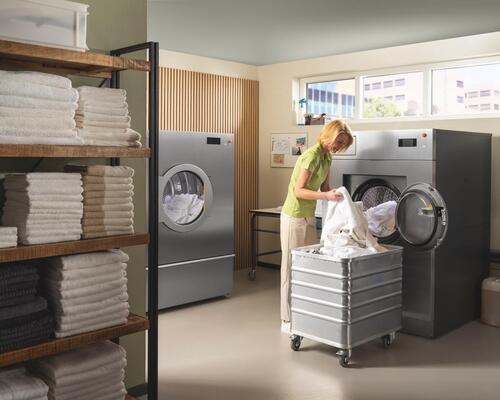
In today’s premium spa environment, every detail shapes the guest experience – right down to
the softness of towels and the freshness of linens. [more...]
In the aftermath of the pandemic, people will be more aware of the importance of their health and the strength of their immune system.
Can fit tech alert users to potential immunodeficiencies or symptoms? And might these products assist governments? We asked industry leaders for their predictions
Polar devices log a wide range of metrics, including heart rate variation and respiration
Tom Fowler, US president, Polar
The adoption of wearables to monitor health status was increasing pre-COVID-19 and the pandemic has been a massive catalyst for a greater shift in this direction.
Polar has seen this reflected in the volume of sales of devices and – importantly – in the data our users have been activating.
We’ve worked for years with pro athletes, coaches and scientists in the area of rest and recovery. This work has focused on optimising athletic performance.
It turns out that the data sets for these elite performers are identical to the data sets that can benefit the general consumer in terms of health maintenance.
Here’s an example of what is possible today with Polar devices. While you sleep, your device can monitor your resting heart rate (HR), heart rate variation (HRV) and respiration rate. You can compare each night’s numbers to your normal baseline. Is your HR lower or higher than normal? How about your HRV and respiration rate?
If you experience four or five days of truly bad numbers, this will be a strong indication that something is amiss. Perhaps it’s just a super-charged work schedule, too much caffeine and alcohol, or too much travelling. Or perhaps the root cause is that you’re incubating an illness that has yet to emerge. Either way, you can see that you need to take extra care of yourself.
At the government level, this is a key opportunity for controlling future pandemics.
I’m strongly optimistic that wearables are increasingly going
to be key tools in health, wellness and disease management
If large populations self-monitored and the system flagged deteriorating individuals before they became symptomatic, infected individuals could be tested, receive care and be quarantined before they unwittingly spread the contagion. Similarly, for frontline health workers, early identification of asymptomatic personnel could get them out of the rotation and into care early. This is exactly what Elysian Labs is doing, in partnership with Polar, for the US Army.
Today, we can measure HR, HRV, respiration rate, blood oxygenation and core temperature from commonly available devices. Add blood pressure to that mix and you have a powerful suite of biometrics. The data piece is relatively easy. The big question is how to properly interpret that data. What does a given data set mean for a single individual? How specific and bespoke can that guidance be?
Time will tell of course, but I’m strongly optimistic that wearables are increasingly going to be key tools in health, wellness and disease management.
Mathieu Letombe, CEO, Withings
With the current pandemic causing doctors’ offices to limit patient visits, many people have turned to at-home technologies to monitor their health levels remotely. This transition has highlighted the valuable capabilities and potential of connected home devices, including wearable activity trackers.
Using a range of devices, people can monitor their health, sleep and activity levels anywhere. This includes tracking valuable insights like heart rate monitoring, and atrial fibrillation (AFib) detection.
The ability to monitor a range of health levels daily through wearables allows people and their physicians to better understand their overall health and be able to identify major issues early. Additionally, monitoring people’s health levels from day to night also provides valuable insights into health trends and potential issues, which can be used by medical institutions, providers and other health organisations to create long-term solutions.
We’re looking forward to bringing our next wearable device
to market – Scanwatch – which brings medical-grade AFib
and sleep apnoea detection capabilities to the wrist
As we continue our efforts in helping people to monitor their health, we’re looking forward to bringing our next wearable device, ScanWatch, to market. ScanWatch brings medical-grade AFib and sleep apnoea detection capabilities to the wrist. The sleep apnoea tracking capabilities are possible through a blood oxygen saturation (SpO2) sensor, which can also be useful for monitoring other issues outside of sleep apnoea.
Eddie Fletcher, Lead sport scientist, Wattbike
Utilising the right fitness technology, which can accurately test, benchmark and track key performance indicators, can result in a marked improvement in health and fitness, improving a person’s ability to prevent complications from illness.
The Cardiorespiratory Fitness test (CRF), which is built into the Wattbike, is a measure of VO2max, used to record current health and fitness benchmarks.
From this score, personalised, effective training plans can be assigned that will improve CRF scores, and – in turn – overall health.
As CRF scores improve, training plans become more advanced, ensuring there’s continual progression.
This test is designed to both identify current health concerns and potential risks, with tailored lifestyle coaching to help users improve their health for the long-term.
There’s huge scope for how the CRF test can help individuals, governments and the medical profession in the fight against obesity, which is one of the biggest risk factors for dying of COVID-19.
Discovery Vitality developed a health assessment programme in partnership with Wattbike that was delivered across over 450 different venues in South Africa and last year, approximately 100k assessments were completed.
Our test is designed to
both identify current
health concerns and
potential future risks
Governments need to be rallied and key decision makers need to act on the facts. Most importantly, it’s people in sedentary populations who need to be targeted and engaged in order to encourage them to benchmark, track and improve their health.
Technology will continue to drive rapid advancements in health monitoring. Health tracking will just become a part of every day, reaching outside the four walls of a gym facility.
Wattbike’s CRF test comes with tailored lifestyle coaching
Will Ahmed, CEO, Whoop
We believe Whoop has the potential to predict illness and demonstrate secrets your body is trying to tell you that you otherwise can’t feel.
This is going to become more important in society as we come to terms with the fact that a virus can keep everyone indoors or make people sick, and that you could be asymptomatic and not know you have it.
We feel it’s our responsibility to examine these areas, because we can measure things in your body that you can’t feel, and illness is a huge component of that.
When thinking about something like our current medical system and how we’ve treated doctors’ appointments, we’ve found the snapshots of your body that the GP gets are only as useful as photos. They give you a glimpse into a moment in time, but they don’t tell the complete story.
The snapshots of your body that the GP gets are only
as useful as photos. They give you a glimpse of a
moment in time, but they don’t tell the complete story
If you’re trying to understand if someone is sick or has an underlying issue, you need continuous data and that’s where doctors should – and inevitably will – use data from wearables to help patients.
In this way, technology can play a big role in helping society, government and employers to manage their populations in an empowering way.
Whoop also helps people understand their own bodies and that, in turn, can make them more self-aware and healthier.
Global Wellness Day (GWD) will mark its 15th anniversary on Saturday 13 June 2026, with the
theme: #JoyMagenta – a celebration of the healing qualities of simple gestures and activities
that spark joy.
Global luxury hospitality brand, Six Senses, has partnered with longevity healthcare provider,
HUM2N, to launch a clinic at Six Senses London, at The Whiteley.
As part of its first hotel partnership, Mayrlife – the medical health resort company known for its
site in Altaussee, Austria – has launched a day clinic at the Rosewood Vienna.
Premium London health club, KX Chelsea, will imminently unveil its most significant
redevelopment since its launch in 2002 to create an integrated wellness model combining
training, recovery and relaxation.
Rosewood Le Guanahani St Barth, on the northeast coast of Saint Barthélemy in the French
West Indies, is offering a programme of ocean-inspired yoga classes between 8-14 June to
celebrate Global Wellness Day (GWD).
Hotel de France, located on the British Isle of Jersey, has created a wellness retreat package
that includes a hot yoga session that will take place in Jersey Zoo’s butterfly sanctuary.
The Ritz-Carlton, Langkawi, in Malaysia, has revealed a schedule for Global Wellness Day
(GWD) that includes guided rainforest walks, mindful movement and guided coastal meditation
experiences.
Longevitix, a clinical platform for preventive and longevity medicine, has launched its AI-
powered intelligence system to help physicians deliver continuous, personalised longevity-
focused care at scale.
Atmantan Wellness Centre, an integrative wellness destination in Mulshi, near Pune in India, is
expanding its portfolio by adding a new centre in Hyderabad that will launch between 2028 and
2029.
A recent survey by the UK Spa Association (UKSA) into the industry’s approach to cancer care
has revealed that almost half of participating respondents (46 per cent) are unaware that
cancer is a disability and guests with a cancer diagnosis must be given
In today’s premium spa environment, every detail shapes the guest experience – right down to
the softness of towels and the freshness of linens. [more...]