Yes! Send me the FREE digital editions of Spa Business and Spa Business insider magazines and the FREE weekly Spa Business and Spa Business insider ezines and breaking news alerts!
Your worst nightmare happens – a
member with COVID-19 attends
three group exercise classes in a
period of 18 hours. Sarah Shortt
explains how one operator dealt
with this crisis while staying
open throughout and avoiding
community transmission
With the COVID-19 interventions already in place, the gym was allowed to stay open
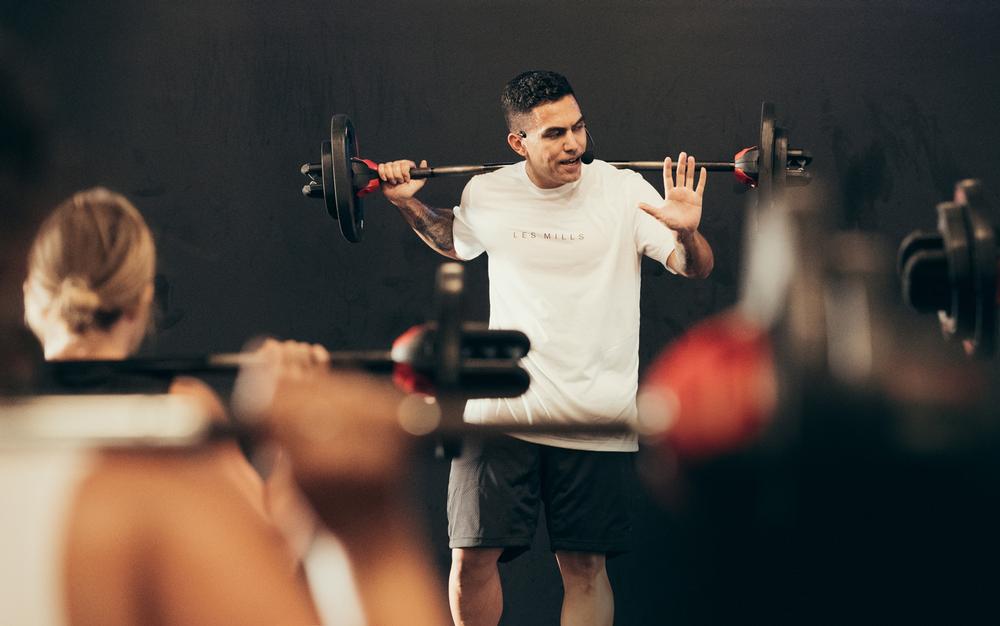
Learning someone with COVID-19 has been in your gym is every manager’s worst nightmare, however, for the team at the Les Mills-owned Takapuna gym, in Auckland, New Zealand, this was something they’d anticipated.
On learning an infected member had attended three group fitness classes in 18 hours, they had an action plan ready to deploy.
Due to the effectiveness of their preparation and actions, no further cases were discovered – despite 86 members coming into contact with the infected member – and the club was able to remain open for business. So how did their four-part plan enable them to contain the virus and deal with the resultant media attention?
1. Plan ahead “We took the pandemic seriously early on – talking about it back in January, which meant we were getting organised in February,” says Dione Forbes-Ryrie, MD of Les Mills New Zealand’s chain of 12 gyms.
“We started planning so early on that Exercise New Zealand, our bank, and even our auditor thought we were being over the top!
“But many of us had worked in the business when the Christchurch earthquake occurred – that had seen 24 per cent of our assets in lockdown for 12 months back in 2011 – so we know what the world looks like when things really go pear-shaped.
“When COVID-19 came onto our radar, our immediate thought was, have we got another Christchurch coming at us? We established a critical incident team so we were ready if and when lockdown hit.”
Ironically, Les Mills NZ was already planning to run a practice drill of a COVID-19 case in another of its clubs the week the real-life case was discovered in Takapuna. That meant plans were already in place and draft communications had been prepared for a variety of scenarios.
“This case was clear cut, but it could have gone either way if we hadn’t had processes in place,” says Guy Needham, head of marketing and sales. “Especially when you consider the person visited the club three times in 18 hours.”
2. Communicate Maintaining timely communication with club members and staff was critical to ensuring everyone felt informed and cared for, as well as avoiding the spread of misinformation.
“Many members have commented on how much they appreciated the strong communications,” explains Forbes-Ryrie. “We were open and transparent, explaining what had happened and when people would be contacted by the Ministry of Health if the case affected them. We also ensured they heard the news from us first, rather than from the media.”
“We were also mindful to engage with our internal team,” says Needham. “We’ve got more contractors on our team, such as group fitness instructors, than we have employees, so it was important they were also kept up to speed with what was happening, because they’re often the people our members are talking to.
“If a member approaches one of our instructors on social media, we want that instructor to have one central source of truth they can refer the member to.”
3. Reassure members Some members are naturally cautious about returning to exercise facilities after a case has been identified, but when members saw how seriously Les Mills Takapuna was taking the threat, attendances bounced back.
“Attendance declined to 58 percent after the incident,” says Forbes-Ryrie, “but it’s now back to 90 per cent as a result of us communicating the protocols we’ve got in place – as well as the fact we’ve been able to share the news that there have been no instances of club transmission.”
This dip is similar to that experienced after lockdown, when attendance dropped to around 60 per cent, but was back up to 95 per cent after three weeks.
“Confidence has been restored quickly – not only in our existing membership, but also in new prospects. Even with the case happening at Takapuna, the sales team achieved over 70 per cent of its monthly pre-COVID target,” she says.
4. Manage the media The case generated a significant amount of attention from the press. So how did the business respond?
“We prioritised our members and internal teams,” says Forbes-Ryrie.
“Engaging with the media wasn’t the number one thing on our list, but we knew we needed to get our media communications right.
“We had a lot of requests for interviews but felt the best way forward was to provide comprehensive answers to their questions, so we did this with a media statement. We also set up a FAQs page on our website at www.lesmills.co.nz/covid-19, that answered a lot of the questions media outlets were asking, such as what we were doing around cleaning, and who might be at risk of contracting the virus. Again, it came back to being transparent.”
Forbes-Ryrie says the reaction from members has been incredibly positive. “We’ve had a lot of people commenting on how well cared for they feel – a letter was published in the New Zealand Herald the other day, praising how well we’ve handled the situation.”
Key facts
COVID-19 case management @Les Mills
• Eighty-six people were recognised as having been in close contact with the infected member who attended group exercise classes at Les Mills Takapuna.
• They immediately went into self-isolation and of these 86 people, all returned a negative result when tested for the virus.
• Due to the club having already conducted extensive deep cleans, the local authority advised it was able to remain open.
• Despite this, the company also conducted an additional full deep clean of the club, followed by an antiviral fogging treatment.
Key takeaways
• Keep ahead of the situation, be ready to act. Be proactive, not reactive
• Run simulations, stress test your systems, practice drills, identify gaps and fill them – make sure you’re ready to handle an incident if it happens
• Have a communication plan ready to go for each stakeholder group – members, in-house staff, freelancers, local authority and health inspectors – and keep these updated
• Organise regular inspections, keep in touch with local health authorities, so they know your baselines for COVID-19 control
• Establish a central ‘source of truth’ to avoid the spread of misinformation
• If the worst happens, focus your energies on looking after your members, your staff and the health authorities, while managing the media effectively by issuing clear statements and using a web-based FAQ
• Ensure your contact-tracing systems are working effectively and audit these regularly
• Track the recovery of member numbers and lovebomb members to reassure them and get them back to the gym
In today’s premium spa environment, every detail shapes the guest experience – right down to
the softness of towels and the freshness of linens. [more...]
Le Atelier by C.O.D.E. doesn't offer a standard bespoke service, it provides a highly
customised approach to designing massage beds and loungers in high-end wellness
environments. [more...]
+ More featured suppliers
COMPANY PROFILES
Elemis
Elemis was founded in London in 1989 by Linda Steiner whose vision was to create a skincare range as [more...]
Barr + Wray Ltd
Barr + Wray has more than 60 years’ experience in the design and delivery of world-class spa and wel [more...]
Your worst nightmare happens – a
member with COVID-19 attends
three group exercise classes in a
period of 18 hours. Sarah Shortt
explains how one operator dealt
with this crisis while staying
open throughout and avoiding
community transmission
With the COVID-19 interventions already in place, the gym was allowed to stay open
Learning someone with COVID-19 has been in your gym is every manager’s worst nightmare, however, for the team at the Les Mills-owned Takapuna gym, in Auckland, New Zealand, this was something they’d anticipated.
On learning an infected member had attended three group fitness classes in 18 hours, they had an action plan ready to deploy.
Due to the effectiveness of their preparation and actions, no further cases were discovered – despite 86 members coming into contact with the infected member – and the club was able to remain open for business. So how did their four-part plan enable them to contain the virus and deal with the resultant media attention?
1. Plan ahead “We took the pandemic seriously early on – talking about it back in January, which meant we were getting organised in February,” says Dione Forbes-Ryrie, MD of Les Mills New Zealand’s chain of 12 gyms.
“We started planning so early on that Exercise New Zealand, our bank, and even our auditor thought we were being over the top!
“But many of us had worked in the business when the Christchurch earthquake occurred – that had seen 24 per cent of our assets in lockdown for 12 months back in 2011 – so we know what the world looks like when things really go pear-shaped.
“When COVID-19 came onto our radar, our immediate thought was, have we got another Christchurch coming at us? We established a critical incident team so we were ready if and when lockdown hit.”
Ironically, Les Mills NZ was already planning to run a practice drill of a COVID-19 case in another of its clubs the week the real-life case was discovered in Takapuna. That meant plans were already in place and draft communications had been prepared for a variety of scenarios.
“This case was clear cut, but it could have gone either way if we hadn’t had processes in place,” says Guy Needham, head of marketing and sales. “Especially when you consider the person visited the club three times in 18 hours.”
2. Communicate Maintaining timely communication with club members and staff was critical to ensuring everyone felt informed and cared for, as well as avoiding the spread of misinformation.
“Many members have commented on how much they appreciated the strong communications,” explains Forbes-Ryrie. “We were open and transparent, explaining what had happened and when people would be contacted by the Ministry of Health if the case affected them. We also ensured they heard the news from us first, rather than from the media.”
“We were also mindful to engage with our internal team,” says Needham. “We’ve got more contractors on our team, such as group fitness instructors, than we have employees, so it was important they were also kept up to speed with what was happening, because they’re often the people our members are talking to.
“If a member approaches one of our instructors on social media, we want that instructor to have one central source of truth they can refer the member to.”
3. Reassure members Some members are naturally cautious about returning to exercise facilities after a case has been identified, but when members saw how seriously Les Mills Takapuna was taking the threat, attendances bounced back.
“Attendance declined to 58 percent after the incident,” says Forbes-Ryrie, “but it’s now back to 90 per cent as a result of us communicating the protocols we’ve got in place – as well as the fact we’ve been able to share the news that there have been no instances of club transmission.”
This dip is similar to that experienced after lockdown, when attendance dropped to around 60 per cent, but was back up to 95 per cent after three weeks.
“Confidence has been restored quickly – not only in our existing membership, but also in new prospects. Even with the case happening at Takapuna, the sales team achieved over 70 per cent of its monthly pre-COVID target,” she says.
4. Manage the media The case generated a significant amount of attention from the press. So how did the business respond?
“We prioritised our members and internal teams,” says Forbes-Ryrie.
“Engaging with the media wasn’t the number one thing on our list, but we knew we needed to get our media communications right.
“We had a lot of requests for interviews but felt the best way forward was to provide comprehensive answers to their questions, so we did this with a media statement. We also set up a FAQs page on our website at www.lesmills.co.nz/covid-19, that answered a lot of the questions media outlets were asking, such as what we were doing around cleaning, and who might be at risk of contracting the virus. Again, it came back to being transparent.”
Forbes-Ryrie says the reaction from members has been incredibly positive. “We’ve had a lot of people commenting on how well cared for they feel – a letter was published in the New Zealand Herald the other day, praising how well we’ve handled the situation.”
Key facts
COVID-19 case management @Les Mills
• Eighty-six people were recognised as having been in close contact with the infected member who attended group exercise classes at Les Mills Takapuna.
• They immediately went into self-isolation and of these 86 people, all returned a negative result when tested for the virus.
• Due to the club having already conducted extensive deep cleans, the local authority advised it was able to remain open.
• Despite this, the company also conducted an additional full deep clean of the club, followed by an antiviral fogging treatment.
Key takeaways
• Keep ahead of the situation, be ready to act. Be proactive, not reactive
• Run simulations, stress test your systems, practice drills, identify gaps and fill them – make sure you’re ready to handle an incident if it happens
• Have a communication plan ready to go for each stakeholder group – members, in-house staff, freelancers, local authority and health inspectors – and keep these updated
• Organise regular inspections, keep in touch with local health authorities, so they know your baselines for COVID-19 control
• Establish a central ‘source of truth’ to avoid the spread of misinformation
• If the worst happens, focus your energies on looking after your members, your staff and the health authorities, while managing the media effectively by issuing clear statements and using a web-based FAQ
• Ensure your contact-tracing systems are working effectively and audit these regularly
• Track the recovery of member numbers and lovebomb members to reassure them and get them back to the gym
Global Wellness Day (GWD) marked its 15th anniversary on Saturday 13 June 2026, with the
theme: #JoyMagenta – a celebration of the healing qualities of simple gestures and activities
that spark joy.
Global luxury hospitality brand, Six Senses, has partnered with longevity healthcare provider,
HUM2N, to launch a clinic at Six Senses London, at The Whiteley.
As part of its first hotel partnership, Mayrlife – the medical health resort company known for its
site in Altaussee, Austria – has launched a day clinic at the Rosewood Vienna.
Premium London health club, KX Chelsea, will imminently unveil its most significant
redevelopment since its launch in 2002 to create an integrated wellness model combining
training, recovery and relaxation.
Rosewood Le Guanahani St Barth, on the northeast coast of Saint Barthélemy in the French
West Indies, is offering a programme of ocean-inspired yoga classes between 8-14 June to
celebrate Global Wellness Day (GWD).
Hotel de France, located on the British Isle of Jersey, has created a wellness retreat package
that includes a hot yoga session that will take place in Jersey Zoo’s butterfly sanctuary.
The Ritz-Carlton, Langkawi, in Malaysia, has revealed a schedule for Global Wellness Day
(GWD) that includes guided rainforest walks, mindful movement and guided coastal meditation
experiences.
Longevitix, a clinical platform for preventive and longevity medicine, has launched its AI-
powered intelligence system to help physicians deliver continuous, personalised longevity-
focused care at scale.
Atmantan Wellness Centre, an integrative wellness destination in Mulshi, near Pune in India, is
expanding its portfolio by adding a new centre in Hyderabad that will launch between 2028 and
2029.
In today’s premium spa environment, every detail shapes the guest experience – right down to
the softness of towels and the freshness of linens. [more...]
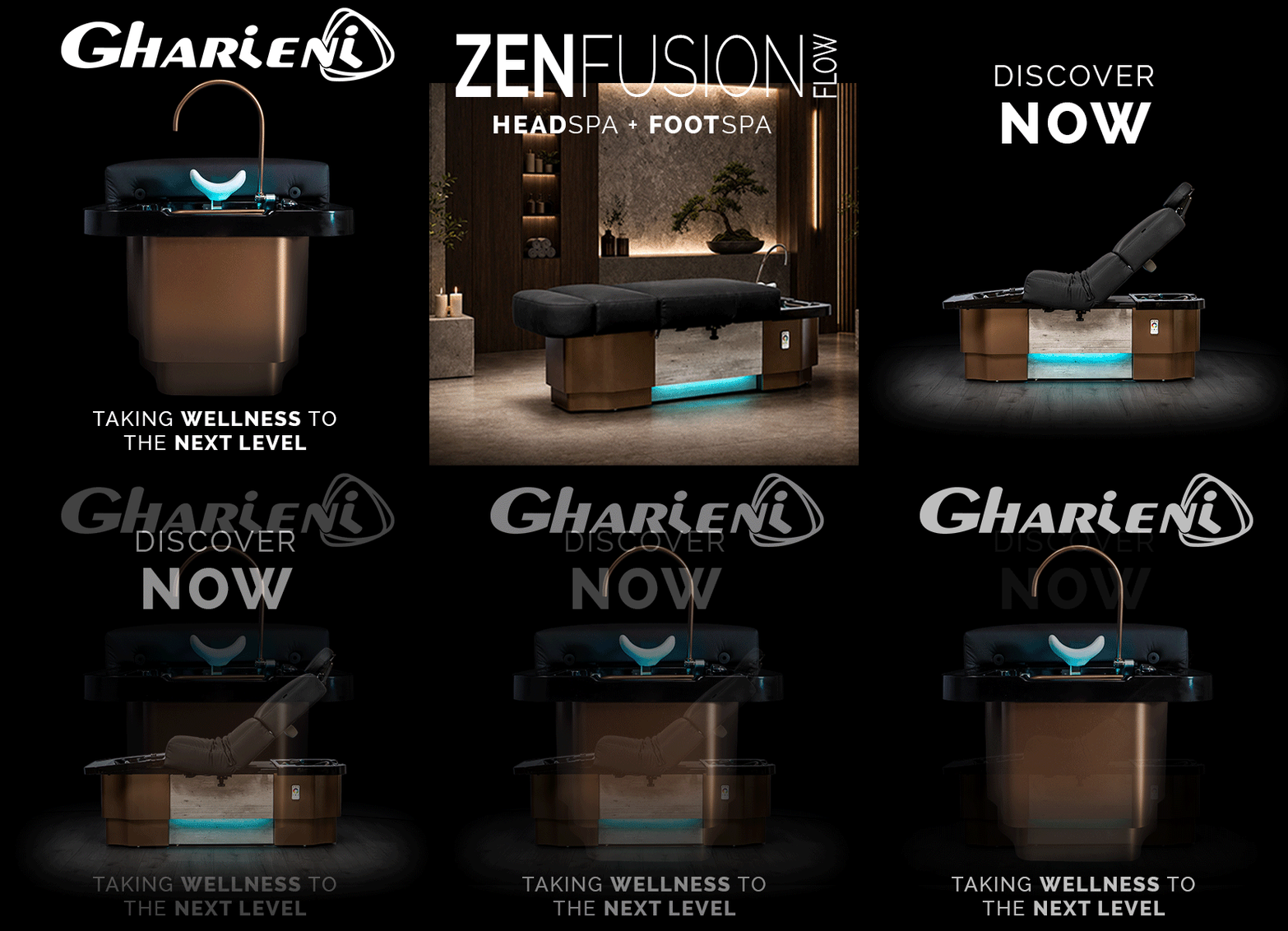
Le Atelier by C.O.D.E. doesn't offer a standard bespoke service, it provides a highly
customised approach to designing massage beds and loungers in high-end wellness
environments. [more...]
+ More featured suppliers
COMPANY PROFILES
Elemis Elemis was founded in London in 1989 by Linda Steiner whose vision was to create a skincare range as [more...]