Yes! Send me the FREE digital editions of Spa Business and Spa Business insider magazines and the FREE weekly Spa Business and Spa Business insider ezines and breaking news alerts!
New research into Type 2 diabetes and COVID-19 is establishing the risks across different age groups, enabling policymakers to design interventions more effectively
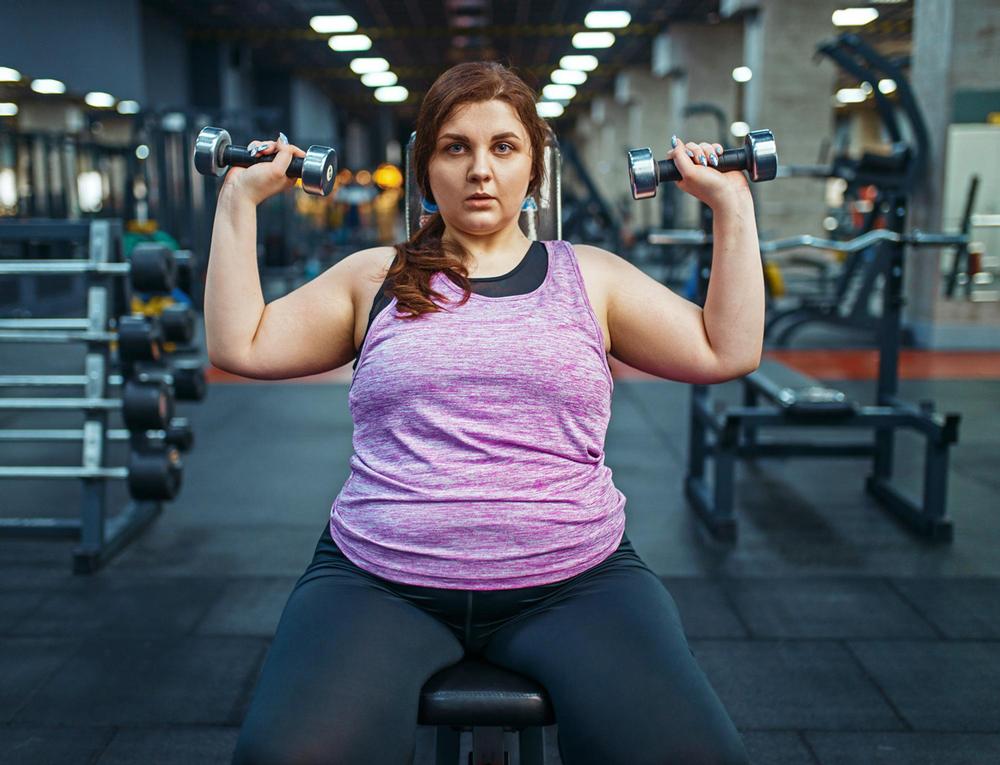
The additional COVID-19 mortality risk associated with diabetes is higher in younger than older people / Shutterstock.com/Nomad_Soul
People aged 40 with Type 2 diabetes face a “disproportionately increased risk of dying from COVID-19” – equivalent to the risk faced by a non-diabetic 20 years older.
The finding comes from a study led by researchers at the University of Exeter, which also shows that the risk of death from COVID-19 among those with Type 2 increases the younger they are, compared with people of a similar age without the condition.
Published in the journal Diabetologia, the study – The disproportionate excess mortality risk of COVID-19 in younger people with diabetes – is based on an analysis of three large-scale datasets and triangulates the evidence on heterogeneity of diabetes effect, by age, on COVID-19 mortality from large population-based and critical care-based studies.
Challenging the young “For a person aged 40 years with Type 2 diabetes, additional mortality risk is equivalent to around 20 years of chronological age, meaning that mortality risk is similar to that of a 60-year-old person without diabetes,” reads the study.
“For a person aged 70 years with diabetes, the additional mortality risk from diabetes is equivalent to an additional eight years of chronological age, meaning that their ‘COVID-age’ is 78 years.”
Although not the only cause, obesity is believed to account for up to 80 per cent of the risk of developing Type 2 diabetes, while research suggests that obese people are up to 80 times more likely to develop Type 2 diabetes than those with a BMI of less than 22.
The UK has one of the highest levels of obesity in Europe, with more than 1 in 4 (28.1 per cent) adults obese and nearly two out of three (63.4 per cent) people overweight.
Le Atelier by C.O.D.E. doesn't offer a standard bespoke service, it provides a highly
customised approach to designing massage beds and loungers in high-end wellness
environments. [more...]
New research into Type 2 diabetes and COVID-19 is establishing the risks across different age groups, enabling policymakers to design interventions more effectively
The additional COVID-19 mortality risk associated with diabetes is higher in younger than older people / Shutterstock.com/Nomad_Soul
People aged 40 with Type 2 diabetes face a “disproportionately increased risk of dying from COVID-19” – equivalent to the risk faced by a non-diabetic 20 years older.
The finding comes from a study led by researchers at the University of Exeter, which also shows that the risk of death from COVID-19 among those with Type 2 increases the younger they are, compared with people of a similar age without the condition.
Published in the journal Diabetologia, the study – The disproportionate excess mortality risk of COVID-19 in younger people with diabetes – is based on an analysis of three large-scale datasets and triangulates the evidence on heterogeneity of diabetes effect, by age, on COVID-19 mortality from large population-based and critical care-based studies.
Challenging the young “For a person aged 40 years with Type 2 diabetes, additional mortality risk is equivalent to around 20 years of chronological age, meaning that mortality risk is similar to that of a 60-year-old person without diabetes,” reads the study.
“For a person aged 70 years with diabetes, the additional mortality risk from diabetes is equivalent to an additional eight years of chronological age, meaning that their ‘COVID-age’ is 78 years.”
Although not the only cause, obesity is believed to account for up to 80 per cent of the risk of developing Type 2 diabetes, while research suggests that obese people are up to 80 times more likely to develop Type 2 diabetes than those with a BMI of less than 22.
The UK has one of the highest levels of obesity in Europe, with more than 1 in 4 (28.1 per cent) adults obese and nearly two out of three (63.4 per cent) people overweight.
The Standards Authority for Touch in Cancer Care (SATCC) charity has announced its first five-
day Living with Cancer and Beyond retreat, which will be held at Carden Park Hotel and Spa in
Cheshire, UK, between 1 and 5 September.
Patmos Aktis, a Luxury Collection Resort and Spa, has opened in Greece, with a renovated and
rebranded wellness offering called Ansana Wellness and Spa.
The Mauna Kea Beach Hotel, an Autograph Collection property in Hawaii, US, has opened its
22,000 sq ft indoor-outdoor Spa at Mauna Kea as the final step in the property’s overall
renovation, which has cost more than US$180 million (€166 million, £140 mill
The UK spa review and discovery platform for consumers, the Good Spa Guide, has announced
it will host the Good Spa Guide Awards 2026 during an event on 16 November at Sopwell House
Hotel in St Albans, UK.
Eighty-four per cent of consumers now say wellness is a top priority in their lives, with this
percentage increasing year on year, according to a preview presentation of McKinsey’s Future of
Wellness 2026 research report.
Mass protests have been taking place since Monday 1 June in Albania over the development of
a luxury resort by Donald Trump’s daughter Ivanka Trump and her husband Jared Kushner.
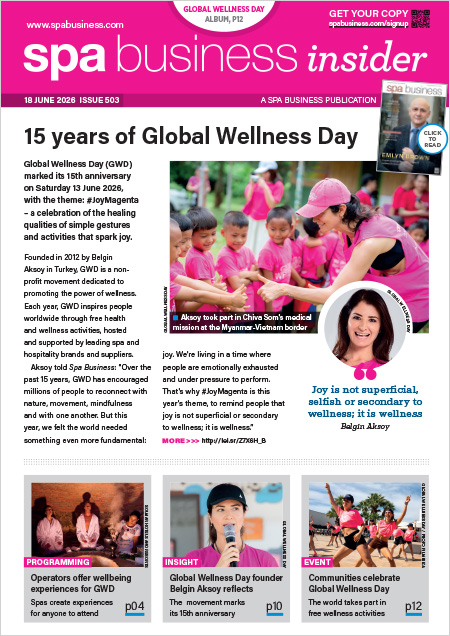
Global Wellness Day (GWD) marked its 15th anniversary on Saturday 13 June 2026, with the
theme: #JoyMagenta – a celebration of the healing qualities of simple gestures and activities
that spark joy.
Global luxury hospitality brand, Six Senses, has partnered with longevity healthcare provider,
HUM2N, to launch a clinic at Six Senses London, at The Whiteley.
As part of its first hotel partnership, Mayrlife – the medical health resort company known for its
site in Altaussee, Austria – has launched a day clinic at the Rosewood Vienna.
Premium London health club, KX Chelsea, will imminently unveil its most significant
redevelopment since its launch in 2002 to create an integrated wellness model combining
training, recovery and relaxation.
Le Atelier by C.O.D.E. doesn't offer a standard bespoke service, it provides a highly
customised approach to designing massage beds and loungers in high-end wellness
environments. [more...]