Yes! Send me the FREE digital editions of Spa Business and Spa Business insider magazines and the FREE weekly Spa Business and Spa Business insider ezines and breaking news alerts!
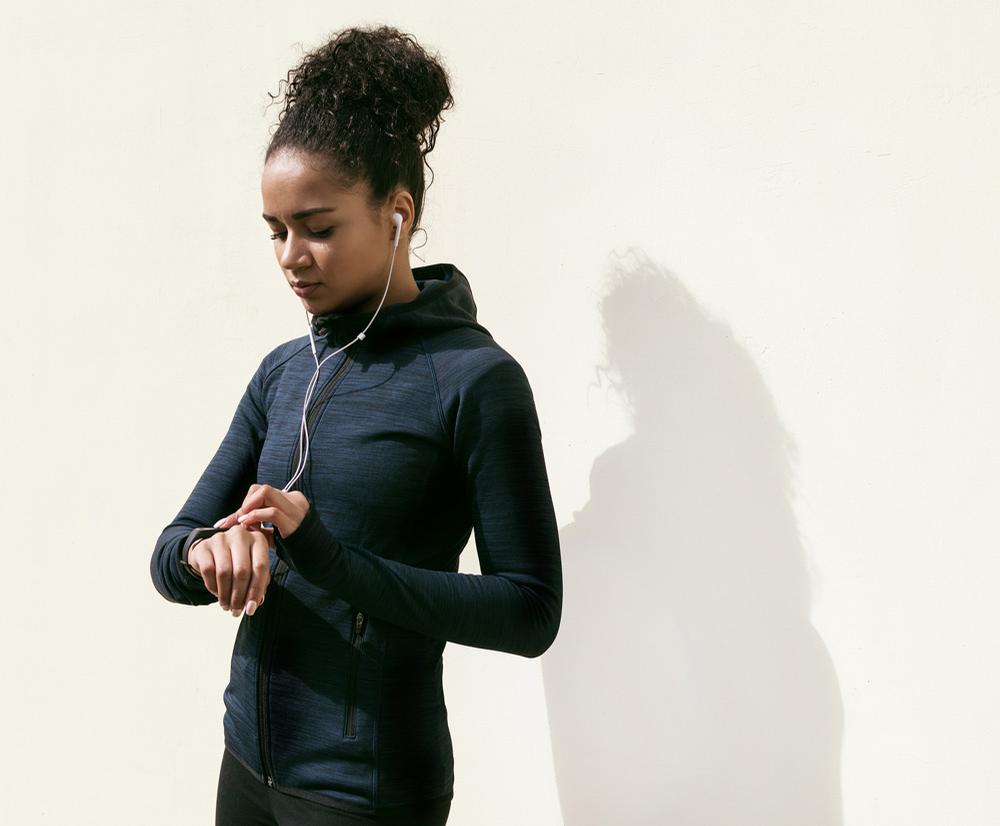
The health and fitness wearables market is forecast to grow to US$24.5bn / Artem Varnitsin/shutterstock
As companies in the high-touch spa and wellness industry grapple with COVID-19, including closings, reduced service menus, new hygiene protocols and testing, there is an overarching new normal that businesses should prepare for. In the post-COVID world, adapting to the rippling impacts on global connectivity (climate, supply chains, disease, economies and politics) requires rapid adoption of evolving technology.
According to a McKinsey & Company report, during the initial three months of the COVID-19 outbreak, many industries implemented technology and “touchless” services at a scale that would normally have taken three years. And many companies are quickly establishing new remote-work policies that will alter real estate demands, workplace socialisation and customer service expectations. So, what does this mean to the wellness industry?
Human interaction is the hallmark of our industry, and will remain so for at least another generation or more until telepresence technological options are viable. Even then, the human element, combined with artificial intelligence (AI), will be important to provide an emotional experience that is integral to wellbeing. To grow, the spa and wellness industry must integrate better content, diagnostics and technology to elevate the quality of the services, particularly coming off a pandemic in which health and science were brought to the fore. For instance, the US$16.2bn health and fitness wearables market is forecast to grow to US$24.5bn in 2023, in large part due to the virus outbreak.
Wellness redefined Kai-Fu Lee’s book, AI Super-Powers, provides a graph with four quadrants showing where AI will reside in the workplace. In the near term, two quadrants show the symbiotic benefit of AI and human interaction and the other two suggest AI will replace human labour. Based on his description, I would rather be a massage therapist than a medical radiologist in five years. AI may be able to read an X-ray and CAT Scan better than a human can soon, but it will take longer before telepresence and robotics can provide a substitute for human touch and emotional connection.
Two lessons from the COVID tragedy are 1) companies that are nimble and embrace technology will advance faster than their competitors who don’t, and 2) according to a study conducted by American LIVES, after living a “compromised-year” many people are reprioritising their lives and choosing to focus on their health and emotional wellbeing. The spa and wellness industry can play an important role in response to this growing consumer need.
To capture market-share, the spa and wellness sector can no longer define itself as either a hotel amenity or alternative health treatment – both are too limited. Wellbeing is the culmination of one’s lifestyle and involves many disciplines in a globally connected world. This means we need to be proficient in the healing arts as well as meditative, nutritional and fitness best-practices and content development and data and technology integration delivered in an emotionally safe environment to support behavioral change.
An open lane To borrow an example from another industry, Tesla combines a multitude of technologies and disciplines involving transportation, energy, data collection and human behavioral sciences. It understands its role in an interconnected world. Just as Tesla is not simply a car company, a wellbeing organisation must be more than its treatments and tools. In an ever-connected sustainable world in which people will strive to achieve greater wellbeing, the spa and wellness industry has an open lane. Those who can adapt by incorporating technology and science within its human-touch practices will excel, and those who can’t will adhere to Schumpeter’s economic market theory of creative destruction, and go the way of the horse-drawn buggy whip.
About the author:
Kevin Kelly, CEO of Sensei, is a wellness and hospitality leader with more than 30 years in the industry. Prior to Sensei, his roles included founder/chief executive officer of CIVANA, partner and chief executive officer of Two Bunch Palms, and chief branding officer and president of Canyon Ranch.
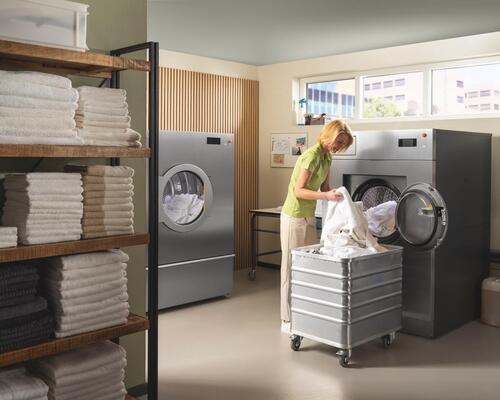
In today’s premium spa environment, every detail shapes the guest experience – right down to
the softness of towels and the freshness of linens. [more...]
The health and fitness wearables market is forecast to grow to US$24.5bn / Artem Varnitsin/shutterstock
As companies in the high-touch spa and wellness industry grapple with COVID-19, including closings, reduced service menus, new hygiene protocols and testing, there is an overarching new normal that businesses should prepare for. In the post-COVID world, adapting to the rippling impacts on global connectivity (climate, supply chains, disease, economies and politics) requires rapid adoption of evolving technology.
According to a McKinsey & Company report, during the initial three months of the COVID-19 outbreak, many industries implemented technology and “touchless” services at a scale that would normally have taken three years. And many companies are quickly establishing new remote-work policies that will alter real estate demands, workplace socialisation and customer service expectations. So, what does this mean to the wellness industry?
Human interaction is the hallmark of our industry, and will remain so for at least another generation or more until telepresence technological options are viable. Even then, the human element, combined with artificial intelligence (AI), will be important to provide an emotional experience that is integral to wellbeing. To grow, the spa and wellness industry must integrate better content, diagnostics and technology to elevate the quality of the services, particularly coming off a pandemic in which health and science were brought to the fore. For instance, the US$16.2bn health and fitness wearables market is forecast to grow to US$24.5bn in 2023, in large part due to the virus outbreak.
Wellness redefined Kai-Fu Lee’s book, AI Super-Powers, provides a graph with four quadrants showing where AI will reside in the workplace. In the near term, two quadrants show the symbiotic benefit of AI and human interaction and the other two suggest AI will replace human labour. Based on his description, I would rather be a massage therapist than a medical radiologist in five years. AI may be able to read an X-ray and CAT Scan better than a human can soon, but it will take longer before telepresence and robotics can provide a substitute for human touch and emotional connection.
Two lessons from the COVID tragedy are 1) companies that are nimble and embrace technology will advance faster than their competitors who don’t, and 2) according to a study conducted by American LIVES, after living a “compromised-year” many people are reprioritising their lives and choosing to focus on their health and emotional wellbeing. The spa and wellness industry can play an important role in response to this growing consumer need.
To capture market-share, the spa and wellness sector can no longer define itself as either a hotel amenity or alternative health treatment – both are too limited. Wellbeing is the culmination of one’s lifestyle and involves many disciplines in a globally connected world. This means we need to be proficient in the healing arts as well as meditative, nutritional and fitness best-practices and content development and data and technology integration delivered in an emotionally safe environment to support behavioral change.
An open lane To borrow an example from another industry, Tesla combines a multitude of technologies and disciplines involving transportation, energy, data collection and human behavioral sciences. It understands its role in an interconnected world. Just as Tesla is not simply a car company, a wellbeing organisation must be more than its treatments and tools. In an ever-connected sustainable world in which people will strive to achieve greater wellbeing, the spa and wellness industry has an open lane. Those who can adapt by incorporating technology and science within its human-touch practices will excel, and those who can’t will adhere to Schumpeter’s economic market theory of creative destruction, and go the way of the horse-drawn buggy whip.
About the author:
Kevin Kelly, CEO of Sensei, is a wellness and hospitality leader with more than 30 years in the industry. Prior to Sensei, his roles included founder/chief executive officer of CIVANA, partner and chief executive officer of Two Bunch Palms, and chief branding officer and president of Canyon Ranch.
Global Wellness Day (GWD) marked its 15th anniversary on Saturday 13 June 2026, with the
theme: #JoyMagenta – a celebration of the healing qualities of simple gestures and activities
that spark joy.
Global luxury hospitality brand, Six Senses, has partnered with longevity healthcare provider,
HUM2N, to launch a clinic at Six Senses London, at The Whiteley.
As part of its first hotel partnership, Mayrlife – the medical health resort company known for its
site in Altaussee, Austria – has launched a day clinic at the Rosewood Vienna.
Premium London health club, KX Chelsea, will imminently unveil its most significant
redevelopment since its launch in 2002 to create an integrated wellness model combining
training, recovery and relaxation.
Rosewood Le Guanahani St Barth, on the northeast coast of Saint Barthélemy in the French
West Indies, is offering a programme of ocean-inspired yoga classes between 8-14 June to
celebrate Global Wellness Day (GWD).
Hotel de France, located on the British Isle of Jersey, has created a wellness retreat package
that includes a hot yoga session that will take place in Jersey Zoo’s butterfly sanctuary.
The Ritz-Carlton, Langkawi, in Malaysia, has revealed a schedule for Global Wellness Day
(GWD) that includes guided rainforest walks, mindful movement and guided coastal meditation
experiences.
Longevitix, a clinical platform for preventive and longevity medicine, has launched its AI-
powered intelligence system to help physicians deliver continuous, personalised longevity-
focused care at scale.
Atmantan Wellness Centre, an integrative wellness destination in Mulshi, near Pune in India, is
expanding its portfolio by adding a new centre in Hyderabad that will launch between 2028 and
2029.
In today’s premium spa environment, every detail shapes the guest experience – right down to
the softness of towels and the freshness of linens. [more...]