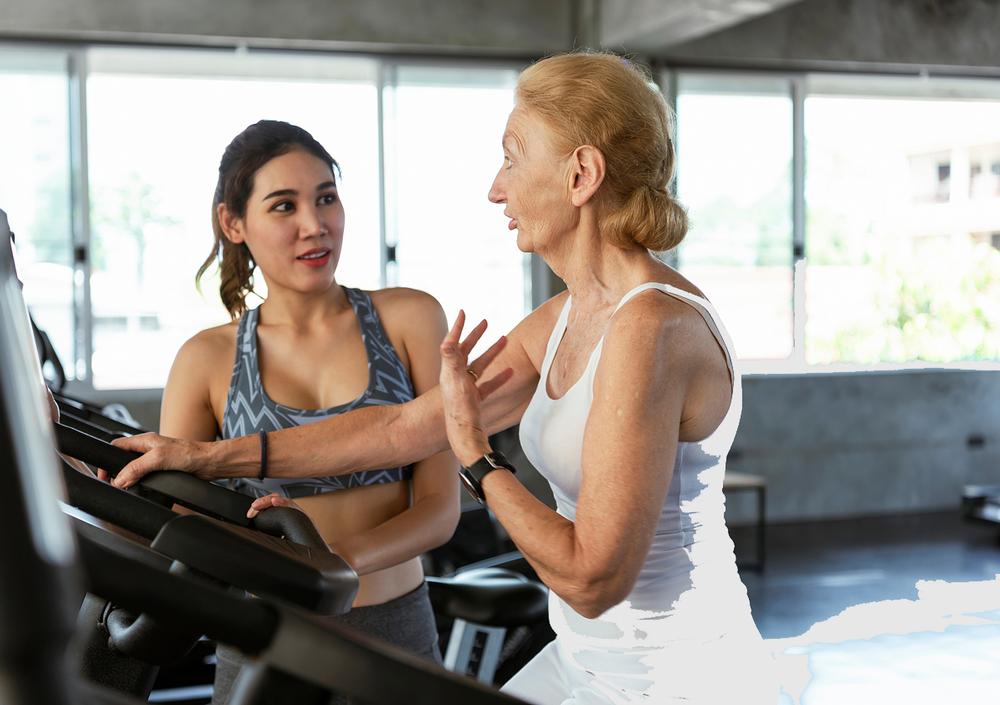
The Active IQ training courses are specially designed for fitness professionals / shutterstock/this is me
An estimated 15 million people in the UK are living with at least one long-term health condition. This number is rising year-on-year and now also includes the long-term effects of COVID-19 and its many health complications. This places a huge burden on the NHS, social care providers, communities and the economy.
Social prescribing has a large role to play in supporting society and the nation’s health, but what does it actually entail and how does the leisure industry fit into this emerging practice?
Social prescribing – also sometimes called ‘community referral’ – creates a formal way for primary care providers, such as GPs, to refer patients to a variety of non-clinical services. It involves a link worker, known as a social prescriber, who helps design a package of services or activities to suit people’s needs. These can include dance sessions, gardening clubs or even just group chats.
“Social prescribing is an approach that doesn’t look to only treat a problem medically,” says Dr Dane Vishnubala, chief medical adviser for Active IQ. “It looks at people as a whole and takes into account the many different factors that could be causing their problem. This could include financial worries, mental ill-health, physical ill-health or lack of support and community help. By looking at the whole person, social prescribing can often help solve more than just one problem and address more than one issue.
“Behaviour change sits at the heart of social prescribing and is crucial to its success. By looking not just at someone’s health, but also at the social elements behind their health and suggesting improvements to their lifestyle, we can bring about lasting change.”
Not just a medical issue Health isn’t always a medical issue: if the pandemic has taught us one thing, it’s that health is very much a social issue too.
“Many are suffering, not just with their physical health, but their mental health too, as a result of COVID-19,” says Vishnubala. “Ironically – and worryingly – some people with anxiety or depression will find stepping into a fitness facility a daunting undertaking.”
So how can the fitness industry play its part and ensure that those working in their local community have the right skills to be able to successfully signpost people to physical activity?
“Leisure facilities and organisations will need to have a protocol in place so local social prescribers know what they offer and how they fit in,” advises Vishnubala. “Operators will also need to be alert to the other important elements of social prescribing, such as community, empathy and support. It’s not enough to just let people use the gym or join a class: this holistic view of social prescribing must be embraced too.”
Engaging your staff The empathy, understanding and trust that fitness professionals and personal trainers impart to clients make them very well placed to take on social prescribing responsibilities, believes Vishnubala who says their knowledge, behavioural change skills, ability to listen and awareness of adapting to suit people’s needs are all important assets.
“Fitness professionals would also make great link workers as their consultation skills, ability to recognise cues when speaking to people and follow up on actions to be taken will all be called upon here.”
Engaging in social prescribing is not only very rewarding, it can also help operators keep their best staff by engaging them in this new role.
“Operators that don’t have a social prescribing arm should seek out local link workers and find out how they can help engage people at their site,” says Vishnubala. “It’s a great way for operators to keep the best PTs in the business, especially those who might be slightly older or more experienced, as their life skills and empathy are highly valuable and transferable when it comes to working with people arriving on-site via social prescribing.”
By understanding the core fundamentals of health and wellbeing, the fitness industry can help people on their fitness and wellness journey. Social prescribing gives leisure providers the chance to open their doors to new people and open their minds to new opportunities. This rewarding work will encourage fitness professionals to broaden their skillset and bespoke training is available to ensure they are confident and ready to meet the demands – and opportunities – presented by social prescribing.
Active IQ has developed two qualifications in partnership with Ad-Lib Training designed to support and upskill the broader workforce within the leisure sector.
The Active IQ Level 1 Award in Influencing Health and Wellbeing focuses on providing learners with an understanding of the principles of health and wellbeing, the role of activity in health and wellbeing and the benefits of a healthy, balanced diet.
Open to anyone over the age of 14, learners will develop their communication skills and learn how to support individuals to improve their health and wellbeing.
The Active IQ Level 2 Award in Health and Community Activation, takes things a step further by looking into behavioural changes on a much deeper level. This qualification is open to anyone over the age of 16 and has no prerequisites.
Both courses will enable learners to understand:
• how lifestyle factors affect health and wellbeing
• the components of fitness
• the principles of training
• the role of activity on health and wellbeing
• the barriers and motivators for leading a healthy, active lifestyle
Find out more
• Get in touch with our business development team at [email protected]
• Get more details on the Active IQ Level 1 Award in Influencing Health and Wellbeing at
www.HCMmag.com/ActiveIQ-HW
Dr Dane Vishnubala is chief medical adviser for Active IQ
In the fast-paced world of fitness and wellness, where high-intensity workouts push us to
our limits and the sweat pours, the importance of efficient recovery cannot be overstated. [more...]
Le Atelier by C.O.D.E. doesn't offer a standard bespoke service, it provides a highly
customised approach to designing massage beds and loungers in high-end wellness
environments. [more...]
+ More featured suppliers
COMPANY PROFILES
AKT Group
AKT Group is the Franco–Italian parent company of SKYY, C.O.D.E. and AKTMe, operating as an integrat [more...]
Robosculptor
Since its
inception in 2019, roboSculptor has grown
into an advanced, AI-powered platform
that de [more...]
The Active IQ training courses are specially designed for fitness professionals / shutterstock/this is me
An estimated 15 million people in the UK are living with at least one long-term health condition. This number is rising year-on-year and now also includes the long-term effects of COVID-19 and its many health complications. This places a huge burden on the NHS, social care providers, communities and the economy.
Social prescribing has a large role to play in supporting society and the nation’s health, but what does it actually entail and how does the leisure industry fit into this emerging practice?
Social prescribing – also sometimes called ‘community referral’ – creates a formal way for primary care providers, such as GPs, to refer patients to a variety of non-clinical services. It involves a link worker, known as a social prescriber, who helps design a package of services or activities to suit people’s needs. These can include dance sessions, gardening clubs or even just group chats.
“Social prescribing is an approach that doesn’t look to only treat a problem medically,” says Dr Dane Vishnubala, chief medical adviser for Active IQ. “It looks at people as a whole and takes into account the many different factors that could be causing their problem. This could include financial worries, mental ill-health, physical ill-health or lack of support and community help. By looking at the whole person, social prescribing can often help solve more than just one problem and address more than one issue.
“Behaviour change sits at the heart of social prescribing and is crucial to its success. By looking not just at someone’s health, but also at the social elements behind their health and suggesting improvements to their lifestyle, we can bring about lasting change.”
Not just a medical issue Health isn’t always a medical issue: if the pandemic has taught us one thing, it’s that health is very much a social issue too.
“Many are suffering, not just with their physical health, but their mental health too, as a result of COVID-19,” says Vishnubala. “Ironically – and worryingly – some people with anxiety or depression will find stepping into a fitness facility a daunting undertaking.”
So how can the fitness industry play its part and ensure that those working in their local community have the right skills to be able to successfully signpost people to physical activity?
“Leisure facilities and organisations will need to have a protocol in place so local social prescribers know what they offer and how they fit in,” advises Vishnubala. “Operators will also need to be alert to the other important elements of social prescribing, such as community, empathy and support. It’s not enough to just let people use the gym or join a class: this holistic view of social prescribing must be embraced too.”
Engaging your staff The empathy, understanding and trust that fitness professionals and personal trainers impart to clients make them very well placed to take on social prescribing responsibilities, believes Vishnubala who says their knowledge, behavioural change skills, ability to listen and awareness of adapting to suit people’s needs are all important assets.
“Fitness professionals would also make great link workers as their consultation skills, ability to recognise cues when speaking to people and follow up on actions to be taken will all be called upon here.”
Engaging in social prescribing is not only very rewarding, it can also help operators keep their best staff by engaging them in this new role.
“Operators that don’t have a social prescribing arm should seek out local link workers and find out how they can help engage people at their site,” says Vishnubala. “It’s a great way for operators to keep the best PTs in the business, especially those who might be slightly older or more experienced, as their life skills and empathy are highly valuable and transferable when it comes to working with people arriving on-site via social prescribing.”
By understanding the core fundamentals of health and wellbeing, the fitness industry can help people on their fitness and wellness journey. Social prescribing gives leisure providers the chance to open their doors to new people and open their minds to new opportunities. This rewarding work will encourage fitness professionals to broaden their skillset and bespoke training is available to ensure they are confident and ready to meet the demands – and opportunities – presented by social prescribing.
Active IQ has developed two qualifications in partnership with Ad-Lib Training designed to support and upskill the broader workforce within the leisure sector.
The Active IQ Level 1 Award in Influencing Health and Wellbeing focuses on providing learners with an understanding of the principles of health and wellbeing, the role of activity in health and wellbeing and the benefits of a healthy, balanced diet.
Open to anyone over the age of 14, learners will develop their communication skills and learn how to support individuals to improve their health and wellbeing.
The Active IQ Level 2 Award in Health and Community Activation, takes things a step further by looking into behavioural changes on a much deeper level. This qualification is open to anyone over the age of 16 and has no prerequisites.
Both courses will enable learners to understand:
• how lifestyle factors affect health and wellbeing
• the components of fitness
• the principles of training
• the role of activity on health and wellbeing
• the barriers and motivators for leading a healthy, active lifestyle
Find out more
• Get in touch with our business development team at [email protected]
• Get more details on the Active IQ Level 1 Award in Influencing Health and Wellbeing at
www.HCMmag.com/ActiveIQ-HW
Dr Dane Vishnubala is chief medical adviser for Active IQ
Four Seasons Resort The Nam Hai in Hoi An, Vietnam, has put together a Global Wellness Day
(GWD) agenda with activations rooted in nature and shaped by four pillars of Joy – in
alignment with the day’s theme #JoyMagenta.
The Global Wellness Summit (GWS) will celebrate its 20th anniversary at the 2026 event in
Phuket, Thailand, later this year with the theme: The Science, Art and Soul of Wellness.
Auko, an all-inclusive development, is opening in Phong Nha in Vietnam in Q3 2026, with a
series of 30 tented eco-lodges and wellness hospitality operations by Lumina Wellbeing.
Therme Manchester’s 28-acre development, which will include interconnected glass pavilions
that measure 65,000sq m, will be the largest bathing and wellbeing attraction in the world once
complete, according to prof David Russell, CEO of Therme UK.
Naples Beach Club, a Four Seasons Resort, has opened a 2,800sq m spa called The Sanctuary,
with the design and concept inspired by the Native American people that populated Florida’s
Southwest coast – the Calusa.
Swire Hotels’ luxury hospitality brand Upper House has revealed it will roll out its two-day
House of Healing retreats at its three hotels in Hong Kong, Chengdu and Shanghai.
LVMH-owned beauty house Guerlain will launch up to five spas with partners a year as part of
its plan to expand globally, according to the brand’s international spa and wellness director,
Diane Davody.
A new global study by Kevin Kelly and Peter Yesawich, called WELLSurvey 2.0, has revealed
more than half of consumers in the UK, US and Germany would not choose numerous high-
profile wellness resort brands for a future trip.
Luxury hospitality and wellness pioneer Jeremy McCarthy has launched Leisure Alchemy, a
digital platform that will provide professionals with strategic guidance on how to build
transformational leisure experiences that drive profit.
In the fast-paced world of fitness and wellness, where high-intensity workouts push us to
our limits and the sweat pours, the importance of efficient recovery cannot be overstated. [more...]
Le Atelier by C.O.D.E. doesn't offer a standard bespoke service, it provides a highly
customised approach to designing massage beds and loungers in high-end wellness
environments. [more...]
+ More featured suppliers
COMPANY PROFILES
AKT Group AKT Group is the Franco–Italian parent company of SKYY, C.O.D.E. and AKTMe, operating as an integrat [more...]