Yes! Send me the FREE digital editions of Spa Business and Spa Business insider magazines and the FREE weekly Spa Business and Spa Business insider ezines and breaking news alerts!
The sharp increase in energy prices has left some operators reeling, but there’s reason to be optimistic if we can learn from other sectors, while moving to a low carbon future
The sector must learn from other markets / Photo: Syda Productions/shutterstock
Soaring prices are focusing attention on energy security and sustainability and on page 46, we debate the issues as they relate to our sector with industry operators and energy experts.
We’re hearing talk of parents putting their children in wetsuits for swimming lessons, as operators cool pools, but it’s not yet clear if the savings made will exceed the business lost from customers who can’t tolerate a chilly swim – for even the best reasons.
The big picture is that until renewables and locally generated power dominate, we’ll be at the mercy of the global market for carbon-based power.
Counter-intuitively, even though going carbon neutral helps the planet, it isn’t a solution to energy price increases, as sustainably-generated power is currently up to six times more expensive than fossil fuels, putting the environment and business on a collision course.
We need bold, coordinated and tactical solutions and this will require us to explore other sectors to better understand how they manage and control their energy costs, as the health and fitness industry has been slow to invest in energy-saving tech and expertise.
Some supermarket operators, for example, transact directly with energy suppliers, agreeing to turn off all their freezers nationally for short periods during times of peak demand [within HSE guidelines] in return for cash – not only securing additional payments, but also saving energy in the process.
Imagine if pool operators coordinated joint negotiations to the point where they could also strike these kinds of deals for turning pool plant off for short windows of time during periods of peak energy demand? This could be one piece of the jigsaw in keeping facilities viable, while also saving carbon emissions.
We need more ideas and information such as this to enable us to find ways forward. Simply asking the government for money in the form of subsidies – as the sector is currently doing – is an obvious and well-worn step, but unlikely to be sustainable in the longer term, even if it yields short-term success.
Smart operators are looking for robust long-term solutions, investing in building management systems, Passivhaus facilities, and local power generation while aiming to cut every scrap of unneeded energy usage through best management practice.
It’s estimated that if all UK leisure centre operators cut their energy usage by only 10 per cent, for example, this part of the sector would save upwards of £70m a year, giving an idea of the scale of the opportunity.
It’s a shame it’s taken an energy crisis to set us on this path, but exciting to be heading for a lower-carbon future.
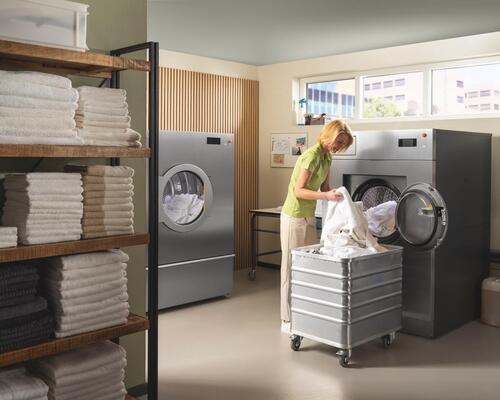
In today’s premium spa environment, every detail shapes the guest experience – right down to
the softness of towels and the freshness of linens. [more...]
+ More featured suppliers
COMPANY PROFILES
Voya Organic Beauty
Voya Organic Beauty, founded in 2006 in Ireland by Mark Walton and Kira Guckian Walton, is a private [more...]
TechnoAlpin Indoor
TechnoAlpin is the world leader for snowmaking systems. With the Indoor snow division, TechnoAlpin c [more...]
The sharp increase in energy prices has left some operators reeling, but there’s reason to be optimistic if we can learn from other sectors, while moving to a low carbon future
The sector must learn from other markets / Photo: Syda Productions/shutterstock
Soaring prices are focusing attention on energy security and sustainability and on page 46, we debate the issues as they relate to our sector with industry operators and energy experts.
We’re hearing talk of parents putting their children in wetsuits for swimming lessons, as operators cool pools, but it’s not yet clear if the savings made will exceed the business lost from customers who can’t tolerate a chilly swim – for even the best reasons.
The big picture is that until renewables and locally generated power dominate, we’ll be at the mercy of the global market for carbon-based power.
Counter-intuitively, even though going carbon neutral helps the planet, it isn’t a solution to energy price increases, as sustainably-generated power is currently up to six times more expensive than fossil fuels, putting the environment and business on a collision course.
We need bold, coordinated and tactical solutions and this will require us to explore other sectors to better understand how they manage and control their energy costs, as the health and fitness industry has been slow to invest in energy-saving tech and expertise.
Some supermarket operators, for example, transact directly with energy suppliers, agreeing to turn off all their freezers nationally for short periods during times of peak demand [within HSE guidelines] in return for cash – not only securing additional payments, but also saving energy in the process.
Imagine if pool operators coordinated joint negotiations to the point where they could also strike these kinds of deals for turning pool plant off for short windows of time during periods of peak energy demand? This could be one piece of the jigsaw in keeping facilities viable, while also saving carbon emissions.
We need more ideas and information such as this to enable us to find ways forward. Simply asking the government for money in the form of subsidies – as the sector is currently doing – is an obvious and well-worn step, but unlikely to be sustainable in the longer term, even if it yields short-term success.
Smart operators are looking for robust long-term solutions, investing in building management systems, Passivhaus facilities, and local power generation while aiming to cut every scrap of unneeded energy usage through best management practice.
It’s estimated that if all UK leisure centre operators cut their energy usage by only 10 per cent, for example, this part of the sector would save upwards of £70m a year, giving an idea of the scale of the opportunity.
It’s a shame it’s taken an energy crisis to set us on this path, but exciting to be heading for a lower-carbon future.
The Standards Authority for Touch in Cancer Care (SATCC) charity has announced its first five-
day Living with Cancer and Beyond retreat, which will be held at Carden Park Hotel and Spa in
Cheshire, UK, between 1 and 5 September.
Patmos Aktis, a Luxury Collection Resort and Spa, has opened in Greece, with a renovated and
rebranded wellness offering called Ansana Wellness and Spa.
The Mauna Kea Beach Hotel, an Autograph Collection property in Hawaii, US, has opened its
22,000 sq ft indoor-outdoor Spa at Mauna Kea as the final step in the property’s overall
renovation, which has cost more than US$180 million (€166 million, £140 mill
The UK spa review and discovery platform for consumers, the Good Spa Guide, has announced
it will host the Good Spa Guide Awards 2026 during an event on 16 November at Sopwell House
Hotel in St Albans, UK.
Eighty-four per cent of consumers now say wellness is a top priority in their lives, with this
percentage increasing year on year, according to a preview presentation of McKinsey’s Future of
Wellness 2026 research report.
Mass protests have been taking place since Monday 1 June in Albania over the development of
a luxury resort by Donald Trump’s daughter Ivanka Trump and her husband Jared Kushner.
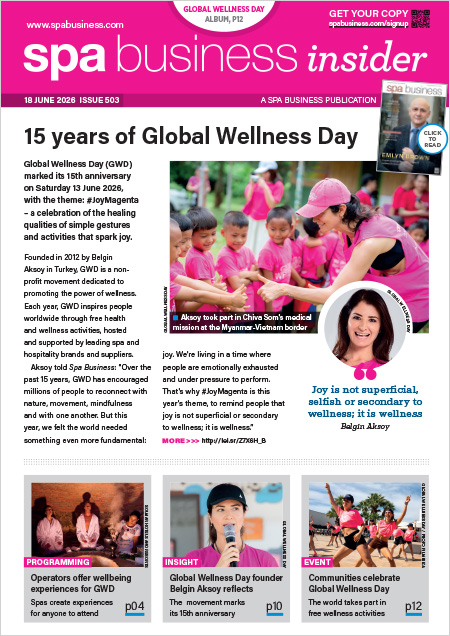
Global Wellness Day (GWD) marked its 15th anniversary on Saturday 13 June 2026, with the
theme: #JoyMagenta – a celebration of the healing qualities of simple gestures and activities
that spark joy.
Global luxury hospitality brand, Six Senses, has partnered with longevity healthcare provider,
HUM2N, to launch a clinic at Six Senses London, at The Whiteley.
As part of its first hotel partnership, Mayrlife – the medical health resort company known for its
site in Altaussee, Austria – has launched a day clinic at the Rosewood Vienna.
Premium London health club, KX Chelsea, will imminently unveil its most significant
redevelopment since its launch in 2002 to create an integrated wellness model combining
training, recovery and relaxation.
In today’s premium spa environment, every detail shapes the guest experience – right down to
the softness of towels and the freshness of linens. [more...]
+ More featured suppliers
COMPANY PROFILES
Voya Organic Beauty Voya Organic Beauty, founded in 2006 in Ireland by Mark Walton and Kira Guckian Walton, is a private [more...]