Yes! Send me the FREE digital editions of Spa Business and Spa Business insider magazines and the FREE weekly Spa Business and Spa Business insider ezines and breaking news alerts!
Employees are increasingly expecting more from their employers when it comes to wellbeing at work. Ann Marie Aguilar outlines the growing research behind the business case for healthy buildings and healthy organisations
Boosting ventilation rates has an economic benefit / shutterstock/hedgehog94
The last few years have shown us, as a society, the sheer importance of public health in built infrastructure. The COVID-19 pandemic brought about a greater social awareness of the connection between our health and the places where we live, play and work. On the latter, organisations have seen the largest shift in recent memory regarding how and where employees conduct business and many expect more from their employers with regard to ensuring their wellbeing at work.
The societal impetus for better health outcomes is clear. But how does this translate into organisational strategy? What about the business case beyond individual health in buildings?
Earlier this year, the International WELL Building Institute released Investing in Health Pays Back: The Growing Research Behind the Business Case for Healthy Buildings and Healthy Organizations. This compilation of nearly 60 independent studies, including research led by Massachusetts Institute of Technology (MIT) and Harvard’s T.H. Chan School of Public Health, showcases the real return on investment and other economic benefits of healthy buildings and healthy organisations.
Healthy buildings, healthy economy To understand the organisational impacts, we must first explore the scale of benefits at a macro level. Fundamentally, healthy buildings support a healthy economy. According to the research, by helping boost productivity and reduce symptoms associated with sickness, healthy building strategies have the potential to yield massive, economy-wide financial gains.
In the US, a 20 to 50 per cent reduction in ‘Sick Building Syndrome’ symptoms for office workers would power an annual productivity gain of US $20 $200 bn. Research also shows that boosting minimum ventilation rates in US offices (from eight to 15 litres per second) would create US $38 bn in annual economic benefit.
If the wide-reaching benefits are clear, the need for specific organisations to promote healthier spaces goes further. People are an organisation’s most valuable asset and when they are less engaged, the bottom line suffers. One study included in IWBI’s research review found that absenteeism costs US companies US $2,074 per employee per year, and the UK £595 per employee per year.
Another study found a productivity loss of US $61 bn per year in the US from common conditions such as headaches or back problems. In the Netherlands, researchers showed that workers lost an average of 2.5 days a year from unsatisfactory indoor environmental conditions, representing 25 per cent of total absenteeism.
Strategies for worker wellbeing These figures make clear the need to improve environmental conditions in the workplace. Incorporating human health considerations into corporate policies, as well as decisions about the design and operations of workplaces, is rapidly becoming common practice for developers, real estate owners and organisations.
Savvy organisations increasingly realise that pursuing strategies to improve their workers’ wellbeing can have a substantial impact on business objectives such as productivity, absenteeism, cognitive performance, recruitment and retention. But the path to implementing real change can be daunting in the marketplace.
In October of last year, a study in the Journal of Building and Environment found that WELL Certification drives significant benefits across occupant satisfaction, perceived health, wellbeing and productivity, including a near 30 per cent improvement in overall satisfaction with the workplace, which jumped from 42 per cent to 70 per cent and a 26 per cent overall increase in reported wellbeing scores.
Employee perception This year, IWBI commissioned The Harris Poll to gauge US employees’ perceptions of their employer’s investment into their health and wellbeing with IWBI’s 2023 State of Workforce Wellbeing Poll. The poll found that the majority of employees place a high value on a healthy work environment and how an organisation invests in their health, safety and wellbeing. The poll found: ● 96 per cent agree that a healthy work environment is necessary for productivity. ● 87 per cent agree that employers should be “ethically obligated” to create a work environment that enhances the health, safety and wellbeing of their employees. ● 84 per cent of employees agree that supporting the health of employees is a “must-have” for companies. ● 81 per cent agree that their company’s physical work environment has a major impact on their health and wellbeing.
What we long considered to be intuitive is now strikingly clear. Supporting employees’ overall health and wellbeing is in employers’ best interests – and from a business perspective, has the ability to impact the bottom line.
$2,074 Cost of absenteeism in the US, per employee, per year
2.5 days Average loss per year, per employee in The Netherlands due to unsatisfactory indoor environmental conditions
$38 billion Annual economic benefit of boosting
minimum ventilation rates in US offices
96% of employees say that a healthy work environment is necessary for productivity
IWBI
About the author:
Ann Marie Aguilar is senior vice president, EMEA for the International WELL Building Institute
The Spa Life UK Convention returns from 21–23 June 2026 at Whittlebury Park Hotel, Spa &
Golf Resort, bringing together spa managers, directors and owners for two days of focused
education, meaningful connection and commercial insight. [more...]
+ More featured suppliers
COMPANY PROFILES
Prism Light Pod
Prism Light Pod launched its first
whole-body red light bed in 2016. We
expanded with the Prism Li [more...]
TechnoAlpin Indoor
TechnoAlpin is the world leader for snowmaking systems. With the Indoor snow division, TechnoAlpin c [more...]
Employees are increasingly expecting more from their employers when it comes to wellbeing at work. Ann Marie Aguilar outlines the growing research behind the business case for healthy buildings and healthy organisations
Boosting ventilation rates has an economic benefit / shutterstock/hedgehog94
The last few years have shown us, as a society, the sheer importance of public health in built infrastructure. The COVID-19 pandemic brought about a greater social awareness of the connection between our health and the places where we live, play and work. On the latter, organisations have seen the largest shift in recent memory regarding how and where employees conduct business and many expect more from their employers with regard to ensuring their wellbeing at work.
The societal impetus for better health outcomes is clear. But how does this translate into organisational strategy? What about the business case beyond individual health in buildings?
Earlier this year, the International WELL Building Institute released Investing in Health Pays Back: The Growing Research Behind the Business Case for Healthy Buildings and Healthy Organizations. This compilation of nearly 60 independent studies, including research led by Massachusetts Institute of Technology (MIT) and Harvard’s T.H. Chan School of Public Health, showcases the real return on investment and other economic benefits of healthy buildings and healthy organisations.
Healthy buildings, healthy economy To understand the organisational impacts, we must first explore the scale of benefits at a macro level. Fundamentally, healthy buildings support a healthy economy. According to the research, by helping boost productivity and reduce symptoms associated with sickness, healthy building strategies have the potential to yield massive, economy-wide financial gains.
In the US, a 20 to 50 per cent reduction in ‘Sick Building Syndrome’ symptoms for office workers would power an annual productivity gain of US $20 $200 bn. Research also shows that boosting minimum ventilation rates in US offices (from eight to 15 litres per second) would create US $38 bn in annual economic benefit.
If the wide-reaching benefits are clear, the need for specific organisations to promote healthier spaces goes further. People are an organisation’s most valuable asset and when they are less engaged, the bottom line suffers. One study included in IWBI’s research review found that absenteeism costs US companies US $2,074 per employee per year, and the UK £595 per employee per year.
Another study found a productivity loss of US $61 bn per year in the US from common conditions such as headaches or back problems. In the Netherlands, researchers showed that workers lost an average of 2.5 days a year from unsatisfactory indoor environmental conditions, representing 25 per cent of total absenteeism.
Strategies for worker wellbeing These figures make clear the need to improve environmental conditions in the workplace. Incorporating human health considerations into corporate policies, as well as decisions about the design and operations of workplaces, is rapidly becoming common practice for developers, real estate owners and organisations.
Savvy organisations increasingly realise that pursuing strategies to improve their workers’ wellbeing can have a substantial impact on business objectives such as productivity, absenteeism, cognitive performance, recruitment and retention. But the path to implementing real change can be daunting in the marketplace.
In October of last year, a study in the Journal of Building and Environment found that WELL Certification drives significant benefits across occupant satisfaction, perceived health, wellbeing and productivity, including a near 30 per cent improvement in overall satisfaction with the workplace, which jumped from 42 per cent to 70 per cent and a 26 per cent overall increase in reported wellbeing scores.
Employee perception This year, IWBI commissioned The Harris Poll to gauge US employees’ perceptions of their employer’s investment into their health and wellbeing with IWBI’s 2023 State of Workforce Wellbeing Poll. The poll found that the majority of employees place a high value on a healthy work environment and how an organisation invests in their health, safety and wellbeing. The poll found: ● 96 per cent agree that a healthy work environment is necessary for productivity. ● 87 per cent agree that employers should be “ethically obligated” to create a work environment that enhances the health, safety and wellbeing of their employees. ● 84 per cent of employees agree that supporting the health of employees is a “must-have” for companies. ● 81 per cent agree that their company’s physical work environment has a major impact on their health and wellbeing.
What we long considered to be intuitive is now strikingly clear. Supporting employees’ overall health and wellbeing is in employers’ best interests – and from a business perspective, has the ability to impact the bottom line.
$2,074 Cost of absenteeism in the US, per employee, per year
2.5 days Average loss per year, per employee in The Netherlands due to unsatisfactory indoor environmental conditions
$38 billion Annual economic benefit of boosting
minimum ventilation rates in US offices
96% of employees say that a healthy work environment is necessary for productivity
IWBI
About the author:
Ann Marie Aguilar is senior vice president, EMEA for the International WELL Building Institute
Mass protests have been taking place since Monday 1 June in Albania over the development of
a luxury resort by Donald Trump’s daughter Ivanka Trump and her husband Jared Kushner.
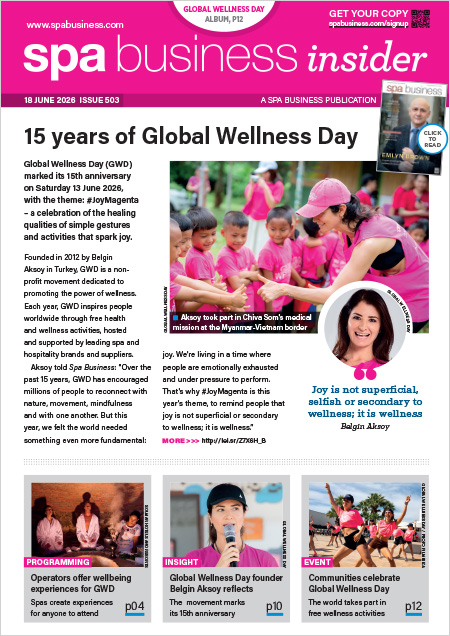
Global Wellness Day (GWD) marked its 15th anniversary on Saturday 13 June 2026, with the
theme: #JoyMagenta – a celebration of the healing qualities of simple gestures and activities
that spark joy.
Global luxury hospitality brand, Six Senses, has partnered with longevity healthcare provider,
HUM2N, to launch a clinic at Six Senses London, at The Whiteley.
As part of its first hotel partnership, Mayrlife – the medical health resort company known for its
site in Altaussee, Austria – has launched a day clinic at the Rosewood Vienna.
Premium London health club, KX Chelsea, will imminently unveil its most significant
redevelopment since its launch in 2002 to create an integrated wellness model combining
training, recovery and relaxation.
Rosewood Le Guanahani St Barth, on the northeast coast of Saint Barthélemy in the French
West Indies, is offering a programme of ocean-inspired yoga classes between 8-14 June to
celebrate Global Wellness Day (GWD).
Hotel de France, located on the British Isle of Jersey, has created a wellness retreat package
that includes a hot yoga session that will take place in Jersey Zoo’s butterfly sanctuary.
The Ritz-Carlton, Langkawi, in Malaysia, has revealed a schedule for Global Wellness Day
(GWD) that includes guided rainforest walks, mindful movement and guided coastal meditation
experiences.
Longevitix, a clinical platform for preventive and longevity medicine, has launched its AI-
powered intelligence system to help physicians deliver continuous, personalised longevity-
focused care at scale.
Atmantan Wellness Centre, an integrative wellness destination in Mulshi, near Pune in India, is
expanding its portfolio by adding a new centre in Hyderabad that will launch between 2028 and
2029.
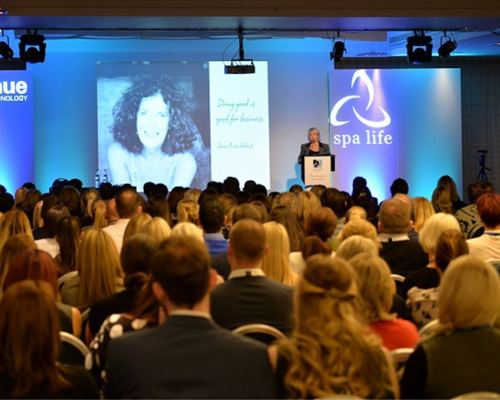
The Spa Life UK Convention returns from 21–23 June 2026 at Whittlebury Park Hotel, Spa &
Golf Resort, bringing together spa managers, directors and owners for two days of focused
education, meaningful connection and commercial insight. [more...]
+ More featured suppliers
COMPANY PROFILES
Prism Light Pod Prism Light Pod launched its first
whole-body red light bed in 2016. We
expanded with the Prism Li [more...]