We need a focus on prevention to reverse stalling life expectancy trends / Photo: Shutterstock / Sabrina Bracher
There was a moment in 2021, at the point the UK’s Office for Health Improvement and Disparities (OHID) was being launched, when focus was finally given to improving the nation’s health and reducing inequalities.
The then Secretary of State for Health and Social Care, Sajid Javid, said: “By focusing on preventing and not just treating poor health, [OHID] will tackle health disparities to break the link between people’s background and their prospects for a healthy life.”
This was to be the moment the building blocks for good health would finally be considered across the whole of government; OHID would coordinate activity across Whitehall “to address the wider drivers of good health, from employment to housing, education and the environment”.
Ambitions have been diluted Fast forward two years and this ambition is barely recognisable. A commitment to produce a standalone, cross-government health disparities white paper has been diluted beyond recognition. The agenda is now a minor feature in the major conditions strategy (www.hcmmag.com/majorconditions), a document rooted firmly in the Department of Health and Social Care and more specifically the NHS.
While the document lists primary prevention – tackling the root causes of ill health – as a priority, there are no substantive commitments likely to reverse stalling life expectancy trends or the gap that exists between different areas.
There’s only one new policy announcement in the prevention space and this is government consulting on adding pack inserts to tobacco products to encourage smokers to quit. This new policy is not enough to address the impact of risk factors such as obesity, smoking and alcohol consumption on people’s health.
The report is anchored in the role of clinical services and places too much focus on individual behaviour change and personalised prevention. This ignores broader evidence on the state’s crucial role in taking population-level action on risk factors and the wider determinants.
Lack of ambition This lack of ambition should be a concern for us all. The nation’s health is central to society’s strength and growth.
Having commented on previous moments when the ambition was watered down, it has become increasingly difficult to find anything new to say or be surprised by the lack of ambition shown. Perhaps it’s unsurprising then that the external commentary around the strategy is quiet, reflecting a feeling that there is nothing to gain by making the same points – again – accepting that a government in its last year of a five-year term is unlikely to make bold, new moves.
But the point that communities are being left behind by a lack of ambition and leadership is one to continue making. There will be very little impact on life expectancy without a new approach that has strong political leadership at its core and manifestos for the next election will be the next realistic point for such a vision to be set out.
A lack of ambition should be a concern for us all. The nation’s health is central to society’s strength and growth. We should be demanding more from government.
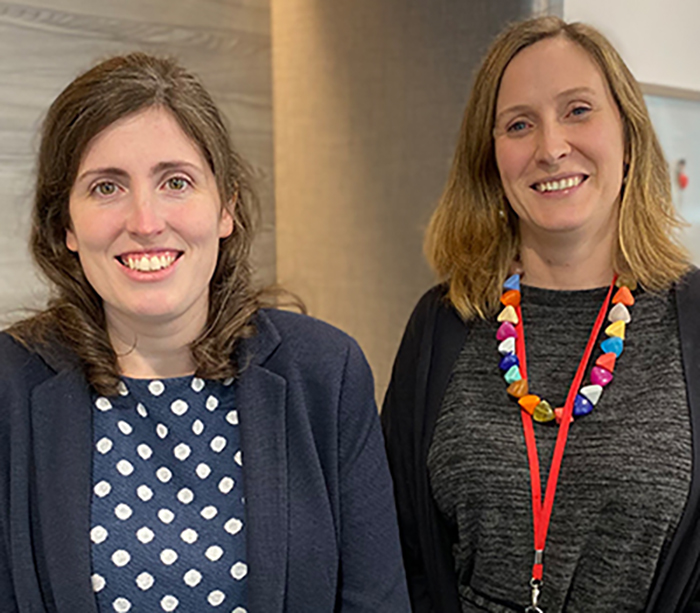
photo: The Health Foundation
By Katherine Merrifield and Gwen Nightingale –
Job-share assistant directors,
The Health Foundation Healthy Lives team
Le Atelier by C.O.D.E. doesn't offer a standard bespoke service, it provides a highly
customised approach to designing massage beds and loungers in high-end wellness
environments. [more...]
We need a focus on prevention to reverse stalling life expectancy trends / Photo: Shutterstock / Sabrina Bracher
There was a moment in 2021, at the point the UK’s Office for Health Improvement and Disparities (OHID) was being launched, when focus was finally given to improving the nation’s health and reducing inequalities.
The then Secretary of State for Health and Social Care, Sajid Javid, said: “By focusing on preventing and not just treating poor health, [OHID] will tackle health disparities to break the link between people’s background and their prospects for a healthy life.”
This was to be the moment the building blocks for good health would finally be considered across the whole of government; OHID would coordinate activity across Whitehall “to address the wider drivers of good health, from employment to housing, education and the environment”.
Ambitions have been diluted Fast forward two years and this ambition is barely recognisable. A commitment to produce a standalone, cross-government health disparities white paper has been diluted beyond recognition. The agenda is now a minor feature in the major conditions strategy (www.hcmmag.com/majorconditions), a document rooted firmly in the Department of Health and Social Care and more specifically the NHS.
While the document lists primary prevention – tackling the root causes of ill health – as a priority, there are no substantive commitments likely to reverse stalling life expectancy trends or the gap that exists between different areas.
There’s only one new policy announcement in the prevention space and this is government consulting on adding pack inserts to tobacco products to encourage smokers to quit. This new policy is not enough to address the impact of risk factors such as obesity, smoking and alcohol consumption on people’s health.
The report is anchored in the role of clinical services and places too much focus on individual behaviour change and personalised prevention. This ignores broader evidence on the state’s crucial role in taking population-level action on risk factors and the wider determinants.
Lack of ambition This lack of ambition should be a concern for us all. The nation’s health is central to society’s strength and growth.
Having commented on previous moments when the ambition was watered down, it has become increasingly difficult to find anything new to say or be surprised by the lack of ambition shown. Perhaps it’s unsurprising then that the external commentary around the strategy is quiet, reflecting a feeling that there is nothing to gain by making the same points – again – accepting that a government in its last year of a five-year term is unlikely to make bold, new moves.
But the point that communities are being left behind by a lack of ambition and leadership is one to continue making. There will be very little impact on life expectancy without a new approach that has strong political leadership at its core and manifestos for the next election will be the next realistic point for such a vision to be set out.
A lack of ambition should be a concern for us all. The nation’s health is central to society’s strength and growth. We should be demanding more from government.
photo: The Health Foundation
By Katherine Merrifield and Gwen Nightingale –
Job-share assistant directors,
The Health Foundation Healthy Lives team
A recent survey by the UK Spa Association (UKSA) into the industry’s approach to cancer care
has revealed that almost half of participating respondents (46 per cent) are unaware that
cancer is a disability and guests with a cancer diagnosis must be given
Mexican operator, Solmar Hotels and Resorts, is hosting a series of events in celebration of
Global Wellness Day, including a Temazcal ceremony at its Playa Grande Resort and Spa in Los
Cabos.
Mandarin Oriental has announced a standalone residence brand, Mansions, which will debut at
Emirates Palace, Mandarin Oriental Mansions, Abu Dhabi, in 2029.
Four Seasons Resort The Nam Hai in Hoi An, Vietnam, has put together a Global Wellness Day
(GWD) agenda with activations rooted in nature and shaped by four pillars of Joy – in
alignment with the day’s theme #JoyMagenta.
The Global Wellness Summit (GWS) will celebrate its 20th anniversary at the 2026 event in
Phuket, Thailand, later this year with the theme: The Science, Art and Soul of Wellness.
Auko, an all-inclusive development, is opening in Phong Nha in Vietnam in Q3 2026, with a
series of 30 tented eco-lodges and wellness hospitality operations by Lumina Wellbeing.
Therme Manchester’s 28-acre development, which will include interconnected glass pavilions
that measure 65,000sq m, will be the largest bathing and wellbeing attraction in the world once
complete, according to prof David Russell, CEO of Therme UK.
Naples Beach Club, a Four Seasons Resort, has opened a 2,800sq m spa called The Sanctuary,
with the design and concept inspired by the Native American people that populated Florida’s
Southwest coast – the Calusa.
Swire Hotels’ luxury hospitality brand Upper House has revealed it will roll out its two-day
House of Healing retreats at its three hotels in Hong Kong, Chengdu and Shanghai.
Le Atelier by C.O.D.E. doesn't offer a standard bespoke service, it provides a highly
customised approach to designing massage beds and loungers in high-end wellness
environments. [more...]