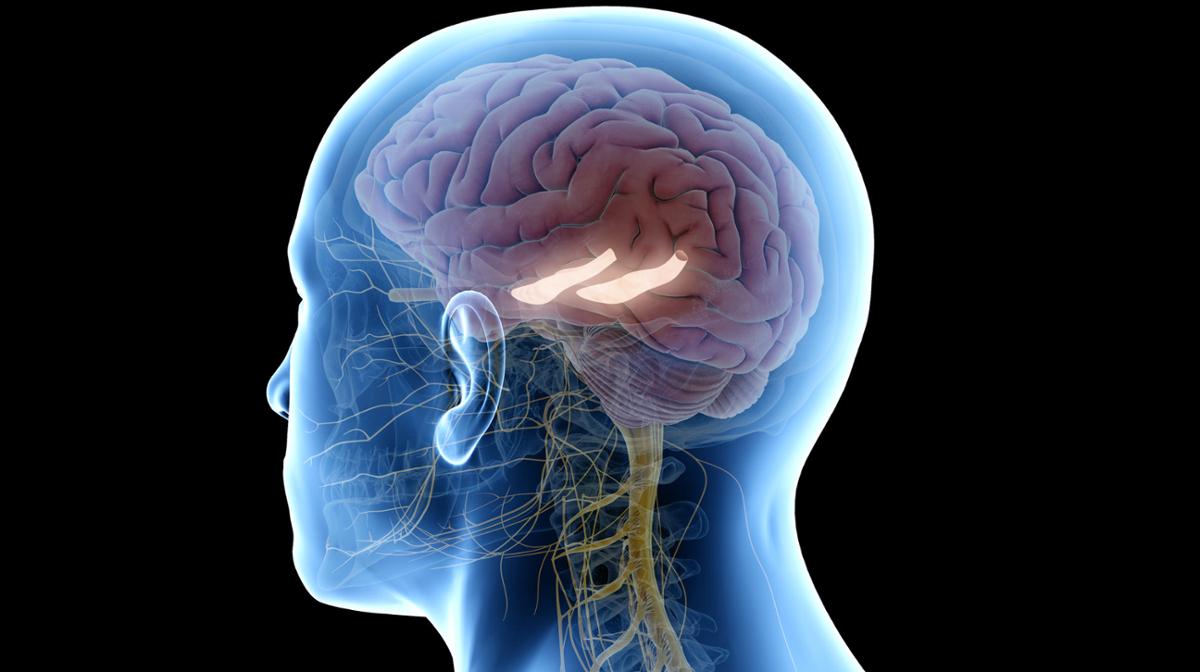
The hippocampus has not yet been targeted to treat obesity / photo: Shutterstock / SciePro
Research from the Perelman School of Medicine at the University of Pennsylvania, US, suggests disrupted connections between memory and appetite-regulating brain circuits are directly proportional to body mass index (BMI).
The link is most notable in patients who suffer from disordered overeating that can lead to obesity, such as binge eating disorder (BED).
Published in the journal, Nature, the research – titled An orexigenic subnetwork within the human hippocampus – found individuals who are obese have impaired connections between the dorsolateral hippocampus (dlHPC) and the lateral hypothalamus (LH), which may impact their ability to control or regulate emotional responses when anticipating rewarding meals or treats.
The dlHPC is located in the region of the brain that processes memory and the LH is in the region of the brain that’s responsible for keeping the body in a stable state – homeostasis.
The team monitored brain activity as patients anticipated – and then received – a sweet treat (a chocolate milkshake).
The results Results showed both the dlHPC and the LH activated simultaneously when participants anticipated receiving the rewarding meal. The dlHPC and LH also exhibited extremely strong connectivity.
In individuals with obesity, researchers found that the impairment of this hypothalamus-hippocampus circuit was directly proportional to their BMI.
In addition, for participants with a high BMI, the connection was even more disturbed.
To further validate the connection, the research team used a technique called ‘brain clearing’ to analyse brain tissue – this revealed a melanin-concentrating hormone, which is known to regulate feeding behaviour and is produced in the LH. They found the presence of MCH in the dlHPC and nowhere else, confirming a link between the two regions.
Previous research has found an association with loss of function in the human hippocampus in individuals with obesity and related disordered eating, such as BED.
However, outside of imaging techniques such as magnetic resonance imaging (MRI), the role of the hippocampus has been difficult to study.
About the findings Casey Halpern, associate professor of neurosurgery and one of the study authors, said: “These findings underscore that the brains of some individuals can be fundamentally different in regions that increase the risk of obesity.
“Conditions such as obesity are a lot more complicated than simply managing self-control and eating healthier.
“What these individuals need is not more willpower, but the therapeutic equivalent of an electrician that can make right these connections inside their brain.
“We hope to be able to use this research to develop novel therapies to help improve function of this critical circuit that seems to go awry in patients who are obese.”
Le Atelier by C.O.D.E. doesn't offer a standard bespoke service, it provides a highly
customised approach to designing massage beds and loungers in high-end wellness
environments. [more...]
The hippocampus has not yet been targeted to treat obesity / photo: Shutterstock / SciePro
Research from the Perelman School of Medicine at the University of Pennsylvania, US, suggests disrupted connections between memory and appetite-regulating brain circuits are directly proportional to body mass index (BMI).
The link is most notable in patients who suffer from disordered overeating that can lead to obesity, such as binge eating disorder (BED).
Published in the journal, Nature, the research – titled An orexigenic subnetwork within the human hippocampus – found individuals who are obese have impaired connections between the dorsolateral hippocampus (dlHPC) and the lateral hypothalamus (LH), which may impact their ability to control or regulate emotional responses when anticipating rewarding meals or treats.
The dlHPC is located in the region of the brain that processes memory and the LH is in the region of the brain that’s responsible for keeping the body in a stable state – homeostasis.
The team monitored brain activity as patients anticipated – and then received – a sweet treat (a chocolate milkshake).
The results Results showed both the dlHPC and the LH activated simultaneously when participants anticipated receiving the rewarding meal. The dlHPC and LH also exhibited extremely strong connectivity.
In individuals with obesity, researchers found that the impairment of this hypothalamus-hippocampus circuit was directly proportional to their BMI.
In addition, for participants with a high BMI, the connection was even more disturbed.
To further validate the connection, the research team used a technique called ‘brain clearing’ to analyse brain tissue – this revealed a melanin-concentrating hormone, which is known to regulate feeding behaviour and is produced in the LH. They found the presence of MCH in the dlHPC and nowhere else, confirming a link between the two regions.
Previous research has found an association with loss of function in the human hippocampus in individuals with obesity and related disordered eating, such as BED.
However, outside of imaging techniques such as magnetic resonance imaging (MRI), the role of the hippocampus has been difficult to study.
About the findings Casey Halpern, associate professor of neurosurgery and one of the study authors, said: “These findings underscore that the brains of some individuals can be fundamentally different in regions that increase the risk of obesity.
“Conditions such as obesity are a lot more complicated than simply managing self-control and eating healthier.
“What these individuals need is not more willpower, but the therapeutic equivalent of an electrician that can make right these connections inside their brain.
“We hope to be able to use this research to develop novel therapies to help improve function of this critical circuit that seems to go awry in patients who are obese.”
Mass protests have been taking place since Monday 1 June in Albania over the development of
a luxury resort by Donald Trump’s daughter Ivanka Trump and her husband Jared Kushner.
Global Wellness Day (GWD) marked its 15th anniversary on Saturday 13 June 2026, with the
theme: #JoyMagenta – a celebration of the healing qualities of simple gestures and activities
that spark joy.
Global luxury hospitality brand, Six Senses, has partnered with longevity healthcare provider,
HUM2N, to launch a clinic at Six Senses London, at The Whiteley.
As part of its first hotel partnership, Mayrlife – the medical health resort company known for its
site in Altaussee, Austria – has launched a day clinic at the Rosewood Vienna.
Premium London health club, KX Chelsea, will imminently unveil its most significant
redevelopment since its launch in 2002 to create an integrated wellness model combining
training, recovery and relaxation.
Rosewood Le Guanahani St Barth, on the northeast coast of Saint Barthélemy in the French
West Indies, is offering a programme of ocean-inspired yoga classes between 8-14 June to
celebrate Global Wellness Day (GWD).
Hotel de France, located on the British Isle of Jersey, has created a wellness retreat package
that includes a hot yoga session that will take place in Jersey Zoo’s butterfly sanctuary.
The Ritz-Carlton, Langkawi, in Malaysia, has revealed a schedule for Global Wellness Day
(GWD) that includes guided rainforest walks, mindful movement and guided coastal meditation
experiences.
Longevitix, a clinical platform for preventive and longevity medicine, has launched its AI-
powered intelligence system to help physicians deliver continuous, personalised longevity-
focused care at scale.
Atmantan Wellness Centre, an integrative wellness destination in Mulshi, near Pune in India, is
expanding its portfolio by adding a new centre in Hyderabad that will launch between 2028 and
2029.
Le Atelier by C.O.D.E. doesn't offer a standard bespoke service, it provides a highly
customised approach to designing massage beds and loungers in high-end wellness
environments. [more...]