Yes! Send me the FREE digital editions of Spa Business and Spa Business insider magazines and the FREE weekly Spa Business and Spa Business insider ezines and breaking news alerts!
Market intelligence outfit Leisure
DB has published its London
Boutique Studio Report 2023.
Founder David Minton outlines key
trends highlighted by the research
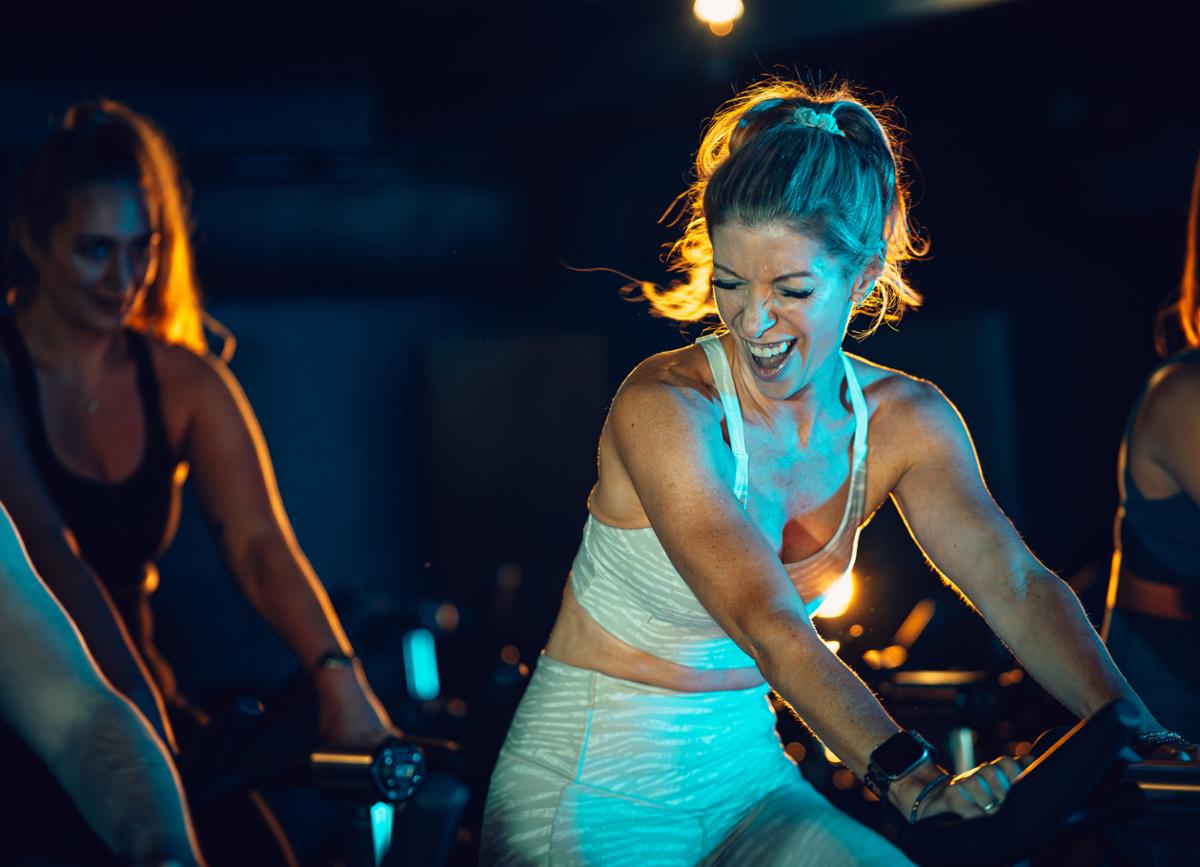
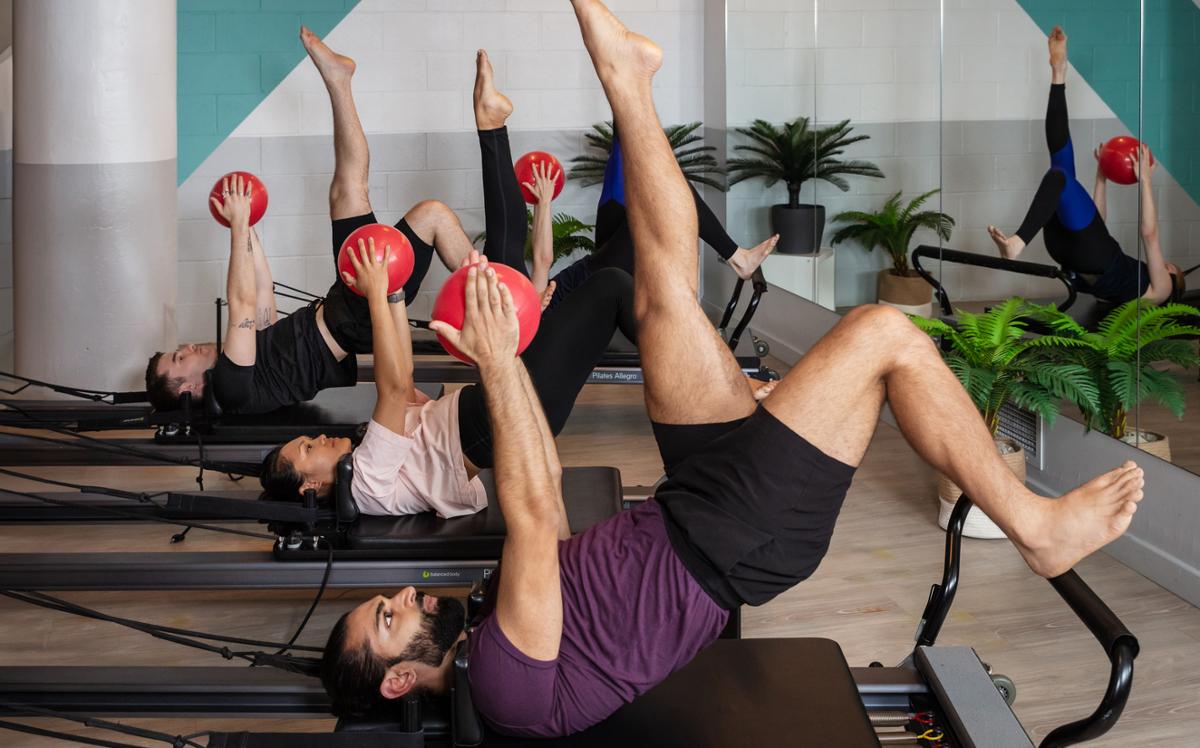
There are now 300 boutiques in London according to Leisure DB / photo: United Fitness Brands
In 2018, when we published the first London Boutique Studio Report, it was easy to be seduced by the boutique lifestyle. Founded by individuals with ideas, passion and energy, the premium experiences, environments and emotions inspired loyal communities.
2018 was the heyday for operators and consumers, with visitors coming from far and wide to try the capital’s latest boutique concepts – 62 studios opened in London that year, more than in New York City – while globally F45, then the fastest-growing brand, opened 900-plus sites.
The momentum was still there in February 2020, when boutique fitness authority Emma Barry published her book, Building a Badass Boutique. I was honoured to write the foreword and speak at the launch about how the industry was having a ‘fitainment’ moment like never before. One month later came the COVID-19 pandemic and lockdowns.
The market has been in too much flux to report reliably since the start of the pandemic, but this year, as things stabilise, we’ve revisited the London boutique sector to discover an industry that’s finding its feet again amid the distributions of recent years.
In spite of a number of permanent closures and some brands falling into administration or liquidation, many have emerged leaner, stronger and more nimble. Openings may be fewer than in the ‘peak boutique’ years, but closures are slowing, as surviving brands stabilise and start to rebuild.
Finances remain tight and new funding can be hard to come by for some, but London’s operators retain the pioneering spirit, responding to changing consumer behaviours with creativity and passion.
Let’s take a look at some of the key themes of this year’s report, which contains both statistics and in-depth interviews with leading players, taking as read that this is a sector adapting to hybrid working patterns that render central London a predominantly Tuesday–Thursday hub.
A new model “Fitness boutiques can claim responsibility for driving a lot of emotional and financial value into group fitness experiences over the last 15 years,” writes Barry in the report.
“However, my unbridled pre-pandemic optimism has been tempered and I now have a more balanced view. It now feels like a tough sector.”
“What’s now clear is that a class pack-based model is not the path to business sustainability,” say Richard Smith and Steph Davies from United Fitness Brands (UFB). “Neither can you rely on brand alone to drive custom. This is a big challenge for the boutique sector, which is having to explore recurring membership models to support its commercial success in this new era.”
“Meanwhile big box clubs are becoming more flexible, with short-term memberships, punch packs, casual visits and day passes,” says Barry. “As the HVLP (high value, low price) and some mid- and luxury-level segments flourish, boutiques also come down to unit economics – site-by-site profitability – and consolidation will continue as operational budgets remain tight.”
Yet in spite of continued challenges, operators are standing firm. “‘Post-COVID’ is a constantly evolving state,” says Sandy Macaskill, CEO of Barry’s UK. “The landscape may have changed for now, but we can see forward to a time when it changes back again, so, we haven’t reduced our schedules, we’ve taken risks and set ourselves up with growth opportunities.”
Confused definitions “It can be a confused and saturated market, not helped by big boxes coming in and calling themselves boutiques,” say Smith and Davies. “‘Boutique’ has become a buzzword and it’s led to a lack of clarity around its definition.”
“In its heyday, ‘boutique’ meant uniqueness, expert focus within a single discipline, elevated touches and the one-off specialness of a small business that people were willing to travel across town for,” says Barry. “As boutique brands have scaled, big boxes have created high-quality in-club boutiques and some regions have become oversaturated by a genre, so that uniqueness has dissipated in places.
“The perspectives that used to set boutiques apart have been analysed and understood and absorbed into other businesses, such as big box gyms, corporate sites and residential communities. These fitness businesses are taking elements of boutique and placing them in their own spaces,” says Barry.
“One of the biggest threats to the boutique sector is gyms,” confirms Ten Health & Fitness founder Joanne Mathews, “which is ironic given that when we launched in 2007, we were the antidote to impersonal big boxes. Now we see the likes of Third Space really excelling, including in its class offering – where you’ll see reformer classes on the timetable – and securing investment to continue its growth”.
Speaking of reformer pilates, this is the hot trend referenced unanimously by our interviewees. However, says Frame’s Joan Murphy: “I’m not seeing many brand sites opening, but quite a few existing boutiques are converting to reformer pilates or adding it to their class portfolio.”
A self-inflicted threat? “Why does the boutique industry find it necessary to consistently discount?” asks Mathews. “We’d all be far better off if this didn’t happen: it risks commoditising the boutique fitness product.”
“The biggest danger to the sector is the constant discounting and race to the bottom,” agrees Stanbury.
“The boutique model does work and if you have the best instructors and can deliver excellence across every touchpoint to meet high customer expectations every time, you can fill classes to high capacity at a premium price.
“However, you need to foster community and create strong brands to build loyal customer bases that won’t be distracted by other studios’ flash sales,” he says. “If you can achieve that, you’ll be in good shape.”
“I see the future of boutiques as positive, but only if we can stop discounting, and only if we create a healthier, more transparent environment,” adds Psycle CEO, David Watt.
A multi-modality future “I believe that, with a few exceptions, the era of the one-genre boutique is over,” says Barry. “There’s been a natural swing towards diversification, with consumers seeking variety and boutique business owners wanting to meet customer needs and capture more of the wallet-share.”
Blok London co-founder, Ed Stanbury, goes one step further, saying: “I’ve always believed the single-format and limited multi-format boutique studio model is fundamentally flawed. Consumers can’t achieve balance by doing individual types of workout in isolation. That’s why Blok has always had a cross-discipline approach and why we’re seeing many boutiques expand into additional disciplines… even when the clue to their expertise lies in their name.”
“Variety must be delivered in the right way and “right” depends on your offering, your model and location,” advises Emma Barry. “Take Barry’s as an example of best practice. It’s taken its time to understand its market deeply and has not been sidetracked. It introduced new concepts Lift and Ride, but both of these uphold the original Red Room vibe, are based on clear customer needs and were piloted extensively before rollout.
“Diversification hasn’t always worked as well in other boutique operations, where a set of programmes have sometimes come out under one brand, seemingly more in response to trends than to a long-term view of customer needs, brand authenticity and the ability to deliver a consistently fantastic experience.
“Diversification can work within one brand, but it’s important to make sure it’s authentic, based on a deep analysis of customer needs and tested to ensure people actually come and are happy to pay.”
Consolidation and collaboration An alternative approach can be to bring separate boutique brands together behind the scenes, as multi-brand operator, United Fitness Brands, has done in London, leaving each brand distinct from a customer-facing perspective, as Smith and Davies explain: “Our multiple brands enable us to offer a choice: membership of one specific boutique brand, or accessing all our brands and studios through our Studio Pass membership – we’re able to offer variety, all within one business.”
Psycle is also looking at consolidation, but intends to do it under its own umbrella, says Watt: “I believe the future of boutique lies in the ability to reach scale,” he says. “Consolidation under one brand represents a great opportunity to achieve that.
“There are a large number of small operators that are running on survival right now,” he continues. “I believe the way for these businesses to succeed is to start to think about ways to pool their assets, driving economies of scale that help them uplift the quality of their product, offer consistency to the customer and slowly regain price appreciation. I believe joining bigger, more established businesses is the way to do that.”
Leisure DB chair and industry veteran, David Turner agrees, saying “Ironically, it’s an approach that begins to ‘reconstruct’ the multi-disciplinary, big-box clubs that boutiques had previously ‘deconstructed’ – but now with a different pricing model.”
A people problem Staffing is a now huge challenge, says Barry: “Boutiques have always prioritised the quality of their talent, but the pain of finding and training new staff in high-churn roles is now very real, with a smaller, younger, less experienced labour pool.”
Mathews agrees: “There simply aren’t enough people in central London to fill all the jobs that need filling, due to the double impact of Brexit and the ‘new normal’ work-life balance and these staffing challenges can make it hard to have a stable business.
“We’re seeing interesting shifts in the employment market – not least having four generations simultaneously in the workforce for the first time in history. That’s imposing very diverse demands on employers and we need to understand these shifts if we’re to recruit and retain a great team.”
To franchise… or not? “We’re on a mission to get more people moving, and provided we can bring passionate people on board who share our ethos, franchising will be the fastest way to achieve that goal,” says Murphy.
UFB also sees franchising as “very much part” of its long-term strategy: “It may not be right for all our brands, but we’re considering opportunities across our portfolio,” says Smith.
“Franchising can be a hugely powerful way to get your brand out there, provided you have the right partners who take on the brand as if it were their own,” confirms Macaskill.
But other experts sound a warning bell. Cameron Falloon, founder of the BFT (Body Fit Training) franchise, which is now part of Xponential Fitness, says: “I’ve seen a lot more boutique brands turn to franchising recently and I’m not convinced all will succeed.”
Falloon’s advice? “If you have a boutique studio product you think could work as a franchise, develop your IP and don’t be in a rush… You don’t want to do early adopters a disservice by launching a product that keeps changing. Know what your next five years looks like and what it’s going to take to get there.”
Le Atelier by C.O.D.E. doesn't offer a standard bespoke service, it provides a highly
customised approach to designing massage beds and loungers in high-end wellness
environments. [more...]
+ More featured suppliers
COMPANY PROFILES
Blu Spas, Inc.
Blu is a full-service firm offering project feasibility, planning and design as well as operational [more...]
Myndstream
The Stream, Myndstream's purpose-built streaming service enables you to personalise the music to sui [more...]
Market intelligence outfit Leisure
DB has published its London
Boutique Studio Report 2023.
Founder David Minton outlines key
trends highlighted by the research
There are now 300 boutiques in London according to Leisure DB / photo: United Fitness Brands
In 2018, when we published the first London Boutique Studio Report, it was easy to be seduced by the boutique lifestyle. Founded by individuals with ideas, passion and energy, the premium experiences, environments and emotions inspired loyal communities.
2018 was the heyday for operators and consumers, with visitors coming from far and wide to try the capital’s latest boutique concepts – 62 studios opened in London that year, more than in New York City – while globally F45, then the fastest-growing brand, opened 900-plus sites.
The momentum was still there in February 2020, when boutique fitness authority Emma Barry published her book, Building a Badass Boutique. I was honoured to write the foreword and speak at the launch about how the industry was having a ‘fitainment’ moment like never before. One month later came the COVID-19 pandemic and lockdowns.
The market has been in too much flux to report reliably since the start of the pandemic, but this year, as things stabilise, we’ve revisited the London boutique sector to discover an industry that’s finding its feet again amid the distributions of recent years.
In spite of a number of permanent closures and some brands falling into administration or liquidation, many have emerged leaner, stronger and more nimble. Openings may be fewer than in the ‘peak boutique’ years, but closures are slowing, as surviving brands stabilise and start to rebuild.
Finances remain tight and new funding can be hard to come by for some, but London’s operators retain the pioneering spirit, responding to changing consumer behaviours with creativity and passion.
Let’s take a look at some of the key themes of this year’s report, which contains both statistics and in-depth interviews with leading players, taking as read that this is a sector adapting to hybrid working patterns that render central London a predominantly Tuesday–Thursday hub.
A new model “Fitness boutiques can claim responsibility for driving a lot of emotional and financial value into group fitness experiences over the last 15 years,” writes Barry in the report.
“However, my unbridled pre-pandemic optimism has been tempered and I now have a more balanced view. It now feels like a tough sector.”
“What’s now clear is that a class pack-based model is not the path to business sustainability,” say Richard Smith and Steph Davies from United Fitness Brands (UFB). “Neither can you rely on brand alone to drive custom. This is a big challenge for the boutique sector, which is having to explore recurring membership models to support its commercial success in this new era.”
“Meanwhile big box clubs are becoming more flexible, with short-term memberships, punch packs, casual visits and day passes,” says Barry. “As the HVLP (high value, low price) and some mid- and luxury-level segments flourish, boutiques also come down to unit economics – site-by-site profitability – and consolidation will continue as operational budgets remain tight.”
Yet in spite of continued challenges, operators are standing firm. “‘Post-COVID’ is a constantly evolving state,” says Sandy Macaskill, CEO of Barry’s UK. “The landscape may have changed for now, but we can see forward to a time when it changes back again, so, we haven’t reduced our schedules, we’ve taken risks and set ourselves up with growth opportunities.”
Confused definitions “It can be a confused and saturated market, not helped by big boxes coming in and calling themselves boutiques,” say Smith and Davies. “‘Boutique’ has become a buzzword and it’s led to a lack of clarity around its definition.”
“In its heyday, ‘boutique’ meant uniqueness, expert focus within a single discipline, elevated touches and the one-off specialness of a small business that people were willing to travel across town for,” says Barry. “As boutique brands have scaled, big boxes have created high-quality in-club boutiques and some regions have become oversaturated by a genre, so that uniqueness has dissipated in places.
“The perspectives that used to set boutiques apart have been analysed and understood and absorbed into other businesses, such as big box gyms, corporate sites and residential communities. These fitness businesses are taking elements of boutique and placing them in their own spaces,” says Barry.
“One of the biggest threats to the boutique sector is gyms,” confirms Ten Health & Fitness founder Joanne Mathews, “which is ironic given that when we launched in 2007, we were the antidote to impersonal big boxes. Now we see the likes of Third Space really excelling, including in its class offering – where you’ll see reformer classes on the timetable – and securing investment to continue its growth”.
Speaking of reformer pilates, this is the hot trend referenced unanimously by our interviewees. However, says Frame’s Joan Murphy: “I’m not seeing many brand sites opening, but quite a few existing boutiques are converting to reformer pilates or adding it to their class portfolio.”
A self-inflicted threat? “Why does the boutique industry find it necessary to consistently discount?” asks Mathews. “We’d all be far better off if this didn’t happen: it risks commoditising the boutique fitness product.”
“The biggest danger to the sector is the constant discounting and race to the bottom,” agrees Stanbury.
“The boutique model does work and if you have the best instructors and can deliver excellence across every touchpoint to meet high customer expectations every time, you can fill classes to high capacity at a premium price.
“However, you need to foster community and create strong brands to build loyal customer bases that won’t be distracted by other studios’ flash sales,” he says. “If you can achieve that, you’ll be in good shape.”
“I see the future of boutiques as positive, but only if we can stop discounting, and only if we create a healthier, more transparent environment,” adds Psycle CEO, David Watt.
A multi-modality future “I believe that, with a few exceptions, the era of the one-genre boutique is over,” says Barry. “There’s been a natural swing towards diversification, with consumers seeking variety and boutique business owners wanting to meet customer needs and capture more of the wallet-share.”
Blok London co-founder, Ed Stanbury, goes one step further, saying: “I’ve always believed the single-format and limited multi-format boutique studio model is fundamentally flawed. Consumers can’t achieve balance by doing individual types of workout in isolation. That’s why Blok has always had a cross-discipline approach and why we’re seeing many boutiques expand into additional disciplines… even when the clue to their expertise lies in their name.”
“Variety must be delivered in the right way and “right” depends on your offering, your model and location,” advises Emma Barry. “Take Barry’s as an example of best practice. It’s taken its time to understand its market deeply and has not been sidetracked. It introduced new concepts Lift and Ride, but both of these uphold the original Red Room vibe, are based on clear customer needs and were piloted extensively before rollout.
“Diversification hasn’t always worked as well in other boutique operations, where a set of programmes have sometimes come out under one brand, seemingly more in response to trends than to a long-term view of customer needs, brand authenticity and the ability to deliver a consistently fantastic experience.
“Diversification can work within one brand, but it’s important to make sure it’s authentic, based on a deep analysis of customer needs and tested to ensure people actually come and are happy to pay.”
Consolidation and collaboration An alternative approach can be to bring separate boutique brands together behind the scenes, as multi-brand operator, United Fitness Brands, has done in London, leaving each brand distinct from a customer-facing perspective, as Smith and Davies explain: “Our multiple brands enable us to offer a choice: membership of one specific boutique brand, or accessing all our brands and studios through our Studio Pass membership – we’re able to offer variety, all within one business.”
Psycle is also looking at consolidation, but intends to do it under its own umbrella, says Watt: “I believe the future of boutique lies in the ability to reach scale,” he says. “Consolidation under one brand represents a great opportunity to achieve that.
“There are a large number of small operators that are running on survival right now,” he continues. “I believe the way for these businesses to succeed is to start to think about ways to pool their assets, driving economies of scale that help them uplift the quality of their product, offer consistency to the customer and slowly regain price appreciation. I believe joining bigger, more established businesses is the way to do that.”
Leisure DB chair and industry veteran, David Turner agrees, saying “Ironically, it’s an approach that begins to ‘reconstruct’ the multi-disciplinary, big-box clubs that boutiques had previously ‘deconstructed’ – but now with a different pricing model.”
A people problem Staffing is a now huge challenge, says Barry: “Boutiques have always prioritised the quality of their talent, but the pain of finding and training new staff in high-churn roles is now very real, with a smaller, younger, less experienced labour pool.”
Mathews agrees: “There simply aren’t enough people in central London to fill all the jobs that need filling, due to the double impact of Brexit and the ‘new normal’ work-life balance and these staffing challenges can make it hard to have a stable business.
“We’re seeing interesting shifts in the employment market – not least having four generations simultaneously in the workforce for the first time in history. That’s imposing very diverse demands on employers and we need to understand these shifts if we’re to recruit and retain a great team.”
To franchise… or not? “We’re on a mission to get more people moving, and provided we can bring passionate people on board who share our ethos, franchising will be the fastest way to achieve that goal,” says Murphy.
UFB also sees franchising as “very much part” of its long-term strategy: “It may not be right for all our brands, but we’re considering opportunities across our portfolio,” says Smith.
“Franchising can be a hugely powerful way to get your brand out there, provided you have the right partners who take on the brand as if it were their own,” confirms Macaskill.
But other experts sound a warning bell. Cameron Falloon, founder of the BFT (Body Fit Training) franchise, which is now part of Xponential Fitness, says: “I’ve seen a lot more boutique brands turn to franchising recently and I’m not convinced all will succeed.”
Falloon’s advice? “If you have a boutique studio product you think could work as a franchise, develop your IP and don’t be in a rush… You don’t want to do early adopters a disservice by launching a product that keeps changing. Know what your next five years looks like and what it’s going to take to get there.”
Global Wellness Day (GWD) marked its 15th anniversary on Saturday 13 June 2026, with the
theme: #JoyMagenta – a celebration of the healing qualities of simple gestures and activities
that spark joy.
Global luxury hospitality brand, Six Senses, has partnered with longevity healthcare provider,
HUM2N, to launch a clinic at Six Senses London, at The Whiteley.
As part of its first hotel partnership, Mayrlife – the medical health resort company known for its
site in Altaussee, Austria – has launched a day clinic at the Rosewood Vienna.
Premium London health club, KX Chelsea, will imminently unveil its most significant
redevelopment since its launch in 2002 to create an integrated wellness model combining
training, recovery and relaxation.
Rosewood Le Guanahani St Barth, on the northeast coast of Saint Barthélemy in the French
West Indies, is offering a programme of ocean-inspired yoga classes between 8-14 June to
celebrate Global Wellness Day (GWD).
Hotel de France, located on the British Isle of Jersey, has created a wellness retreat package
that includes a hot yoga session that will take place in Jersey Zoo’s butterfly sanctuary.
The Ritz-Carlton, Langkawi, in Malaysia, has revealed a schedule for Global Wellness Day
(GWD) that includes guided rainforest walks, mindful movement and guided coastal meditation
experiences.
Longevitix, a clinical platform for preventive and longevity medicine, has launched its AI-
powered intelligence system to help physicians deliver continuous, personalised longevity-
focused care at scale.
Atmantan Wellness Centre, an integrative wellness destination in Mulshi, near Pune in India, is
expanding its portfolio by adding a new centre in Hyderabad that will launch between 2028 and
2029.
Le Atelier by C.O.D.E. doesn't offer a standard bespoke service, it provides a highly
customised approach to designing massage beds and loungers in high-end wellness
environments. [more...]
+ More featured suppliers
COMPANY PROFILES
Blu Spas, Inc. Blu is a full-service firm offering project feasibility, planning and design as well as operational [more...]