Yes! Send me the FREE digital editions of Spa Business and Spa Business insider magazines and the FREE weekly Spa Business and Spa Business insider ezines and breaking news alerts!
Millions of people each year who experience a stroke are left with a permanent brain injury through a lack of rehabilitation and the health and fitness industry has a critical role to play in fixing this
Three hours of exercise a day can heal stroke injuries / photo: peopleimages.com yuri a/shutterstock
Globally, around 15 million people will have a stroke in the next 12 months. Five million will die, five million will recover and the other five million will be left permanently impacted, with life-changing disabilities.
Just as swift medical treatment following a stroke can substantially improve the outcome, so rehabilitation, when delivered in a timely way, can help the brain heal and enable people to avoid long-term disability.
The window of opportunity to undertake rehabilitation is short, this window closes fast and without it people do not recover. The first three to six months are critical.
The awful news is that we are failing to deliver the levels of support needed, condemning people to live with permanent brain injury for the rest of their lives when this is absolutely avoidable for the majority – were they able to access the right interventions.
Two new sets of guidelines lay out clinical best practice for stroke recovery and they are both exercise-related. In March 2023, the The National Clinical Guidance for Stroke was published, recommending six hours of activity a day, to include exercise.
New guidelines from the National Institute for Clinical Excellence (NICE), published this month, recommend three hours of exercise a day.
Writing on page 55, Dr Andy Kerr of the University of Strathclyde says most patients received “minimal rehabilitation”, as therapists struggle to meet demand.
Kerr says on a typical hospital ward, there may be two therapists for 40 or more stroke patients and when they’re discharged, their homes are often not suitable for rehab work, so therapists are limited to the exercises they can prescribe.
This is a scandal of epic proportions and one the health and fitness industry is well-placed to address as part of its remit to widen services into health.
Please read our feature on stroke rehab, which starts on page 54 and take action by setting aside facilities and resources to support people with stroke to heal themselves. Every day you delay will be having a direct impact on their lives and the lives of their families.
Great examples are given by our experts and there is already good expertise in the sector when it comes to delivering this support – we just need much more of it.
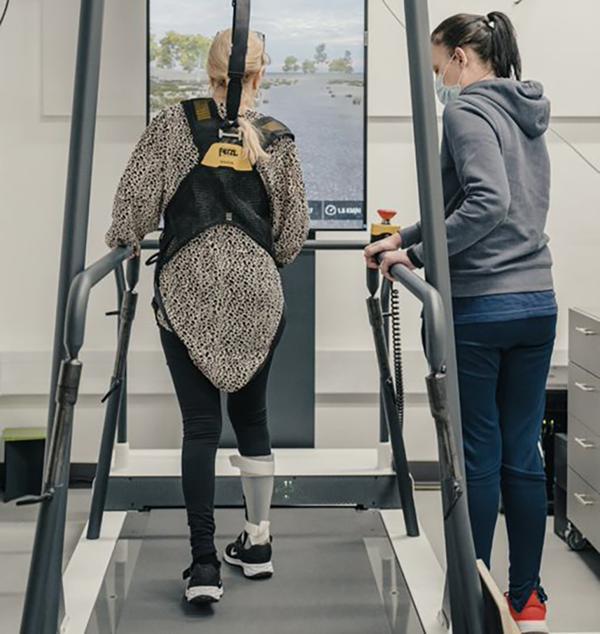
Technology can help and Strathclyde is using VR, treadmills, power-assisted equipment, balance trainers and upper-limb training systems.
Please make this one of your new year resolutions and let us know how your plans progress so we can share them.
In the fast-paced world of fitness and wellness, where high-intensity workouts push us to
our limits and the sweat pours, the importance of efficient recovery cannot be overstated. [more...]
Millions of people each year who experience a stroke are left with a permanent brain injury through a lack of rehabilitation and the health and fitness industry has a critical role to play in fixing this
Three hours of exercise a day can heal stroke injuries / photo: peopleimages.com yuri a/shutterstock
Globally, around 15 million people will have a stroke in the next 12 months. Five million will die, five million will recover and the other five million will be left permanently impacted, with life-changing disabilities.
Just as swift medical treatment following a stroke can substantially improve the outcome, so rehabilitation, when delivered in a timely way, can help the brain heal and enable people to avoid long-term disability.
The window of opportunity to undertake rehabilitation is short, this window closes fast and without it people do not recover. The first three to six months are critical.
The awful news is that we are failing to deliver the levels of support needed, condemning people to live with permanent brain injury for the rest of their lives when this is absolutely avoidable for the majority – were they able to access the right interventions.
Two new sets of guidelines lay out clinical best practice for stroke recovery and they are both exercise-related. In March 2023, the The National Clinical Guidance for Stroke was published, recommending six hours of activity a day, to include exercise.
New guidelines from the National Institute for Clinical Excellence (NICE), published this month, recommend three hours of exercise a day.
Writing on page 55, Dr Andy Kerr of the University of Strathclyde says most patients received “minimal rehabilitation”, as therapists struggle to meet demand.
Kerr says on a typical hospital ward, there may be two therapists for 40 or more stroke patients and when they’re discharged, their homes are often not suitable for rehab work, so therapists are limited to the exercises they can prescribe.
This is a scandal of epic proportions and one the health and fitness industry is well-placed to address as part of its remit to widen services into health.
Please read our feature on stroke rehab, which starts on page 54 and take action by setting aside facilities and resources to support people with stroke to heal themselves. Every day you delay will be having a direct impact on their lives and the lives of their families.
Great examples are given by our experts and there is already good expertise in the sector when it comes to delivering this support – we just need much more of it.
Technology can help and Strathclyde is using VR, treadmills, power-assisted equipment, balance trainers and upper-limb training systems.
Please make this one of your new year resolutions and let us know how your plans progress so we can share them.
People taking GLP-1 weight loss medications such as Ozempic, Wegovy, Mounjaro and Zepbound
may be losing weight, but they’re also becoming less physically active, according to new
research presented at the ENDO 2026 annual meeting of the Endocrine Society
Abu Dhabi-based investment firm Mubadala Capital has made a binding, fully financed
€1 billion
offer to acquire Pierre and Vacances SA, the European holiday resort operator behind the
continental European Center Parcs business.
Global retreat trade show, Synergy The Retreat Show, has launched a resource called The
Source, which hosts an open-access online Transformation Series programme.
The Standards Authority for Touch in Cancer Care (SATCC) charity has announced its first five-
day Living with Cancer and Beyond retreat, which will be held at Carden Park Hotel and Spa in
Cheshire, UK, between 1 and 5 September.
Patmos Aktis, a Luxury Collection Resort and Spa, has opened in Greece, with a renovated and
rebranded wellness offering called Ansana Wellness and Spa.
The Mauna Kea Beach Hotel, an Autograph Collection property in Hawaii, US, has opened its
22,000 sq ft indoor-outdoor Spa at Mauna Kea as the final step in the property’s overall
renovation, which has cost more than US$180 million (€166 million, £140 mill
The UK spa review and discovery platform for consumers, the Good Spa Guide, has announced
it will host the Good Spa Guide Awards 2026 during an event on 16 November at Sopwell House
Hotel in St Albans, UK.
Eighty-four per cent of consumers now say wellness is a top priority in their lives, with this
percentage increasing year on year, according to a preview presentation of McKinsey’s Future of
Wellness 2026 research report.
Mass protests have been taking place since Monday 1 June in Albania over the development of
a luxury resort by Donald Trump’s daughter Ivanka Trump and her husband Jared Kushner.
In the fast-paced world of fitness and wellness, where high-intensity workouts push us to
our limits and the sweat pours, the importance of efficient recovery cannot be overstated. [more...]