Yes! Send me the FREE digital editions of Spa Business and Spa Business insider magazines and the FREE weekly Spa Business and Spa Business insider ezines and breaking news alerts!
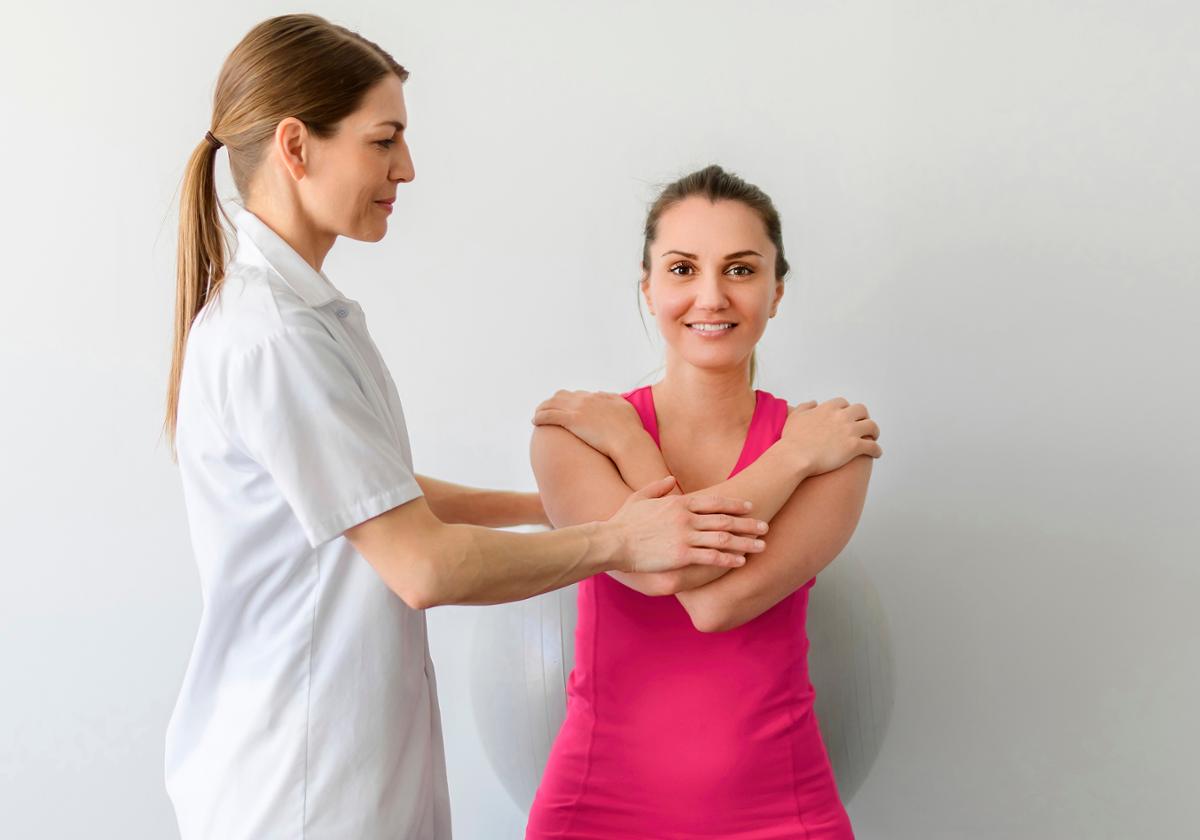
The sector needs to embrace partnerships with the health service / photo: Shutterstock / Lopolo
Everybody’s talking about the ‘pivot to active wellbeing’ but do professionals working in the active leisure sector understand how to make it happen? It’s a topic much debated, but one that remains more of a goal than an achievement.
Fitness is melding into the wellness industry but, as yet, the same can’t be said for the complex healthcare system. How can the active leisure sector pivot so it’s acknowledged by healthcare as essential?
In its 2022 Future of Public Sector Leisure* report, Sport England looked at how to evolve the sector from a traditional leisure service into one more focused on active wellbeing, creating a closer relationship between health and leisure built on social prescribing and the delivery of preventative activity opportunities.
Two years on, the sector has still not reached its full potential in supporting the health of the nation. At the 2023 Active Uprising Summit, UK Active chair, Mike Farrar, called on the government to deploy the physical activity sector to support the NHS.
The evidence that physical activity is one of our best weapons in the battle against sickness and disease is indeed irrefutable, but when every county and healthcare trust has different policies and funding comes from numerous sources, navigating a pivot can be a daunting prospect for operators. We asked leaders in the sector to share their opinions.
John Oxley
CEO, Life Leisure
photo: Life Leisure / Castle Studios
In order to survive, leisure must redefine why it exists – which is to become a preventative health service, rather than an optional leisure service. That, to me, is what the pivot to active wellbeing is about; re-defining the value we bring to society, then being prepared to re-design aspects of our services so our approach genuinely meets the needs of our communities.
If we’re going to play a contributory role to addressing health inequalities and improving population health, we must move away from our own entrenched position and learn to understand the language health is speaking. We’ve got to view things from health’s perspective, seek out healthcare partners and ask: ‘how can we play a role that might support you?’ Think about your landscape, try to understand your neighbourhoods’ needs, then collaborate with other agencies to meet those needs.
Traditionally, leisure hasn’t embraced data, but it’s important we begin to; health lives on evidence.
We must apply the same degree of rigour to our evidence as already exists in the health service. Only then are we likely to be accepted, believed and invited to occupy a credible space by healthcare.
We recently partnered with State of Life to evaluate the effectiveness of our Exercise Referral scheme for people with long-term health conditions. We’re encouraged by the evaluation – top line figures suggest the programme delivers a £17,500 benefit per person and is estimated to be eight times more beneficial than physical activity in the general population. If we apply this calculation to the known participants who completed the programme in the same year, this delivers around £14m in social value to Stockport. This approach to health intervention is 12 times more cost effective than the NHS.
Significantly, the evaluation has relied on collecting high quality data and giving it a Wellbeing value (Wellby) – a methodology recognised by the UK Treasury – which can be benchmarked against the QALY, a recognised measure in health services (www.HCMmag.com/HCMWellby). This level of scrutiny can illustrate and demonstrate the credibility our services can command.
Traditionally, leisure hasn’t
embraced data, but it’s
important we begin to;
health lives on evidence
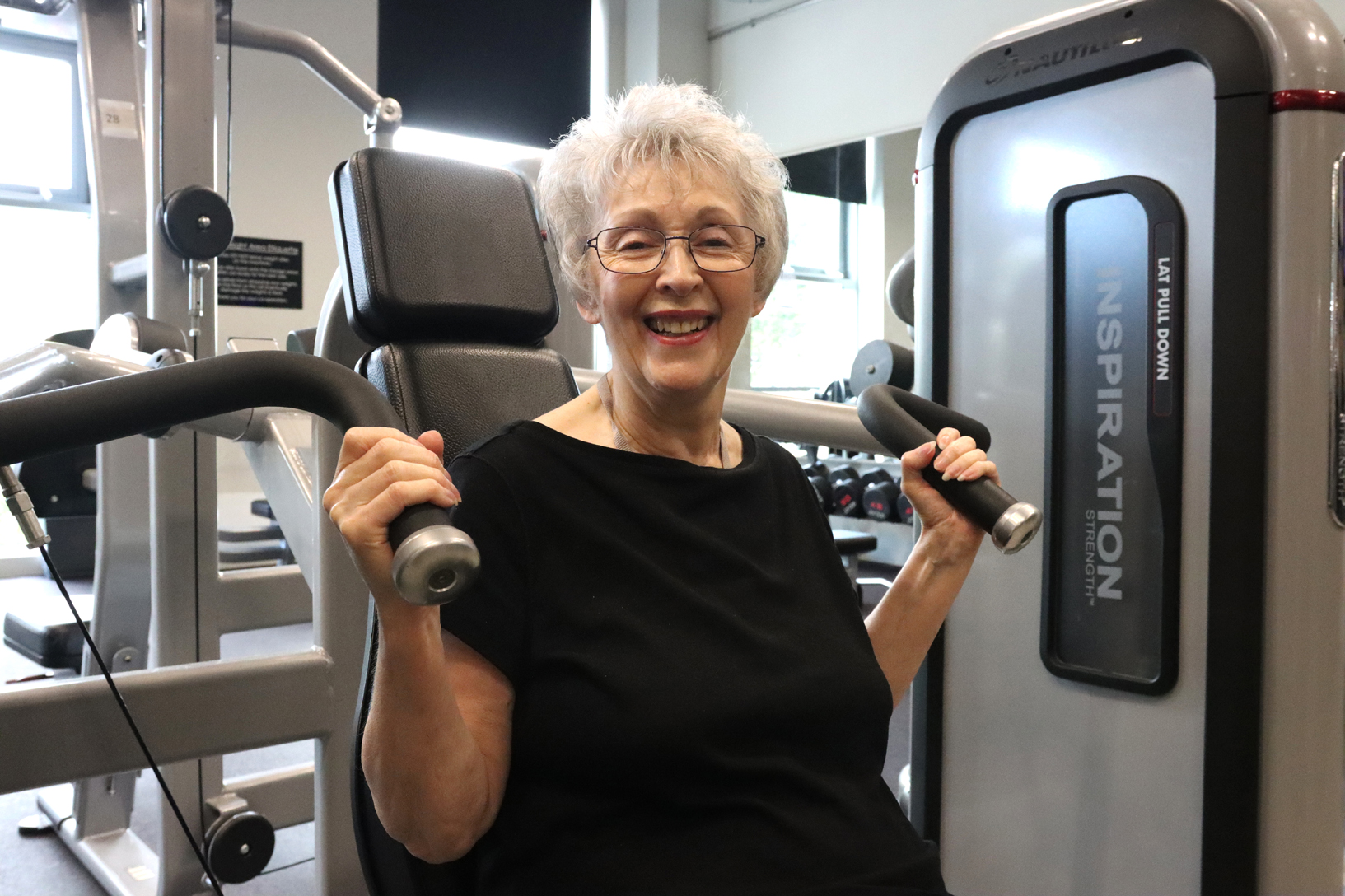
Exercise benefits all ages and social groups / photo: Life Leisure / Brinnington / age uk
Andy King
Director, Miova Change consultancy and chair of GM Active
Photo: MIOVA
I doubt there’s a council in the land that isn’t fretting over what to do with their leisure services, given the perilous state of local government finances. These same officers will be hearing about a pivot to active wellbeing and thinking ‘that makes sense’, but questioning how to go about it.
In Greater Manchester, we’ve been wrestling with this for years. Recently we sought advice from kindred spirits nationwide who are doing amazing things utilising their assets, people and buildings to really make headway in working with health. We have a growing list of examples where leisure is working brilliantly with both public health and the wider NHS. This includes Prehab4Cancer, which is heading towards 10,000 patients a year.
In parallel, as part of a local pilot that takes a whole system, place-based approach, Sport England has identified 10 ‘conditions for change’ that an area can benchmark itself against.
The results of that audit can be used to inform a plan to create conditions for improving health outcomes. By definition, this place-based approach has a much wider focus than just our sector, but it’s a great way to start the process. Within that context, we can consider how leisure can play a much needed part in improving population health and reducing inequalities.
UK Active and some of the larger operators are doing amazing work with MSK Hubs, while chair Mike Farrar is successfully getting Integrated Care Boards around a table to help accelerate, among other things, what leisure can do to reduce waiting lists and improve the health of NHS workers.
Other companies are contributing too, making it easier for operators and councils to make the transition – Good Boost for example.
Discover Momenta also has programmes related to diabetes prevention, cardiovascular disease and weight management already commissioned by the NHS and freely available to operators.
All over the country our leisure colleagues are doing some amazing things; they are ‘pivoting’! Now we must formally catalogue their efforts to create a library of best practice available to everyone, including our health partners.
Each should be assessed by an NHS-approved measure, so they have credibility and a type of quality mark. A job for UK Active to lead maybe?”
Our leisure colleagues are
doing some amazing
things; they’re ‘pivoting’!
Now we must formally
catalogue their efforts
The sector has a big part to play in improving population health, says King / photo: GM Active / Darren Robinson Photography
The aim is a population that’s healthy at every age / photo: GM Active
Duncan Wood-Allum
MD, SLC
photo: SLC / NIKKI GOODEVE
Having been involved in the pivot movement from the outset through our work in the Greater Manchester Pivot to Active Wellbeing Programme, I see three key things that still need to happen. Firstly, our workforce needs to be better supported, with a renewed focus from CIMSPA to professionalise the sector – as set out in its recent Workforce Strategy – and seek allied health professional status. Currently, despite what’s been put in place through the CIMSPA Local Skills Accountability Boards, there’s no properly resourced, credible framework being developed to map out the contribution our sector can make.
We remain in a cycle of low skill / low pay that will resign the sector to not being credible enough to play a more impactful role in physical activity, health and wellbeing. We won’t break that pattern unless there’s a national debate about what the sector’s role in prevention should be. My fear is CIMSPA’s view is too narrow; it currently feels safer to stay in the ‘sport and physical activity’ lane than broaden the remit to include active wellbeing.
Secondly, we need to support and incentivise the operator market to continue to innovate and explore a greater focus on prevention. National guidance needs to be brought into line with innovative practices in partnering and procurement.
There is a pressing need to share pioneering approaches to long-term contracts, service level agreements and specifications, so we can move to the next level of alignment. This will require commissioning changes from local authorities, greater collaboration with Integrated Care Boards and ensuring facilities and services supporting active wellbeing are embedded in place-based working.
Lastly, we must strengthen the alignment between place-based working, local delivery pilots and active wellbeing infrastructure. The former ‘leisure operator sector’ has moved on significantly, but we still need to learn how each part of the wider system can support their shared goal of a more active population through more focus on inactive populations. I’m confident Sport England will play a pivotal role in maximising the synergy and we and other progressive organisations will continue to drive innovation in this space.
We remain in a
cycle of low skill/
low pay that
will resign the
sector to not
being credible
enough to play a
more impactful
role, unless
something is done
A greater focus on prevention will be key for the future / photo: Shutterstock / PeopleImages.com - Yuri A
Amanda Smith
Head of community, Malvern Hills District Council
photo: Malvern Hills District Council
Helping communities to become strong, resilient and sustainable supports our ambition of healthier, safer, inclusive places that are led by residents. It’s incumbent on councils with responsibility for leisure assets to create the strategic landscape and culture to support the pivot to active wellbeing.
Malvern Hills District Council (MHDC) has made health and wellbeing a pillar within its corporate plan. Our key action is transforming our leisure assets into community wellbeing hubs that support residents to take control of their own physical, mental and financial wellbeing.
We place strategic importance on connecting with other community assets to tackle health inequalities and strengthen communities. This further reinforces our commitment to resident-led approaches, as outlined in our 20-year Connected Communities Strategy.
Equally important is collaboration. MHDC’s place-based Integrated Care System partnership is coordinated at district level, with agencies, including our leisure provider, working across the whole system to share data and identify need. The partnership has adopted the council’s key corporate action as one of its joint ‘pivot to wellbeing’ plan priorities, as well as three complimentary priorities:
• To support the expansion and growth of community hubs
• To help health and wellbeing services connect to each other and their communities
• To support communities enhance their own physical, mental and financial wellbeing.
“We’re evolving MHDC’s relationship with our leisure provider from that of a ‘client’ to a ‘relationship-builder’. This will better enable them to develop trusted, collaborative relationships with public and community sector partners that tackle health inequalities. The foundations of success for MHDC and our partners is alignment to the NHS Prevention Charter, the appliance of Keep it Local principles and being resident-led.
We’re making public money work better for communities with Place-Based Public Service Budgets and shifting towards more investment in prevention.
To quote Aretha Franklin, ‘sometimes, what you’re looking for is already there’.We’re on board and ready to improve population health and reduce inequalities.
We’re making public
money work better
for communities
Leisure assets must turn into community wellbeing hubs / photo: Shutterstock/BAZA Production
Diane Friday
Active lifestyles programme manager, Mytime Active
Photo: MyTime Active
At grassroots level, the pivot to active wellbeing is nothing new; there are examples of leisure actively supporting the NHS nationwide. Mytime Active has been developing community-based active wellbeing programmes since its inception in 2004 and in 2008, we started a Sport England-funded Active Ageing programme, called Primetime, that now offers over 100 activities a week to more than 2,500 members.
During the last 14 years we’ve secured £3.4m in grant funding to support active wellbeing programmes, and data from the Office of National Statistics shows our members have up to a 13 per cent higher wellbeing factor than general residents.
I’ve worked for Mytime Active since its inception. While health contracting and commissioning have changed hugely, the fact our team has worked together for so long gives a consistent approach and earns us a voice in conversations that don’t always include leisure or fitness operators. This is highlighted by our partnership with the Local Care Partnership, One Bromley – managing a Health Hub in a Bromley shopping centre, offering free Vital 5 lifestyle advice. We also partnered with England Golf and UK Active to launch Golf on Referral, the first ever research-backed, medically-proven GP referral pathway for golf, which won England Golf’s 2019 Innovation Award.
The key to successfully working with healthcare is time, continuity of provision and sharing results. Our contracts to deliver HeartSmart and Fresh Start (our cardiac rehabilitation and exercise on referral programmes) have been running for around 25 years – there’s no quick fix, as relationship-building takes time.
Leisure’s focus should be creating pathways that integrate with healthcare teams to move patients’ recovery to community venues. For example, we’re partnering our exercise specialists with the cardiac nurse team at the Princess Royal University Hospital to deliver eight-week early exercise and education programmes. This enables us to support the transition from hospital back into the community for longer-term rehab. We’re working on reproducing this model for other conditions, and are also participating in the UK Active MSK Hubs pilot.
Healthcare professionals from the Southeast London Integrated Care Board, public health nurses and physio groups have helped train our staff, which has the knock-on effect of improving these professionals’ confidence in our referral services.
During the last 14 years
we’ve secured £3.45m
in grant funding
to support active
wellbeing programmes
Mytime Active now receives over 1300 referrals per year / photo: MyTime Active
Natalie McGuire
Director of business development, Brimhams Active
Photo: Brimhams Active
The sector itself has been pivoting for some time, boasting many examples of best practice and innovation, and delivering outstanding outcomes across the country. But we are on a learning journey, constantly challenging each other to drive continuous development, and the role the leisure sector can play in the wider health ecosystem has not yet been fully realised. Clarity of message, presentation of data and investment return potential are regular hot topics for colleagues in the sector as we consider our next steps in influencing beyond leisure.
Brimhams Active (BA) (LACTO), an incorporated health and wellbeing company, was established with a sole focus of challenging the conventional leisure model and delivering community health and wellbeing services that prioritise social value and commercial objectives in equal measure. The strategy and service design is simple – personalisation. Wellbeing is individualistic and if we truly want to make an impact then a recognition that one size doesn’t fit all is essential. Our Five Ways to Wellness model (movement, nutrition, mindset, connection, recovery) offers a bespoke service with movement at the core.
Current place-based concepts are built on legacy, community sport and physical activity development approaches and funding initiatives. Taking advantage of a network of National Governing Bodies, Active Partnerships and local sports clubs allows leisure operators to provide community wellbeing services. Only when we collaborate with health partners and account for the specific capability and capacity of all component parts will we get true integration – this is the ‘pivot’. Further developments in facility design, flexible environments, sustainable funding streams, policy change and workforce professionalisation are needed to maintain the momentum.
Only when we collaborate
with health partners will
we get true integration
– this is the ‘pivot’
Wellbeing needs a personalised approach / photo: Shutterstock / Prostock-studio
Emma Cunningham
Community health and wellbeing manager, Horizon Leisure
photo: Horizon Leisure
In an ideal world, leisure and healthcare would seamlessly intertwine, promoting physical fitness, combatting health conditions and promoting social inclusion; the reality of course is more complex.
As we strive for a pivot towards more health-centric approaches, we’re faced with challenges that necessitate robust partnerships and innovative solutions. At the heart of this pivot is the need for strong collaborations between leisure providers, the NHS, councils, charities and key stakeholders. Forging these partnerships is essential in bridging the gap and creating an ecosystem where prevention, treatment and rehabilitation converge.
For leisure centres to become more than recreation venues, we need to leave our traditional setting and go out into communities. Working effectively with the NHS and local authorities requires a reframing of priorities and resource allocation, with investments directed towards enhancing accessibility, affordability and inclusivity.
Horizon Leisure has made a concerted effort to embed health promotion initiatives within the fabric of its communities. We have a shopping-mall-based Wellbeing Hub offering free health checks and interventions and exercise orientation through our Foundations Programme. The Hub also has a CommunityPod to take blood pressure, which feeds directly into local GPs’ databases.
The CommunityPod is part of NHS England’s Innovation for Healthcare Inequalities Programme, coordinated by Health Innovation Wessex in a joined-up approach with GP practices, Microtech, Hampshire and Isle of Wight Integrated Care Board, plus the Hampshire Public Health team.
Data tells us that 60 per cent of those tested so far have had high blood pressure. Experts at the Hub give people advice on reducing it and refer people for follow-on supported activities and education programmes.
Working with the
NHS requires
a reframing of
priorities, with
investments directed
towards enhancing
accessibility, affordability
and inclusivity
The leisure sector must take its work out into the community / photo: Horizon Leisure
Stuart Stokes
MD, ReferAll
photo: Referall
This is less about leisure pivoting and more about better promotion of what we’re already doing and doing well. For that to be credible and listened to, it needs to be evidenced with data.
The whole industry is asking how we can work with health, but I don’t think we need to reinvent the wheel. Just give healthcare providers the data, show them how many people go through your interventions and demonstrate the positive change.
“There’s an expectation that, for us to be credible to healthcare, we have to become clinicians in our own right. This isn’t necessary. Leisure needs a fantastic service (check) that’s delivering tangible, proven results (check) and for healthcare to know about it. This we need to work on – it’s not that the quality of our services is poor, it’s our data and comms that are lacking.
At ReferAll we get to see the positive impact of leisure operators’ hard work every day. What’s missing is the demonstration of this to the people that matter. If you’re a leisure trust providing a fantastic cardiac rehab programme, does your Primary Care Network know you exist, for example?
The pace of collaboration with the NHS is accelerating. With more than 320 schemes managed on our platform, we’re actively exploring API integration with NHS systems to extract clinical data that meets the diverse needs of our customers, but in a meaningful language for NHS partners.
It’s becoming increasingly common for local authorities to specify leisure management systems that integrate with us, highlighting the growing interest in open APIs and data sharing. Through collaborative partnerships, we integrate systems based on customer requests. This secure connection with software platforms allows leisure providers to showcase data with a comprehensive set of KPIs, reporting on what happens from the point of referral through the entire client journey.
How can we move forward? Look at data, reach out to your local Integrated Care System or Primary Care Networks, make sure they know how to refer to you and make that referral is easy. For me, that promotion to the people that matter is what the pivot to health is all about.
We don’t need to reinvent the wheel. Just give healthcare providers the data
The sector must do more to promote its health impact results / photo: Shutterstock / Ground Picture
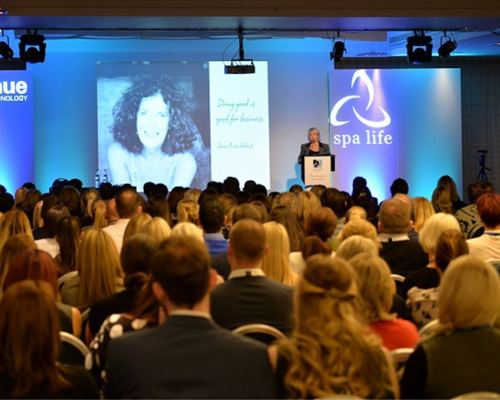
The Spa Life UK Convention returns from 21–23 June 2026 at Whittlebury Park Hotel, Spa &
Golf Resort, bringing together spa managers, directors and owners for two days of focused
education, meaningful connection and commercial insight. [more...]
In the fast-paced world of fitness and wellness, where high-intensity workouts push us to
our limits and the sweat pours, the importance of efficient recovery cannot be overstated. [more...]
+ More featured suppliers
COMPANY PROFILES
Seed To Skin
Founded by Jeanette Thottrup in 2018, in Tuscany, Seed to Skin is an award winning skincare line. [more...]
G.M. Collin
G.M. Collin develops superior skin care products, from preventive care to combating the first signs [more...]
The sector needs to embrace partnerships with the health service / photo: Shutterstock / Lopolo
Everybody’s talking about the ‘pivot to active wellbeing’ but do professionals working in the active leisure sector understand how to make it happen? It’s a topic much debated, but one that remains more of a goal than an achievement.
Fitness is melding into the wellness industry but, as yet, the same can’t be said for the complex healthcare system. How can the active leisure sector pivot so it’s acknowledged by healthcare as essential?
In its 2022 Future of Public Sector Leisure* report, Sport England looked at how to evolve the sector from a traditional leisure service into one more focused on active wellbeing, creating a closer relationship between health and leisure built on social prescribing and the delivery of preventative activity opportunities.
Two years on, the sector has still not reached its full potential in supporting the health of the nation. At the 2023 Active Uprising Summit, UK Active chair, Mike Farrar, called on the government to deploy the physical activity sector to support the NHS.
The evidence that physical activity is one of our best weapons in the battle against sickness and disease is indeed irrefutable, but when every county and healthcare trust has different policies and funding comes from numerous sources, navigating a pivot can be a daunting prospect for operators. We asked leaders in the sector to share their opinions.
John Oxley
CEO, Life Leisure
photo: Life Leisure / Castle Studios
In order to survive, leisure must redefine why it exists – which is to become a preventative health service, rather than an optional leisure service. That, to me, is what the pivot to active wellbeing is about; re-defining the value we bring to society, then being prepared to re-design aspects of our services so our approach genuinely meets the needs of our communities.
If we’re going to play a contributory role to addressing health inequalities and improving population health, we must move away from our own entrenched position and learn to understand the language health is speaking. We’ve got to view things from health’s perspective, seek out healthcare partners and ask: ‘how can we play a role that might support you?’ Think about your landscape, try to understand your neighbourhoods’ needs, then collaborate with other agencies to meet those needs.
Traditionally, leisure hasn’t embraced data, but it’s important we begin to; health lives on evidence.
We must apply the same degree of rigour to our evidence as already exists in the health service. Only then are we likely to be accepted, believed and invited to occupy a credible space by healthcare.
We recently partnered with State of Life to evaluate the effectiveness of our Exercise Referral scheme for people with long-term health conditions. We’re encouraged by the evaluation – top line figures suggest the programme delivers a £17,500 benefit per person and is estimated to be eight times more beneficial than physical activity in the general population. If we apply this calculation to the known participants who completed the programme in the same year, this delivers around £14m in social value to Stockport. This approach to health intervention is 12 times more cost effective than the NHS.
Significantly, the evaluation has relied on collecting high quality data and giving it a Wellbeing value (Wellby) – a methodology recognised by the UK Treasury – which can be benchmarked against the QALY, a recognised measure in health services (www.HCMmag.com/HCMWellby). This level of scrutiny can illustrate and demonstrate the credibility our services can command.
Traditionally, leisure hasn’t
embraced data, but it’s
important we begin to;
health lives on evidence
Exercise benefits all ages and social groups / photo: Life Leisure / Brinnington / age uk
Andy King
Director, Miova Change consultancy and chair of GM Active
Photo: MIOVA
I doubt there’s a council in the land that isn’t fretting over what to do with their leisure services, given the perilous state of local government finances. These same officers will be hearing about a pivot to active wellbeing and thinking ‘that makes sense’, but questioning how to go about it.
In Greater Manchester, we’ve been wrestling with this for years. Recently we sought advice from kindred spirits nationwide who are doing amazing things utilising their assets, people and buildings to really make headway in working with health. We have a growing list of examples where leisure is working brilliantly with both public health and the wider NHS. This includes Prehab4Cancer, which is heading towards 10,000 patients a year.
In parallel, as part of a local pilot that takes a whole system, place-based approach, Sport England has identified 10 ‘conditions for change’ that an area can benchmark itself against.
The results of that audit can be used to inform a plan to create conditions for improving health outcomes. By definition, this place-based approach has a much wider focus than just our sector, but it’s a great way to start the process. Within that context, we can consider how leisure can play a much needed part in improving population health and reducing inequalities.
UK Active and some of the larger operators are doing amazing work with MSK Hubs, while chair Mike Farrar is successfully getting Integrated Care Boards around a table to help accelerate, among other things, what leisure can do to reduce waiting lists and improve the health of NHS workers.
Other companies are contributing too, making it easier for operators and councils to make the transition – Good Boost for example.
Discover Momenta also has programmes related to diabetes prevention, cardiovascular disease and weight management already commissioned by the NHS and freely available to operators.
All over the country our leisure colleagues are doing some amazing things; they are ‘pivoting’! Now we must formally catalogue their efforts to create a library of best practice available to everyone, including our health partners.
Each should be assessed by an NHS-approved measure, so they have credibility and a type of quality mark. A job for UK Active to lead maybe?”
Our leisure colleagues are
doing some amazing
things; they’re ‘pivoting’!
Now we must formally
catalogue their efforts
The sector has a big part to play in improving population health, says King / photo: GM Active / Darren Robinson Photography
The aim is a population that’s healthy at every age / photo: GM Active
Duncan Wood-Allum
MD, SLC
photo: SLC / NIKKI GOODEVE
Having been involved in the pivot movement from the outset through our work in the Greater Manchester Pivot to Active Wellbeing Programme, I see three key things that still need to happen. Firstly, our workforce needs to be better supported, with a renewed focus from CIMSPA to professionalise the sector – as set out in its recent Workforce Strategy – and seek allied health professional status. Currently, despite what’s been put in place through the CIMSPA Local Skills Accountability Boards, there’s no properly resourced, credible framework being developed to map out the contribution our sector can make.
We remain in a cycle of low skill / low pay that will resign the sector to not being credible enough to play a more impactful role in physical activity, health and wellbeing. We won’t break that pattern unless there’s a national debate about what the sector’s role in prevention should be. My fear is CIMSPA’s view is too narrow; it currently feels safer to stay in the ‘sport and physical activity’ lane than broaden the remit to include active wellbeing.
Secondly, we need to support and incentivise the operator market to continue to innovate and explore a greater focus on prevention. National guidance needs to be brought into line with innovative practices in partnering and procurement.
There is a pressing need to share pioneering approaches to long-term contracts, service level agreements and specifications, so we can move to the next level of alignment. This will require commissioning changes from local authorities, greater collaboration with Integrated Care Boards and ensuring facilities and services supporting active wellbeing are embedded in place-based working.
Lastly, we must strengthen the alignment between place-based working, local delivery pilots and active wellbeing infrastructure. The former ‘leisure operator sector’ has moved on significantly, but we still need to learn how each part of the wider system can support their shared goal of a more active population through more focus on inactive populations. I’m confident Sport England will play a pivotal role in maximising the synergy and we and other progressive organisations will continue to drive innovation in this space.
We remain in a
cycle of low skill/
low pay that
will resign the
sector to not
being credible
enough to play a
more impactful
role, unless
something is done
A greater focus on prevention will be key for the future / photo: Shutterstock / PeopleImages.com - Yuri A
Amanda Smith
Head of community, Malvern Hills District Council
photo: Malvern Hills District Council
Helping communities to become strong, resilient and sustainable supports our ambition of healthier, safer, inclusive places that are led by residents. It’s incumbent on councils with responsibility for leisure assets to create the strategic landscape and culture to support the pivot to active wellbeing.
Malvern Hills District Council (MHDC) has made health and wellbeing a pillar within its corporate plan. Our key action is transforming our leisure assets into community wellbeing hubs that support residents to take control of their own physical, mental and financial wellbeing.
We place strategic importance on connecting with other community assets to tackle health inequalities and strengthen communities. This further reinforces our commitment to resident-led approaches, as outlined in our 20-year Connected Communities Strategy.
Equally important is collaboration. MHDC’s place-based Integrated Care System partnership is coordinated at district level, with agencies, including our leisure provider, working across the whole system to share data and identify need. The partnership has adopted the council’s key corporate action as one of its joint ‘pivot to wellbeing’ plan priorities, as well as three complimentary priorities:
• To support the expansion and growth of community hubs
• To help health and wellbeing services connect to each other and their communities
• To support communities enhance their own physical, mental and financial wellbeing.
“We’re evolving MHDC’s relationship with our leisure provider from that of a ‘client’ to a ‘relationship-builder’. This will better enable them to develop trusted, collaborative relationships with public and community sector partners that tackle health inequalities. The foundations of success for MHDC and our partners is alignment to the NHS Prevention Charter, the appliance of Keep it Local principles and being resident-led.
We’re making public money work better for communities with Place-Based Public Service Budgets and shifting towards more investment in prevention.
To quote Aretha Franklin, ‘sometimes, what you’re looking for is already there’.We’re on board and ready to improve population health and reduce inequalities.
We’re making public
money work better
for communities
Leisure assets must turn into community wellbeing hubs / photo: Shutterstock/BAZA Production
Diane Friday
Active lifestyles programme manager, Mytime Active
Photo: MyTime Active
At grassroots level, the pivot to active wellbeing is nothing new; there are examples of leisure actively supporting the NHS nationwide. Mytime Active has been developing community-based active wellbeing programmes since its inception in 2004 and in 2008, we started a Sport England-funded Active Ageing programme, called Primetime, that now offers over 100 activities a week to more than 2,500 members.
During the last 14 years we’ve secured £3.4m in grant funding to support active wellbeing programmes, and data from the Office of National Statistics shows our members have up to a 13 per cent higher wellbeing factor than general residents.
I’ve worked for Mytime Active since its inception. While health contracting and commissioning have changed hugely, the fact our team has worked together for so long gives a consistent approach and earns us a voice in conversations that don’t always include leisure or fitness operators. This is highlighted by our partnership with the Local Care Partnership, One Bromley – managing a Health Hub in a Bromley shopping centre, offering free Vital 5 lifestyle advice. We also partnered with England Golf and UK Active to launch Golf on Referral, the first ever research-backed, medically-proven GP referral pathway for golf, which won England Golf’s 2019 Innovation Award.
The key to successfully working with healthcare is time, continuity of provision and sharing results. Our contracts to deliver HeartSmart and Fresh Start (our cardiac rehabilitation and exercise on referral programmes) have been running for around 25 years – there’s no quick fix, as relationship-building takes time.
Leisure’s focus should be creating pathways that integrate with healthcare teams to move patients’ recovery to community venues. For example, we’re partnering our exercise specialists with the cardiac nurse team at the Princess Royal University Hospital to deliver eight-week early exercise and education programmes. This enables us to support the transition from hospital back into the community for longer-term rehab. We’re working on reproducing this model for other conditions, and are also participating in the UK Active MSK Hubs pilot.
Healthcare professionals from the Southeast London Integrated Care Board, public health nurses and physio groups have helped train our staff, which has the knock-on effect of improving these professionals’ confidence in our referral services.
During the last 14 years
we’ve secured £3.45m
in grant funding
to support active
wellbeing programmes
Mytime Active now receives over 1300 referrals per year / photo: MyTime Active
Natalie McGuire
Director of business development, Brimhams Active
Photo: Brimhams Active
The sector itself has been pivoting for some time, boasting many examples of best practice and innovation, and delivering outstanding outcomes across the country. But we are on a learning journey, constantly challenging each other to drive continuous development, and the role the leisure sector can play in the wider health ecosystem has not yet been fully realised. Clarity of message, presentation of data and investment return potential are regular hot topics for colleagues in the sector as we consider our next steps in influencing beyond leisure.
Brimhams Active (BA) (LACTO), an incorporated health and wellbeing company, was established with a sole focus of challenging the conventional leisure model and delivering community health and wellbeing services that prioritise social value and commercial objectives in equal measure. The strategy and service design is simple – personalisation. Wellbeing is individualistic and if we truly want to make an impact then a recognition that one size doesn’t fit all is essential. Our Five Ways to Wellness model (movement, nutrition, mindset, connection, recovery) offers a bespoke service with movement at the core.
Current place-based concepts are built on legacy, community sport and physical activity development approaches and funding initiatives. Taking advantage of a network of National Governing Bodies, Active Partnerships and local sports clubs allows leisure operators to provide community wellbeing services. Only when we collaborate with health partners and account for the specific capability and capacity of all component parts will we get true integration – this is the ‘pivot’. Further developments in facility design, flexible environments, sustainable funding streams, policy change and workforce professionalisation are needed to maintain the momentum.
Only when we collaborate
with health partners will
we get true integration
– this is the ‘pivot’
Wellbeing needs a personalised approach / photo: Shutterstock / Prostock-studio
Emma Cunningham
Community health and wellbeing manager, Horizon Leisure
photo: Horizon Leisure
In an ideal world, leisure and healthcare would seamlessly intertwine, promoting physical fitness, combatting health conditions and promoting social inclusion; the reality of course is more complex.
As we strive for a pivot towards more health-centric approaches, we’re faced with challenges that necessitate robust partnerships and innovative solutions. At the heart of this pivot is the need for strong collaborations between leisure providers, the NHS, councils, charities and key stakeholders. Forging these partnerships is essential in bridging the gap and creating an ecosystem where prevention, treatment and rehabilitation converge.
For leisure centres to become more than recreation venues, we need to leave our traditional setting and go out into communities. Working effectively with the NHS and local authorities requires a reframing of priorities and resource allocation, with investments directed towards enhancing accessibility, affordability and inclusivity.
Horizon Leisure has made a concerted effort to embed health promotion initiatives within the fabric of its communities. We have a shopping-mall-based Wellbeing Hub offering free health checks and interventions and exercise orientation through our Foundations Programme. The Hub also has a CommunityPod to take blood pressure, which feeds directly into local GPs’ databases.
The CommunityPod is part of NHS England’s Innovation for Healthcare Inequalities Programme, coordinated by Health Innovation Wessex in a joined-up approach with GP practices, Microtech, Hampshire and Isle of Wight Integrated Care Board, plus the Hampshire Public Health team.
Data tells us that 60 per cent of those tested so far have had high blood pressure. Experts at the Hub give people advice on reducing it and refer people for follow-on supported activities and education programmes.
Working with the
NHS requires
a reframing of
priorities, with
investments directed
towards enhancing
accessibility, affordability
and inclusivity
The leisure sector must take its work out into the community / photo: Horizon Leisure
Stuart Stokes
MD, ReferAll
photo: Referall
This is less about leisure pivoting and more about better promotion of what we’re already doing and doing well. For that to be credible and listened to, it needs to be evidenced with data.
The whole industry is asking how we can work with health, but I don’t think we need to reinvent the wheel. Just give healthcare providers the data, show them how many people go through your interventions and demonstrate the positive change.
“There’s an expectation that, for us to be credible to healthcare, we have to become clinicians in our own right. This isn’t necessary. Leisure needs a fantastic service (check) that’s delivering tangible, proven results (check) and for healthcare to know about it. This we need to work on – it’s not that the quality of our services is poor, it’s our data and comms that are lacking.
At ReferAll we get to see the positive impact of leisure operators’ hard work every day. What’s missing is the demonstration of this to the people that matter. If you’re a leisure trust providing a fantastic cardiac rehab programme, does your Primary Care Network know you exist, for example?
The pace of collaboration with the NHS is accelerating. With more than 320 schemes managed on our platform, we’re actively exploring API integration with NHS systems to extract clinical data that meets the diverse needs of our customers, but in a meaningful language for NHS partners.
It’s becoming increasingly common for local authorities to specify leisure management systems that integrate with us, highlighting the growing interest in open APIs and data sharing. Through collaborative partnerships, we integrate systems based on customer requests. This secure connection with software platforms allows leisure providers to showcase data with a comprehensive set of KPIs, reporting on what happens from the point of referral through the entire client journey.
How can we move forward? Look at data, reach out to your local Integrated Care System or Primary Care Networks, make sure they know how to refer to you and make that referral is easy. For me, that promotion to the people that matter is what the pivot to health is all about.
We don’t need to reinvent the wheel. Just give healthcare providers the data
The sector must do more to promote its health impact results / photo: Shutterstock / Ground Picture
Global Wellness Day (GWD) marked its 15th anniversary on Saturday 13 June 2026, with the
theme: #JoyMagenta – a celebration of the healing qualities of simple gestures and activities
that spark joy.
Global luxury hospitality brand, Six Senses, has partnered with longevity healthcare provider,
HUM2N, to launch a clinic at Six Senses London, at The Whiteley.
As part of its first hotel partnership, Mayrlife – the medical health resort company known for its
site in Altaussee, Austria – has launched a day clinic at the Rosewood Vienna.
Premium London health club, KX Chelsea, will imminently unveil its most significant
redevelopment since its launch in 2002 to create an integrated wellness model combining
training, recovery and relaxation.
Rosewood Le Guanahani St Barth, on the northeast coast of Saint Barthélemy in the French
West Indies, is offering a programme of ocean-inspired yoga classes between 8-14 June to
celebrate Global Wellness Day (GWD).
Hotel de France, located on the British Isle of Jersey, has created a wellness retreat package
that includes a hot yoga session that will take place in Jersey Zoo’s butterfly sanctuary.
The Ritz-Carlton, Langkawi, in Malaysia, has revealed a schedule for Global Wellness Day
(GWD) that includes guided rainforest walks, mindful movement and guided coastal meditation
experiences.
Longevitix, a clinical platform for preventive and longevity medicine, has launched its AI-
powered intelligence system to help physicians deliver continuous, personalised longevity-
focused care at scale.
Atmantan Wellness Centre, an integrative wellness destination in Mulshi, near Pune in India, is
expanding its portfolio by adding a new centre in Hyderabad that will launch between 2028 and
2029.
The Spa Life UK Convention returns from 21–23 June 2026 at Whittlebury Park Hotel, Spa &
Golf Resort, bringing together spa managers, directors and owners for two days of focused
education, meaningful connection and commercial insight. [more...]
In the fast-paced world of fitness and wellness, where high-intensity workouts push us to
our limits and the sweat pours, the importance of efficient recovery cannot be overstated. [more...]
+ More featured suppliers
COMPANY PROFILES
Seed To Skin Founded by Jeanette Thottrup in 2018, in Tuscany, Seed to Skin is an award winning skincare line. [more...]