McKinsey’s 2024 Future of Wellness survey identified the trends defining the US$1.8 trillion global wellness market and shows the sector continues to grow
Half of gym-goers say that being a gym member is a core part of their identity / Photo: shutterstock/View Apart
According to McKinsey’s 2024 Future of Wellness survey – which questioned 5000 individuals across China, the UK and the US – consumers are taking control of their health, with 58 per cent of US respondents saying they are prioritising their wellness more than they did a year ago.
The US wellness market has reached US$480bn and is growing at 5 to 10 per cent a year. Eighty two per cent of US consumers consider wellness a top, or important, priority in their lives, compared to 73 per cent in the UK and 87 per cent in China.
Gen Z and millennial customers are the most wellness conscious, buying more products and services than older generations. Appearance is the most popular category, followed by health, fitness, nutrition, sleep and mindfulness.
The pandemic got us all used to home-testing and now consumers are interested in other at-home diagnostic kits for example, for vitamin and mineral deficiencies, cold and flu symptoms and cholesterol. In China some people had even replaced in-person healthcare appointments with tests undertaken at home.
Wearable trend endures A new era for biomonitoring and wearables is here, as the technology evolves with biometric rings to measure sleep quality and continuous glucose monitors that can be applied on the back of the arm. Around half of consumers surveyed have purchased a fitness wearable at some point, 75 per cent are open to using one in the future and one-third are using their devices more.
McKinsey says there is still a gap in the market for wearables to aid with nutrition, weight management, mindfulness and behaviour change. Data privacy and clear insights are most important, with overly complicated information being offputting.
Technological advancements and first-party data is giving personalisation a new edge. Around 20 per cent of UK consumers and 30 per cent of US and China consumers are looking for personalised products and services which use biometric data to provide recommendations. Artificial intelligence could play a greater role here.
Last year consumers showed a shift from clean or natural ingredients to clinically proven ones, particularly in over-the-counter medications, vitamins and supplements. Those companies who have built a brand around natural products may want to seek out third-party certifications to substantiate their claims.
Consumers are done with healthwashing (deceptive marketing which positions a product as healthier than it is) and healthcare provider recommendations are rising in importance, especially around mindfulness and sleep.
Seven areas of growth Women’s health products are on the rise with the highest spend being on menopause and pregnancy-related products. To date menopause has been an overlooked segment.
Demand for healthy ageing and longevity products and services are on the rise, propelled by a shift towards preventative medicine. Around 70 per cent of consumers in the UK and US, and 85 per cent in China, have purchased a product in this category over the past year.
By 2030, one in six people in the world will be aged over 60, so there will be a greater focus on healthy ageing going forward, with younger people seeking preventative solutions and older people seeking to improve their longevity.
Weight management is still top of mind, with 60 per cent of US consumers trying to lose weight. Exercise was the most reported intervention, but more than 50 per cent of US consumers are considering prescription medication. Although this was less in the UK and China, with fewer than 30 per cent considering weight loss drugs to be effective. McKinsey says it is too early to say how the use of weight loss drugs will impact the broader wellness market.
More interest and more competition Fitness is now a priority for many consumers, with around 50 per cent of gym-goers saying it is a core part of their identity. With more choices, the market is getting more competitive. McKinsey recommends building strong communities with experiences such as retreats, nutritional coaching and personalised workout plans, possibly informed by AI.
Gut health is ascending, with more than 80 per cent of consumers appreciating its importance and more than 50 per cent planning to make it a higher priority in the next few years. Over-the-counter probiotic supplements are popular, along with probiotic rich foods such as yoghurt, kimchi and kombucha. Two potential areas for growth are at-home microbiome testing and personalised nutrition.
Sexual health products grew during the pandemic, this and an expanded conversation around challenges is leading to more demand. More traditional retailers are selling sexual-health products and there is room for disruptor brands.
Sleep ranks as the second-highest health and wellness priority for consumers and is also the area with the most unmet needs. Not much has changed since last year, when 37 per cent expressed a desire for more sleep and mindfulness products which address cognitive functioning, stress and anxiety management.
There is yet to be a compelling ecosystem to improve sleep holistically, which means there is also the opportunity to address the pain points: inducing sleep, minimising sleep interruptions, easing wakefulness and improving sleep quality.
At a glance
• Gen Z and millennials are the most wellness-conscious demographics
• There is an appetite for home-testing
• The enduring trend for wearables and technology, along with AI, will lead to increased personalisation
• Clinically-proven ingredients are now more desirable than natural ones
• Consumers are fed up with healthwashing
• Womens’ health products are on the rise, especially for the menopause
• There is increasing interest in longevity
• Weight management is still top of mind, including weight-loss drugs
• Gut-health is becoming a priority
• Mainstream retailers are moving into sexual health products
• Sleep is a pain point and continues to cause challenges
McKinsey’s 2024 Future of Wellness survey identified the trends defining the US$1.8 trillion global wellness market and shows the sector continues to grow
Half of gym-goers say that being a gym member is a core part of their identity / Photo: shutterstock/View Apart
According to McKinsey’s 2024 Future of Wellness survey – which questioned 5000 individuals across China, the UK and the US – consumers are taking control of their health, with 58 per cent of US respondents saying they are prioritising their wellness more than they did a year ago.
The US wellness market has reached US$480bn and is growing at 5 to 10 per cent a year. Eighty two per cent of US consumers consider wellness a top, or important, priority in their lives, compared to 73 per cent in the UK and 87 per cent in China.
Gen Z and millennial customers are the most wellness conscious, buying more products and services than older generations. Appearance is the most popular category, followed by health, fitness, nutrition, sleep and mindfulness.
The pandemic got us all used to home-testing and now consumers are interested in other at-home diagnostic kits for example, for vitamin and mineral deficiencies, cold and flu symptoms and cholesterol. In China some people had even replaced in-person healthcare appointments with tests undertaken at home.
Wearable trend endures A new era for biomonitoring and wearables is here, as the technology evolves with biometric rings to measure sleep quality and continuous glucose monitors that can be applied on the back of the arm. Around half of consumers surveyed have purchased a fitness wearable at some point, 75 per cent are open to using one in the future and one-third are using their devices more.
McKinsey says there is still a gap in the market for wearables to aid with nutrition, weight management, mindfulness and behaviour change. Data privacy and clear insights are most important, with overly complicated information being offputting.
Technological advancements and first-party data is giving personalisation a new edge. Around 20 per cent of UK consumers and 30 per cent of US and China consumers are looking for personalised products and services which use biometric data to provide recommendations. Artificial intelligence could play a greater role here.
Last year consumers showed a shift from clean or natural ingredients to clinically proven ones, particularly in over-the-counter medications, vitamins and supplements. Those companies who have built a brand around natural products may want to seek out third-party certifications to substantiate their claims.
Consumers are done with healthwashing (deceptive marketing which positions a product as healthier than it is) and healthcare provider recommendations are rising in importance, especially around mindfulness and sleep.
Seven areas of growth Women’s health products are on the rise with the highest spend being on menopause and pregnancy-related products. To date menopause has been an overlooked segment.
Demand for healthy ageing and longevity products and services are on the rise, propelled by a shift towards preventative medicine. Around 70 per cent of consumers in the UK and US, and 85 per cent in China, have purchased a product in this category over the past year.
By 2030, one in six people in the world will be aged over 60, so there will be a greater focus on healthy ageing going forward, with younger people seeking preventative solutions and older people seeking to improve their longevity.
Weight management is still top of mind, with 60 per cent of US consumers trying to lose weight. Exercise was the most reported intervention, but more than 50 per cent of US consumers are considering prescription medication. Although this was less in the UK and China, with fewer than 30 per cent considering weight loss drugs to be effective. McKinsey says it is too early to say how the use of weight loss drugs will impact the broader wellness market.
More interest and more competition Fitness is now a priority for many consumers, with around 50 per cent of gym-goers saying it is a core part of their identity. With more choices, the market is getting more competitive. McKinsey recommends building strong communities with experiences such as retreats, nutritional coaching and personalised workout plans, possibly informed by AI.
Gut health is ascending, with more than 80 per cent of consumers appreciating its importance and more than 50 per cent planning to make it a higher priority in the next few years. Over-the-counter probiotic supplements are popular, along with probiotic rich foods such as yoghurt, kimchi and kombucha. Two potential areas for growth are at-home microbiome testing and personalised nutrition.
Sexual health products grew during the pandemic, this and an expanded conversation around challenges is leading to more demand. More traditional retailers are selling sexual-health products and there is room for disruptor brands.
Sleep ranks as the second-highest health and wellness priority for consumers and is also the area with the most unmet needs. Not much has changed since last year, when 37 per cent expressed a desire for more sleep and mindfulness products which address cognitive functioning, stress and anxiety management.
There is yet to be a compelling ecosystem to improve sleep holistically, which means there is also the opportunity to address the pain points: inducing sleep, minimising sleep interruptions, easing wakefulness and improving sleep quality.
At a glance
• Gen Z and millennials are the most wellness-conscious demographics
• There is an appetite for home-testing
• The enduring trend for wearables and technology, along with AI, will lead to increased personalisation
• Clinically-proven ingredients are now more desirable than natural ones
• Consumers are fed up with healthwashing
• Womens’ health products are on the rise, especially for the menopause
• There is increasing interest in longevity
• Weight management is still top of mind, including weight-loss drugs
• Gut-health is becoming a priority
• Mainstream retailers are moving into sexual health products
• Sleep is a pain point and continues to cause challenges
People taking GLP-1 weight loss medications such as Ozempic, Wegovy, Mounjaro and Zepbound
may be losing weight, but they’re also becoming less physically active, according to new
research presented at the ENDO 2026 annual meeting of the Endocrine Society
Abu Dhabi-based investment firm Mubadala Capital has made a binding, fully financed
€1 billion
offer to acquire Pierre and Vacances SA, the European holiday resort operator behind the
continental European Center Parcs business.
Global retreat trade show, Synergy The Retreat Show, has launched a resource called The
Source, which hosts an open-access online Transformation Series programme.
The Standards Authority for Touch in Cancer Care (SATCC) charity has announced its first five-
day Living with Cancer and Beyond retreat, which will be held at Carden Park Hotel and Spa in
Cheshire, UK, between 1 and 5 September.
Patmos Aktis, a Luxury Collection Resort and Spa, has opened in Greece, with a renovated and
rebranded wellness offering called Ansana Wellness and Spa.
The Mauna Kea Beach Hotel, an Autograph Collection property in Hawaii, US, has opened its
22,000 sq ft indoor-outdoor Spa at Mauna Kea as the final step in the property’s overall
renovation, which has cost more than US$180 million (€166 million, £140 mill
The UK spa review and discovery platform for consumers, the Good Spa Guide, has announced
it will host the Good Spa Guide Awards 2026 during an event on 16 November at Sopwell House
Hotel in St Albans, UK.
Eighty-four per cent of consumers now say wellness is a top priority in their lives, with this
percentage increasing year on year, according to a preview presentation of McKinsey’s Future of
Wellness 2026 research report.
Mass protests have been taking place since Monday 1 June in Albania over the development of
a luxury resort by Donald Trump’s daughter Ivanka Trump and her husband Jared Kushner.
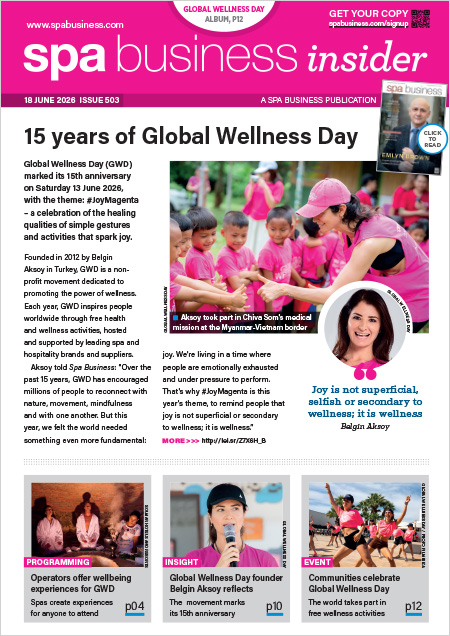
Global Wellness Day (GWD) marked its 15th anniversary on Saturday 13 June 2026, with the
theme: #JoyMagenta – a celebration of the healing qualities of simple gestures and activities
that spark joy.