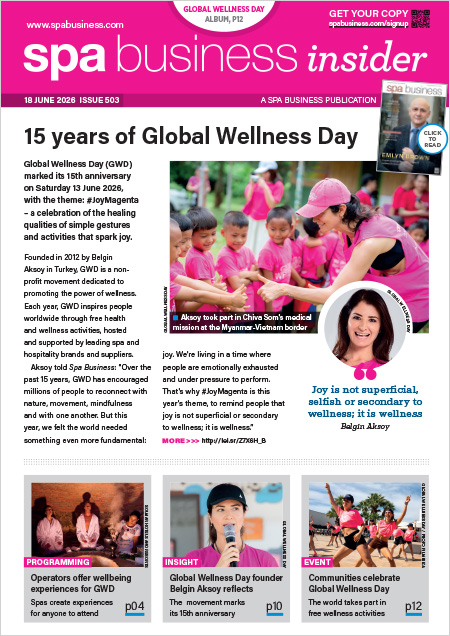
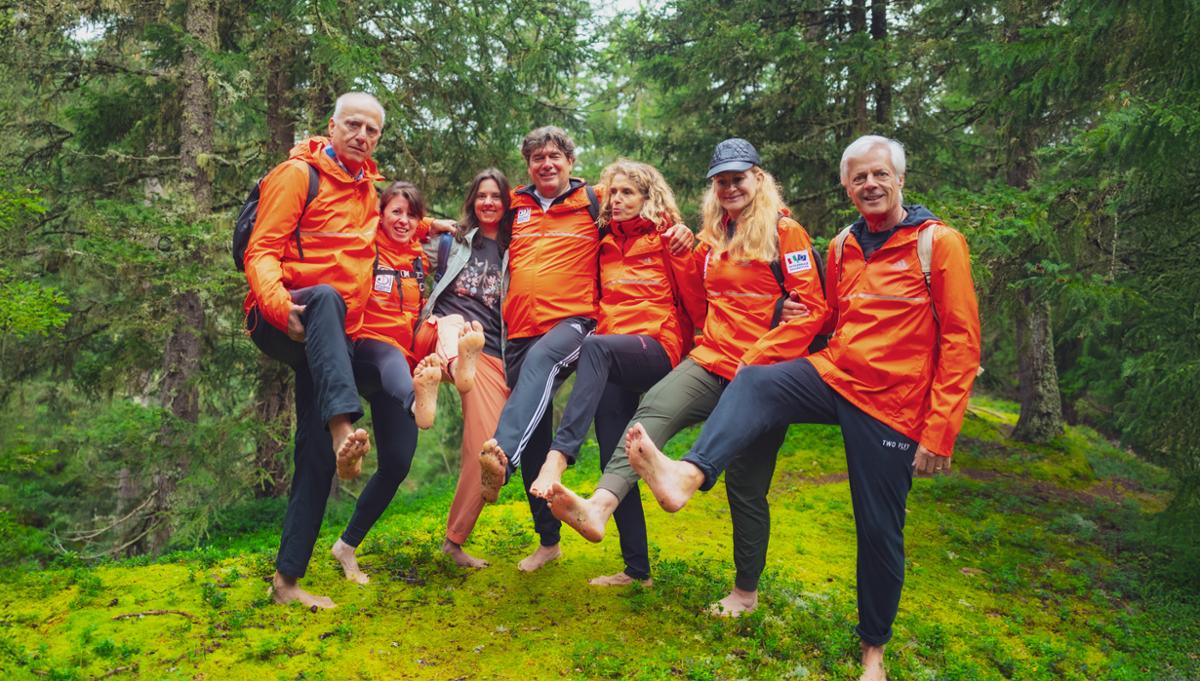
Christensen wants people to enjoy outdoor activity
Tell us about Mavericks Mavericks Life Co is an international training provider for the sports and physical activity sector, specialising in active lifestyle education and sustainable approaches.
I launched the company in 2008 with the intention of getting people active while having fun, especially those who don’t generally think physical activity is for them.
What drives us is finding a balance between teaching sports and exercise science with fun ways to get people active in a recreational way, moving their bodies in a way that feels joyful, but is also backed by physiology, psychology and life sciences.
Can you give us a flavour of the skills you teach? The Mavericks Way is a nature-based training programme, designed to help people reconnect with nature while improving their physical health and mental wellbeing.
We use key aspects of health and exercise science and psychology for leading and working in a community environment. This includes an introduction to motivational psychology for participation and developing intrinsic motivation.
We explore the latest insights from recent scientific studies on behaviours, barriers and activities related to outdoor exercise and specifically focus on how outdoor activities should help meet physical activity guidelines around cardiorespiratory fitness, muscle and bone function, mobility and balance.
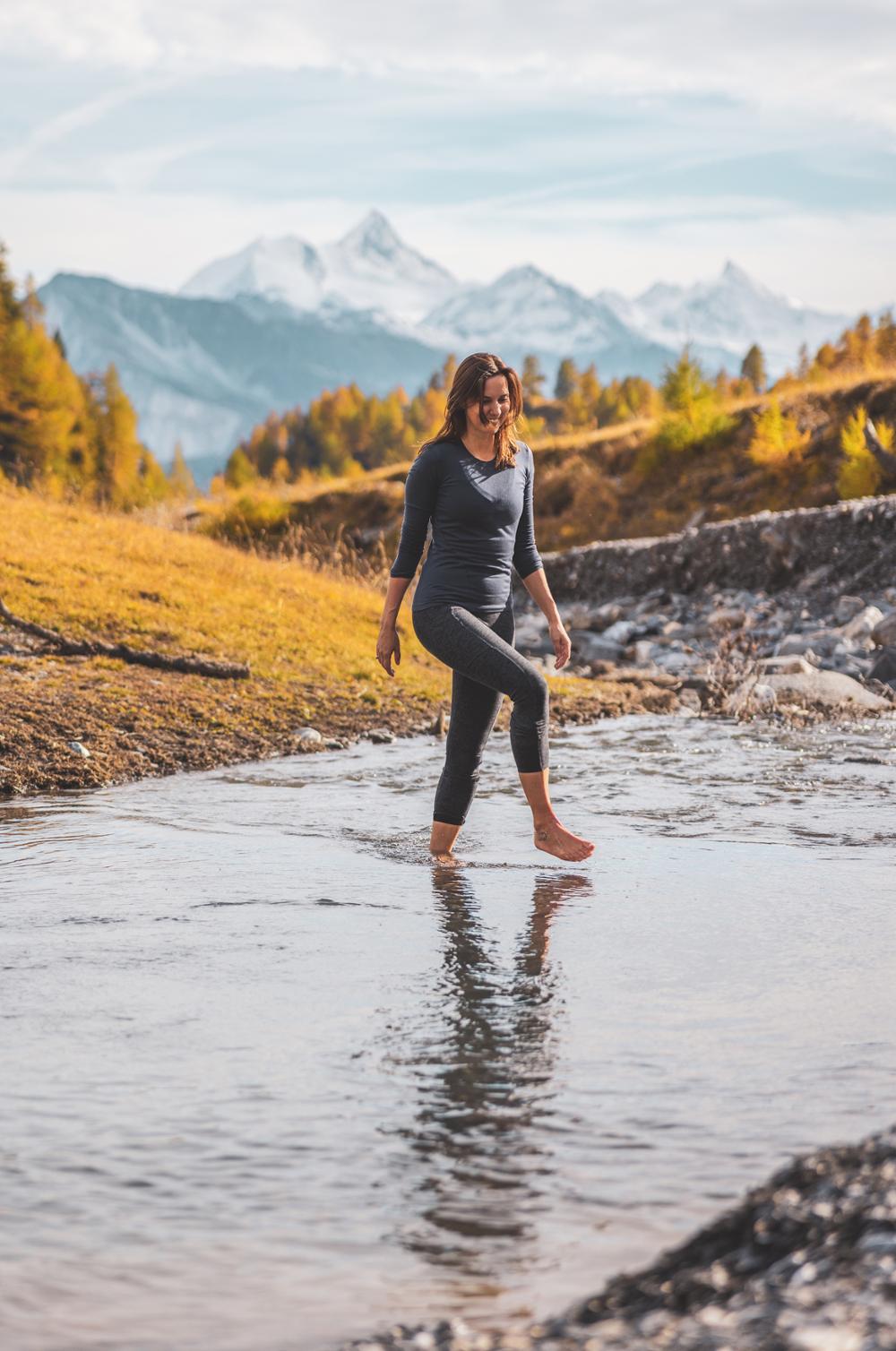
The Mavericks Way teaches people to adopt an active lifestyle using their favourite outdoor activity, such as walking or running groups, ultimate frisbee, rope and jump rope, tree climbing, wild swimming, or games with their dog or their children. Everything counts!
The outdoor environment gives more possibilities to be creative and playful – for example, working on balance exercises, agility and jumping drills, or playing recreational games. Outdoors is not a replacement for indoor training, but it’s a motivator, because people can have a lot of fun and they can be more social.
The course has a section on nature re-connection: exploring the science of evolution and ecology and the links between the environment and human health. We bring about a connection with nature by teaching people to use and explore the five senses in natural environments and highlighting how nature provides additional proprioceptive, energy expenditure and training opportunities.
There’s a guided mindfulness/sensory experience to show how contact with nature affects our bodies and reduces stress levels in the short term.
We also explore different terrain and opportunities to build fitness exercises based on the available landscape and discuss what nature provides humans and the different ways we and nature are connected.
The course is accredited by NASM and AFAA (USA), EREPS (EU), and CIMSPA (UK). It involves 12 to 15 hours of online learning, which has to be completed within three months.
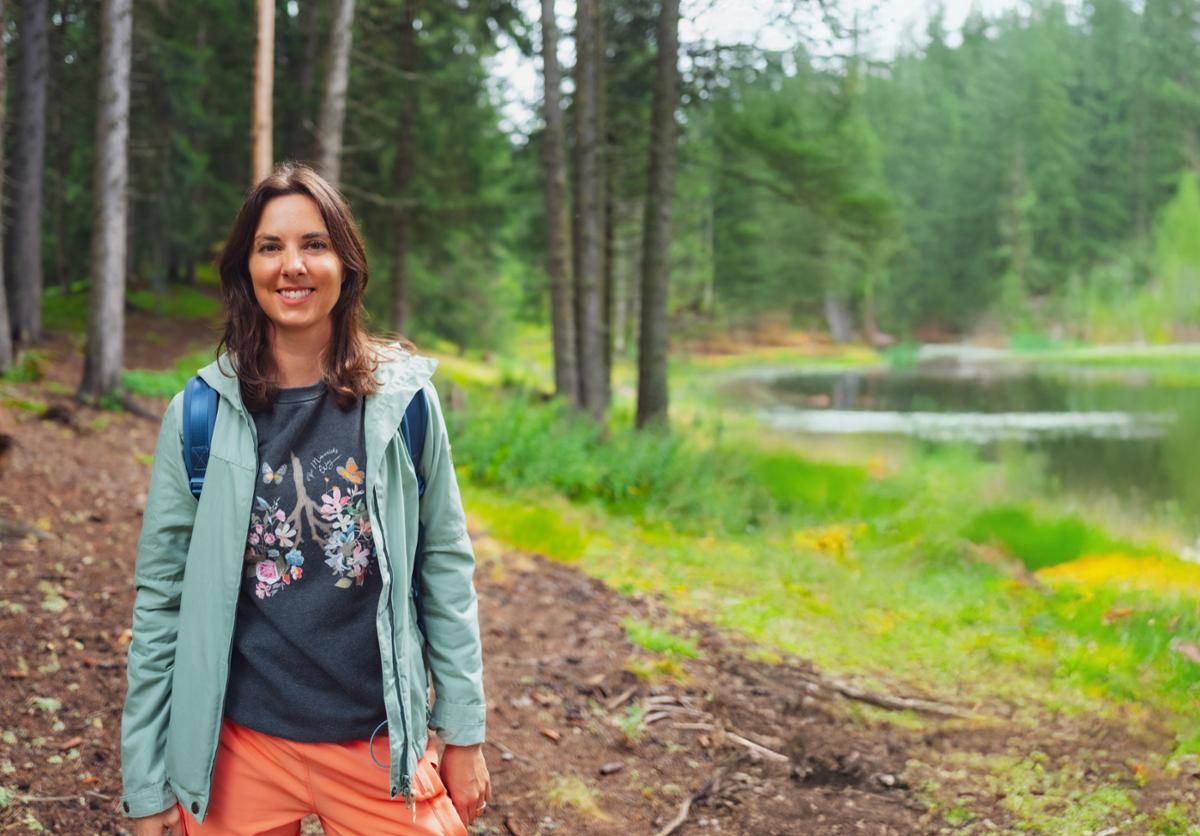
You’re based in the UK and the Swiss mountains, can the programmes be transferred to urban environments? Absolutely. Nature-based training can be practiced in any outdoor space. I pilot all the programmes at our training centre in Switzerland and pop-ups in London to see how they translate to different practices.
The outdoor course teaches participants to explore and discover urban nature, revealing how it may be a lot closer than we think. It’s not just Big Nature that’s useful – Little Nature is also a great resource that we should preserve, especially in urban settings. Examples of existing outdoor activities we can lean into more include running groups, outdoor circuits, jump rope and Tai Chi.
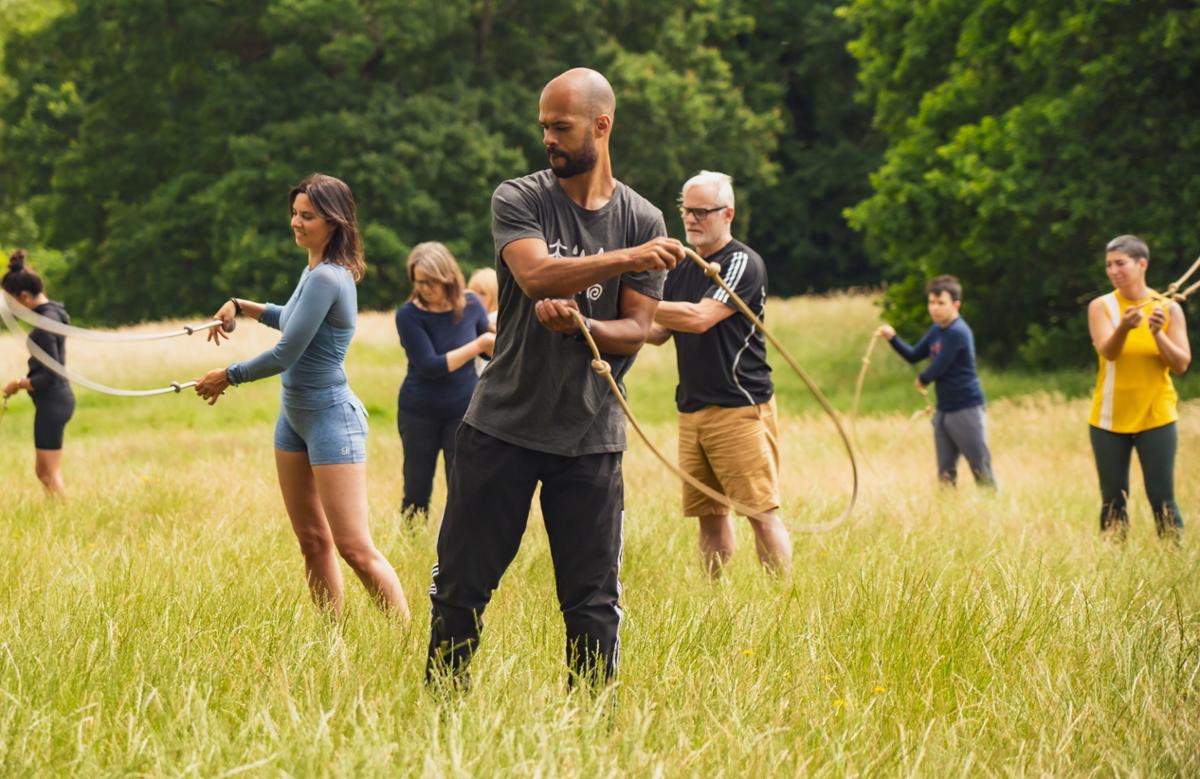
Have you ever tried this in an area of deprivation? That’s exactly why we created the course and we’re currently running a pilot in the Philippines to measure the impact this type of activity could have within local communities. In the Philippines, we’re training leaders who practice rope flow, a highly accessible movement-based activity using a rope. The people of the Philippines have taught me that a lack of resources is just a perceived barrier: when you have a can-do attitude, you can achieve anything, even getting fit with a recycled piece of rope in your backyard.
Countries with the fewest resources often teach us the most about using basic resources and how people approach outdoor exercise joyfully in all weathers!
Who are your customers? Our education courses are aimed at existing coaches, activity leaders and health professionals, but our workshops and online resources are designed for people of all levels. Our approach is neither a critique nor a replacement for what’s already happening indoors, but it’s definitely how we’re seeing things going forward.
I think the sports and fitness industry has such huge potential to help people be more connected to their environment and their health and move towards sustainable activities.
In today’s premium spa environment, every detail shapes the guest experience – right down to
the softness of towels and the freshness of linens. [more...]
Christensen wants people to enjoy outdoor activity
Tell us about Mavericks Mavericks Life Co is an international training provider for the sports and physical activity sector, specialising in active lifestyle education and sustainable approaches.
I launched the company in 2008 with the intention of getting people active while having fun, especially those who don’t generally think physical activity is for them.
What drives us is finding a balance between teaching sports and exercise science with fun ways to get people active in a recreational way, moving their bodies in a way that feels joyful, but is also backed by physiology, psychology and life sciences.
Can you give us a flavour of the skills you teach? The Mavericks Way is a nature-based training programme, designed to help people reconnect with nature while improving their physical health and mental wellbeing.
We use key aspects of health and exercise science and psychology for leading and working in a community environment. This includes an introduction to motivational psychology for participation and developing intrinsic motivation.
We explore the latest insights from recent scientific studies on behaviours, barriers and activities related to outdoor exercise and specifically focus on how outdoor activities should help meet physical activity guidelines around cardiorespiratory fitness, muscle and bone function, mobility and balance.
The Mavericks Way teaches people to adopt an active lifestyle using their favourite outdoor activity, such as walking or running groups, ultimate frisbee, rope and jump rope, tree climbing, wild swimming, or games with their dog or their children. Everything counts!
The outdoor environment gives more possibilities to be creative and playful – for example, working on balance exercises, agility and jumping drills, or playing recreational games. Outdoors is not a replacement for indoor training, but it’s a motivator, because people can have a lot of fun and they can be more social.
The course has a section on nature re-connection: exploring the science of evolution and ecology and the links between the environment and human health. We bring about a connection with nature by teaching people to use and explore the five senses in natural environments and highlighting how nature provides additional proprioceptive, energy expenditure and training opportunities.
There’s a guided mindfulness/sensory experience to show how contact with nature affects our bodies and reduces stress levels in the short term.
We also explore different terrain and opportunities to build fitness exercises based on the available landscape and discuss what nature provides humans and the different ways we and nature are connected.
The course is accredited by NASM and AFAA (USA), EREPS (EU), and CIMSPA (UK). It involves 12 to 15 hours of online learning, which has to be completed within three months.
You’re based in the UK and the Swiss mountains, can the programmes be transferred to urban environments? Absolutely. Nature-based training can be practiced in any outdoor space. I pilot all the programmes at our training centre in Switzerland and pop-ups in London to see how they translate to different practices.
The outdoor course teaches participants to explore and discover urban nature, revealing how it may be a lot closer than we think. It’s not just Big Nature that’s useful – Little Nature is also a great resource that we should preserve, especially in urban settings. Examples of existing outdoor activities we can lean into more include running groups, outdoor circuits, jump rope and Tai Chi.
Have you ever tried this in an area of deprivation? That’s exactly why we created the course and we’re currently running a pilot in the Philippines to measure the impact this type of activity could have within local communities. In the Philippines, we’re training leaders who practice rope flow, a highly accessible movement-based activity using a rope. The people of the Philippines have taught me that a lack of resources is just a perceived barrier: when you have a can-do attitude, you can achieve anything, even getting fit with a recycled piece of rope in your backyard.
Countries with the fewest resources often teach us the most about using basic resources and how people approach outdoor exercise joyfully in all weathers!
Who are your customers? Our education courses are aimed at existing coaches, activity leaders and health professionals, but our workshops and online resources are designed for people of all levels. Our approach is neither a critique nor a replacement for what’s already happening indoors, but it’s definitely how we’re seeing things going forward.
I think the sports and fitness industry has such huge potential to help people be more connected to their environment and their health and move towards sustainable activities.
Private hotel owner and developer HVL Hotels will open a new luxury resort and tourism
destination called Laval Hunter Valley in the second half of 2027 in Pokolbin, Australia.
The annual wellness festival dedicated to wellbeing, culture, longevity and human connection,
called Alma, will be hosted by Rocco Forte hotel, Verdura Resort in Sicily, Italy.
Capella Hotel Group has appointed Feisal Jaffer as chief development officer as the company
ramps up its global expansion of both its Capella and Patina brands.
People taking GLP-1 weight loss medications such as Ozempic, Wegovy, Mounjaro and Zepbound
may be losing weight, but they’re also becoming less physically active, according to new
research presented at the ENDO 2026 annual meeting of the Endocrine Society
Abu Dhabi-based investment firm Mubadala Capital has made a binding, fully financed
€1 billion
offer to acquire Pierre and Vacances SA, the European holiday resort operator behind the
continental European Center Parcs business.
Global retreat trade show, Synergy The Retreat Show, has launched a resource called The
Source, which hosts an open-access online Transformation Series programme.
The Standards Authority for Touch in Cancer Care (SATCC) charity has announced its first five-
day Living with Cancer and Beyond retreat, which will be held at Carden Park Hotel and Spa in
Cheshire, UK, between 1 and 5 September.
Patmos Aktis, a Luxury Collection Resort and Spa, has opened in Greece, with a renovated and
rebranded wellness offering called Ansana Wellness and Spa.
The Mauna Kea Beach Hotel, an Autograph Collection property in Hawaii, US, has opened its
22,000 sq ft indoor-outdoor Spa at Mauna Kea as the final step in the property’s overall
renovation, which has cost more than US$180 million (€166 million, £140 mill
The UK spa review and discovery platform for consumers, the Good Spa Guide, has announced
it will host the Good Spa Guide Awards 2026 during an event on 16 November at Sopwell House
Hotel in St Albans, UK.
In today’s premium spa environment, every detail shapes the guest experience – right down to
the softness of towels and the freshness of linens. [more...]