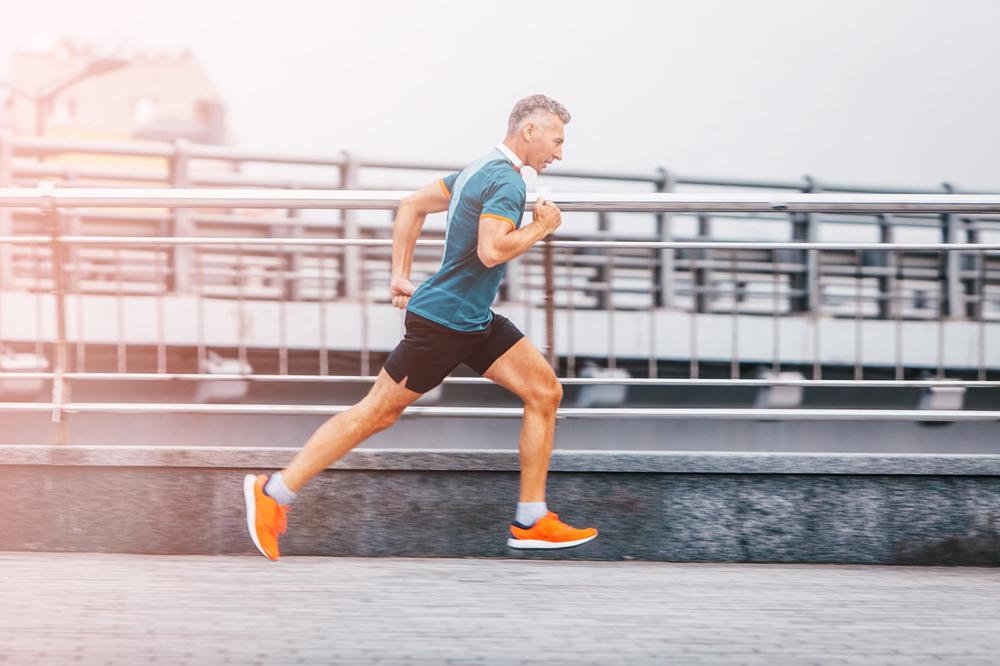
The cost of modern day inactivity while travelling, working or winding down drains the economy / Photo: SHUTTERSTOCK/ Pressmaster
Much of modern life is spent sitting, whether travelling, at work or winding down at the end of the day. What’s the price of all this inactivity? The numbers might shock you.
In November 2019, Vitality and RAND Europe published a groundbreaking global study on the economic impact of physical inactivity, illustrating the significant influence of regular exercise on economic growth, workforce productivity and life expectancy.
The study found that the world’s GDP would gain more than $100bn each year until 2050 if people took part in just one of these daily activities:
■ walked 15 minutes more
■ slow jogged for half a mile (one km)
■ took 1,500 extra steps
Promote Productivity Further findings show that if the physically inactive were to reach the World Health Organisation’s recommended minimum levels of exercise (150 minutes of moderately intensive exercise per week), employees would gain up to five additional days of productivity per year and the global economy would grow by an estimated $220bn annually.
In addition to getting inactive people active, if currently active individuals boosted their physical activity levels by 20 per cent, the global economy could grow by more than $360bn every year; equivalent to the size of Singapore’s economy.
Economic gains for the US economy would be $95bn a year until 2050, and $11bn a year for the UK economy.
These economic gains would be attributed to the reduction in premature deaths within the working age population, reduced sick leave and improved levels of workplace productivity – driven largely by the positive impact of physical activity on mental health.
Healthy Performance Researchers at RAND Europe utilised Vitality’s extensive proprietary dataset on workplace health – derived from its Healthiest Workplace initiative in seven countries – to assess the relationship between physical activity and performance at work. It also combined the mortality and productivity effects into a single model to project the true economic cost of physical inactivity over time.
It analysed three scenarios that sketch a global picture of how increased physical activity can benefit not only individuals but also businesses and global economies.
As forecasts of a global slump persist, the price of sedentary lifestyles is sobering.
By exercising more, people take far fewer sick days and live longer. Physically inactive 40-year-olds could add at least 2.5 years to their lives simply by jogging for 20 minutes a day. And exercise is not only just good for our physical health; it provides significant benefits for our mental health too, enabling us to work more productively.
In cold economic terms, a greater amount of exercise would mean that more people could work more productively across more days. And the pay-off for the individual? A happier, healthier and wealthier life.
Incentivise Employees Over 20 years ago, Discovery set out to transform the insurance industry by incentivising people to live healthier, more active lives. It does this through Vitality, a science-based behavioural change programme that encourages healthy activity among members and rewards them for it. Incentives range from a free weekly coffee or cinema tickets for achieving a certain number of steps each week to an Apple Watch for consistently meeting their personal exercise goals.
Studies have proven that people can be incentivised to move more – and that has a benefit to them, the businesses they work for and wider society, because the healthier people are, the less burden they place on public services. Discovery calls it ‘shared value.’ Discovery has partnered with leading insurance companies around the world by integrating Vitality into their offerings to make tens of millions healthier. The insurers connected by Vitality are committed to encouraging positive behaviour change to not only drive individual improvements but also offer sustainable solutions to global challenges like inactivity – as evidenced by their collective commitment to make 100 million people 20 per cent more active by 2025. This study shows the massive benefits of that approach.
Corporate Culture Shift However, this can’t be done without a broader corporate culture shift – one that prioritises the physical and mental wellness of its people. Tackling the perverse trend of presenteeism is a good place to start.
Working longer hours doesn’t make people better at their jobs, but it does rob them of precious minutes and hours in the day. This time would be better spent exercising. Today’s leaders have a responsibility to encourage their colleagues to have a healthy work-life balance. This benefits the individual, the company and, more broadly, the economy.
Andre Nepgen, Head of the Global Vitality Network at Discovery Limited
www.vitality.co.uk
Global GDP would gain over £80bn annually if sedentary people walk, jog or take 1,500 extra steps daily / Photo: SHUTTERSTOCK/ Anutr Yossundara
Physically inactive 40-year-olds could add at least 2.5 years to their lives simply by jogging for 20 minutes a day / Photo: SHUTTERSTOCK/ Igor Palamarchuk
Working longer hours doesn’t make people better at their jobs, but robs them of time better spent exercising / Photo: SHUTTERSTOCK/ FLAMINGO IMAGES
The cost of modern day inactivity while travelling, working or winding down drains the economy / Photo: SHUTTERSTOCK/ Pressmaster
Much of modern life is spent sitting, whether travelling, at work or winding down at the end of the day. What’s the price of all this inactivity? The numbers might shock you.
In November 2019, Vitality and RAND Europe published a groundbreaking global study on the economic impact of physical inactivity, illustrating the significant influence of regular exercise on economic growth, workforce productivity and life expectancy.
The study found that the world’s GDP would gain more than $100bn each year until 2050 if people took part in just one of these daily activities:
■ walked 15 minutes more
■ slow jogged for half a mile (one km)
■ took 1,500 extra steps
Promote Productivity Further findings show that if the physically inactive were to reach the World Health Organisation’s recommended minimum levels of exercise (150 minutes of moderately intensive exercise per week), employees would gain up to five additional days of productivity per year and the global economy would grow by an estimated $220bn annually.
In addition to getting inactive people active, if currently active individuals boosted their physical activity levels by 20 per cent, the global economy could grow by more than $360bn every year; equivalent to the size of Singapore’s economy.
Economic gains for the US economy would be $95bn a year until 2050, and $11bn a year for the UK economy.
These economic gains would be attributed to the reduction in premature deaths within the working age population, reduced sick leave and improved levels of workplace productivity – driven largely by the positive impact of physical activity on mental health.
Healthy Performance Researchers at RAND Europe utilised Vitality’s extensive proprietary dataset on workplace health – derived from its Healthiest Workplace initiative in seven countries – to assess the relationship between physical activity and performance at work. It also combined the mortality and productivity effects into a single model to project the true economic cost of physical inactivity over time.
It analysed three scenarios that sketch a global picture of how increased physical activity can benefit not only individuals but also businesses and global economies.
As forecasts of a global slump persist, the price of sedentary lifestyles is sobering.
By exercising more, people take far fewer sick days and live longer. Physically inactive 40-year-olds could add at least 2.5 years to their lives simply by jogging for 20 minutes a day. And exercise is not only just good for our physical health; it provides significant benefits for our mental health too, enabling us to work more productively.
In cold economic terms, a greater amount of exercise would mean that more people could work more productively across more days. And the pay-off for the individual? A happier, healthier and wealthier life.
Incentivise Employees Over 20 years ago, Discovery set out to transform the insurance industry by incentivising people to live healthier, more active lives. It does this through Vitality, a science-based behavioural change programme that encourages healthy activity among members and rewards them for it. Incentives range from a free weekly coffee or cinema tickets for achieving a certain number of steps each week to an Apple Watch for consistently meeting their personal exercise goals.
Studies have proven that people can be incentivised to move more – and that has a benefit to them, the businesses they work for and wider society, because the healthier people are, the less burden they place on public services. Discovery calls it ‘shared value.’ Discovery has partnered with leading insurance companies around the world by integrating Vitality into their offerings to make tens of millions healthier. The insurers connected by Vitality are committed to encouraging positive behaviour change to not only drive individual improvements but also offer sustainable solutions to global challenges like inactivity – as evidenced by their collective commitment to make 100 million people 20 per cent more active by 2025. This study shows the massive benefits of that approach.
Corporate Culture Shift However, this can’t be done without a broader corporate culture shift – one that prioritises the physical and mental wellness of its people. Tackling the perverse trend of presenteeism is a good place to start.
Working longer hours doesn’t make people better at their jobs, but it does rob them of precious minutes and hours in the day. This time would be better spent exercising. Today’s leaders have a responsibility to encourage their colleagues to have a healthy work-life balance. This benefits the individual, the company and, more broadly, the economy.
Andre Nepgen, Head of the Global Vitality Network at Discovery Limited
www.vitality.co.uk
Global GDP would gain over £80bn annually if sedentary people walk, jog or take 1,500 extra steps daily / Photo: SHUTTERSTOCK/ Anutr Yossundara
Physically inactive 40-year-olds could add at least 2.5 years to their lives simply by jogging for 20 minutes a day / Photo: SHUTTERSTOCK/ Igor Palamarchuk
Working longer hours doesn’t make people better at their jobs, but robs them of time better spent exercising / Photo: SHUTTERSTOCK/ FLAMINGO IMAGES
Global Wellness Day (GWD) marked its 15th anniversary on Saturday 13 June 2026, with the
theme: #JoyMagenta – a celebration of the healing qualities of simple gestures and activities
that spark joy.
Global luxury hospitality brand, Six Senses, has partnered with longevity healthcare provider,
HUM2N, to launch a clinic at Six Senses London, at The Whiteley.
As part of its first hotel partnership, Mayrlife – the medical health resort company known for its
site in Altaussee, Austria – has launched a day clinic at the Rosewood Vienna.
Premium London health club, KX Chelsea, will imminently unveil its most significant
redevelopment since its launch in 2002 to create an integrated wellness model combining
training, recovery and relaxation.
Rosewood Le Guanahani St Barth, on the northeast coast of Saint Barthélemy in the French
West Indies, is offering a programme of ocean-inspired yoga classes between 8-14 June to
celebrate Global Wellness Day (GWD).
Hotel de France, located on the British Isle of Jersey, has created a wellness retreat package
that includes a hot yoga session that will take place in Jersey Zoo’s butterfly sanctuary.
The Ritz-Carlton, Langkawi, in Malaysia, has revealed a schedule for Global Wellness Day
(GWD) that includes guided rainforest walks, mindful movement and guided coastal meditation
experiences.
Longevitix, a clinical platform for preventive and longevity medicine, has launched its AI-
powered intelligence system to help physicians deliver continuous, personalised longevity-
focused care at scale.
Atmantan Wellness Centre, an integrative wellness destination in Mulshi, near Pune in India, is
expanding its portfolio by adding a new centre in Hyderabad that will launch between 2028 and
2029.