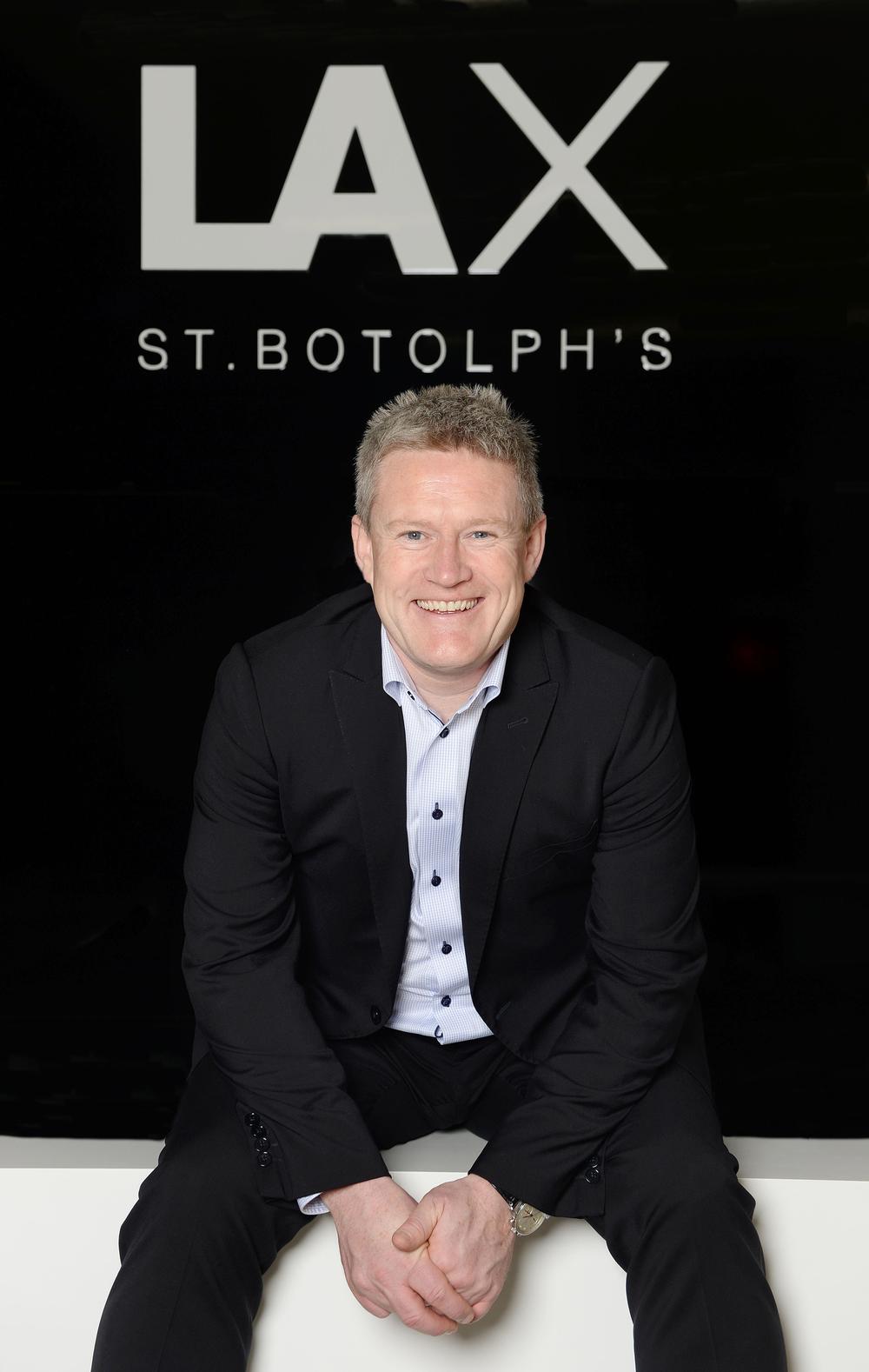
“This is the first new club we’ve opened in 10 years,” says Martin Long, CEO of LA fitness, as he shows me round the brand new LAX club, which opened at the end of October in the heart of the City of London.
“We’ve taken 10 years of learnings from the LA fitness chain and its diverse management team, as well as from the rest of the industry in the UK and around the world, and we’ve applied all that in a club we’ve built from scratch in a £2.5m project.”
The result is a premium offering, designed specifically for a City audience, which operates under the distinct brand of LAX. “There was healthy debate over the brand – some of the early workings still had it down as an LA fitness club – but for me, it was a clean sheet of paper and I wanted to use a new brand,” says Long. “We’d been looking at the London market for some time, and when this opportunity came up I saw it as a blank canvas: it really was just a concrete bunker when we got hold of it.
“If you look at the LA chain, there have been lots of acquisitions over the years – single ‘mom and pop’ clubs being added to the estate – and there really wasn’t a clean landscape. This was an opportunity to take a very blank canvas and bring it to life. If we’d tried to do that under the LA fitness brand, we’d have been starting from behind the curve. Just putting a new name above the door was the starting point for differentiation.
“That said, we wanted to keep some association with the LA brand. LAX has a standalone distinction, but we don’t hide the fact that it’s linked to LA fitness by any means.
“It’s similar to the hotel model in a way, where you have different levels of branding within a portfolio. If you were in an Intercontinental, for example, you wouldn’t necessarily see branding for the group’s other hotel chains in there. Similarly, there aren’t many references to LA fitness in the LAX building. The whole front end is different: everything from the key systems to class booking to contracts has been designed to support the simplicity of the LAX brand and concept.
“However, LAX members automatically have access to LA fitness clubs, so although LAX membership cards use proximity technology – LA fitness has swipe cards – they can also be swiped in LA fitness clubs.”
A focus on fitness He continues: “We decided to set LAX at a premium level and added as much into the club as we could – all the current trends – to make it a very simple but top-end customer experience, with a high degree of interaction and education.” (See briefing box, p39)
The pressure on the mid-market over recent times – squeezed from both sides by the low-cost operators and the premium sector – has been well-documented, and Fitness First has already moved to refine its offering in a bid to move its brand more upmarket. Has the launch of the premium LAX brand been motivated by a similar rationale?
“I don’t think it directly reflects that market dynamic,” says Long. “LAX is simply about meeting the needs of the London market, and specifically the building above the club, where there are 5,000 employees working for a number of firms. It was about designing a concept that works for those time-hungry customers – somewhere they can get the most out of their exercise in the limited time they have available.
“That’s why we’ve focused on short format, small group training sessions – our new LAX20 and LAX30 classes – which are included in the membership and delivered both in the functional area and on the gym floor. That’s also why we haven’t included a pool. If members want to swim, they can go to one of the nearby LA fitness clubs – there are several within easy walking distance – but we wanted to maximise the workout space at LAX.”
In line with this very focused approach, LAX also limits its secondary revenue streams to concentrate on its core territory of fitness. “There are plenty of places in London where you can get a great coffee or a fresh juice, and we have a Tesco store next door, so there’s no point us selling bottled water or snacks. We just focus on giving our members everything they need to do a great workout, with the only thing you can add being PT.”
Yet surprisingly, particularly given the affluent City clientele, the club launched with just six PTs, with the expectation of reaching 15–20 after 12 months, subject to demand. “The model is different at LAX,” explains Long. “We have a full team of staff, known as LAX Crew, who are non-PT and who are there to help people – particularly on the functional floor, which is manned at all times. We don’t just leave people to their own devices – the LAX Crew are highly skilled and are there to make sure every member gets the most out of each workout. None of our other clubs come close to that level of added value on the fitness floor.”
The slogan on the wall of reception – ‘Live your potential. Take the journey. Make it matter’ – sums up the philosophy of the new club, he adds. “It’s about taking valuable time and maximising your workout. It is about the intensity, but it’s also about how we add value through variety and through the input of the LAX Crew.”
A winning formula These high levels of service and attention to detail are to be expected at a premium club. What comes as more of a surprise at LAX is the price: a relatively modest £79 a month, plus £50 joining fee.
“We’ve priced it very keenly, with members really only paying a small premium above our other clubs and the local competition,” says Long. “Meanwhile, across London, you’re seeing whole new price points coming in with the likes of Equinox and the microgyms. We believe we’re offering great value for money. I think most people would expect LAX to charge a lot more than we’re pitching it at.”
Given this pricing structure – along with the club’s high staffing model, prime City location and relative lack of secondary spend channels – how many members will LAX need to break even?
“We launched with around 1,500 members and I think it has the potential to be a 4,000-member club. However, our target is about 2,500 members – anything north of that and we’ll be doing well,” says Long. He must have noticed the look on my face, as he adds: “That’s surprised you hasn’t it?”
It has indeed, but judging by those figures it sounds like a winning formula. So are more LAX clubs on the cards? “I’d open more, yes, and they’d be largely metropolis-based,” says Long.
“There’s also, within the design of the LAX brand and the structure of the offering, the option to launch a small studio format in line with the growing trend of the microgyms. The 20- and 30-minute LAX20 and LAX30 classes are very, very portable as a sub-brand.”
LAX is also being used as a testbed to trial new concepts and services, with a view to potentially rolling some of these out across the LA fitness estate. Long explains: “We believe the LAX brand gives us a fair degree of flexibility going forward, including the option to rebrand some of the LA clubs where appropriate – South Kensington, for example – or to take elements such as LAX20 and LAX30 and roll those back across the LA fitness chain.
“That’s important, because we have to make sure we don’t lose sight of the fact that LAX is just one club. We have 80 in the estate.”
Estate management So how have things gone with the LA fitness brand since Health Club Management last interviewed Long in September 2009? “We’re trading in a difficult marketplace, but the LA fitness portfolio has scrubbed up pretty well over the last few years of refurbishment and investment into the business.
“Are they now great clubs? I think they’re good clubs. With a club like LAX, you can start from scratch and make it great, but it’s much harder to take a chain and put change through it.
“But if you look at our member surveys, the members are happier. Are they off the Richter scale happy? No. But we’re certainly not alone in that.
I think the vast majority of chains are pretty well run and give pretty good service and pretty good value, but the industry still suffers from reputational problems that go back to the old times. Fair play to ukactive – it’s doing a lot of work on the broader reputation of the sector – but that’s still outweighed by the dissenters, by the history. We’re still fighting that every day of the week.
“The other problem the industry has – and it’s almost impossible to change this now – is that it’s devalued itself over time. Yield has gone down over time, not up. Inflation has gone up. We have LA clubs today charging less than they did 10 years ago.
“The consumer perception now is that £50 a month is a lot of money for membership – I get members who pay £19 and use the club every single day, doing classes, and they still think they’re over-paying. Honestly, they’re not even covering the water bill.
“But all in all, the majority of members are happy. We want them to have a good experience and feel they’re getting great value. Do we hit that box every day of the week with every member? No, but with the vast majority we do.
“The other industry-wide issue I really wanted to address in our clubs was staff retention, as I believe that contributes to the friendliness, familiarity and sense of community in a club.
Honestly, that’s probably the area where we’d still like to be doing better. We’ve invested heavily in training and introduced a lot of loyalty mechanics – performance-related pay and so on. And I do think we give a good grounding to staff – I think we’re very good at inducting, training and creating good people. I’d just like them to stay longer so we benefit from that, but gym staff come from a young, portable generation and it hasn’t been easy to drive that change through the business.”
Growing participation When we last spoke, Long was very enthusiastic about the potential of the health and fitness sector, envisaging a big period of growth ahead. In practice, gym members continue to make up no more than around 12 per cent of the overall UK population. So has Long witnessed any signs of the market growth he predicted?
“Consumer participation in fitness and lifestyle is definitely improving. The difficulty is measuring growth in one particular segment of the market, because the market has broadened, particularly in the area of outdoor lifestyle – not just boot camps and military fitness, but running and especially cycling.
“So the broader market has certainly grown; measuring growth simply in the gym sector is the hard part. We’re trying to measure an uplift in just one tiny segment of a very broad market for consumer wellbeing.
“That said, there’s been a lot of change in the health and fitness industry already, with operators upping their game, and I do believe there are further opportunities for growth, provided the right concepts can be designed for the right locations.”
The new LAX club – located in the St Botolph’s Building near Aldgate and Liverpool Street tube stations – is spread over three floors, with a clean, airy, urban design conceived by Jamm Architects.
A spacious reception area occupies the ground floor, with iPads where members can tap into their MY LA account. This gives them access to services such as online class booking; fitness tutorials; a fitness review to create a personalised workout programme based on fitness levels, goals and motivation; FAQs; and a feedback and response facility. Access to the club is via proximity card, freeing up the staff to act more as hosts than receptionists.
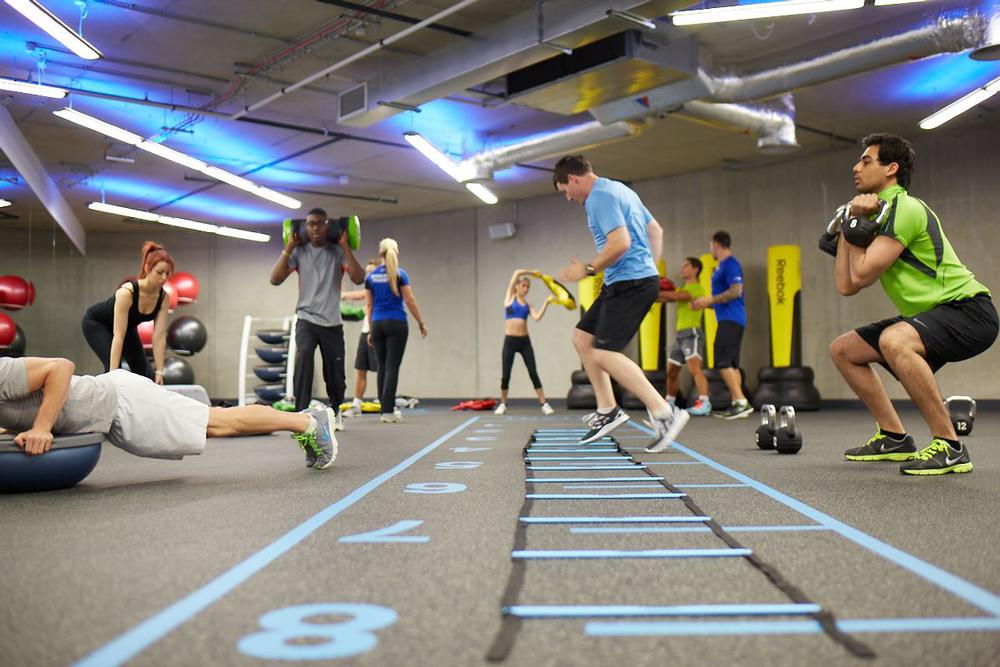
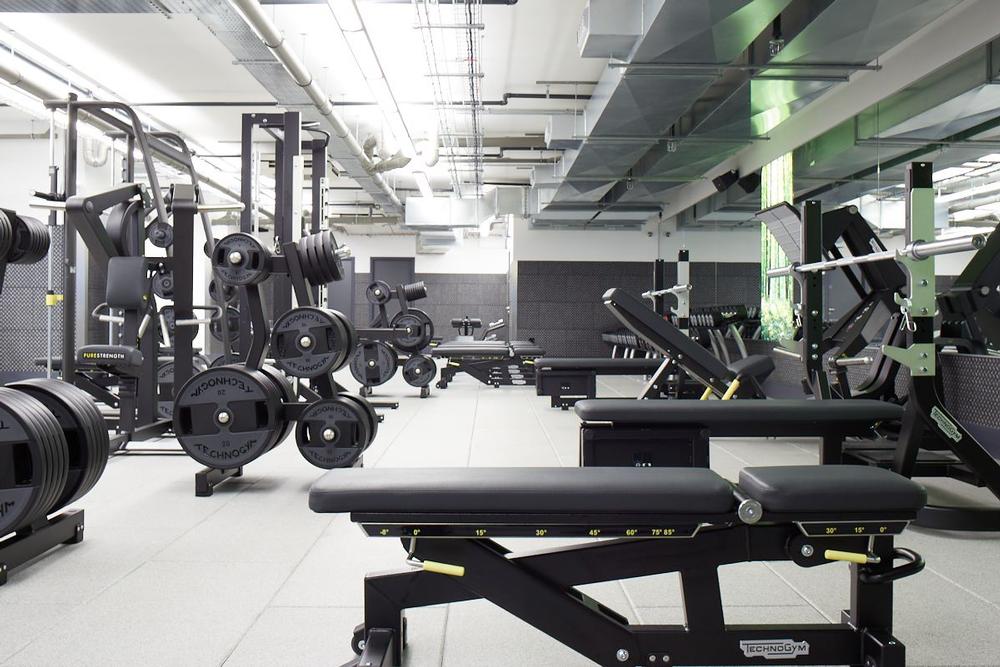
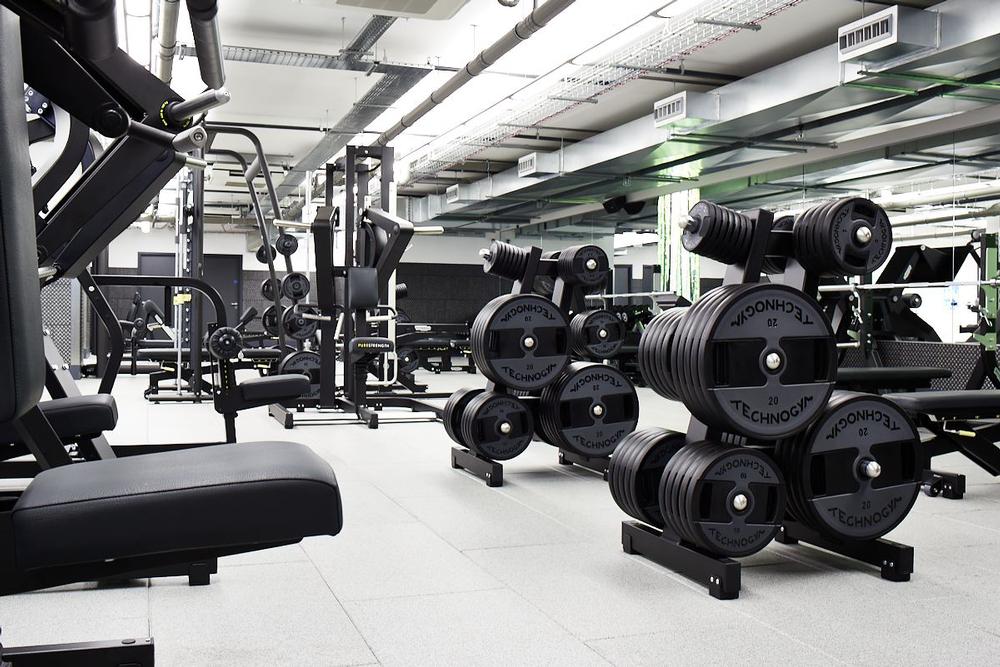
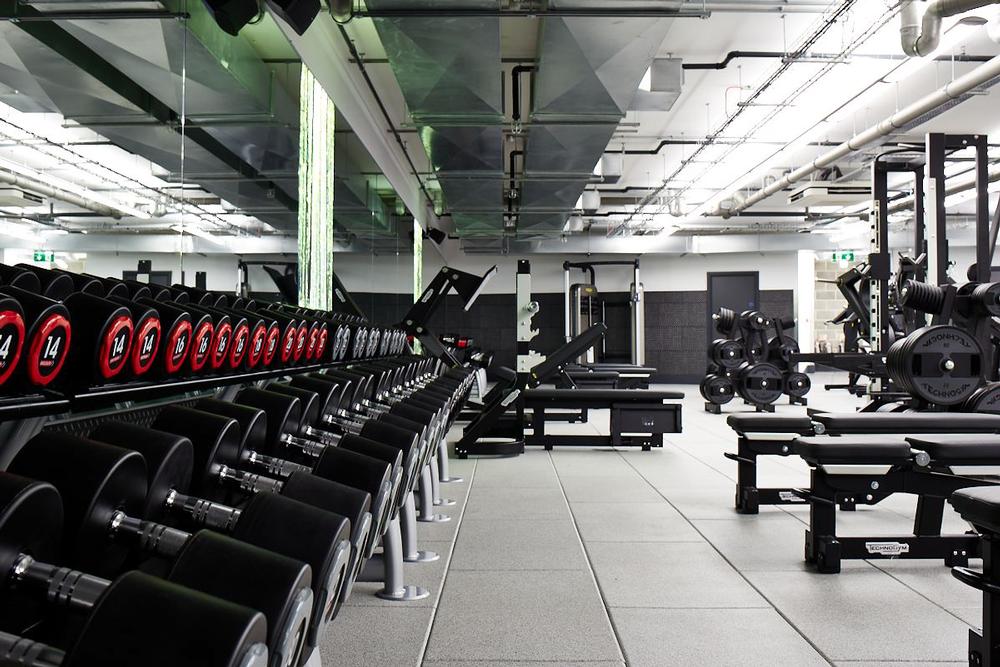
One floor down is the main gym, kitted out with Technogym CV and resistance equipment; changing rooms are on a mezzanine above this, overlooking the 220sq m CV area. Resistance equipment occupies a 325sq m space. Next level down is a 265sq m dedicated functional floor offering space for group training sessions, personal training and independent workouts. Kitted out by Escape, equipment includes an Octagon rig, Bulgarian bags, steel bags and Dynamax balls.
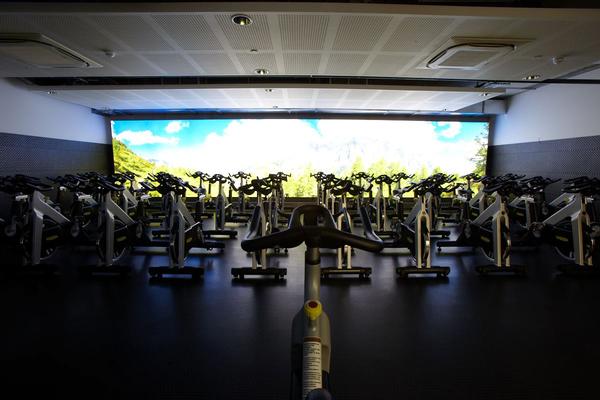
Also on this floor is a 97sq m cycle studio with capacity for 50–60 bikes, as well as a 175sq m group exercise studio offering the full range of Les Mills classes alongside pilates, yoga and Zumba. These studio classes complement the signature LAX20 and LAX30 20- and 30-minute small group training sessions, with a total of over 150 classes a week on the combined group exercise timetable.
Finally, a Learning Pod offers a space for member education and fitness assessments.
The new LAX club near London’s Liverpool Street has an urban design, and incorporates the latest member-focused technology
The new LAX club near London’s Liverpool Street has an urban design, and incorporates the latest member-focused technology
The new LAX club near London’s Liverpool Street has an urban design, and incorporates the latest member-focused technology
The Learning Pod offers space
for member education, as
well as fitness assessments
A 265sq m functional zone allows for independent workouts, PT and group training
Resistance equipment occupies a
325sq m space and sits alongside the
CV area on the lower ground floor
Resistance equipment occupies a
325sq m space and sits alongside the
CV area on the lower ground floor
Resistance equipment occupies a
325sq m space and sits alongside the
CV area on the lower ground floor
“This is the first new club we’ve opened in 10 years,” says Martin Long, CEO of LA fitness, as he shows me round the brand new LAX club, which opened at the end of October in the heart of the City of London.
“We’ve taken 10 years of learnings from the LA fitness chain and its diverse management team, as well as from the rest of the industry in the UK and around the world, and we’ve applied all that in a club we’ve built from scratch in a £2.5m project.”
The result is a premium offering, designed specifically for a City audience, which operates under the distinct brand of LAX. “There was healthy debate over the brand – some of the early workings still had it down as an LA fitness club – but for me, it was a clean sheet of paper and I wanted to use a new brand,” says Long. “We’d been looking at the London market for some time, and when this opportunity came up I saw it as a blank canvas: it really was just a concrete bunker when we got hold of it.
“If you look at the LA chain, there have been lots of acquisitions over the years – single ‘mom and pop’ clubs being added to the estate – and there really wasn’t a clean landscape. This was an opportunity to take a very blank canvas and bring it to life. If we’d tried to do that under the LA fitness brand, we’d have been starting from behind the curve. Just putting a new name above the door was the starting point for differentiation.
“That said, we wanted to keep some association with the LA brand. LAX has a standalone distinction, but we don’t hide the fact that it’s linked to LA fitness by any means.
“It’s similar to the hotel model in a way, where you have different levels of branding within a portfolio. If you were in an Intercontinental, for example, you wouldn’t necessarily see branding for the group’s other hotel chains in there. Similarly, there aren’t many references to LA fitness in the LAX building. The whole front end is different: everything from the key systems to class booking to contracts has been designed to support the simplicity of the LAX brand and concept.
“However, LAX members automatically have access to LA fitness clubs, so although LAX membership cards use proximity technology – LA fitness has swipe cards – they can also be swiped in LA fitness clubs.”
A focus on fitness He continues: “We decided to set LAX at a premium level and added as much into the club as we could – all the current trends – to make it a very simple but top-end customer experience, with a high degree of interaction and education.” (See briefing box, p39)
The pressure on the mid-market over recent times – squeezed from both sides by the low-cost operators and the premium sector – has been well-documented, and Fitness First has already moved to refine its offering in a bid to move its brand more upmarket. Has the launch of the premium LAX brand been motivated by a similar rationale?
“I don’t think it directly reflects that market dynamic,” says Long. “LAX is simply about meeting the needs of the London market, and specifically the building above the club, where there are 5,000 employees working for a number of firms. It was about designing a concept that works for those time-hungry customers – somewhere they can get the most out of their exercise in the limited time they have available.
“That’s why we’ve focused on short format, small group training sessions – our new LAX20 and LAX30 classes – which are included in the membership and delivered both in the functional area and on the gym floor. That’s also why we haven’t included a pool. If members want to swim, they can go to one of the nearby LA fitness clubs – there are several within easy walking distance – but we wanted to maximise the workout space at LAX.”
In line with this very focused approach, LAX also limits its secondary revenue streams to concentrate on its core territory of fitness. “There are plenty of places in London where you can get a great coffee or a fresh juice, and we have a Tesco store next door, so there’s no point us selling bottled water or snacks. We just focus on giving our members everything they need to do a great workout, with the only thing you can add being PT.”
Yet surprisingly, particularly given the affluent City clientele, the club launched with just six PTs, with the expectation of reaching 15–20 after 12 months, subject to demand. “The model is different at LAX,” explains Long. “We have a full team of staff, known as LAX Crew, who are non-PT and who are there to help people – particularly on the functional floor, which is manned at all times. We don’t just leave people to their own devices – the LAX Crew are highly skilled and are there to make sure every member gets the most out of each workout. None of our other clubs come close to that level of added value on the fitness floor.”
The slogan on the wall of reception – ‘Live your potential. Take the journey. Make it matter’ – sums up the philosophy of the new club, he adds. “It’s about taking valuable time and maximising your workout. It is about the intensity, but it’s also about how we add value through variety and through the input of the LAX Crew.”
A winning formula These high levels of service and attention to detail are to be expected at a premium club. What comes as more of a surprise at LAX is the price: a relatively modest £79 a month, plus £50 joining fee.
“We’ve priced it very keenly, with members really only paying a small premium above our other clubs and the local competition,” says Long. “Meanwhile, across London, you’re seeing whole new price points coming in with the likes of Equinox and the microgyms. We believe we’re offering great value for money. I think most people would expect LAX to charge a lot more than we’re pitching it at.”
Given this pricing structure – along with the club’s high staffing model, prime City location and relative lack of secondary spend channels – how many members will LAX need to break even?
“We launched with around 1,500 members and I think it has the potential to be a 4,000-member club. However, our target is about 2,500 members – anything north of that and we’ll be doing well,” says Long. He must have noticed the look on my face, as he adds: “That’s surprised you hasn’t it?”
It has indeed, but judging by those figures it sounds like a winning formula. So are more LAX clubs on the cards? “I’d open more, yes, and they’d be largely metropolis-based,” says Long.
“There’s also, within the design of the LAX brand and the structure of the offering, the option to launch a small studio format in line with the growing trend of the microgyms. The 20- and 30-minute LAX20 and LAX30 classes are very, very portable as a sub-brand.”
LAX is also being used as a testbed to trial new concepts and services, with a view to potentially rolling some of these out across the LA fitness estate. Long explains: “We believe the LAX brand gives us a fair degree of flexibility going forward, including the option to rebrand some of the LA clubs where appropriate – South Kensington, for example – or to take elements such as LAX20 and LAX30 and roll those back across the LA fitness chain.
“That’s important, because we have to make sure we don’t lose sight of the fact that LAX is just one club. We have 80 in the estate.”
Estate management So how have things gone with the LA fitness brand since Health Club Management last interviewed Long in September 2009? “We’re trading in a difficult marketplace, but the LA fitness portfolio has scrubbed up pretty well over the last few years of refurbishment and investment into the business.
“Are they now great clubs? I think they’re good clubs. With a club like LAX, you can start from scratch and make it great, but it’s much harder to take a chain and put change through it.
“But if you look at our member surveys, the members are happier. Are they off the Richter scale happy? No. But we’re certainly not alone in that.
I think the vast majority of chains are pretty well run and give pretty good service and pretty good value, but the industry still suffers from reputational problems that go back to the old times. Fair play to ukactive – it’s doing a lot of work on the broader reputation of the sector – but that’s still outweighed by the dissenters, by the history. We’re still fighting that every day of the week.
“The other problem the industry has – and it’s almost impossible to change this now – is that it’s devalued itself over time. Yield has gone down over time, not up. Inflation has gone up. We have LA clubs today charging less than they did 10 years ago.
“The consumer perception now is that £50 a month is a lot of money for membership – I get members who pay £19 and use the club every single day, doing classes, and they still think they’re over-paying. Honestly, they’re not even covering the water bill.
“But all in all, the majority of members are happy. We want them to have a good experience and feel they’re getting great value. Do we hit that box every day of the week with every member? No, but with the vast majority we do.
“The other industry-wide issue I really wanted to address in our clubs was staff retention, as I believe that contributes to the friendliness, familiarity and sense of community in a club.
Honestly, that’s probably the area where we’d still like to be doing better. We’ve invested heavily in training and introduced a lot of loyalty mechanics – performance-related pay and so on. And I do think we give a good grounding to staff – I think we’re very good at inducting, training and creating good people. I’d just like them to stay longer so we benefit from that, but gym staff come from a young, portable generation and it hasn’t been easy to drive that change through the business.”
Growing participation When we last spoke, Long was very enthusiastic about the potential of the health and fitness sector, envisaging a big period of growth ahead. In practice, gym members continue to make up no more than around 12 per cent of the overall UK population. So has Long witnessed any signs of the market growth he predicted?
“Consumer participation in fitness and lifestyle is definitely improving. The difficulty is measuring growth in one particular segment of the market, because the market has broadened, particularly in the area of outdoor lifestyle – not just boot camps and military fitness, but running and especially cycling.
“So the broader market has certainly grown; measuring growth simply in the gym sector is the hard part. We’re trying to measure an uplift in just one tiny segment of a very broad market for consumer wellbeing.
“That said, there’s been a lot of change in the health and fitness industry already, with operators upping their game, and I do believe there are further opportunities for growth, provided the right concepts can be designed for the right locations.”
The new LAX club – located in the St Botolph’s Building near Aldgate and Liverpool Street tube stations – is spread over three floors, with a clean, airy, urban design conceived by Jamm Architects.
A spacious reception area occupies the ground floor, with iPads where members can tap into their MY LA account. This gives them access to services such as online class booking; fitness tutorials; a fitness review to create a personalised workout programme based on fitness levels, goals and motivation; FAQs; and a feedback and response facility. Access to the club is via proximity card, freeing up the staff to act more as hosts than receptionists.
One floor down is the main gym, kitted out with Technogym CV and resistance equipment; changing rooms are on a mezzanine above this, overlooking the 220sq m CV area. Resistance equipment occupies a 325sq m space. Next level down is a 265sq m dedicated functional floor offering space for group training sessions, personal training and independent workouts. Kitted out by Escape, equipment includes an Octagon rig, Bulgarian bags, steel bags and Dynamax balls.
Also on this floor is a 97sq m cycle studio with capacity for 50–60 bikes, as well as a 175sq m group exercise studio offering the full range of Les Mills classes alongside pilates, yoga and Zumba. These studio classes complement the signature LAX20 and LAX30 20- and 30-minute small group training sessions, with a total of over 150 classes a week on the combined group exercise timetable.
Finally, a Learning Pod offers a space for member education and fitness assessments.
The new LAX club near London’s Liverpool Street has an urban design, and incorporates the latest member-focused technology
The new LAX club near London’s Liverpool Street has an urban design, and incorporates the latest member-focused technology
The new LAX club near London’s Liverpool Street has an urban design, and incorporates the latest member-focused technology
The Learning Pod offers space
for member education, as
well as fitness assessments
A 265sq m functional zone allows for independent workouts, PT and group training
Resistance equipment occupies a
325sq m space and sits alongside the
CV area on the lower ground floor
Resistance equipment occupies a
325sq m space and sits alongside the
CV area on the lower ground floor
Resistance equipment occupies a
325sq m space and sits alongside the
CV area on the lower ground floor
Private hotel owner and developer HVL Hotels will open a new luxury resort and tourism
destination called Laval Hunter Valley in the second half of 2027 in Pokolbin, Australia.
The annual wellness festival dedicated to wellbeing, culture, longevity and human connection,
called Alma, will be hosted by Rocco Forte hotel, Verdura Resort in Sicily, Italy.
Capella Hotel Group has appointed Feisal Jaffer as chief development officer as the company
ramps up its global expansion of both its Capella and Patina brands.
People taking GLP-1 weight loss medications such as Ozempic, Wegovy, Mounjaro and Zepbound
may be losing weight, but they’re also becoming less physically active, according to new
research presented at the ENDO 2026 annual meeting of the Endocrine Society
Abu Dhabi-based investment firm Mubadala Capital has made a binding, fully financed
€1 billion
offer to acquire Pierre and Vacances SA, the European holiday resort operator behind the
continental European Center Parcs business.
Global retreat trade show, Synergy The Retreat Show, has launched a resource called The
Source, which hosts an open-access online Transformation Series programme.
The Standards Authority for Touch in Cancer Care (SATCC) charity has announced its first five-
day Living with Cancer and Beyond retreat, which will be held at Carden Park Hotel and Spa in
Cheshire, UK, between 1 and 5 September.
Patmos Aktis, a Luxury Collection Resort and Spa, has opened in Greece, with a renovated and
rebranded wellness offering called Ansana Wellness and Spa.
The Mauna Kea Beach Hotel, an Autograph Collection property in Hawaii, US, has opened its
22,000 sq ft indoor-outdoor Spa at Mauna Kea as the final step in the property’s overall
renovation, which has cost more than US$180 million (€166 million, £140 mill