After involvement in both the media and politics, social reformer and
entrepreneur Valmiki Kempadoo has decided that hospitality is the way to
create a sustainable future for the Caribbean. He talks to Kath Hudson
By Kath Hudson | Published in Leisure Management 2014 issue 3
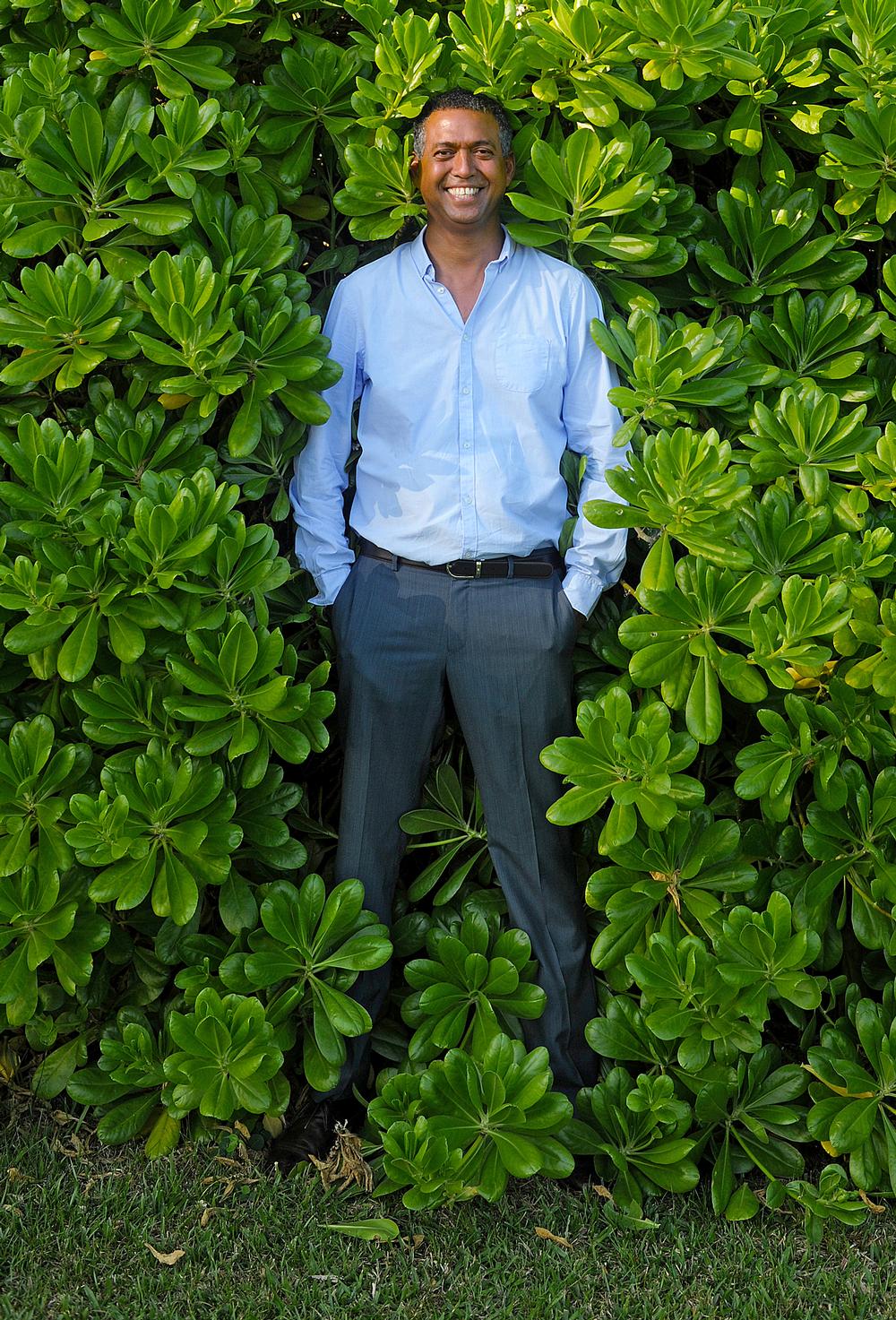
Valmiki Kempadoo has always had a strong interest in sustainability
With a mix of hotels, villas, spa and golf, Kittitian Hill, on the Caribbean island of St Kitts, might sound like a regular, albeit luxury, holiday resort. But look closer and it becomes evident that this is a game changer on many levels.
It’s the manifestation of the philosophy of its founder Valmiki Kempadoo, who has been an organic farmer, landscape gardener, horticulturist, founded a tv station and formed two political parties. He believes tourism is the best vehicle for change and the best way of creating a sustainable future for the Caribbean.
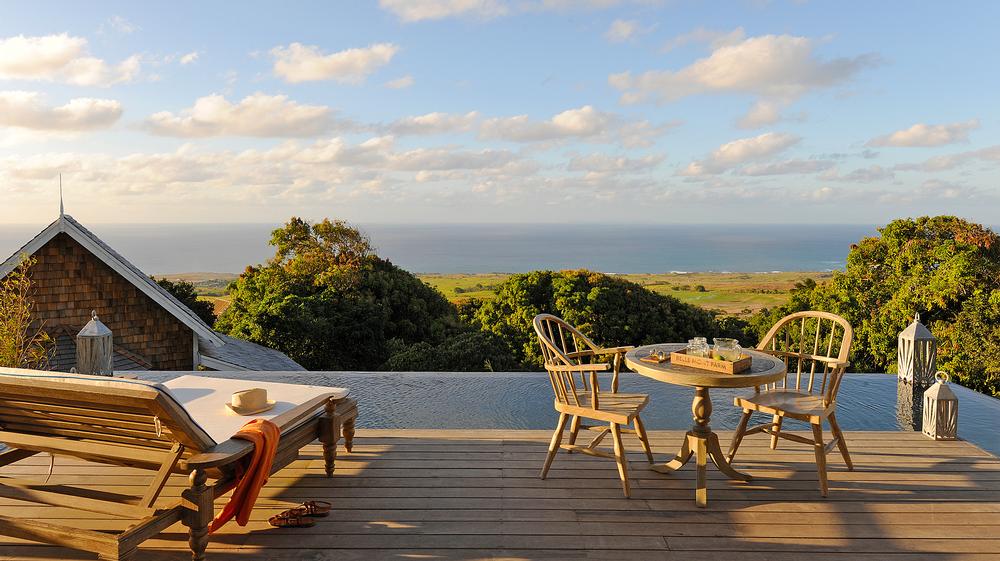
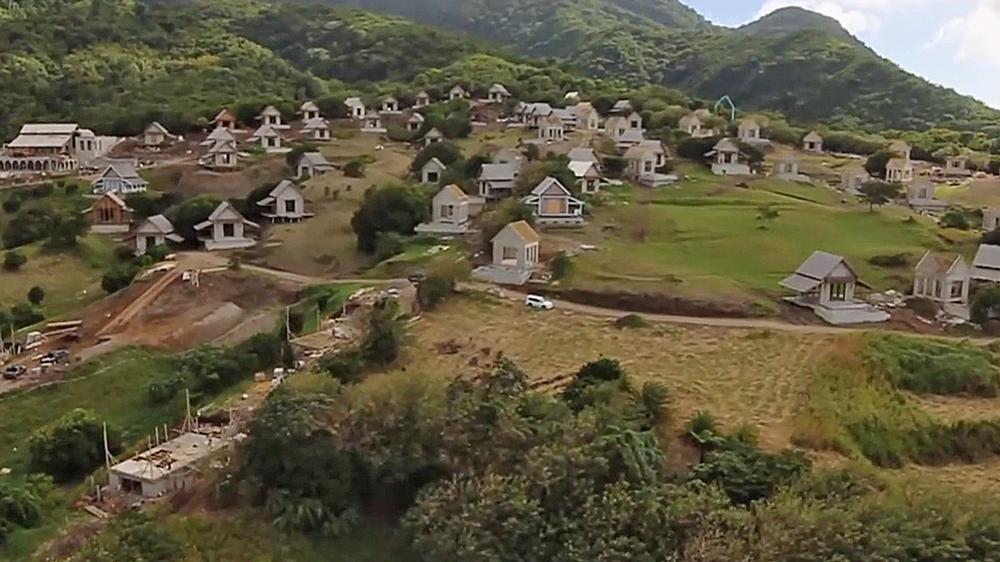
The first phase of the US$500m development, which started in 2010, is opening in December this year. It will include Belle Mont Farm, a collection of 84 farmhouses and a four bedroom suite; an ‘edible’ golf course, Irie Fields (more on this later), a fitness centre, bar and restaurant, as well as a clubhouse. By the end of 2015, the site will also have a spa, a farm-to-table restaurant, a conference centre and a central village, which will be the hub of the resort.
THE CONCEPT Kempadoo has tried to bring about change in the Caribbean in many ways, but after winning an election he became disillusioned, believing that while the government had changed, the politics had not.
“I asked myself, what can give us significant and lasting change for a sustainable future? It’s a very young society, with a disturbed past,” he says. “Tourism is the single largest driver for the region, but the business model being used by the large international resorts is not dissimilar to that of the plantation model of yesteryear: one of maximum extraction and exploitation. It’s very sad that after 500 years we’re still doing pretty much the same thing.”
Intent on finding a new model and a new way forward for the industry, Kempadoo drew on his experiences in different areas – NGOs, private sector, government – to create a vehicle which could achieve a sustainable change.
To start with, he needed a suitable location. It had to be an island which was new and unpositioned in the tourism sector, without a strong branding. So this ruled out places like Barbados and St Lucia. Also he needed a government which would be supportive of a large scale development, based on a broad philosophic vision, rather than attached to a big, international brand.
St Kitts presented the ideal opportunity. The government embraced the idea; the economy was in transition, moving away from being an agrarian, sugar-producing island. Tourism was yet to take hold, but the island was easily accessible, with a road running all the way around and flights directly from New York, Miami and London.
“It is not the classic white sand type of island of the Caribbean,” says Kempadoo. “We do have white sand, but we also have volcanic black sand beaches and steep mountains – the new village will go from 500 feet to 1,000 feet, with beautiful views.”
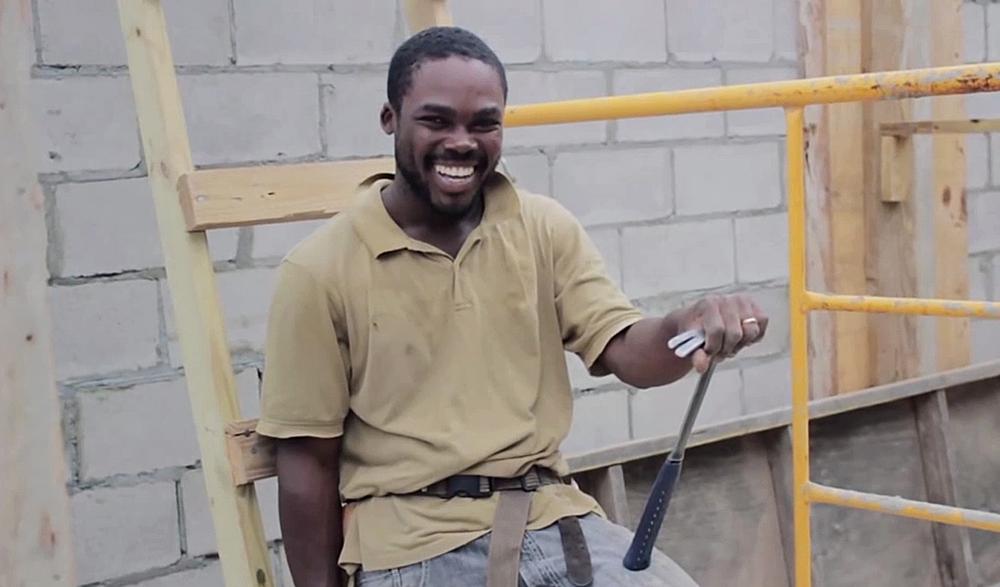
Kempadoo’s philosophy was to develop the resort purely using local and regional people. However, as he got further into the project, he realised that he couldn’t meet all of his objectives unless he went international. So although he has used local teams for the building work, he had to look further afield for some elements, including the architecture.
Bill Bensley, who specialises in tropical resorts, was chosen for this role.
“The international team have taken the development to another level,” he says. “Bill’s background is in landscape architecture; he is focused on the externals, rather than just the buildings. I was really impressed with how he took the vernacular architecture of St Kitts and quickly distilled it into modern resort architecture, with a bit of an edge to it.”
FARM TO TABLE Kempadoo acquired 400 acres, which is equally split between a golf course and development, including four 100-bed boutique hotels and 75 villas.
The 18-hole championship golf course, Irie Fields, has a couple of interesting USPs: it will be one of only three organic golf courses in the world and the management claim it will be the world’s most edible golf course, with 75 acres of the 200 acre course being farmed.
“There are three issues with golf courses which we’ve tried to avoid,” explains Kempadoo. “The water usage, the pesticides and fertilisers and the land use. Nobody really talks about how much land golf courses tie up. We came up with the idea of resolving this by farming the areas around the golf course with edible plants.”
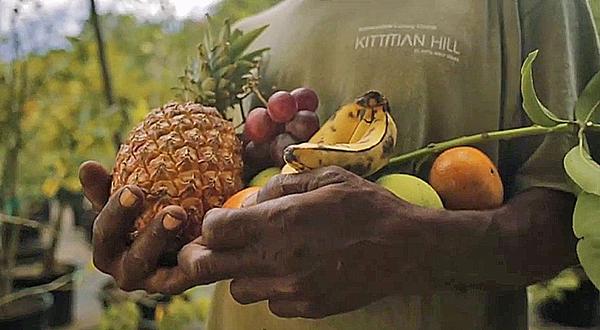
More than 100 different varieties of mango have been planted and other specialities grown there will include avocados and signature rare fruits.
Sustainable sourcing and farm-to-table are two other threads running through Kittitian Hill. Kempadoo believes that within five years, the island will export more than it imports. To this end, even crops of chocolate and coffee have been planted.
Some cereals, oils, wine and red meat will have to be imported, although there is a discussion about whether or not to even offer red meat, since it’s not authentic. Apart from a few popular labels, all the wine imported will be natural and organic.
The culinary team is being put together to define the restaurants. The highest culinary experience will be farm-to-table restaurant The Table, which will open in 2015 and is influenced by other farm-to-table restaurants like Roganics in London. The others will be simple, based on healthy and local ingredients.
The staff will eat their meals in one of the restaurants; rather than having a staff cafeteria hidden away, Kempadoo wanted to make the staff part of the action with a casual, local food restaurant. “We’re not going for discreet Asian service,” says Kempadoo. “Our people are too naturally gregarious for that.”
MANGO WALK Kempadoo has high hopes that the spa, Mango Walk, will become a significant destination spa. Slated to open at the end of 2015, he says it will offer unusual spa treatments.
The spa team is currently researching all the local and regional indigenous treatments in order to offer a menu which is rooted in the history and culture of the area – with a leaf wrap being developed.
“There won’t be Himalayan salt scrubs: we’ll be using local sea salt to make our own salt scrubs,” says Kempadoo. “We’ll be planting the botanicals on our own farm and organically producing our own oils and mixes.”
There will be 16 treatment rooms and four specialist rooms, all designed in vernacular Kittitian style.
Other features include meditation gardens and a self-guided walk to encourage people to wind down and immerse themselves in nature.
There will also be a hyper saline pool, hot and cold water treatments in pools, a steamroom, and a ‘yoga cathedral,’ made purely out of bamboo.
The spa and the hotels will be run by Sedona Resorts. “We spent a while looking for a hotel operator that would be willing to operate a hotel without imposing their brand on it, and that also fitted with the philosophy,” says Kempadoo. “I sought a partner that would take the same care that I’d put into the development of the resort, and would run the hospitality with that same level of care.”
AFFLUENT LIBERALS Affluent liberals have been identified as the main target market for this holiday experience, and New York and London have large concentrations of this demographic. “We didn’t start by identifying a target market and then developing a concept,” explains Kempadoo. “We started with a vision and then went out to find resonance. The group of people we’re aiming for are metropolitan and wealthy, but not mainstream conservative wealthy.
“They are progressive, edgy, arty: filmmakers and advertising executives. They go to the Tate Modern, eat in farm-to-table restaurants and like art, culture and travel.”
People from this demographic are seeking authentic experiences, says Kempadoo. They don’t want to have a holiday which they feel is imposed on a destination, but want to feel integrated and meet the local people. They would rather spend their money on experiences than material possessions. “We believe experience will be the new luxury,” he says. “Gucci and Prada handbags belong to the past and conservative affluent people.”
When the development is fully up and running, Kempadoo plans to focus on creating the Kittitian Hill Institute, a place of higher and aspirational thinking, with a significant Caribbean library, an art gallery and a place where people can meet and debate.
Kittitian Hill has already attracted the attention of other Caribbean governments who are keen to do similar projects, working with their own people as opposed to relying on external sources to develop their islands.
However, the main aim of this project, and what will mark it out as being a success in Kempadoo’s eyes, is whether or not it can bring about the change he desires: a legacy he’s inherited from his father, who also worked with NGO movements around the world specialising in rural developments and intercultural relations.
“My father taught me that societies are changed one person at a time,” he says. “Change is slow and takes time and resources,” he says.
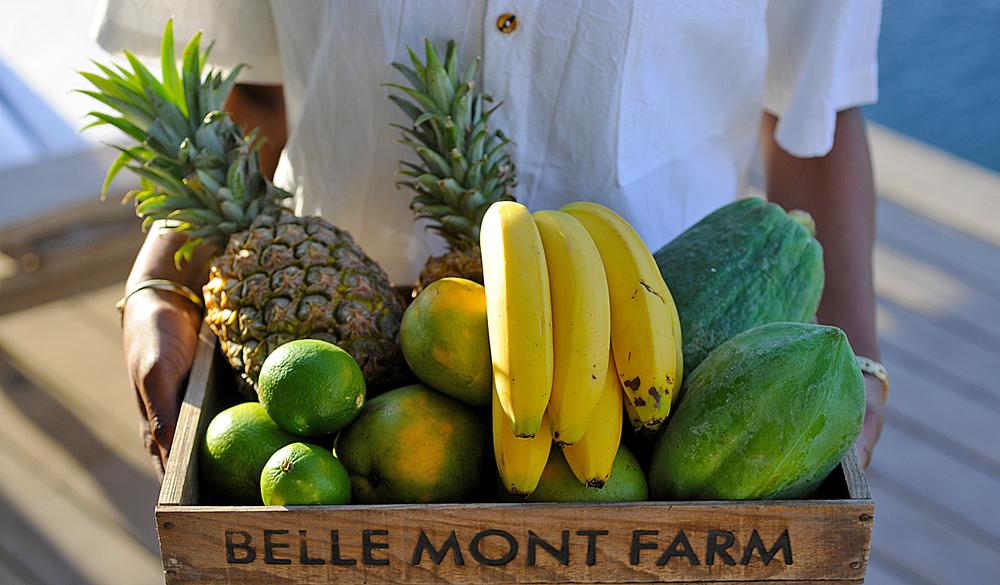
The resort is set in 400 acres of organic farmland. The produce will be used in the resort’s restaurants, and ‘pick me’ signs will invite guests to sample the fruit
The resort is set in 400 acres of organic farmland. The produce will be used in the resort’s restaurants, and ‘pick me’ signs will invite guests to sample the fruit
The resort is set in 400 acres of organic farmland. The produce will be used in the resort’s restaurants, and ‘pick me’ signs will invite guests to sample the fruit
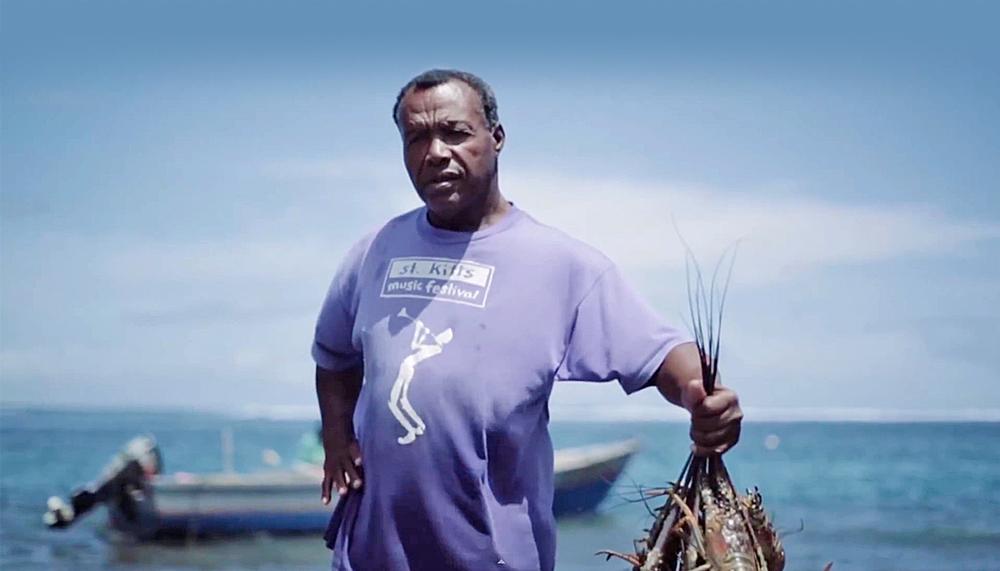
Kempadoo has involved local people as much as possible: a local fisherman
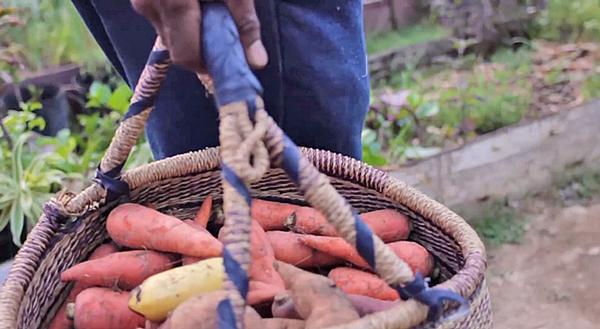
Kempadoo has involved local people as much as possible: a farmer
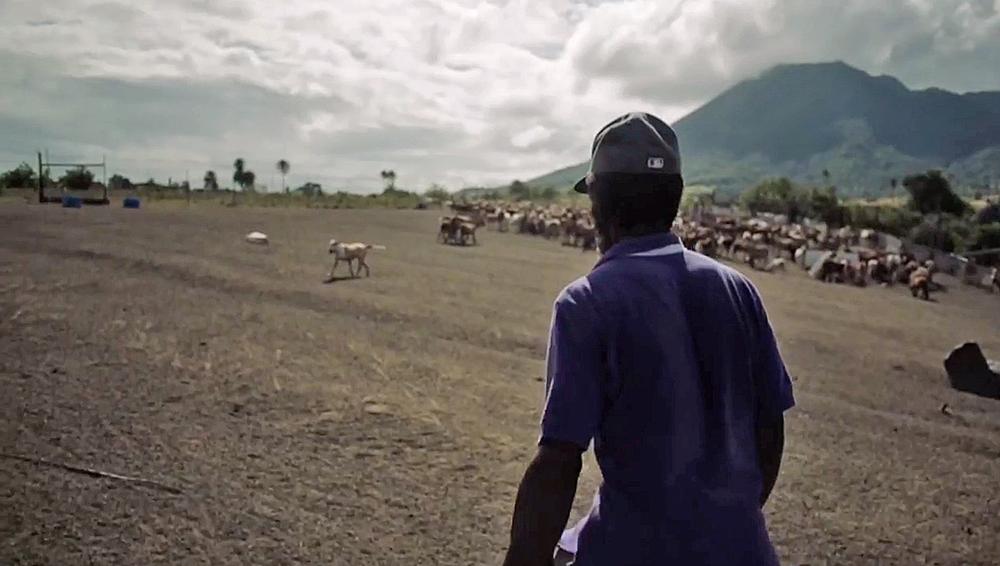
Kempadoo has involved local people as much as possible: a shepherd
Local contractors have been used to build the resort
Local contractors have been used to build the resort
One of the gardeners at Kittitian Hill
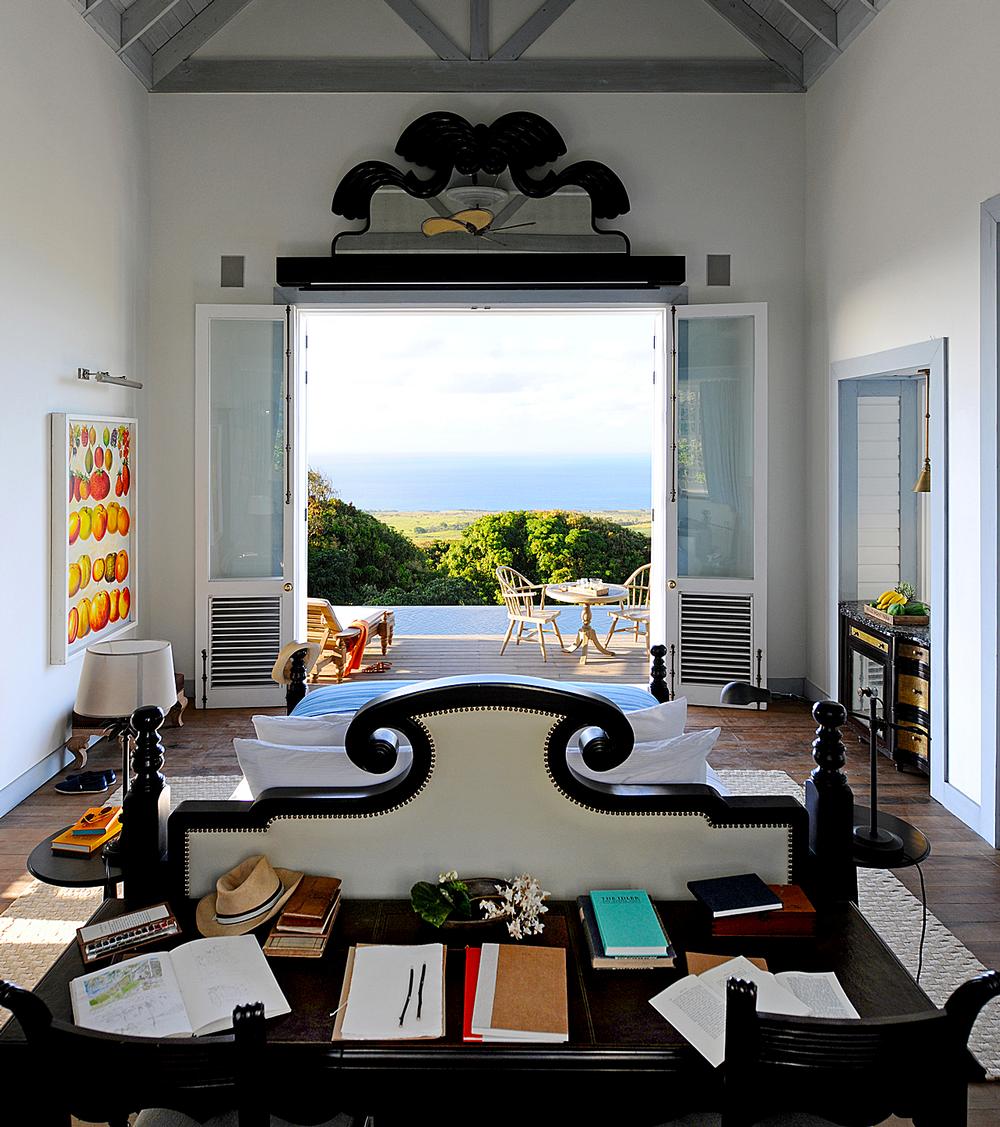
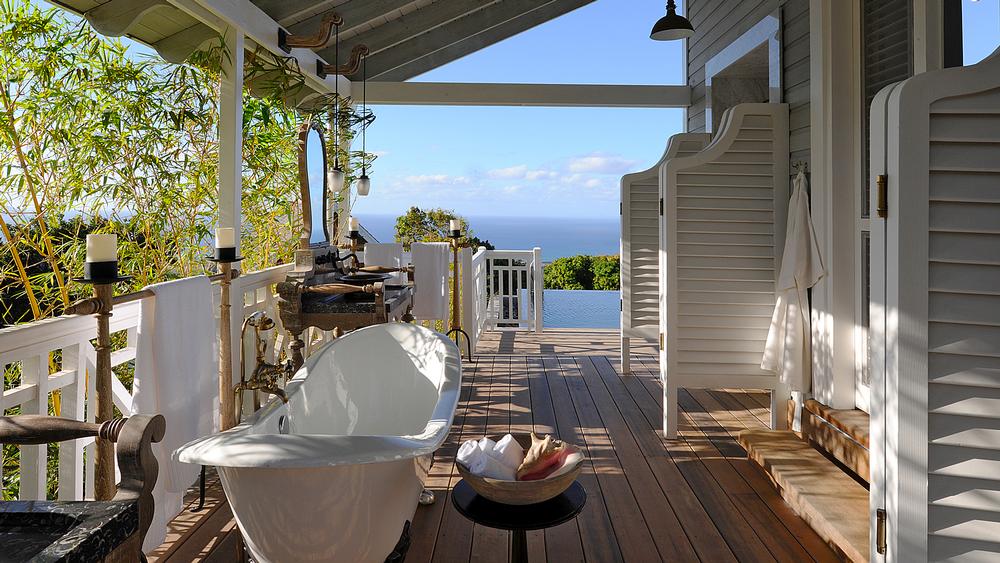
The architecture, landscape and interior design are by architect Bill Bensley and have been inspired by traditional St Kittitian architecture. Local contractors are being used
Le Atelier by C.O.D.E. doesn't offer a standard bespoke service, it provides a highly
customised approach to designing massage beds and loungers in high-end wellness
environments. [more...]
After involvement in both the media and politics, social reformer and
entrepreneur Valmiki Kempadoo has decided that hospitality is the way to
create a sustainable future for the Caribbean. He talks to Kath Hudson
By Kath Hudson | Published in Leisure Management 2014 issue 3
Valmiki Kempadoo has always had a strong interest in sustainability
With a mix of hotels, villas, spa and golf, Kittitian Hill, on the Caribbean island of St Kitts, might sound like a regular, albeit luxury, holiday resort. But look closer and it becomes evident that this is a game changer on many levels.
It’s the manifestation of the philosophy of its founder Valmiki Kempadoo, who has been an organic farmer, landscape gardener, horticulturist, founded a tv station and formed two political parties. He believes tourism is the best vehicle for change and the best way of creating a sustainable future for the Caribbean.
The first phase of the US$500m development, which started in 2010, is opening in December this year. It will include Belle Mont Farm, a collection of 84 farmhouses and a four bedroom suite; an ‘edible’ golf course, Irie Fields (more on this later), a fitness centre, bar and restaurant, as well as a clubhouse. By the end of 2015, the site will also have a spa, a farm-to-table restaurant, a conference centre and a central village, which will be the hub of the resort.
THE CONCEPT Kempadoo has tried to bring about change in the Caribbean in many ways, but after winning an election he became disillusioned, believing that while the government had changed, the politics had not.
“I asked myself, what can give us significant and lasting change for a sustainable future? It’s a very young society, with a disturbed past,” he says. “Tourism is the single largest driver for the region, but the business model being used by the large international resorts is not dissimilar to that of the plantation model of yesteryear: one of maximum extraction and exploitation. It’s very sad that after 500 years we’re still doing pretty much the same thing.”
Intent on finding a new model and a new way forward for the industry, Kempadoo drew on his experiences in different areas – NGOs, private sector, government – to create a vehicle which could achieve a sustainable change.
To start with, he needed a suitable location. It had to be an island which was new and unpositioned in the tourism sector, without a strong branding. So this ruled out places like Barbados and St Lucia. Also he needed a government which would be supportive of a large scale development, based on a broad philosophic vision, rather than attached to a big, international brand.
St Kitts presented the ideal opportunity. The government embraced the idea; the economy was in transition, moving away from being an agrarian, sugar-producing island. Tourism was yet to take hold, but the island was easily accessible, with a road running all the way around and flights directly from New York, Miami and London.
“It is not the classic white sand type of island of the Caribbean,” says Kempadoo. “We do have white sand, but we also have volcanic black sand beaches and steep mountains – the new village will go from 500 feet to 1,000 feet, with beautiful views.”
Kempadoo’s philosophy was to develop the resort purely using local and regional people. However, as he got further into the project, he realised that he couldn’t meet all of his objectives unless he went international. So although he has used local teams for the building work, he had to look further afield for some elements, including the architecture.
Bill Bensley, who specialises in tropical resorts, was chosen for this role.
“The international team have taken the development to another level,” he says. “Bill’s background is in landscape architecture; he is focused on the externals, rather than just the buildings. I was really impressed with how he took the vernacular architecture of St Kitts and quickly distilled it into modern resort architecture, with a bit of an edge to it.”
FARM TO TABLE Kempadoo acquired 400 acres, which is equally split between a golf course and development, including four 100-bed boutique hotels and 75 villas.
The 18-hole championship golf course, Irie Fields, has a couple of interesting USPs: it will be one of only three organic golf courses in the world and the management claim it will be the world’s most edible golf course, with 75 acres of the 200 acre course being farmed.
“There are three issues with golf courses which we’ve tried to avoid,” explains Kempadoo. “The water usage, the pesticides and fertilisers and the land use. Nobody really talks about how much land golf courses tie up. We came up with the idea of resolving this by farming the areas around the golf course with edible plants.”
More than 100 different varieties of mango have been planted and other specialities grown there will include avocados and signature rare fruits.
Sustainable sourcing and farm-to-table are two other threads running through Kittitian Hill. Kempadoo believes that within five years, the island will export more than it imports. To this end, even crops of chocolate and coffee have been planted.
Some cereals, oils, wine and red meat will have to be imported, although there is a discussion about whether or not to even offer red meat, since it’s not authentic. Apart from a few popular labels, all the wine imported will be natural and organic.
The culinary team is being put together to define the restaurants. The highest culinary experience will be farm-to-table restaurant The Table, which will open in 2015 and is influenced by other farm-to-table restaurants like Roganics in London. The others will be simple, based on healthy and local ingredients.
The staff will eat their meals in one of the restaurants; rather than having a staff cafeteria hidden away, Kempadoo wanted to make the staff part of the action with a casual, local food restaurant. “We’re not going for discreet Asian service,” says Kempadoo. “Our people are too naturally gregarious for that.”
MANGO WALK Kempadoo has high hopes that the spa, Mango Walk, will become a significant destination spa. Slated to open at the end of 2015, he says it will offer unusual spa treatments.
The spa team is currently researching all the local and regional indigenous treatments in order to offer a menu which is rooted in the history and culture of the area – with a leaf wrap being developed.
“There won’t be Himalayan salt scrubs: we’ll be using local sea salt to make our own salt scrubs,” says Kempadoo. “We’ll be planting the botanicals on our own farm and organically producing our own oils and mixes.”
There will be 16 treatment rooms and four specialist rooms, all designed in vernacular Kittitian style.
Other features include meditation gardens and a self-guided walk to encourage people to wind down and immerse themselves in nature.
There will also be a hyper saline pool, hot and cold water treatments in pools, a steamroom, and a ‘yoga cathedral,’ made purely out of bamboo.
The spa and the hotels will be run by Sedona Resorts. “We spent a while looking for a hotel operator that would be willing to operate a hotel without imposing their brand on it, and that also fitted with the philosophy,” says Kempadoo. “I sought a partner that would take the same care that I’d put into the development of the resort, and would run the hospitality with that same level of care.”
AFFLUENT LIBERALS Affluent liberals have been identified as the main target market for this holiday experience, and New York and London have large concentrations of this demographic. “We didn’t start by identifying a target market and then developing a concept,” explains Kempadoo. “We started with a vision and then went out to find resonance. The group of people we’re aiming for are metropolitan and wealthy, but not mainstream conservative wealthy.
“They are progressive, edgy, arty: filmmakers and advertising executives. They go to the Tate Modern, eat in farm-to-table restaurants and like art, culture and travel.”
People from this demographic are seeking authentic experiences, says Kempadoo. They don’t want to have a holiday which they feel is imposed on a destination, but want to feel integrated and meet the local people. They would rather spend their money on experiences than material possessions. “We believe experience will be the new luxury,” he says. “Gucci and Prada handbags belong to the past and conservative affluent people.”
When the development is fully up and running, Kempadoo plans to focus on creating the Kittitian Hill Institute, a place of higher and aspirational thinking, with a significant Caribbean library, an art gallery and a place where people can meet and debate.
Kittitian Hill has already attracted the attention of other Caribbean governments who are keen to do similar projects, working with their own people as opposed to relying on external sources to develop their islands.
However, the main aim of this project, and what will mark it out as being a success in Kempadoo’s eyes, is whether or not it can bring about the change he desires: a legacy he’s inherited from his father, who also worked with NGO movements around the world specialising in rural developments and intercultural relations.
“My father taught me that societies are changed one person at a time,” he says. “Change is slow and takes time and resources,” he says.
The resort is set in 400 acres of organic farmland. The produce will be used in the resort’s restaurants, and ‘pick me’ signs will invite guests to sample the fruit
The resort is set in 400 acres of organic farmland. The produce will be used in the resort’s restaurants, and ‘pick me’ signs will invite guests to sample the fruit
The resort is set in 400 acres of organic farmland. The produce will be used in the resort’s restaurants, and ‘pick me’ signs will invite guests to sample the fruit
Kempadoo has involved local people as much as possible: a local fisherman
Kempadoo has involved local people as much as possible: a farmer
Kempadoo has involved local people as much as possible: a shepherd
Local contractors have been used to build the resort
Local contractors have been used to build the resort
One of the gardeners at Kittitian Hill
The architecture, landscape and interior design are by architect Bill Bensley and have been inspired by traditional St Kittitian architecture. Local contractors are being used
A recent survey by the UK Spa Association (UKSA) into the industry’s approach to cancer care
has revealed that almost half of participating respondents (46 per cent) are unaware that
cancer is a disability and guests with a cancer diagnosis must be given
Mexican operator, Solmar Hotels and Resorts, is hosting a series of events in celebration of
Global Wellness Day, including a Temazcal ceremony at its Playa Grande Resort and Spa in Los
Cabos.
Mandarin Oriental has announced a standalone residence brand, Mansions, which will debut at
Emirates Palace, Mandarin Oriental Mansions, Abu Dhabi, in 2029.
Four Seasons Resort The Nam Hai in Hoi An, Vietnam, has put together a Global Wellness Day
(GWD) agenda with activations rooted in nature and shaped by four pillars of Joy – in
alignment with the day’s theme #JoyMagenta.
The Global Wellness Summit (GWS) will celebrate its 20th anniversary at the 2026 event in
Phuket, Thailand, later this year with the theme: The Science, Art and Soul of Wellness.
Auko, an all-inclusive development, is opening in Phong Nha in Vietnam in Q3 2026, with a
series of 30 tented eco-lodges and wellness hospitality operations by Lumina Wellbeing.
Therme Manchester’s 28-acre development, which will include interconnected glass pavilions
that measure 65,000sq m, will be the largest bathing and wellbeing attraction in the world once
complete, according to prof David Russell, CEO of Therme UK.
Naples Beach Club, a Four Seasons Resort, has opened a 2,800sq m spa called The Sanctuary,
with the design and concept inspired by the Native American people that populated Florida’s
Southwest coast – the Calusa.
Swire Hotels’ luxury hospitality brand Upper House has revealed it will roll out its two-day
House of Healing retreats at its three hotels in Hong Kong, Chengdu and Shanghai.
Le Atelier by C.O.D.E. doesn't offer a standard bespoke service, it provides a highly
customised approach to designing massage beds and loungers in high-end wellness
environments. [more...]