“People often assume that those who pay more stay longer, but we don’t see this. What we see is that if you have PT you stay longer because you use more, not because you pay more”
José Teixeira says analysing data is key to understanding your members
What’s your back story? I was a professional athlete in beach volleyball and studied a degree in Sports and Physical Education, before joining Sonae Capital in 2004. Starting as a sales consultant, I went on to be club manager, area manager, operations director and now head of customer experience for the group, overseeing projects, innovation and data.
What does your role as head of customer experience involve? My role is to improve service quality and length of stay of our clients. Data is the key to this: we have a business intelligence department with two business analysts and a psychologist. Our company no longer has to make assumptions, we can work out the reason and support it with numbers.
We have a lot of data about members: not only information like age, gender, height, weight and health, but their length of stay, and their usage. We track entries and exits of group exercise classes and use sensor cameras to get further usage data, we profile clients, as well as monitor who is coming and who is leaving.
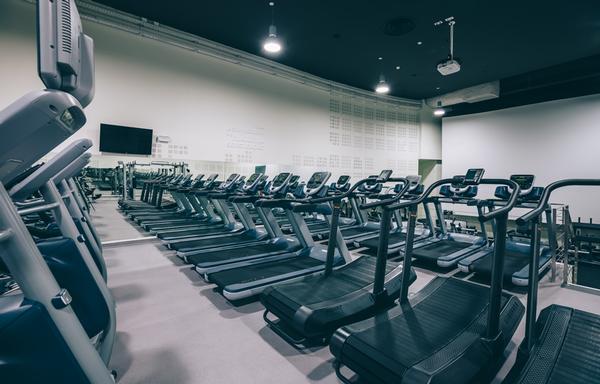
Has this data dispelled some previously held assumptions? A lot of them. For example, we have found that overcrowding is much more important than both cleaning and maintenance in terms of its role in causing a member to leave. If there isn’t space to work out, because there aren’t enough treadmills or room in the class, they leave.
An instructor missing a class hurts the club a lot more than some hair in the showers. Cleaning and maintenance in the gym is important, but it is not as important as many would assume.
We also found that older people stay as members for longer: they have more stable lives, are more stable financially and move less. And people with a contract also stay longer.
People often assume that those who pay more stay longer, but we don’t see this. What we see is that if you have PT you stay longer because you use more, not because you pay more.
What is the most important factor for improving member retention? Increasing usage. People who use the club more, stay longer. For each incremental visit per month, people stay 1.26 months longer as members. As soon as we sell a membership, we think about retention: our sales consultants book the assessment when closing the membership and then our fitness instructors help people to build a routine. New members are more likely to drop out, so it is important to get the first 30 days going well: we aim to get new members to come 12 times in the first 30 days.
We used to sell memberships and 20 per cent of the people never even came to the facility, because we didn’t make an appointment for an induction. Now 85 per cent or our new members attend assessments.
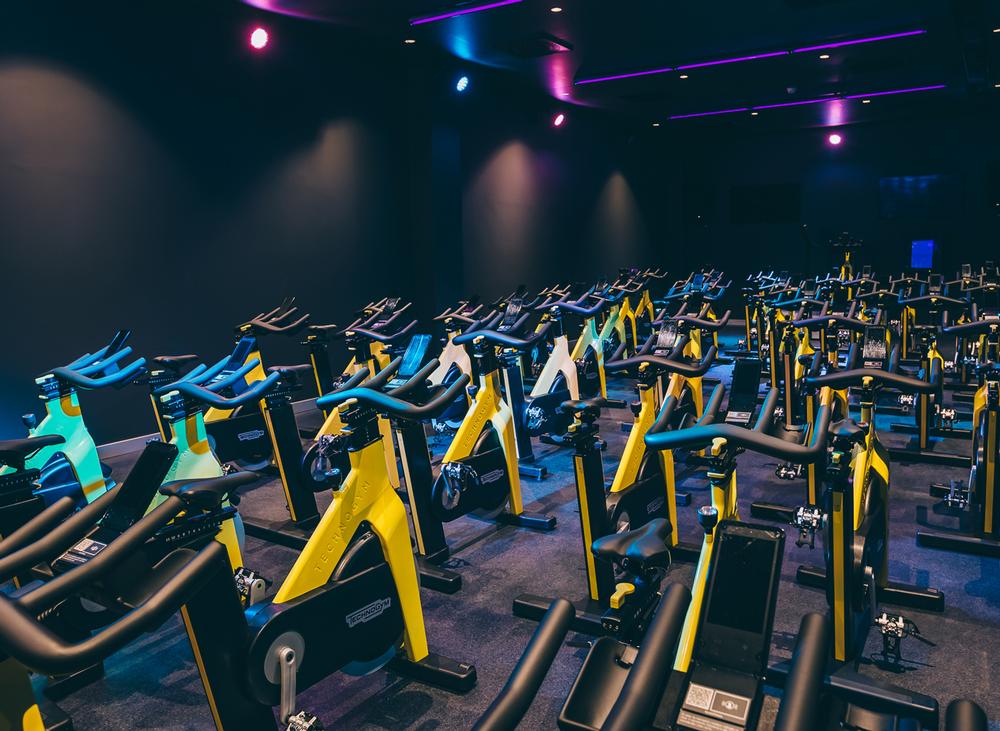
Are you using any other tools to build retention? Group fitness classes are really good at building commitment, because the instructor can say at the end of the class to come back again next week. We are trying to create this similar interaction on the fitness floor, maybe by giving them a challenge, but also to keep developing our group exercise programme.
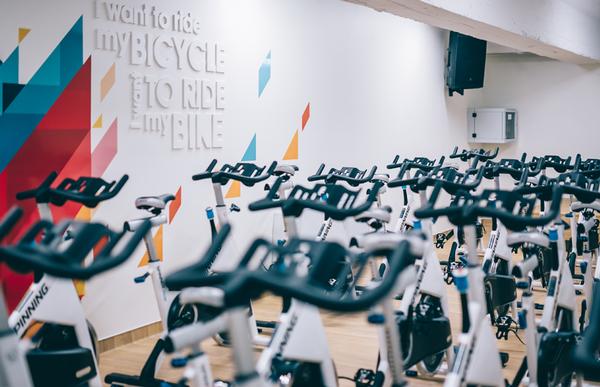
Our average length of stay is 20 to 24 months, but this can rise to three or four years for those who do fitness classes: people like it because the workout is measured in time, you know what you do, it’s social and you get results.
How can other operators improve their business intelligence? Just an Excel spreadsheet does miracles. Many clubs don’t know simple information, such as how many males and females they have, how many of their members are boomers, or millennials, or their average usage in the first 30 days. This is all very easy information to find out.
Clubs need to track their own reality, finding out their member profile and who is joining and leaving. Every club is different – even within our clubs we see differences.
What’s the benefit of having a psychologist on the team? Ninety nine per cent of the communication our fitness instructors have with members is about creating a routine and changing behaviour, which are all psychological questions. So, our psychologist is working on ways to improve the quality of communication with members, as well as informing our zero to 500 customer lifecycle, which is focused on keeping members engaged throughout the lifecycle.
Any future plans for the brand? One of the things we’re looking at is how to integrate fitness and activity into everyday lives. All operators need to be looking to be multi-channel operators, so we can engage with our members 24/7, so that when they are not in the club they can still stream our classes, or do exercises set by instructors at the gym.
SC Fitness owns 35 clubs across three brands in Portugal
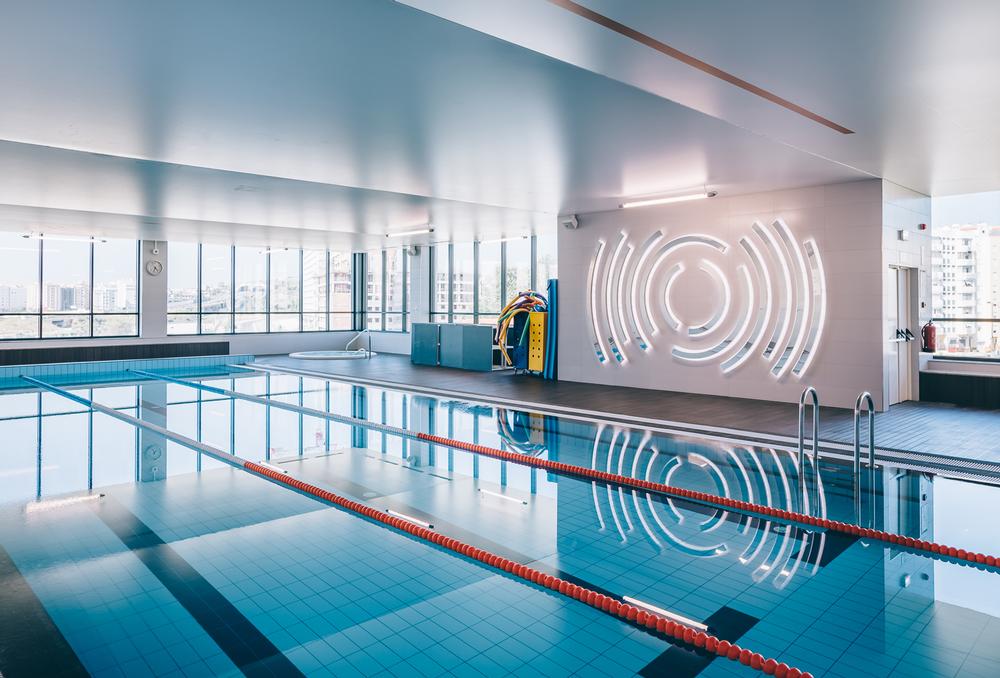
Solinca is a mid-market offering with pool and fitness, catering for every age from babies to seniors, with the most popular demographic being 40 year olds. Priced at €40-€50 per month, there are currently 20 clubs, with two more opening this year.
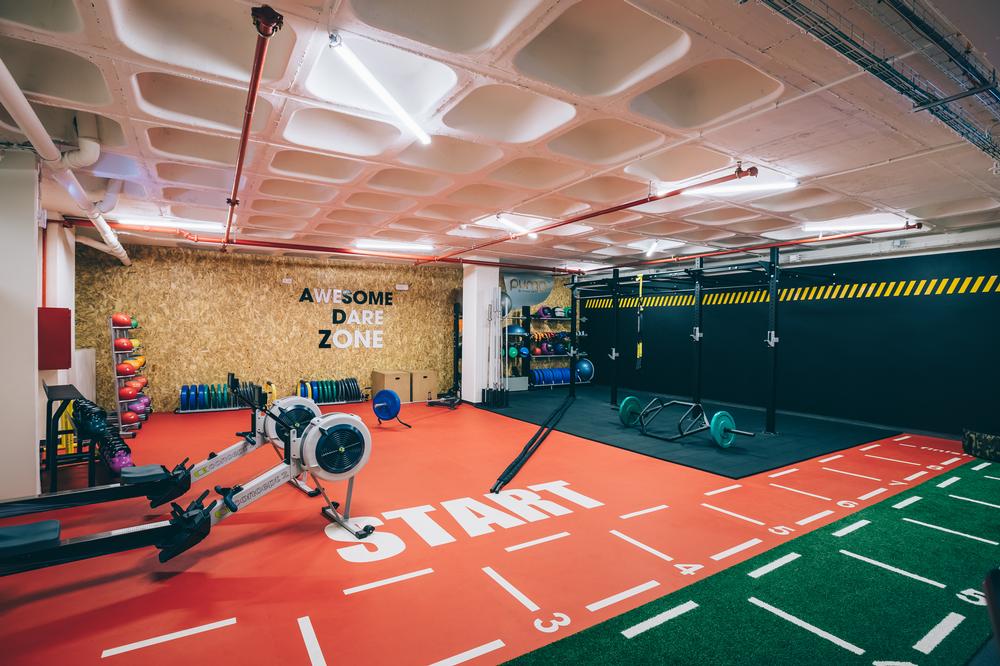
Purchased two years ago, Pump is a low cost chain of 14 clubs, which offer gym and group exercise classes, but no pool. Popular among younger people in their 20s and 30s, membership is €20-€35 a month. Three more will open this year.
SC Fitness owns one premium club, which was acquired last year and rebranded to One. It is similar to Solinca, but with higher quality equipment and materials, less members and higher retention. It costs €60-€65 a month and appeals mainly to an older demographic.
Pump is a low cost chain of 14 clubs, owned by SC Fitness
In the fast-paced world of fitness and wellness, where high-intensity workouts push us to
our limits and the sweat pours, the importance of efficient recovery cannot be overstated. [more...]
“People often assume that those who pay more stay longer, but we don’t see this. What we see is that if you have PT you stay longer because you use more, not because you pay more”
José Teixeira says analysing data is key to understanding your members
What’s your back story? I was a professional athlete in beach volleyball and studied a degree in Sports and Physical Education, before joining Sonae Capital in 2004. Starting as a sales consultant, I went on to be club manager, area manager, operations director and now head of customer experience for the group, overseeing projects, innovation and data.
What does your role as head of customer experience involve? My role is to improve service quality and length of stay of our clients. Data is the key to this: we have a business intelligence department with two business analysts and a psychologist. Our company no longer has to make assumptions, we can work out the reason and support it with numbers.
We have a lot of data about members: not only information like age, gender, height, weight and health, but their length of stay, and their usage. We track entries and exits of group exercise classes and use sensor cameras to get further usage data, we profile clients, as well as monitor who is coming and who is leaving.
Has this data dispelled some previously held assumptions? A lot of them. For example, we have found that overcrowding is much more important than both cleaning and maintenance in terms of its role in causing a member to leave. If there isn’t space to work out, because there aren’t enough treadmills or room in the class, they leave.
An instructor missing a class hurts the club a lot more than some hair in the showers. Cleaning and maintenance in the gym is important, but it is not as important as many would assume.
We also found that older people stay as members for longer: they have more stable lives, are more stable financially and move less. And people with a contract also stay longer.
People often assume that those who pay more stay longer, but we don’t see this. What we see is that if you have PT you stay longer because you use more, not because you pay more.
What is the most important factor for improving member retention? Increasing usage. People who use the club more, stay longer. For each incremental visit per month, people stay 1.26 months longer as members. As soon as we sell a membership, we think about retention: our sales consultants book the assessment when closing the membership and then our fitness instructors help people to build a routine. New members are more likely to drop out, so it is important to get the first 30 days going well: we aim to get new members to come 12 times in the first 30 days.
We used to sell memberships and 20 per cent of the people never even came to the facility, because we didn’t make an appointment for an induction. Now 85 per cent or our new members attend assessments.
Are you using any other tools to build retention? Group fitness classes are really good at building commitment, because the instructor can say at the end of the class to come back again next week. We are trying to create this similar interaction on the fitness floor, maybe by giving them a challenge, but also to keep developing our group exercise programme.
Our average length of stay is 20 to 24 months, but this can rise to three or four years for those who do fitness classes: people like it because the workout is measured in time, you know what you do, it’s social and you get results.
How can other operators improve their business intelligence? Just an Excel spreadsheet does miracles. Many clubs don’t know simple information, such as how many males and females they have, how many of their members are boomers, or millennials, or their average usage in the first 30 days. This is all very easy information to find out.
Clubs need to track their own reality, finding out their member profile and who is joining and leaving. Every club is different – even within our clubs we see differences.
What’s the benefit of having a psychologist on the team? Ninety nine per cent of the communication our fitness instructors have with members is about creating a routine and changing behaviour, which are all psychological questions. So, our psychologist is working on ways to improve the quality of communication with members, as well as informing our zero to 500 customer lifecycle, which is focused on keeping members engaged throughout the lifecycle.
Any future plans for the brand? One of the things we’re looking at is how to integrate fitness and activity into everyday lives. All operators need to be looking to be multi-channel operators, so we can engage with our members 24/7, so that when they are not in the club they can still stream our classes, or do exercises set by instructors at the gym.
SC Fitness owns 35 clubs across three brands in Portugal
Solinca is a mid-market offering with pool and fitness, catering for every age from babies to seniors, with the most popular demographic being 40 year olds. Priced at €40-€50 per month, there are currently 20 clubs, with two more opening this year.
Purchased two years ago, Pump is a low cost chain of 14 clubs, which offer gym and group exercise classes, but no pool. Popular among younger people in their 20s and 30s, membership is €20-€35 a month. Three more will open this year.
SC Fitness owns one premium club, which was acquired last year and rebranded to One. It is similar to Solinca, but with higher quality equipment and materials, less members and higher retention. It costs €60-€65 a month and appeals mainly to an older demographic.
Pump is a low cost chain of 14 clubs, owned by SC Fitness
Mass protests have been taking place since Monday 1 June in Albania over the development of
a luxury resort by Donald Trump’s daughter Ivanka Trump and her husband Jared Kushner.
Global Wellness Day (GWD) marked its 15th anniversary on Saturday 13 June 2026, with the
theme: #JoyMagenta – a celebration of the healing qualities of simple gestures and activities
that spark joy.
Global luxury hospitality brand, Six Senses, has partnered with longevity healthcare provider,
HUM2N, to launch a clinic at Six Senses London, at The Whiteley.
As part of its first hotel partnership, Mayrlife – the medical health resort company known for its
site in Altaussee, Austria – has launched a day clinic at the Rosewood Vienna.
Premium London health club, KX Chelsea, will imminently unveil its most significant
redevelopment since its launch in 2002 to create an integrated wellness model combining
training, recovery and relaxation.
Rosewood Le Guanahani St Barth, on the northeast coast of Saint Barthélemy in the French
West Indies, is offering a programme of ocean-inspired yoga classes between 8-14 June to
celebrate Global Wellness Day (GWD).
Hotel de France, located on the British Isle of Jersey, has created a wellness retreat package
that includes a hot yoga session that will take place in Jersey Zoo’s butterfly sanctuary.
The Ritz-Carlton, Langkawi, in Malaysia, has revealed a schedule for Global Wellness Day
(GWD) that includes guided rainforest walks, mindful movement and guided coastal meditation
experiences.
Longevitix, a clinical platform for preventive and longevity medicine, has launched its AI-
powered intelligence system to help physicians deliver continuous, personalised longevity-
focused care at scale.
Atmantan Wellness Centre, an integrative wellness destination in Mulshi, near Pune in India, is
expanding its portfolio by adding a new centre in Hyderabad that will launch between 2028 and
2029.
In the fast-paced world of fitness and wellness, where high-intensity workouts push us to
our limits and the sweat pours, the importance of efficient recovery cannot be overstated. [more...]