A sport which combines tag, rugby and dodgeball and is played at ferocious speeds astride a broom? Welcome to the crazy, chaotic world of quidditch: a fictional game which has become reality
By Kath Hudson | Published in Sports Management 2015 issue 1
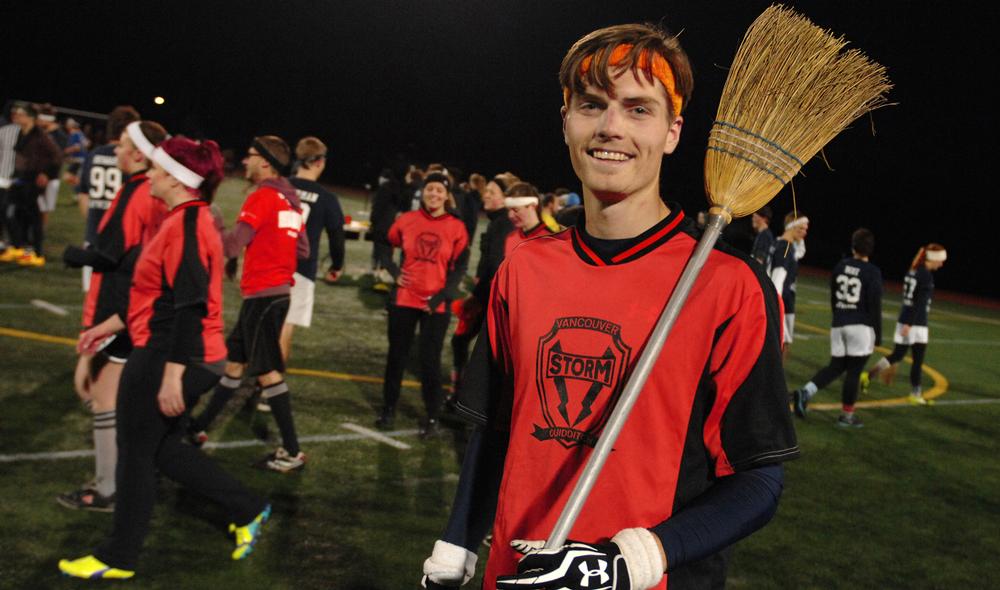
Having started out as a university sport in the US, quidditch has spread across all continents
If your facility is looking for a fun way to engage teenagers and young adults who are losing interest in traditional sports, then quidditch could be the way forward: the teams are mixed and very sociable and the sport has been built up in a culture of inclusivity.
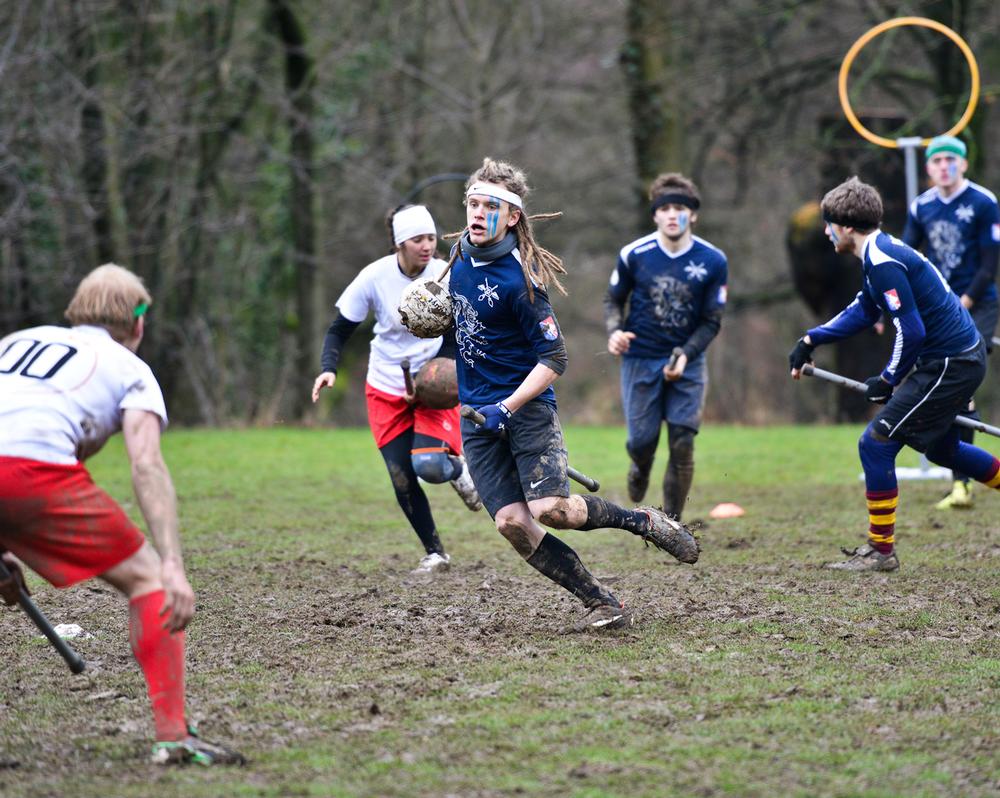
Even though quidditch can be competitive, the broom aspect offers an ironic twist, which makes it fun and breaks down barriers. The game requires and develops a range of skills including throwing, catching, tackling, speed and agility and requires players to think quickly.
It’s cheap and easy to set up and is a marketing dream: everyone knows Harry Potter (don’t they?!). The novelty factor means that a picture or video posted on social media networks should have people thronging to your centre, with the ensuing word of mouth doing the rest.
uidditch has emerged as an inclusive and friendly sport where everyone and anyone of any race, gender or sexual orientation is welcomed with open arms.
The magical game Originally created by JK Rowling in the Harry Potter books, the real life version of quidditch was born in 2005 at Middlebury College, Vermont, US.
“Like many excellent things, quidditch came about on a lazy Sunday afternoon,” explains Harrison Homel, executive director of international governing body, the International Quidditch Association (IQA). “Two students – Alex Benepe and Xander Manshel – had the idea to develop the fictional sport into real life. They started playing it at school, a few other schools heard about it and it snowballed.”
Since then, the sport has spread by YouTube, social media and word of mouth. For those who have wanted to give it a go, it has just involved a trip to a hardware and a toy store, recruiting a few friends and heading to a park.
“When we started out quidditch was mainly attracting people who were avid fans of the Harry Potter books,” says Homel. “But, increasingly, it’s appealing to people looking for a different sport, as it doesn’t take long to realise this is the real deal. It’s a full contact, very athletic, very fast game and it appeals to lots who haven’t read the books, used to play football or basketball, and have walked past it on a university campus and thought ‘that’s something I have to try’.”
Flying around the world Currently it is still quite a university thing, especially in the UK, with most universities fielding a team open to non-students. Three hundred teams are officially recognised by the IQA across the world and 20 countries now have their own governing bodies, with the UK governing body, Quidditch UK, being the fastest growing. The sport is played on every continent, except Antarctica, and in countries as diverse as China, Argentina and Malaysia.
The European Cup was very well attended, with 15 to 20 teams and lots of press coverage. Last July, seven nations competed for the World Championship title in Canada. Homel hopes to double that number by the next tournament in 2016. “One has to have their tongue firmly in their cheek to get on a broomstick and play this sport,” he says. “It’s very difficult to take yourself too seriously.
“One of the things we’re proud of is that it’s a gender inclusive sport: on the pitch at any time there can be people who identify as men, as women, as agender, as transgender, all playing together. That diversity and Big Tent effect doesn’t happen in very many sports, and brings something very special to our community.”
Rowling hasn’t been asked to give quidditch her blessing and neither has she offered it. “I certainly like to think she’s sitting in a mansion somewhere smiling,” says Homel. “However, we’re happy to develop and grow on our own.
“We’ll always have roots in the Harry Potter books, but as the sport grows and develops and creates its own identity we move further away and it becomes less of a priority to get her endorsement.
Dig out your hula hoops Another advantage of quidditch is that it’s very easy for leisure centres and sports clubs to set up: the equipment required should be lying around in store cupboards, so all you need is the players and a soft surface about half the size of a football pitch. Have a look through the official online rule book (www.sportsmanagement.co.uk/quidditch) and off you go.
If you want to formalise it, the IQA and the individual governing bodies offer resources and mentoring, as well as advice on the pathway into leagues and tournaments. Quidditch UK’s Hooch initiative offers a mentoring programme where an existing team will help you get going. The referee test can also be completed online.
Those who play quidditch become evangelical about it, partly because of the sport itself and partly because of the inclusive community it fosters.
Homel sums it up: “What I love most about quidditch is that a group of people – from all walks of life – can set aside any amount of shame that they have and can play a sport as hard as they possibly can, and as aggressively and competitively as they can for as much glory and pride as any other traditional sport.
“But then they can get off their broom and give the other team a hug because the community is that strong.”
The equipment Three hoops – hula hoops will work. A tennis ball in a sock for the snitch, two dodgeballs and a volleyball. Seven brooms, teams often start with a BYOB – bring your own broom – policy.
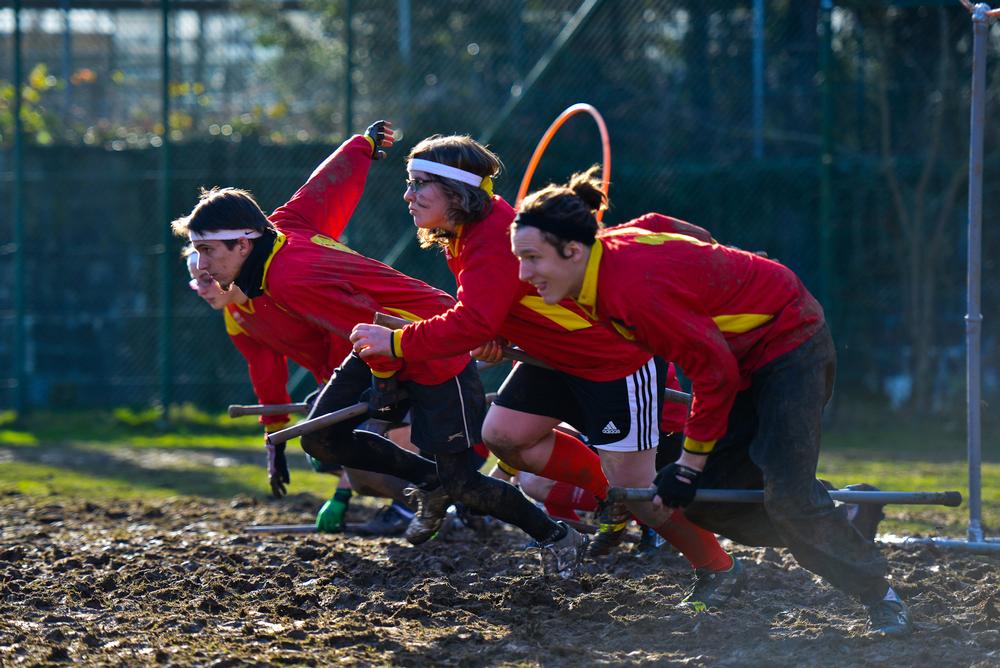
The rules Quidditch uses a mix of elements from rugby, dodgeball and tag. The game stays true to the fictional version, except players ride their brooms like you used to when you played horses as a kid.
There are seven players: a 3:4 gender ratio. A goalie defends the goals against the three chasers who advance the quaffle (volleyball) down the pitch, by passing, kicking or running with it and score points (10 each) for getting a goal through the hoops. The two beaters throw bludgers (dodgeballs) at the other players to stop them getting goals or finding the snitch (someone who has a tennis ball in a sock stuffed into their waistband.) Any player who gets hit by a bludger is out of play until they touch their own goal.
Each team has a seeker who tries to catch the snitch. The snitch is worth 30 points and its capture ends the game. If the score is tied after the snitch catch, the game proceeds into overtime. To stop games being over too quickly, the snitch is released 15 minutes after the start.
The Cambolts Angus Barry and Steffan Danino co-captain the Cambridge University quidditch team, the Cambolts. Barry has trained as a referee and as well as setting up this team, they also founded the Oxford University team, the Radcliffe Chimeras, in 2011. “At Oxford, it just started as a laugh, we didn’t know about the IQA at the time, so we just got some traffic cones and hula hoops and made up our own rules,” says Barry. “Initially we allowed anyone to tackle anyone, which got a bit extreme, and were using tennis balls as bludgers which was a bit painful,” he says.
However, very quickly the team matured and started using IQA rules, playing in leagues and tournaments. The main glue of the team was that they had all become such good friends. Barry, who had played tennis, rugby and football before focusing on quidditch, says that it’s a great sport because there are so many elements.
“You can take a role that plays to your strengths, whether you’re good at throwing, running, or tackling. It’s a game with continuous play and substitutions so it’s very intense. There are lots of balls in play, so you have to react quickly,” he says. Barry, who is currently doing a post-graduate in African Studies at Cambridge University, is going to be playing for the Ugandan team, Katwadde Community Quidditch team, when he goes there next year as part of his studies.
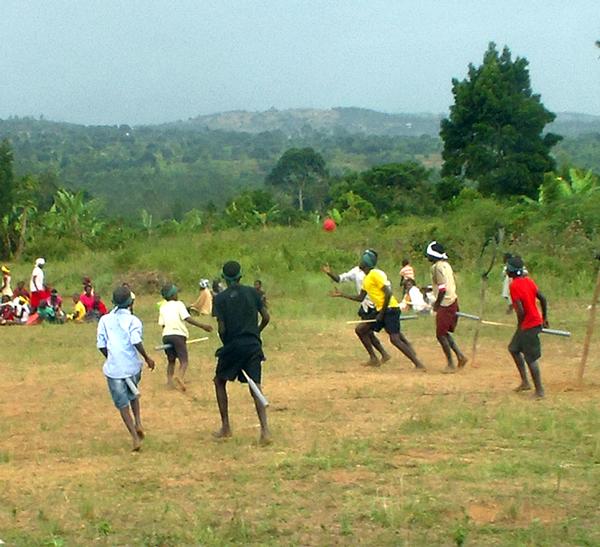
Katwadde Community Quidditch team Quidditch has reached Uganda before the Harry Potter books, thanks to the enthusiasm of John Ssentamu, working with the charity, Sport is the Answer, which encourages youth activity and civic engagement. Despite the lack of hardware stores to buy equipment, they have created a thriving quidditch scene with around 70-80 kids between the ages of 13 and 18 playing on five or six teams.
“We started quidditch in 2013 to provide youths with an alternative sport to other common and competitive sports,” says Ssentamu. “The reaction was amazing since it is a new sport, with new game play and a number of balls on the pitch. It caused enthusiasm among the children and youth.”
Ssentamu says the main challenges in setting up the side was lack of equipment and knowledge: “I was trainee and trainer.” The campaign was given an immense boost when Angus Barry travelled out from the UK with equipment and to provide first hand training. The sport has also been taken to Mbarara University of Science and Technology in Uganda. Many more institutions would like to start the sport, but lack of equipment and funding currently curtails the progress.
The Spa Life UK Convention returns from 21–23 June 2026 at Whittlebury Park Hotel, Spa &
Golf Resort, bringing together spa managers, directors and owners for two days of focused
education, meaningful connection and commercial insight. [more...]
A sport which combines tag, rugby and dodgeball and is played at ferocious speeds astride a broom? Welcome to the crazy, chaotic world of quidditch: a fictional game which has become reality
By Kath Hudson | Published in Sports Management 2015 issue 1
Having started out as a university sport in the US, quidditch has spread across all continents
If your facility is looking for a fun way to engage teenagers and young adults who are losing interest in traditional sports, then quidditch could be the way forward: the teams are mixed and very sociable and the sport has been built up in a culture of inclusivity.
Even though quidditch can be competitive, the broom aspect offers an ironic twist, which makes it fun and breaks down barriers. The game requires and develops a range of skills including throwing, catching, tackling, speed and agility and requires players to think quickly.
It’s cheap and easy to set up and is a marketing dream: everyone knows Harry Potter (don’t they?!). The novelty factor means that a picture or video posted on social media networks should have people thronging to your centre, with the ensuing word of mouth doing the rest.
uidditch has emerged as an inclusive and friendly sport where everyone and anyone of any race, gender or sexual orientation is welcomed with open arms.
The magical game Originally created by JK Rowling in the Harry Potter books, the real life version of quidditch was born in 2005 at Middlebury College, Vermont, US.
“Like many excellent things, quidditch came about on a lazy Sunday afternoon,” explains Harrison Homel, executive director of international governing body, the International Quidditch Association (IQA). “Two students – Alex Benepe and Xander Manshel – had the idea to develop the fictional sport into real life. They started playing it at school, a few other schools heard about it and it snowballed.”
Since then, the sport has spread by YouTube, social media and word of mouth. For those who have wanted to give it a go, it has just involved a trip to a hardware and a toy store, recruiting a few friends and heading to a park.
“When we started out quidditch was mainly attracting people who were avid fans of the Harry Potter books,” says Homel. “But, increasingly, it’s appealing to people looking for a different sport, as it doesn’t take long to realise this is the real deal. It’s a full contact, very athletic, very fast game and it appeals to lots who haven’t read the books, used to play football or basketball, and have walked past it on a university campus and thought ‘that’s something I have to try’.”
Flying around the world Currently it is still quite a university thing, especially in the UK, with most universities fielding a team open to non-students. Three hundred teams are officially recognised by the IQA across the world and 20 countries now have their own governing bodies, with the UK governing body, Quidditch UK, being the fastest growing. The sport is played on every continent, except Antarctica, and in countries as diverse as China, Argentina and Malaysia.
The European Cup was very well attended, with 15 to 20 teams and lots of press coverage. Last July, seven nations competed for the World Championship title in Canada. Homel hopes to double that number by the next tournament in 2016. “One has to have their tongue firmly in their cheek to get on a broomstick and play this sport,” he says. “It’s very difficult to take yourself too seriously.
“One of the things we’re proud of is that it’s a gender inclusive sport: on the pitch at any time there can be people who identify as men, as women, as agender, as transgender, all playing together. That diversity and Big Tent effect doesn’t happen in very many sports, and brings something very special to our community.”
Rowling hasn’t been asked to give quidditch her blessing and neither has she offered it. “I certainly like to think she’s sitting in a mansion somewhere smiling,” says Homel. “However, we’re happy to develop and grow on our own.
“We’ll always have roots in the Harry Potter books, but as the sport grows and develops and creates its own identity we move further away and it becomes less of a priority to get her endorsement.
Dig out your hula hoops Another advantage of quidditch is that it’s very easy for leisure centres and sports clubs to set up: the equipment required should be lying around in store cupboards, so all you need is the players and a soft surface about half the size of a football pitch. Have a look through the official online rule book (www.sportsmanagement.co.uk/quidditch) and off you go.
If you want to formalise it, the IQA and the individual governing bodies offer resources and mentoring, as well as advice on the pathway into leagues and tournaments. Quidditch UK’s Hooch initiative offers a mentoring programme where an existing team will help you get going. The referee test can also be completed online.
Those who play quidditch become evangelical about it, partly because of the sport itself and partly because of the inclusive community it fosters.
Homel sums it up: “What I love most about quidditch is that a group of people – from all walks of life – can set aside any amount of shame that they have and can play a sport as hard as they possibly can, and as aggressively and competitively as they can for as much glory and pride as any other traditional sport.
“But then they can get off their broom and give the other team a hug because the community is that strong.”
The equipment Three hoops – hula hoops will work. A tennis ball in a sock for the snitch, two dodgeballs and a volleyball. Seven brooms, teams often start with a BYOB – bring your own broom – policy.
The rules Quidditch uses a mix of elements from rugby, dodgeball and tag. The game stays true to the fictional version, except players ride their brooms like you used to when you played horses as a kid.
There are seven players: a 3:4 gender ratio. A goalie defends the goals against the three chasers who advance the quaffle (volleyball) down the pitch, by passing, kicking or running with it and score points (10 each) for getting a goal through the hoops. The two beaters throw bludgers (dodgeballs) at the other players to stop them getting goals or finding the snitch (someone who has a tennis ball in a sock stuffed into their waistband.) Any player who gets hit by a bludger is out of play until they touch their own goal.
Each team has a seeker who tries to catch the snitch. The snitch is worth 30 points and its capture ends the game. If the score is tied after the snitch catch, the game proceeds into overtime. To stop games being over too quickly, the snitch is released 15 minutes after the start.
The Cambolts Angus Barry and Steffan Danino co-captain the Cambridge University quidditch team, the Cambolts. Barry has trained as a referee and as well as setting up this team, they also founded the Oxford University team, the Radcliffe Chimeras, in 2011. “At Oxford, it just started as a laugh, we didn’t know about the IQA at the time, so we just got some traffic cones and hula hoops and made up our own rules,” says Barry. “Initially we allowed anyone to tackle anyone, which got a bit extreme, and were using tennis balls as bludgers which was a bit painful,” he says.
However, very quickly the team matured and started using IQA rules, playing in leagues and tournaments. The main glue of the team was that they had all become such good friends. Barry, who had played tennis, rugby and football before focusing on quidditch, says that it’s a great sport because there are so many elements.
“You can take a role that plays to your strengths, whether you’re good at throwing, running, or tackling. It’s a game with continuous play and substitutions so it’s very intense. There are lots of balls in play, so you have to react quickly,” he says. Barry, who is currently doing a post-graduate in African Studies at Cambridge University, is going to be playing for the Ugandan team, Katwadde Community Quidditch team, when he goes there next year as part of his studies.
Katwadde Community Quidditch team Quidditch has reached Uganda before the Harry Potter books, thanks to the enthusiasm of John Ssentamu, working with the charity, Sport is the Answer, which encourages youth activity and civic engagement. Despite the lack of hardware stores to buy equipment, they have created a thriving quidditch scene with around 70-80 kids between the ages of 13 and 18 playing on five or six teams.
“We started quidditch in 2013 to provide youths with an alternative sport to other common and competitive sports,” says Ssentamu. “The reaction was amazing since it is a new sport, with new game play and a number of balls on the pitch. It caused enthusiasm among the children and youth.”
Ssentamu says the main challenges in setting up the side was lack of equipment and knowledge: “I was trainee and trainer.” The campaign was given an immense boost when Angus Barry travelled out from the UK with equipment and to provide first hand training. The sport has also been taken to Mbarara University of Science and Technology in Uganda. Many more institutions would like to start the sport, but lack of equipment and funding currently curtails the progress.
Global Wellness Day (GWD) will mark its 15th anniversary on Saturday 13 June 2026, with the
theme: #JoyMagenta – a celebration of the healing qualities of simple gestures and activities
that spark joy.
Global luxury hospitality brand, Six Senses, has partnered with longevity healthcare provider,
HUM2N, to launch a clinic at Six Senses London, at The Whiteley.
As part of its first hotel partnership, Mayrlife – the medical health resort company known for its
site in Altaussee, Austria – has launched a day clinic at the Rosewood Vienna.
Premium London health club, KX Chelsea, will imminently unveil its most significant
redevelopment since its launch in 2002 to create an integrated wellness model combining
training, recovery and relaxation.
Rosewood Le Guanahani St Barth, on the northeast coast of Saint Barthélemy in the French
West Indies, is offering a programme of ocean-inspired yoga classes between 8-14 June to
celebrate Global Wellness Day (GWD).
Hotel de France, located on the British Isle of Jersey, has created a wellness retreat package
that includes a hot yoga session that will take place in Jersey Zoo’s butterfly sanctuary.
The Ritz-Carlton, Langkawi, in Malaysia, has revealed a schedule for Global Wellness Day
(GWD) that includes guided rainforest walks, mindful movement and guided coastal meditation
experiences.
Longevitix, a clinical platform for preventive and longevity medicine, has launched its AI-
powered intelligence system to help physicians deliver continuous, personalised longevity-
focused care at scale.
Atmantan Wellness Centre, an integrative wellness destination in Mulshi, near Pune in India, is
expanding its portfolio by adding a new centre in Hyderabad that will launch between 2028 and
2029.
A recent survey by the UK Spa Association (UKSA) into the industry’s approach to cancer care
has revealed that almost half of participating respondents (46 per cent) are unaware that
cancer is a disability and guests with a cancer diagnosis must be given
The Spa Life UK Convention returns from 21–23 June 2026 at Whittlebury Park Hotel, Spa &
Golf Resort, bringing together spa managers, directors and owners for two days of focused
education, meaningful connection and commercial insight. [more...]