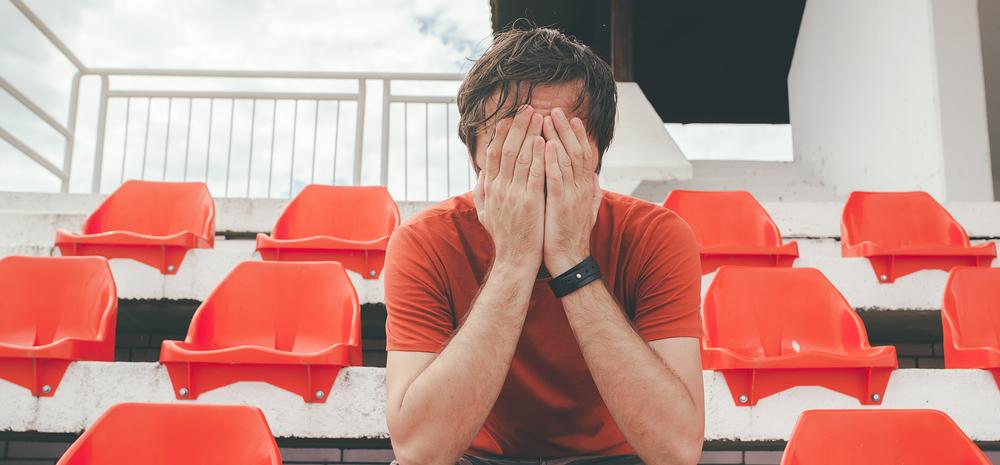
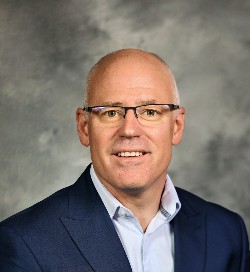
Dr Paul McCarthy helps athletes to think about competition positively
How do you assist athletes? As sports psychologists, we aim to re-educate people to interpret events positively. I teach athletes to view emotions as information, rather than direction. When we understand the emotions we’re experiencing, we can better decide what to do with that information.
For example, some people interpret butterflies in their tummy as a sign of worry, but if you think about this feeling as your body preparing itself for a challenge, then this feeling becomes more positive.
Can a negative mindset have a negative impact? Absolutely. Too much thinking can take you in the wrong direction. We help people to understand which thoughts are helpful and which should be discarded.
Our bodies work less efficiently when we’re in a stressed state, compared to when we’re in a challenged state. If we see a competition as a challenge – which is in our control – and we have the resources to cope, along with sufficient energy and excitement, then our bodies respond better physiologically and psychologically.
What’s the optimum state to be in before a competition? Each individual has a different response: some will be bouncing off the walls and others might want to do a crossword. Many athletes haven’t worked out what works for them yet and that’s what we try to facilitate. This is why it’s important for children to get used to the sporting context early on.
How important is personality type in sporting success? All types of personalities can succeed in all sorts of sports, but it has been shown that people who persevere are more likely to get to the top of their sport than others.
Those with a high working memory – who keep a lot in their head – tend to perform worse under stress compared with others.
Single-mindedness can help you succeed in sport, although not necessarily in your life outside sport. This ability to narrow and focus is helpful in individual sports, however could be a disadvantage in a team game.
How can sports managers apply your research? They should help new members to get what they want. Most people come with a goal, but don’t know how to achieve it. They come with the intention and motivation, but need to be given the strategy, and then feedback, to succeed in their goals, otherwise the intention eventually wears off.
What works universally is simple: support, encouragement, warm feedback, direction and guidance. The people who receive this do exceptionally well. Coaches and instructors need to help people to believe they are the person they wish to become.
In the fast-paced world of fitness and wellness, where high-intensity workouts push us to
our limits and the sweat pours, the importance of efficient recovery cannot be overstated. [more...]
+ More featured suppliers
COMPANY PROFILES
AKT Group
AKT Group is the Franco–Italian parent company of SKYY, C.O.D.E. and AKTMe, operating as an integrat [more...]
Agilysys UK Ltd
Agilysys, Inc. (Nasdaq: AGYS), is a leading
global provider of hospitality software
solutions that [more...]
Dr Paul McCarthy helps athletes to think about competition positively
How do you assist athletes? As sports psychologists, we aim to re-educate people to interpret events positively. I teach athletes to view emotions as information, rather than direction. When we understand the emotions we’re experiencing, we can better decide what to do with that information.
For example, some people interpret butterflies in their tummy as a sign of worry, but if you think about this feeling as your body preparing itself for a challenge, then this feeling becomes more positive.
Can a negative mindset have a negative impact? Absolutely. Too much thinking can take you in the wrong direction. We help people to understand which thoughts are helpful and which should be discarded.
Our bodies work less efficiently when we’re in a stressed state, compared to when we’re in a challenged state. If we see a competition as a challenge – which is in our control – and we have the resources to cope, along with sufficient energy and excitement, then our bodies respond better physiologically and psychologically.
What’s the optimum state to be in before a competition? Each individual has a different response: some will be bouncing off the walls and others might want to do a crossword. Many athletes haven’t worked out what works for them yet and that’s what we try to facilitate. This is why it’s important for children to get used to the sporting context early on.
How important is personality type in sporting success? All types of personalities can succeed in all sorts of sports, but it has been shown that people who persevere are more likely to get to the top of their sport than others.
Those with a high working memory – who keep a lot in their head – tend to perform worse under stress compared with others.
Single-mindedness can help you succeed in sport, although not necessarily in your life outside sport. This ability to narrow and focus is helpful in individual sports, however could be a disadvantage in a team game.
How can sports managers apply your research? They should help new members to get what they want. Most people come with a goal, but don’t know how to achieve it. They come with the intention and motivation, but need to be given the strategy, and then feedback, to succeed in their goals, otherwise the intention eventually wears off.
What works universally is simple: support, encouragement, warm feedback, direction and guidance. The people who receive this do exceptionally well. Coaches and instructors need to help people to believe they are the person they wish to become.
The UK spa review and discovery platform for consumers, the Good Spa Guide, has announced
it will host the Good Spa Guide Awards 2026 during an event on 16 November at Sopwell House
Hotel in St Albans, UK.
Eighty-four per cent of consumers now say wellness is a top priority in their lives, with this
percentage increasing year on year, according to a preview presentation of McKinsey’s Future of
Wellness 2026 research report.
Mass protests have been taking place since Monday 1 June in Albania over the development of
a luxury resort by Donald Trump’s daughter Ivanka Trump and her husband Jared Kushner.
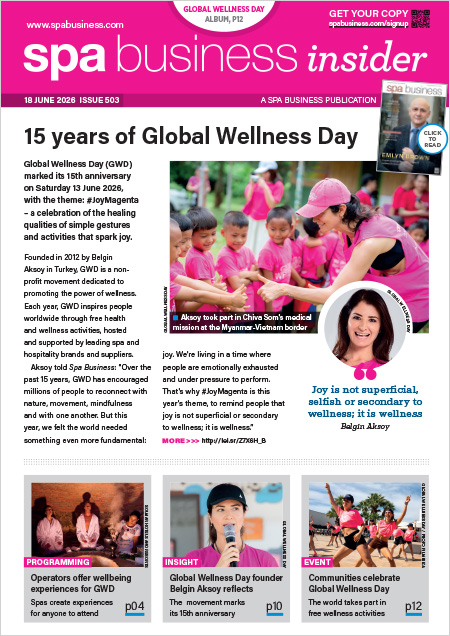
Global Wellness Day (GWD) marked its 15th anniversary on Saturday 13 June 2026, with the
theme: #JoyMagenta – a celebration of the healing qualities of simple gestures and activities
that spark joy.
Global luxury hospitality brand, Six Senses, has partnered with longevity healthcare provider,
HUM2N, to launch a clinic at Six Senses London, at The Whiteley.
As part of its first hotel partnership, Mayrlife – the medical health resort company known for its
site in Altaussee, Austria – has launched a day clinic at the Rosewood Vienna.
Premium London health club, KX Chelsea, will imminently unveil its most significant
redevelopment since its launch in 2002 to create an integrated wellness model combining
training, recovery and relaxation.
Rosewood Le Guanahani St Barth, on the northeast coast of Saint Barthélemy in the French
West Indies, is offering a programme of ocean-inspired yoga classes between 8-14 June to
celebrate Global Wellness Day (GWD).
Hotel de France, located on the British Isle of Jersey, has created a wellness retreat package
that includes a hot yoga session that will take place in Jersey Zoo’s butterfly sanctuary.
The Ritz-Carlton, Langkawi, in Malaysia, has revealed a schedule for Global Wellness Day
(GWD) that includes guided rainforest walks, mindful movement and guided coastal meditation
experiences.
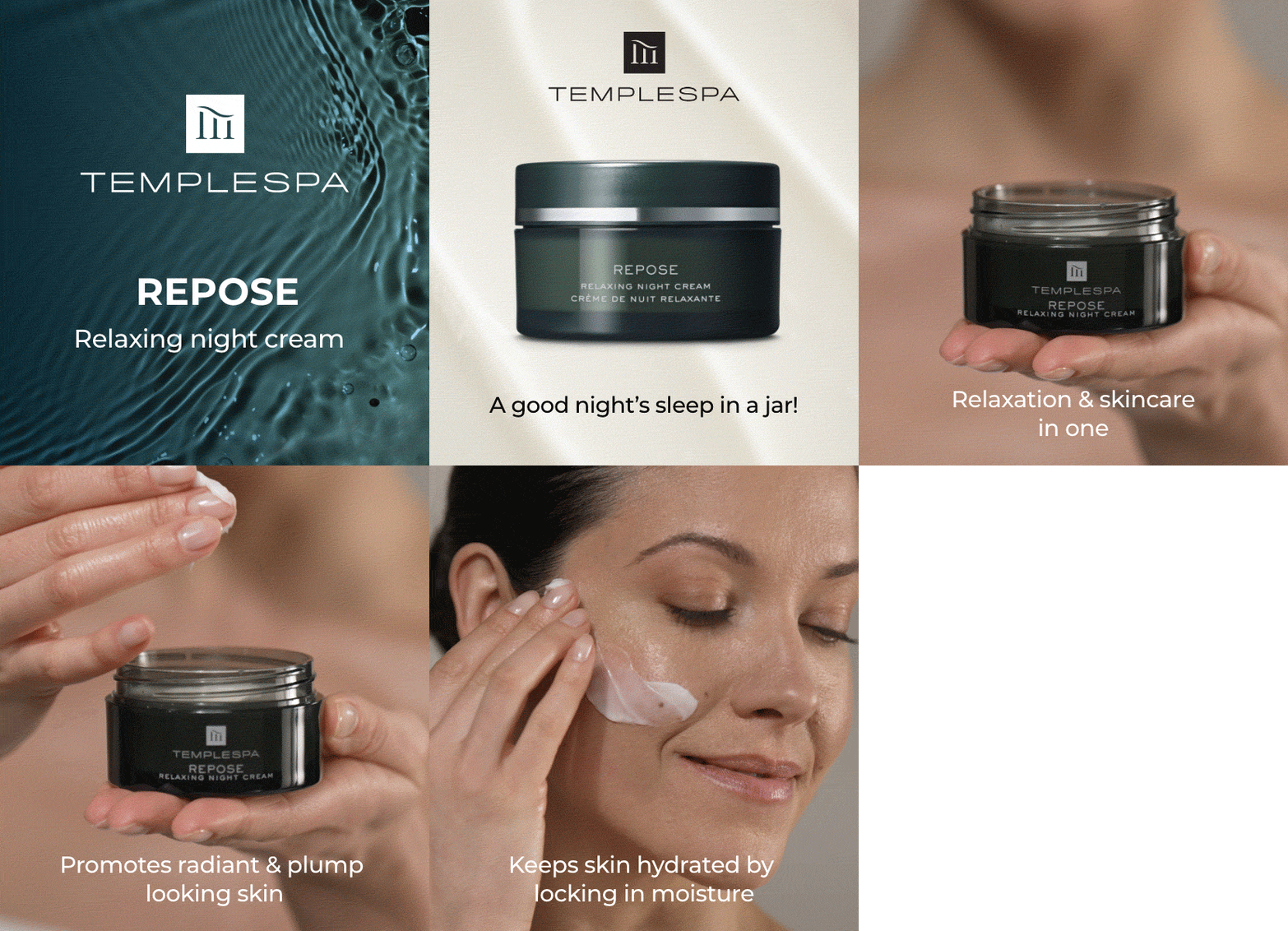
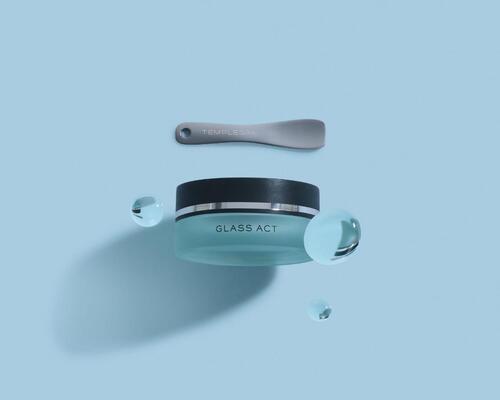
In the fast-paced world of fitness and wellness, where high-intensity workouts push us to
our limits and the sweat pours, the importance of efficient recovery cannot be overstated. [more...]
+ More featured suppliers
COMPANY PROFILES
AKT Group AKT Group is the Franco–Italian parent company of SKYY, C.O.D.E. and AKTMe, operating as an integrat [more...]