Melissa Handford says the National Trust offers a welcoming setting
When did the National Trust first realise it could use its estates to get people active? Some of our sporty staff identified that many of our properties – which were initially designed as pleasure gardens for the wealthy – are ideal locations for getting people active outdoors. However, we were lacking funding and strategic direction, which is what we looked to Sport England to provide.
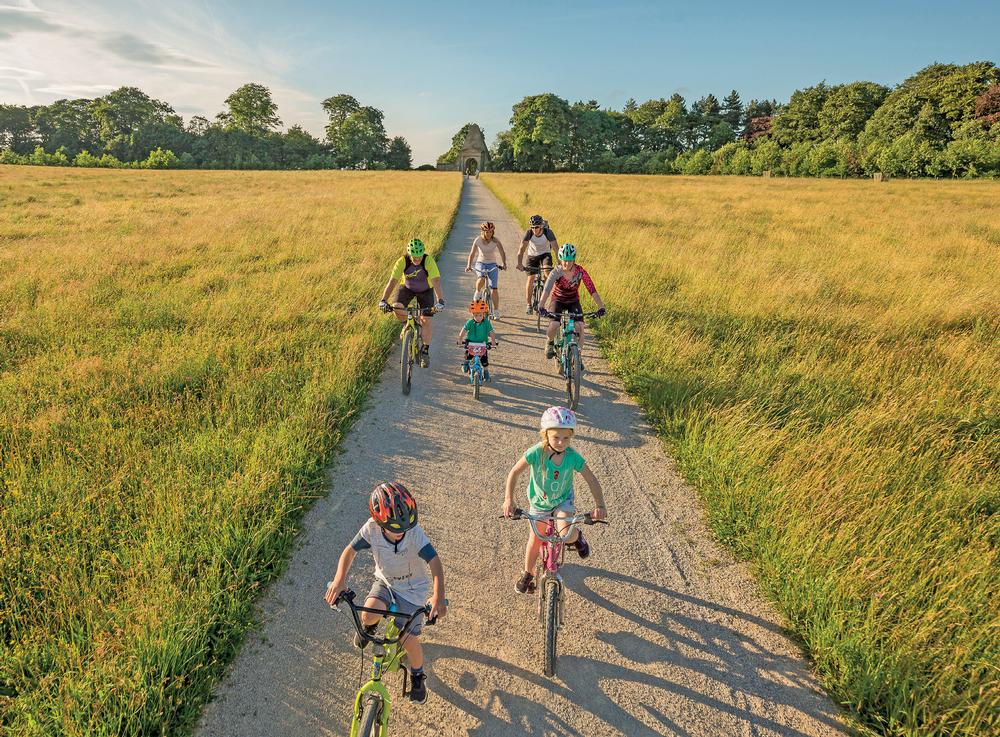
What does the Sport England partnership involve? We match all the funding from Sport England. The first round of funding was in 2012 and it was refreshed in April 2017 for another four-year partnership, until 2021. Over the entire period, we’ll receive £2.5m. Some of this has been used for capital projects, including the development of 10 cycle trails, and also a watersports complex at Fell Foot on Lake Windermere.
The rest has been used to fund the active outdoors programme team and active development officers at the 15 properties that were initially targeted, as well as the marketing of the programmes, the creation of a volunteering package to deliver them, technology development and data and insight gathering.
How did you go about getting activities up and running? Some properties were already providing sporting opportunities. But we have also struck up really valuable partnerships with many national governing bodies, including England Athletics, British Cycling, Archery GB, British Canoe, the LTA, Badminton England and Rounders England, which have all been key to helping us get the projects off the ground, frequently providing free equipment and seeing our work as a testing ground for different ways of delivering their sport to new audiences. Some of our delivery work has also been supported by local clubs, which has been invaluable.
Were there any challenges? Firstly, we needed to ensure all the activities were sensitive to the properties, their heritage and their ‘spirit of place’. It was also crucial to make sure they didn’t create problems for other users or get in the way of their enjoyment. For this reason, we try to organise activities around the shoulder season and quieter times, for example the parkruns happen before the properties are open to the public.
We also had to make sure nothing was visually jarring, for instance, we didn’t want lots of plastic around the properties. Sometimes this led to us creating our own equipment, such as tennis nets with wooden posts.
How do these sporting opportunities benefit the National Trust? One of the things we measure is how good an experience people have at our properties. Overall, 56 per cent of our visitors say they have a very enjoyable visit, but this is higher among our active visitors, with 76 per cent saying they had a very enjoyable visit. If we give people a great time, they’ll come back, develop a loyalty to the Trust, engage with our cause and hopefully make use of our cafés and retail outlets.
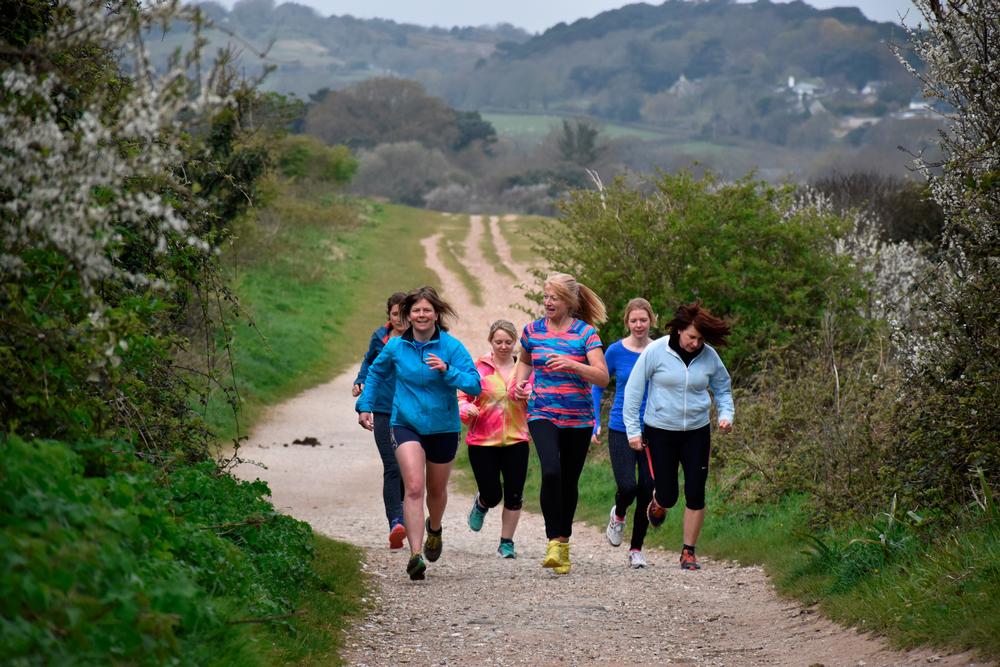
Parkrun now takes place at 29 of our properties each week, bringing 135,000 unique visits each year.
As well as sometimes becoming members, the runners spend, on average, between £10 and £15 per group at the property’s cafés and retail on each visit.
What has the response been like? From March to September 2017, the investment at our 15 properties attracted at least 250,000 people to be active.
In 2016, 31 per cent of our active visitors were new to exercise. Another heartening statistic is that 65 per cent were female, which bucks the trend of wider sports participation, identified in Sport England’s Active Nation survey. We believe this is because we offer a safe, secure and welcoming environment. Most of our runners are aged from 35- to 45-years-old.
Now funding has been secured for another four years, what are your plans? Both the National Trust and Sport England have shared goals of providing public benefits, engaging with the community to be more active and improving physical and mental wellbeing, so going forward we’ll be looking for more ways to extend our reach, by widening programmes, adding more activities and utilising more properties.
We’ve appointed national product leads for walking, running and cycling, and we’ll also be working with NGBs to look at how products can be adapted to attract more diverse audiences, such as seniors and people from more diverse backgrounds.
Another focus will be to make sure that what we offer becomes embedded within the property, so that it will be sustainable even when the funding ends, and that the National Trust will become well known for providing active outdoor opportunities.
The Spa Life UK Convention returns from 21–23 June 2026 at Whittlebury Park Hotel, Spa &
Golf Resort, bringing together spa managers, directors and owners for two days of focused
education, meaningful connection and commercial insight. [more...]
+ More featured suppliers
COMPANY PROFILES
RKF Luxury Linen
RKF Luxury Linen, established in the East of France for several decades, owns an artisanal know-how [more...]
Power Plate
Power Plate is owned, manufactured and distributed by Northbrook, Ill.-based Performance Health Syst [more...]
Melissa Handford says the National Trust offers a welcoming setting
When did the National Trust first realise it could use its estates to get people active? Some of our sporty staff identified that many of our properties – which were initially designed as pleasure gardens for the wealthy – are ideal locations for getting people active outdoors. However, we were lacking funding and strategic direction, which is what we looked to Sport England to provide.
What does the Sport England partnership involve? We match all the funding from Sport England. The first round of funding was in 2012 and it was refreshed in April 2017 for another four-year partnership, until 2021. Over the entire period, we’ll receive £2.5m. Some of this has been used for capital projects, including the development of 10 cycle trails, and also a watersports complex at Fell Foot on Lake Windermere.
The rest has been used to fund the active outdoors programme team and active development officers at the 15 properties that were initially targeted, as well as the marketing of the programmes, the creation of a volunteering package to deliver them, technology development and data and insight gathering.
How did you go about getting activities up and running? Some properties were already providing sporting opportunities. But we have also struck up really valuable partnerships with many national governing bodies, including England Athletics, British Cycling, Archery GB, British Canoe, the LTA, Badminton England and Rounders England, which have all been key to helping us get the projects off the ground, frequently providing free equipment and seeing our work as a testing ground for different ways of delivering their sport to new audiences. Some of our delivery work has also been supported by local clubs, which has been invaluable.
Were there any challenges? Firstly, we needed to ensure all the activities were sensitive to the properties, their heritage and their ‘spirit of place’. It was also crucial to make sure they didn’t create problems for other users or get in the way of their enjoyment. For this reason, we try to organise activities around the shoulder season and quieter times, for example the parkruns happen before the properties are open to the public.
We also had to make sure nothing was visually jarring, for instance, we didn’t want lots of plastic around the properties. Sometimes this led to us creating our own equipment, such as tennis nets with wooden posts.
How do these sporting opportunities benefit the National Trust? One of the things we measure is how good an experience people have at our properties. Overall, 56 per cent of our visitors say they have a very enjoyable visit, but this is higher among our active visitors, with 76 per cent saying they had a very enjoyable visit. If we give people a great time, they’ll come back, develop a loyalty to the Trust, engage with our cause and hopefully make use of our cafés and retail outlets.
Parkrun now takes place at 29 of our properties each week, bringing 135,000 unique visits each year.
As well as sometimes becoming members, the runners spend, on average, between £10 and £15 per group at the property’s cafés and retail on each visit.
What has the response been like? From March to September 2017, the investment at our 15 properties attracted at least 250,000 people to be active.
In 2016, 31 per cent of our active visitors were new to exercise. Another heartening statistic is that 65 per cent were female, which bucks the trend of wider sports participation, identified in Sport England’s Active Nation survey. We believe this is because we offer a safe, secure and welcoming environment. Most of our runners are aged from 35- to 45-years-old.
Now funding has been secured for another four years, what are your plans? Both the National Trust and Sport England have shared goals of providing public benefits, engaging with the community to be more active and improving physical and mental wellbeing, so going forward we’ll be looking for more ways to extend our reach, by widening programmes, adding more activities and utilising more properties.
We’ve appointed national product leads for walking, running and cycling, and we’ll also be working with NGBs to look at how products can be adapted to attract more diverse audiences, such as seniors and people from more diverse backgrounds.
Another focus will be to make sure that what we offer becomes embedded within the property, so that it will be sustainable even when the funding ends, and that the National Trust will become well known for providing active outdoor opportunities.
Longevitix, a clinical platform for preventive and longevity medicine, has launched its AI-
powered intelligence system to help physicians deliver continuous, personalised longevity-
focused care at scale.
Atmantan Wellness Centre, an integrative wellness destination in Mulshi, near Pune in India, is
expanding its portfolio by adding a new centre in Hyderabad that will launch between 2028 and
2029.
A recent survey by the UK Spa Association (UKSA) into the industry’s approach to cancer care
has revealed that almost half of participating respondents (46 per cent) are unaware that
cancer is a disability and guests with a cancer diagnosis must be given
Mexican operator, Solmar Hotels and Resorts, is hosting a series of events in celebration of
Global Wellness Day, including a Temazcal ceremony at its Playa Grande Resort and Spa in Los
Cabos.
Mandarin Oriental has announced a standalone residence brand, Mansions, which will debut at
Emirates Palace, Mandarin Oriental Mansions, Abu Dhabi, in 2029.
Four Seasons Resort The Nam Hai in Hoi An, Vietnam, has put together a Global Wellness Day
(GWD) agenda with activations rooted in nature and shaped by four pillars of Joy – in
alignment with the day’s theme #JoyMagenta.
The Global Wellness Summit (GWS) will celebrate its 20th anniversary at the 2026 event in
Phuket, Thailand, later this year with the theme: The Science, Art and Soul of Wellness.
Auko, an all-inclusive development, is opening in Phong Nha in Vietnam in Q3 2026, with a
series of 30 tented eco-lodges and wellness hospitality operations by Lumina Wellbeing.
The Spa Life UK Convention returns from 21–23 June 2026 at Whittlebury Park Hotel, Spa &
Golf Resort, bringing together spa managers, directors and owners for two days of focused
education, meaningful connection and commercial insight. [more...]
+ More featured suppliers
COMPANY PROFILES
RKF Luxury Linen RKF Luxury Linen, established in the East of France for several decades, owns an artisanal know-how [more...]