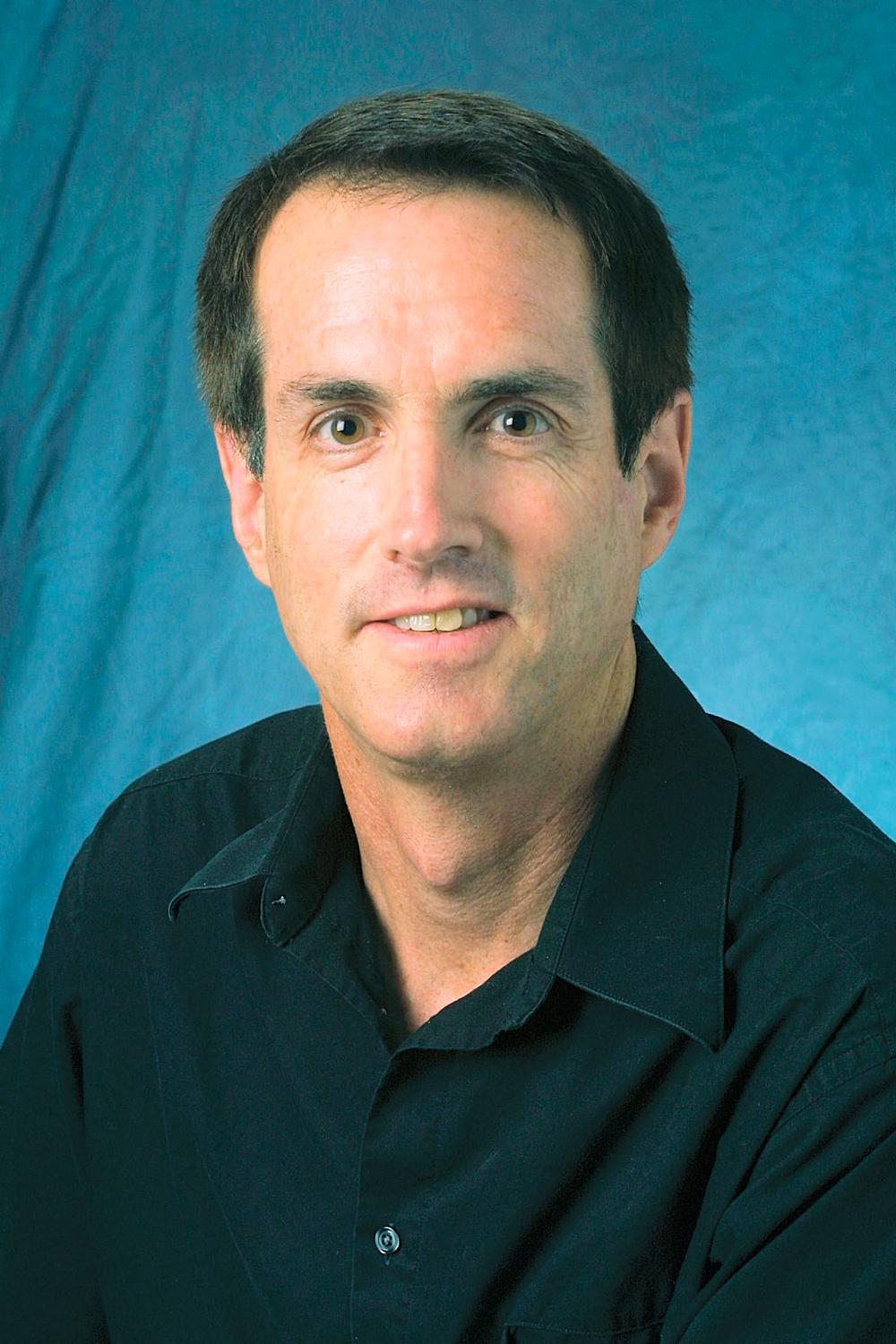
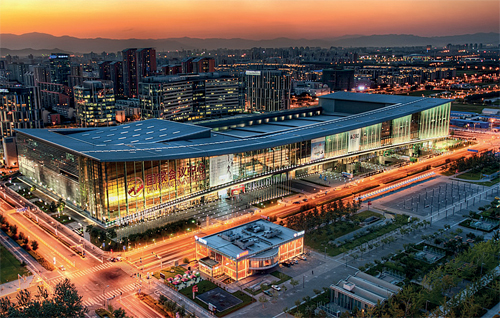
The newly upgraded Fiske Planetarium in Boulder, Colorado now boasts the highest specification full dome theatre in the US. Director Douglas Duncan explains how the dome’s 8K resolution has transformed the user experience and opened up exciting new opportunities
By Julie Cramer | Published in Attractions Management 2014 issue 2
How long did the development take? The actual construction was really fast – only eight months in total. But to research the market, we spent five years studying planetariums around the world, visiting places like the Royal Greenwich Observatory in London and full dome theatres in Germany, China and the US. We opened in October 2013 and have been on an adrenaline high ever since.
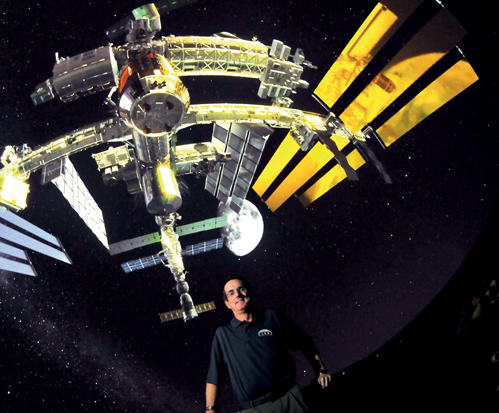
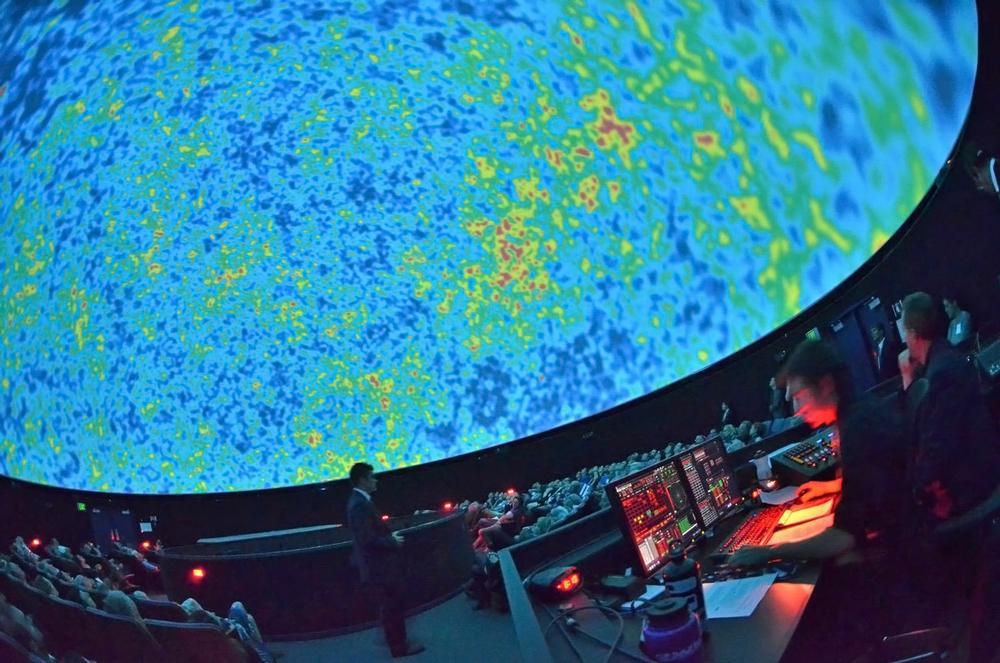
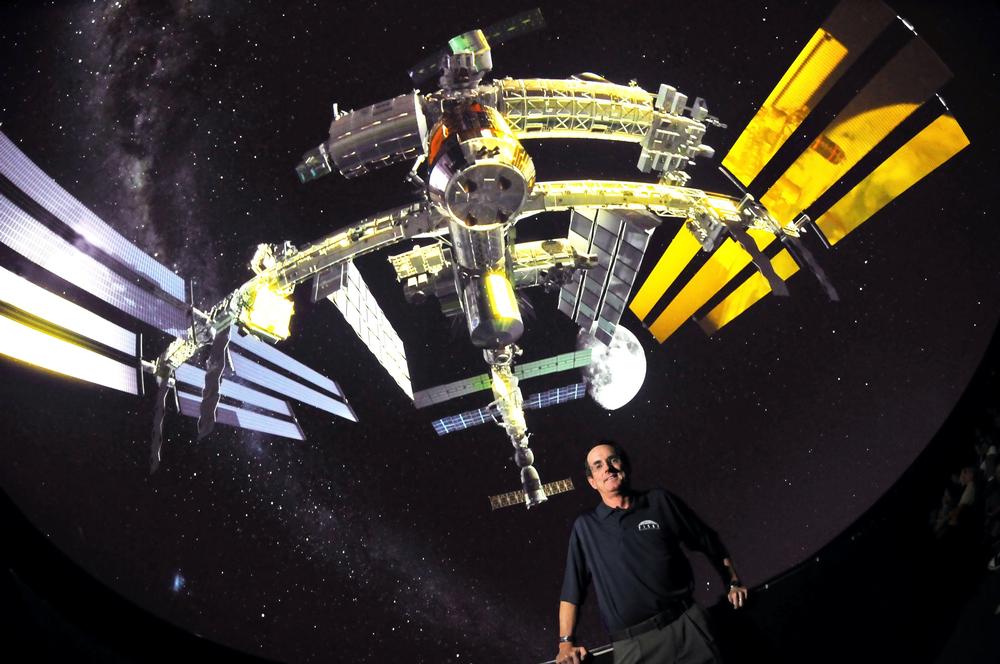
Are you pleased with the results? We’re delighted with the quality. Full dome theatre technology has evolved relatively slowly and I think we’ve only recently reached an interesting threshold in the type of theatre that’s now available. Our new 8k theatre is that threshold. It’s the point where the picture technology becomes so sharp and real that there are no longer any identifiable pixels and the screen becomes so immersive the audience totally forgets their surroundings.
There are more than 100 full domes theatres around the world, but currently you can count the number of 8k theatres on one hand.
What were the dome specifications? We worked with Sky-Skan in the US. The cost of this type of technology has really only just dropped to a more affordable level in the past year.
We’ve invested around US$3m (E2.2m, £1.8m) in the site and have six projectors, each being run by four computers. That’s the equivalent of having 40 Blu-ray players running at once.
The dome is 8,000 by 8,000 pixels, which requires a 20m (66ft)-diameter dome with a 200-seat capacity. The screen is pretty much the resolution of Imax, yet Imax is still film and not digital.
We also have a mechanical star ball machine, produced by a new company in Japan called Megastar. At 3ft (0.9ft)-high, it looks a little like R2D2 sitting in the middle of the theatre. It’s capable of projecting 20 million stars – you can actually take out your binoculars inside the dome to view them.
Also, an American firm called Astrotec have done a great job of building the dome. It’s the same company that built the first dome at Fiske, which served us very well for 40 years.
What were the challenges? One challenge with showing astronomy content is that the sky is very black. When you project onto the screen with the kind of large commercial video projectors we use, the background appears grey. That’s how stars look from a city, with light pollution – not the way we want to show them.
This may not be a problem when projecting onto a small conference screen, but it is an issue for a full dome theatre.
So, we’ve used a newly invented product supplied by Sky-Skan, which is basically a filter that’s placed over all our projectors to improve the contrast. This way, viewers see the darkest dark and the whitest white. When we switch to full colour mode, such as when projecting a film of the Grand Canyon, it’s able to switch mode to enhance these colours too.
What about your content? At University Colorado, Boulder, we’re one of the leading astronomy departments in the world, involved with the NASA missions and the missions to Mars, so we potentially have a lot of great content we can draw on and develop.
The university also has a film school, so we’re able to tap into the talent of the students. They’re working on some unique content production for the facility.
Currently, every show at Fiske is presented live with an astronomer giving a 30-minute presentation. We don’t just cover the stars, we’re also doing earth science – volcanoes and extreme weather, such as floods and tornadoes.
We’re experimenting with using the dome screen as a backdrop to live stage theatre, rather than using a static set. The novelist Dava Sobel has produced a stage adaptation of her novel A More Perfect Heaven that’s based on the life of the astronomer Copernicus. We’re also working with the Boulder Ensemble Theater Company to produce a show based on the discovery of “dark matter” by astronomer Vera Rubin.
Have visitor numbers grown? In Colorado, we have a resident population of around 100,000. The old planetarium attracted around 25,000 to 30,000 visitors per year.
Four months after opening, our income, compared to the same period last year, had almost exactly doubled. That doesn’t exactly mean the visitors have doubled, as we have raised our prices by a few dollars per ticket (adult tickets now cost $10 (E7, £6) and children’s tickets $7 (E5, £4)). But it does mean that attendance is up by at least 40 per cent. We’re open to the public on Saturdays and Sundays, with four showings per day.
During the week, the theatre serves the university (we have 2,500 astronomy students each year).
How have you marketed the new dome? Getting the word out has been a challenge, but numbers have grown mostly through word of mouth. Once people come to see a show, they seem to really like it and tell all their friends.
And we’ve had great success in offering deals via Groupon and Living Social, such as offering 2 for 1 ticket deals. In our last Groupon offer, we sold a month’s worth of tickets in just one day.
I think there’s a branding challenge with planetariums in general. If your big, beautiful new dome is called a planetarium, rather than a digital video theatre, then people only associate it with the stars and planets, whereas of course you can project anything from volcanoes to underwater exploration.
People tend to know that an Imax is a big blank screen that you can fill with different content, but what we essentially have here is a big blank dome that can do the same.
What are your plans for the future? We really want to concentrate on moving into the production of our own digital content that can be distributed worldwide. We have a niche set up here with our wealth of scientists plus our film school.
Full dome theatres in places like New York can afford to produce content with voiceovers from movie stars, such as Tom Hanks. Hiring those movies might cost around $30,000 (E21,800, £18,000) per year. We’re confident that we can produce high quality, compelling content and hire it out at a much lower price.
We have access to exclusive and exciting events, such as the next mission to Mars and work on the Hubble Space Telescope, both led by the University of Colorado. The university’s linked to leading world events, so should be a world-leading communicator.
What are the trends for full dome? I’m going to make a bold prediction. I think that 10 years from now, or as soon as the transmission of data becomes good enough, people will be able to sit in a theatre at a live viewing and watch a leading archaeologist (wearing something like Google’s fish eye camera) walking through Pompeii or trekking through the Grand Canyon, giving a presentation that’s projected in real time onto the dome thousands of miles away. That will make for truly compelling content.
What I’d also say is that scientists have traditionally been quite weak in communicating their work and defending their positions. They have to come out of their laboratories and focus on doing a better job of communicating their discoveries, using all the technology available to them. Not just to attract essential funding, but so they can win the public’s understanding, interest and confidence. We live in a science and technology-dominated age, so it’s important for everyone to understand what’s going on.
Read more from this issue of Spa Business magazine
View contents of Spa Business 2014 issue 2
Editor's letter: The New Philanthropists
Tech is hot and as the growing number of tech millionaires
turn their thoughts to philanthropy, tech-related
attactions will prosper
Profile: Mario Mamon
The current chair of IAAPA talks about
his role with the organisation, doubling
the size of family theme park Enchanted
Kingdom in the Philippines and the
devastation of Super Typhoon Haiyan
Museums: MOHAI
MOHAI's executive director,
Leonard Garfield, talks about
the Seattle museum's new Bezos
Center for Innovation, named after
Amazon founder Jeff Bezos
Science centres: Appliance of science
Andreas Waschk and Mike Boris
explain how they made Blueprint
Entertainment into Europe's largest
private science centre operator
Museums: Olympic Movement
Director Francis Gabet describes how
The Olympic Museum's extensive
refurbishment reflects the excitement
and diveristy of the modern Games
Planetariums: Starry skies
The newly upgraded Fiske Planetarium in
Boulder, Colorado now boasts the highest
specification full dome theatre in the US.
Director Douglas Duncan tells us more
Museums: Beautiful minds
The founders of MoMath, the New York
Museum of Mathematics, tell us how
they're on a mission to get ordinary
people to fall in love with maths
World expos: Brave new world
Christian Lachel considers how world
expos can raise global awareness
about what matters for the planet
3D/4D/5D: IMERSA
A review of the fifth annual IMERSA
conference held in Denver, Colorado
Advertisement feature: EAS 2014
The exhibitors reveal what they’ll be showcasing at EAS in
September and what the hot topics of conversation will be
Waterparks: Wet'n'Wild
Wet'n'Wild Sydney has welcomed
a million visitors through its gates
since opening in December. Managing
director Chris Warhurst tells us why
Ticketing: Convenience store
Gateway's Liesel Tarquini explains
how mobile web stores can help
generate additional revenue
for attractions operators
The newly upgraded Fiske Planetarium in Boulder, Colorado now boasts the highest specification full dome theatre in the US. Director Douglas Duncan explains how the dome’s 8K resolution has transformed the user experience and opened up exciting new opportunities
By Julie Cramer | Published in Attractions Management 2014 issue 2
How long did the development take? The actual construction was really fast – only eight months in total. But to research the market, we spent five years studying planetariums around the world, visiting places like the Royal Greenwich Observatory in London and full dome theatres in Germany, China and the US. We opened in October 2013 and have been on an adrenaline high ever since.
Are you pleased with the results? We’re delighted with the quality. Full dome theatre technology has evolved relatively slowly and I think we’ve only recently reached an interesting threshold in the type of theatre that’s now available. Our new 8k theatre is that threshold. It’s the point where the picture technology becomes so sharp and real that there are no longer any identifiable pixels and the screen becomes so immersive the audience totally forgets their surroundings.
There are more than 100 full domes theatres around the world, but currently you can count the number of 8k theatres on one hand.
What were the dome specifications? We worked with Sky-Skan in the US. The cost of this type of technology has really only just dropped to a more affordable level in the past year.
We’ve invested around US$3m (E2.2m, £1.8m) in the site and have six projectors, each being run by four computers. That’s the equivalent of having 40 Blu-ray players running at once.
The dome is 8,000 by 8,000 pixels, which requires a 20m (66ft)-diameter dome with a 200-seat capacity. The screen is pretty much the resolution of Imax, yet Imax is still film and not digital.
We also have a mechanical star ball machine, produced by a new company in Japan called Megastar. At 3ft (0.9ft)-high, it looks a little like R2D2 sitting in the middle of the theatre. It’s capable of projecting 20 million stars – you can actually take out your binoculars inside the dome to view them.
Also, an American firm called Astrotec have done a great job of building the dome. It’s the same company that built the first dome at Fiske, which served us very well for 40 years.
What were the challenges? One challenge with showing astronomy content is that the sky is very black. When you project onto the screen with the kind of large commercial video projectors we use, the background appears grey. That’s how stars look from a city, with light pollution – not the way we want to show them.
This may not be a problem when projecting onto a small conference screen, but it is an issue for a full dome theatre.
So, we’ve used a newly invented product supplied by Sky-Skan, which is basically a filter that’s placed over all our projectors to improve the contrast. This way, viewers see the darkest dark and the whitest white. When we switch to full colour mode, such as when projecting a film of the Grand Canyon, it’s able to switch mode to enhance these colours too.
What about your content? At University Colorado, Boulder, we’re one of the leading astronomy departments in the world, involved with the NASA missions and the missions to Mars, so we potentially have a lot of great content we can draw on and develop.
The university also has a film school, so we’re able to tap into the talent of the students. They’re working on some unique content production for the facility.
Currently, every show at Fiske is presented live with an astronomer giving a 30-minute presentation. We don’t just cover the stars, we’re also doing earth science – volcanoes and extreme weather, such as floods and tornadoes.
We’re experimenting with using the dome screen as a backdrop to live stage theatre, rather than using a static set. The novelist Dava Sobel has produced a stage adaptation of her novel A More Perfect Heaven that’s based on the life of the astronomer Copernicus. We’re also working with the Boulder Ensemble Theater Company to produce a show based on the discovery of “dark matter” by astronomer Vera Rubin.
Have visitor numbers grown? In Colorado, we have a resident population of around 100,000. The old planetarium attracted around 25,000 to 30,000 visitors per year.
Four months after opening, our income, compared to the same period last year, had almost exactly doubled. That doesn’t exactly mean the visitors have doubled, as we have raised our prices by a few dollars per ticket (adult tickets now cost $10 (E7, £6) and children’s tickets $7 (E5, £4)). But it does mean that attendance is up by at least 40 per cent. We’re open to the public on Saturdays and Sundays, with four showings per day.
During the week, the theatre serves the university (we have 2,500 astronomy students each year).
How have you marketed the new dome? Getting the word out has been a challenge, but numbers have grown mostly through word of mouth. Once people come to see a show, they seem to really like it and tell all their friends.
And we’ve had great success in offering deals via Groupon and Living Social, such as offering 2 for 1 ticket deals. In our last Groupon offer, we sold a month’s worth of tickets in just one day.
I think there’s a branding challenge with planetariums in general. If your big, beautiful new dome is called a planetarium, rather than a digital video theatre, then people only associate it with the stars and planets, whereas of course you can project anything from volcanoes to underwater exploration.
People tend to know that an Imax is a big blank screen that you can fill with different content, but what we essentially have here is a big blank dome that can do the same.
What are your plans for the future? We really want to concentrate on moving into the production of our own digital content that can be distributed worldwide. We have a niche set up here with our wealth of scientists plus our film school.
Full dome theatres in places like New York can afford to produce content with voiceovers from movie stars, such as Tom Hanks. Hiring those movies might cost around $30,000 (E21,800, £18,000) per year. We’re confident that we can produce high quality, compelling content and hire it out at a much lower price.
We have access to exclusive and exciting events, such as the next mission to Mars and work on the Hubble Space Telescope, both led by the University of Colorado. The university’s linked to leading world events, so should be a world-leading communicator.
What are the trends for full dome? I’m going to make a bold prediction. I think that 10 years from now, or as soon as the transmission of data becomes good enough, people will be able to sit in a theatre at a live viewing and watch a leading archaeologist (wearing something like Google’s fish eye camera) walking through Pompeii or trekking through the Grand Canyon, giving a presentation that’s projected in real time onto the dome thousands of miles away. That will make for truly compelling content.
What I’d also say is that scientists have traditionally been quite weak in communicating their work and defending their positions. They have to come out of their laboratories and focus on doing a better job of communicating their discoveries, using all the technology available to them. Not just to attract essential funding, but so they can win the public’s understanding, interest and confidence. We live in a science and technology-dominated age, so it’s important for everyone to understand what’s going on.
Read more from this issue of Spa Business magazine
View contents of Spa Business 2014 issue 2
Editor's letter: The New Philanthropists
Tech is hot and as the growing number of tech millionaires
turn their thoughts to philanthropy, tech-related
attactions will prosper
Profile: Mario Mamon
The current chair of IAAPA talks about
his role with the organisation, doubling
the size of family theme park Enchanted
Kingdom in the Philippines and the
devastation of Super Typhoon Haiyan
Museums: MOHAI
MOHAI's executive director,
Leonard Garfield, talks about
the Seattle museum's new Bezos
Center for Innovation, named after
Amazon founder Jeff Bezos
Science centres: Appliance of science
Andreas Waschk and Mike Boris
explain how they made Blueprint
Entertainment into Europe's largest
private science centre operator
Museums: Olympic Movement
Director Francis Gabet describes how
The Olympic Museum's extensive
refurbishment reflects the excitement
and diveristy of the modern Games
Planetariums: Starry skies
The newly upgraded Fiske Planetarium in
Boulder, Colorado now boasts the highest
specification full dome theatre in the US.
Director Douglas Duncan tells us more
Museums: Beautiful minds
The founders of MoMath, the New York
Museum of Mathematics, tell us how
they're on a mission to get ordinary
people to fall in love with maths
World expos: Brave new world
Christian Lachel considers how world
expos can raise global awareness
about what matters for the planet
3D/4D/5D: IMERSA
A review of the fifth annual IMERSA
conference held in Denver, Colorado
Advertisement feature: EAS 2014
The exhibitors reveal what they’ll be showcasing at EAS in
September and what the hot topics of conversation will be
Waterparks: Wet'n'Wild
Wet'n'Wild Sydney has welcomed
a million visitors through its gates
since opening in December. Managing
director Chris Warhurst tells us why
Ticketing: Convenience store
Gateway's Liesel Tarquini explains
how mobile web stores can help
generate additional revenue
for attractions operators
The Ritz-Carlton, Langkawi, in Malaysia, has revealed a schedule for Global Wellness Day
(GWD) that includes guided rainforest walks, mindful movement and guided coastal meditation
experiences.
Longevitix, a clinical platform for preventive and longevity medicine, has launched its AI-
powered intelligence system to help physicians deliver continuous, personalised longevity-
focused care at scale.
Atmantan Wellness Centre, an integrative wellness destination in Mulshi, near Pune in India, is
expanding its portfolio by adding a new centre in Hyderabad that will launch between 2028 and
2029.
A recent survey by the UK Spa Association (UKSA) into the industry’s approach to cancer care
has revealed that almost half of participating respondents (46 per cent) are unaware that
cancer is a disability and guests with a cancer diagnosis must be given
Mexican operator, Solmar Hotels and Resorts, is hosting a series of events in celebration of
Global Wellness Day, including a Temazcal ceremony at its Playa Grande Resort and Spa in Los
Cabos.
Mandarin Oriental has announced a standalone residence brand, Mansions, which will debut at
Emirates Palace, Mandarin Oriental Mansions, Abu Dhabi, in 2029.
Four Seasons Resort The Nam Hai in Hoi An, Vietnam, has put together a Global Wellness Day
(GWD) agenda with activations rooted in nature and shaped by four pillars of Joy – in
alignment with the day’s theme #JoyMagenta.