The first-ever ISPA Spa Workforce Study challenges the myths
surrounding employee recruitment and retention in the global
spa industry. Research author Colin McIlheney explains how
By Colin McIlheney | Published in Spa Business 2018 issue 2
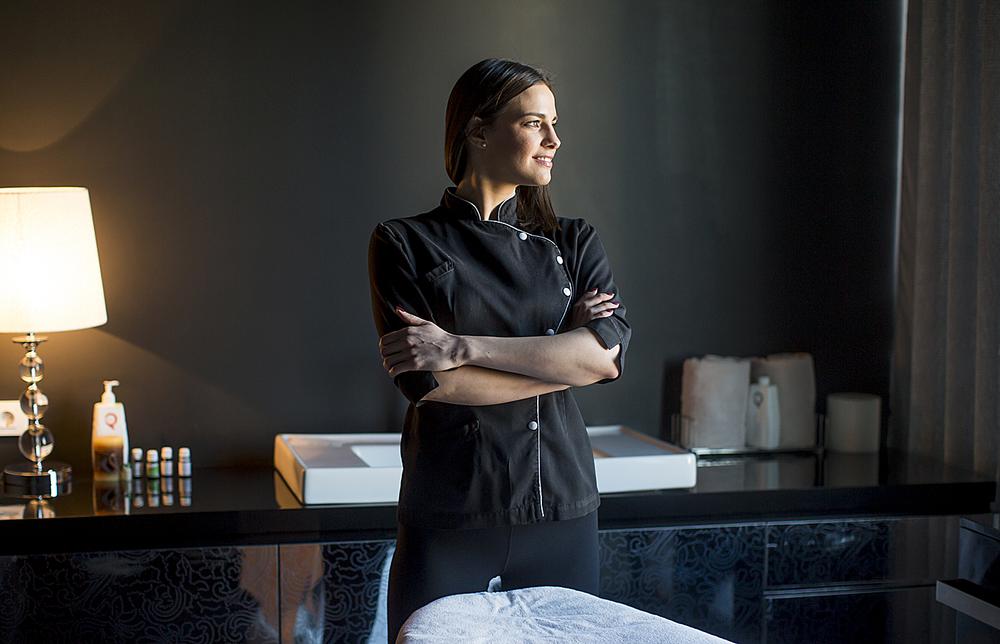
The aim of the study is to understand the reasons for the 32,930 vacant therapist positions in the US / Romaset/shutterstock
There are currently 32,930 vacant positions for therapists in the US spa industry and 1,030 for managers. Inspired by these findings from its annual Spa Industry Study, the International Spa Association (ISPA) Foundation commissioned PricewaterhouseCoopers (PwC) to conduct a global study to get underneath the reasons for the high number of vacancies. This was accomplished by a research design which examines motivations for entering the industry and the reasons why employees then decide to either leave or stay and develop their careers in the spa industry.
The inaugural ISPA Spa Workforce Study covers a variety of hot topics, starting with general issues around recruitment and retention and then drilling down into the reasons behind these decisions. It also addresses employee opinions on compensation packages, their engagement in the workplace and their vision of the spa workforce of the future.
Overarching workforce themes The research focused on two job roles, spa managers (management) and therapists (service providers), with overarching themes emerging throughout the workforce, irrespective of role or grade as well as between the two primary segments.
Three key themes emerged from the data around the perceptions of both management and service provider. Firstly, in terms of attracting talent, those already working in the industry are a great source of advocacy, debunking a common myth that spa professionals often fail to see the meaningfulness in the work they do. They are the core cheerleaders for a career in spas. Word of mouth and/or peer referral is the dominant method used when searching for a job. Almost half of service providers used word of mouth as the method of finding their current job.
The second overarching theme revolved around loyalty to their current employer. The research found that across all job roles, loyalty is high and that a positive culture and working environment is crucial for all job roles. Almost 80 per cent expect to be working in their current organisation 12 months from now. This challenges another traditional belief that many spa professionals are actively seeking a new job. The reasons for staying differ between the job roles, with close to 60 per cent of management citing a positive culture and work environment as their main reason. The top reason for service providers is that the pay or benefits are better than elsewhere, followed closely by culture and work environment and a good working relationship with colleagues.
The third theme focused on the other end of the spectrum – why employees left their previous job. Poor work environment came out at the top of the pile for both management and service providers. This is a key actionable finding. When looking deeper into the work environment issues, 62 per cent of service providers saw poor management as their biggest issue while management cited a lack of opportunity to develop their careers (47 per cent) and poor management around and above them (47 per cent) as their biggest complaint.
Management issues When examining the data in detail it becomes apparent that one size does not fit all in terms of what the occupants of varying job roles perceive to be the key issues or indeed what attracted them to the industry in the first place.
The culture of long hours is often talked about in the spa industry. The research found that almost nine in 10 management responders to the survey worked over 40 hours a week, with the average work week being 44.5 hours. For service providers, this drops to 27 hours. However, this is perhaps not surprising as it’s important to note that working part-time is common practice among service providers with almost half saying they hold a second job.
Training among management, or indeed more pointedly, the lack of education in the spa industry, is a key insight emerging from the research.
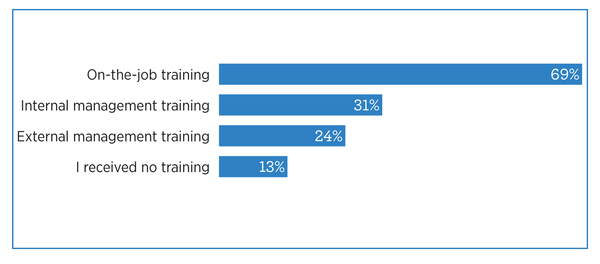
Most management respondents received training on-the-job to prepare them for their first spa management role, with just 24 per cent having undertaken external training specifically geared to a career in management (see Graph 1). The proportion among millennial spa managers falls to 16 per cent, suggesting – perhaps worryingly – that the trend for external management training is declining. Interestingly, only a quarter of management strongly agreed that they had access to the training needed to develop their career. This is a stark finding for the industry but one which can be addressed by clear action plans.
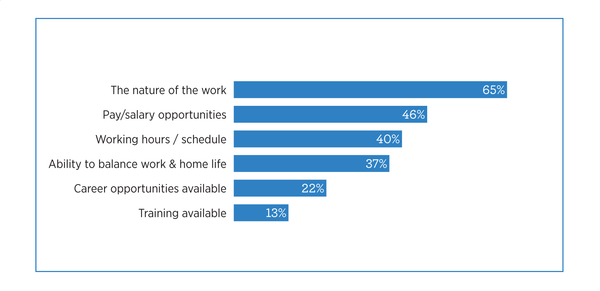
Therapist perspective The overwhelming majority of service providers are passionate about providing exceptional client service and they would like to have a long-term career in the industry. Flexible scheduling and the ability to balance work and home life are important to these employees (see Graph 2). However, they do perceive issues surrounding their compensation package. Less than half agreed that their total compensation fairly reflected their contributions. Pay/salary ranked high (46 per cent) among the factors attracting service providers to the industry and this research may suggest a gap between expectations going in and the actual real-life experience.
The sometimes thorny topic of retail upselling was also explored in the research. A key finding was that 46 per cent of service providers do not believe that upselling retail products is actually their responsibility. This compares to almost 90 per cent of management believing that service providers should have this responsibility. There is a clear disconnect. When focusing on millennial service providers, they were more willing to accept upselling as part of their role, so the message appears to be potentially changing across the generations.
Future view When asked to think about the ‘spa of the future’ and identify the biggest challenge the spa workforce will face going forward respondents view education and training as the top priority. This resonates with all the other research findings. Competition for jobs as well as the drive to retain clients were highlighted as further challenges for the future spa workforce. To paraphrase Conrad Hilton’s famous quote about the key factor for any hotel being location, location and location for the spa industry going forward its training, training and more training.
Read more from this issue of Spa Business magazine
People profile: Garrett Mersberger
Garrett Mersberger on the overhaul of Kohler Waters’ flagship spa in Europe, plus his vision for ISPA following his appointment as chair of the association
Spa programmes: On the menu
Underwater yoga, healing breathwork and genetics all feature in Spa Business’ brand new series revealing the latest treatments, programmes and retreats in spas
Promotional feature: Zimmer MedizinSysteme
Cold therapy is suddenly all the rage, but Zimmer MedizinSysteme’s icelab takes it a step further, creating a cold sauna for the whole body. Rainer Bolsinger explains more about this cutting-edge therapy
Promotional feature: The Tides: pure Dutch nature inside
Modern living might be tough on our minds and bodies, but newly-launched Dutch wellness and self-care brand The Tides offers just the antidote with a new class of pure, raw products and treatments
Graph 1: What training, if any, did you receive to prepare you for your first spa management role?*
*Source: ISPA Spa Workforce Study 2017. Data for managers only; selection of more than one response permitted
Graph 2: What attracted service providers to the spa industry?*
*Source: ISPA Spa Workforce Study 2017. Percentage ranked in top three options
About the research The inaugural ISPA Spa Workforce Study was based on 1,226 respondents across six continents. Topics covered in the full report include: • Spa employees: The key demographics
• Recruitment: What attracted staff to the industry/their job
• Compensation: Employee perceptions of their compensation packages
• The working environment: What is/isn’t working and what affects engagement
The full report is available at experienceispa.com. ISPA members can download a copy for free. Based in the US, ISPA represents operators and suppliers in more than 70 countries, covering all aspects of the industry.
Colin McIlheney is the global research director at PwC.
The Spa Life UK Convention returns from 21–23 June 2026 at Whittlebury Park Hotel, Spa &
Golf Resort, bringing together spa managers, directors and owners for two days of focused
education, meaningful connection and commercial insight. [more...]
+ More featured suppliers
COMPANY PROFILES
G.M. Collin
G.M. Collin develops superior skin care products, from preventive care to combating the first signs [more...]
Barr + Wray Ltd
Barr + Wray has more than 60 years’ experience in the design and delivery of world-class spa and wel [more...]
The first-ever ISPA Spa Workforce Study challenges the myths
surrounding employee recruitment and retention in the global
spa industry. Research author Colin McIlheney explains how
By Colin McIlheney | Published in Spa Business 2018 issue 2
The aim of the study is to understand the reasons for the 32,930 vacant therapist positions in the US / Romaset/shutterstock
There are currently 32,930 vacant positions for therapists in the US spa industry and 1,030 for managers. Inspired by these findings from its annual Spa Industry Study, the International Spa Association (ISPA) Foundation commissioned PricewaterhouseCoopers (PwC) to conduct a global study to get underneath the reasons for the high number of vacancies. This was accomplished by a research design which examines motivations for entering the industry and the reasons why employees then decide to either leave or stay and develop their careers in the spa industry.
The inaugural ISPA Spa Workforce Study covers a variety of hot topics, starting with general issues around recruitment and retention and then drilling down into the reasons behind these decisions. It also addresses employee opinions on compensation packages, their engagement in the workplace and their vision of the spa workforce of the future.
Overarching workforce themes The research focused on two job roles, spa managers (management) and therapists (service providers), with overarching themes emerging throughout the workforce, irrespective of role or grade as well as between the two primary segments.
Three key themes emerged from the data around the perceptions of both management and service provider. Firstly, in terms of attracting talent, those already working in the industry are a great source of advocacy, debunking a common myth that spa professionals often fail to see the meaningfulness in the work they do. They are the core cheerleaders for a career in spas. Word of mouth and/or peer referral is the dominant method used when searching for a job. Almost half of service providers used word of mouth as the method of finding their current job.
The second overarching theme revolved around loyalty to their current employer. The research found that across all job roles, loyalty is high and that a positive culture and working environment is crucial for all job roles. Almost 80 per cent expect to be working in their current organisation 12 months from now. This challenges another traditional belief that many spa professionals are actively seeking a new job. The reasons for staying differ between the job roles, with close to 60 per cent of management citing a positive culture and work environment as their main reason. The top reason for service providers is that the pay or benefits are better than elsewhere, followed closely by culture and work environment and a good working relationship with colleagues.
The third theme focused on the other end of the spectrum – why employees left their previous job. Poor work environment came out at the top of the pile for both management and service providers. This is a key actionable finding. When looking deeper into the work environment issues, 62 per cent of service providers saw poor management as their biggest issue while management cited a lack of opportunity to develop their careers (47 per cent) and poor management around and above them (47 per cent) as their biggest complaint.
Management issues When examining the data in detail it becomes apparent that one size does not fit all in terms of what the occupants of varying job roles perceive to be the key issues or indeed what attracted them to the industry in the first place.
The culture of long hours is often talked about in the spa industry. The research found that almost nine in 10 management responders to the survey worked over 40 hours a week, with the average work week being 44.5 hours. For service providers, this drops to 27 hours. However, this is perhaps not surprising as it’s important to note that working part-time is common practice among service providers with almost half saying they hold a second job.
Training among management, or indeed more pointedly, the lack of education in the spa industry, is a key insight emerging from the research.
Most management respondents received training on-the-job to prepare them for their first spa management role, with just 24 per cent having undertaken external training specifically geared to a career in management (see Graph 1). The proportion among millennial spa managers falls to 16 per cent, suggesting – perhaps worryingly – that the trend for external management training is declining. Interestingly, only a quarter of management strongly agreed that they had access to the training needed to develop their career. This is a stark finding for the industry but one which can be addressed by clear action plans.
Therapist perspective The overwhelming majority of service providers are passionate about providing exceptional client service and they would like to have a long-term career in the industry. Flexible scheduling and the ability to balance work and home life are important to these employees (see Graph 2). However, they do perceive issues surrounding their compensation package. Less than half agreed that their total compensation fairly reflected their contributions. Pay/salary ranked high (46 per cent) among the factors attracting service providers to the industry and this research may suggest a gap between expectations going in and the actual real-life experience.
The sometimes thorny topic of retail upselling was also explored in the research. A key finding was that 46 per cent of service providers do not believe that upselling retail products is actually their responsibility. This compares to almost 90 per cent of management believing that service providers should have this responsibility. There is a clear disconnect. When focusing on millennial service providers, they were more willing to accept upselling as part of their role, so the message appears to be potentially changing across the generations.
Future view When asked to think about the ‘spa of the future’ and identify the biggest challenge the spa workforce will face going forward respondents view education and training as the top priority. This resonates with all the other research findings. Competition for jobs as well as the drive to retain clients were highlighted as further challenges for the future spa workforce. To paraphrase Conrad Hilton’s famous quote about the key factor for any hotel being location, location and location for the spa industry going forward its training, training and more training.
Read more from this issue of Spa Business magazine
People profile: Garrett Mersberger
Garrett Mersberger on the overhaul of Kohler Waters’ flagship spa in Europe, plus his vision for ISPA following his appointment as chair of the association
Spa programmes: On the menu
Underwater yoga, healing breathwork and genetics all feature in Spa Business’ brand new series revealing the latest treatments, programmes and retreats in spas
Promotional feature: Zimmer MedizinSysteme
Cold therapy is suddenly all the rage, but Zimmer MedizinSysteme’s icelab takes it a step further, creating a cold sauna for the whole body. Rainer Bolsinger explains more about this cutting-edge therapy
Promotional feature: The Tides: pure Dutch nature inside
Modern living might be tough on our minds and bodies, but newly-launched Dutch wellness and self-care brand The Tides offers just the antidote with a new class of pure, raw products and treatments
Graph 1: What training, if any, did you receive to prepare you for your first spa management role?*
*Source: ISPA Spa Workforce Study 2017. Data for managers only; selection of more than one response permitted
Graph 2: What attracted service providers to the spa industry?*
*Source: ISPA Spa Workforce Study 2017. Percentage ranked in top three options
About the research The inaugural ISPA Spa Workforce Study was based on 1,226 respondents across six continents. Topics covered in the full report include: • Spa employees: The key demographics
• Recruitment: What attracted staff to the industry/their job
• Compensation: Employee perceptions of their compensation packages
• The working environment: What is/isn’t working and what affects engagement
The full report is available at experienceispa.com. ISPA members can download a copy for free. Based in the US, ISPA represents operators and suppliers in more than 70 countries, covering all aspects of the industry.
Colin McIlheney is the global research director at PwC.
The Ritz-Carlton, Langkawi, in Malaysia, has revealed a schedule for Global Wellness Day
(GWD) that includes guided rainforest walks, mindful movement and guided coastal meditation
experiences.
Longevitix, a clinical platform for preventive and longevity medicine, has launched its AI-
powered intelligence system to help physicians deliver continuous, personalised longevity-
focused care at scale.
Atmantan Wellness Centre, an integrative wellness destination in Mulshi, near Pune in India, is
expanding its portfolio by adding a new centre in Hyderabad that will launch between 2028 and
2029.
A recent survey by the UK Spa Association (UKSA) into the industry’s approach to cancer care
has revealed that almost half of participating respondents (46 per cent) are unaware that
cancer is a disability and guests with a cancer diagnosis must be given
Mexican operator, Solmar Hotels and Resorts, is hosting a series of events in celebration of
Global Wellness Day, including a Temazcal ceremony at its Playa Grande Resort and Spa in Los
Cabos.
Mandarin Oriental has announced a standalone residence brand, Mansions, which will debut at
Emirates Palace, Mandarin Oriental Mansions, Abu Dhabi, in 2029.
Four Seasons Resort The Nam Hai in Hoi An, Vietnam, has put together a Global Wellness Day
(GWD) agenda with activations rooted in nature and shaped by four pillars of Joy – in
alignment with the day’s theme #JoyMagenta.
The Spa Life UK Convention returns from 21–23 June 2026 at Whittlebury Park Hotel, Spa &
Golf Resort, bringing together spa managers, directors and owners for two days of focused
education, meaningful connection and commercial insight. [more...]
+ More featured suppliers
COMPANY PROFILES
G.M. Collin G.M. Collin develops superior skin care products, from preventive care to combating the first signs [more...]