Temporary structures play an increasingly important role at major sports events. Tom Walker looks at how the Gold Coast 2018 Commonwealth Games will deploy them this April
By Tom Walker | Published in Sports Management 2018 issue 1
Borobi, the official mascot for the Gold Coast 2018 Commonwealth Games
In April, Australia will host the Commonwealth Games for the fifth time in the event’s 106-year history. The Games, which kicks off on 4 April, will see a total of 70 nations and territories battle for medals at 17 venues across Queensland’s Gold Coast during 11 days of competition.
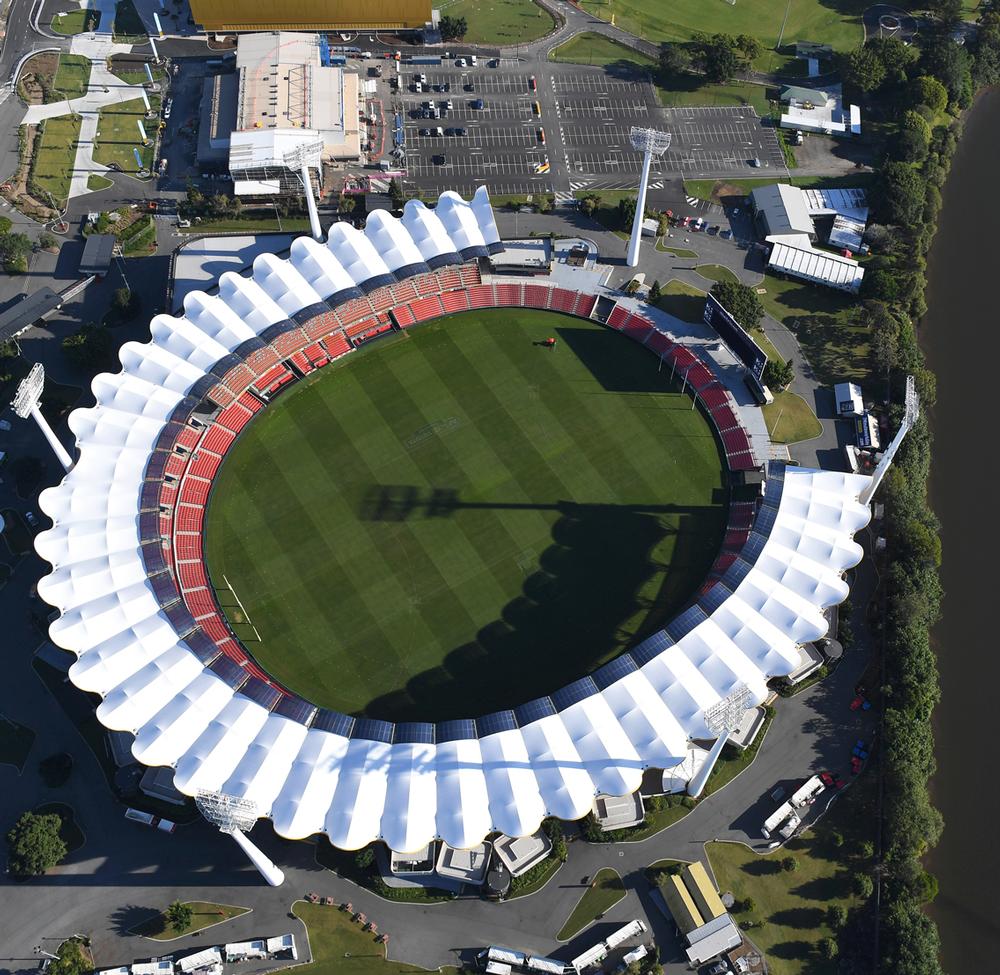
Gold Coast was awarded the Games in 2011 and its successful bid was partly down to the region’s existing sporting infrastructure. Most of the Games facilities, around 80 per cent, were already in place when the bid was launched – including the Carrara Stadium, the main venue of the Games.
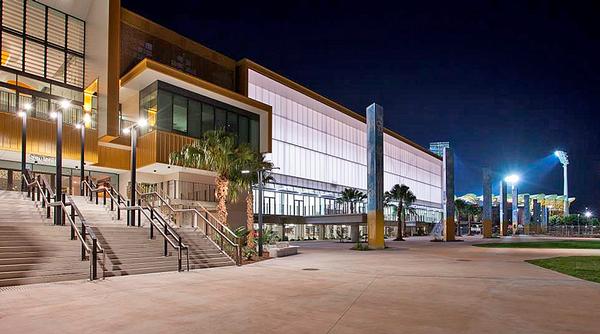
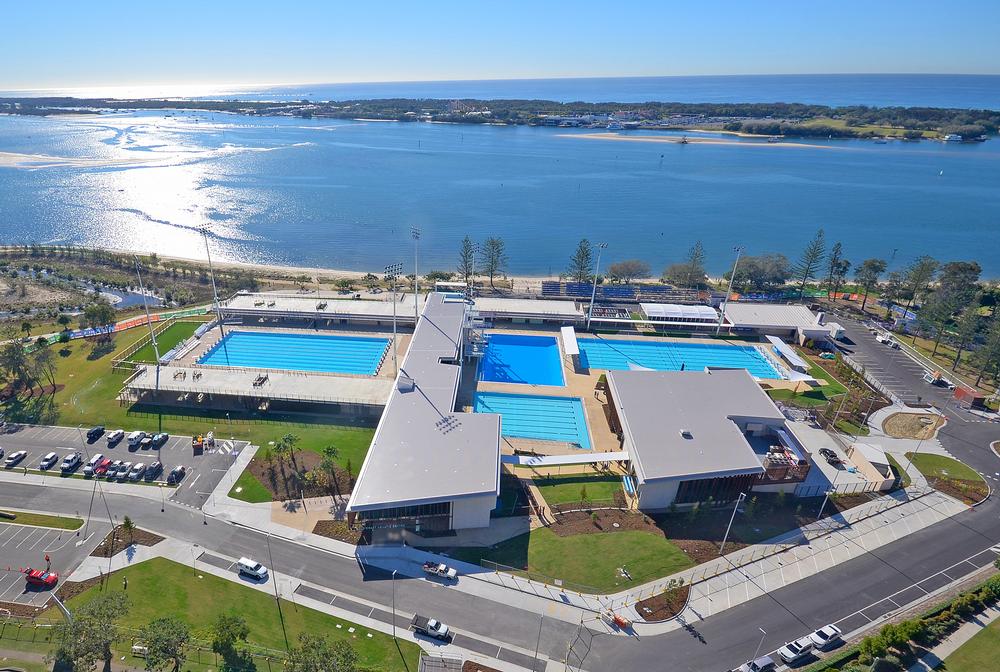
Only three entirely new, permanent facilities have been built for the Games – the Anna Meares Velodrome, Coomera Indoor Sports Centre and the Gold Coast Sports and Leisure Centre. While this year’s Games will rely heavily on existing venues, bringing them up to elite competition standard has involved a redevelopment programme driven by Queensland’s state government. In total, AU$320m has been spent on the three new venues and the general upgrading of existing venues.
TEMPORARY SOLUTIONS At the heart of the delivery of the Games, however, is a plethora of temporary structures and overlay. In addition to the AU$320m investment in new venues, the Gold Coast 2018 Organising Committee (GOLDOC) is spending AU$180m on temporary infrastructure – bringing in everything from spectator grandstands and competition venues to auxiliary buildings.
According to Mark Cutler, head of venue and overlay at GOLDOC, the use of temporary structures and fit-outs will play a huge role in getting venues games-ready. “Temporary overlay is required at every venue to meet specific Commonwealth Games Federation and other international requirements,” he says.
“The amount of overlay required at the venues is highly variable. In general terms, we need to add 25-30 per cent of overlay space to venues that are already well-suited to competition, and more to other venues – such as the conference and exhibition venues being transformed to host sports for the Games.”
According to Cutler, temporary structures will be used in a variety of ways during the 2018 Games. “We are using temporary structures in everything from increasing venue capacities – by building additional grandstands – to catering for the Games’ operations, such as media centres and workforce areas.
“And then there are the broadcast lighting enhancements, additional video-board and scoreboard structures, security screening facilities and equipment, and additional spectator amenities – as well as additional electrical and hydraulic servicing capacity to support the additional loads,” says Cutler.
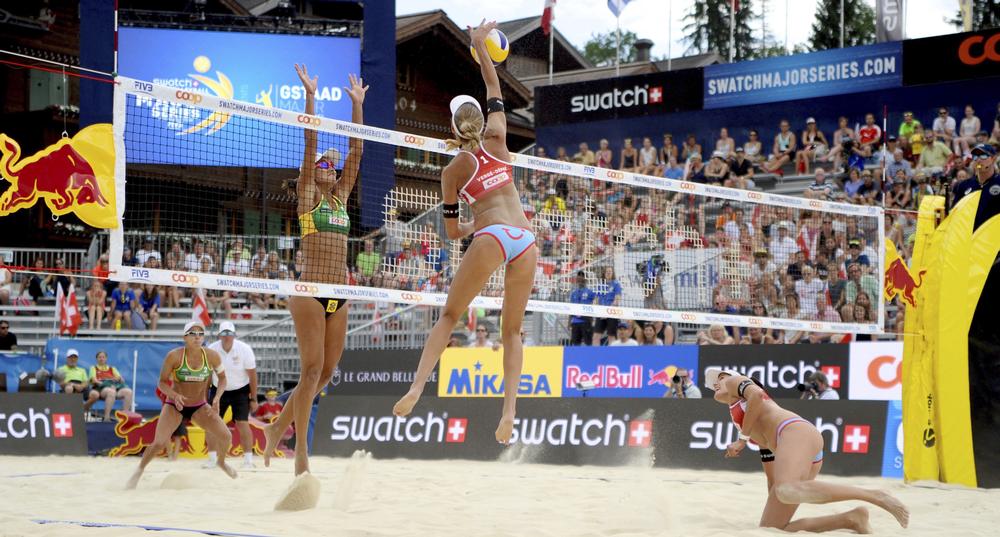
SHOWING OFF THE SIGHTS Three of the 17 venues being created for the 2018 Games will be entirely temporary – the triathlon centre at Southport Broadwater Parklands; The Currumbin Beachfront area, which will host the road cycling; and the beach volleyball arena at Coolangatta.
Using a temporary stadium for beach volleyball has allowed the Games host city to create a setting that will provide the TV audience with some spectacular backdrops. Located at a beachside location, the expected 1.5 billion broadcast viewers will be able to take in the Gold Coast’s iconic coastline.
According to Mark Peters, CEO of GOLDOC, the use of temporary venues has allowed the organiser to select a landmark site for the volleyball – but one that has also presented several challenges.
“There is a significant space requirement for the beach volleyball and much more than meets the eye when it comes to technical delivery – right down to the consistency and grade of sand on the court,” Peters says.
“Coolangatta is a great location for the temporary stadium and with the magnificent skyline it’s an opportunity for it to be showcased all over the world.”
The second temporary venue, at Currumbin Beachfront, will host the road cycling and race walk events. The location was chosen following a “rigorous technical process” to design the courses, which – like the beach volleyball venue – will showcase the coastline.
Meanwhile, Southport Broadwater Parklands will host the start and finish of the Games’ athletics competition, by being the setting for the marathon and triathlon.
At all three venues, temporary stands have been built to accommodate spectators. In total, more than 62,000 temporary seats will be added across the 17 venues.
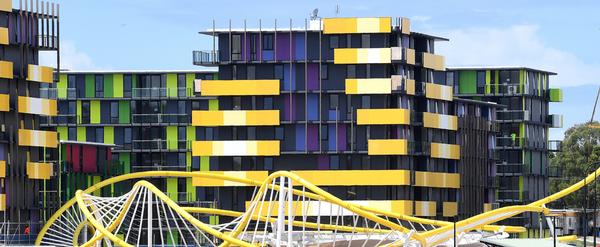
AUXILIARY BUILDINGS As well as providing the necessary extra competition venues for the Games, temporary infrastructure will be used to provide the wide range of additional facilities required for various client groups. “These include the Main Media Centre at Broadbeach and sponsor showcasing sites,” says Cutler.
“Then there are all the corporate hospitality locations within venues, training venues for all sports, a dedicated hotel for the Games Family dignitaries and the Commonwealth Games Village for all the athletes. Most of the ‘backstage’ operations – such as the operational sites for transport bus and fleet staging purposes, security deployment and logistical storage – will also rely heavily on temporary infrastructure.”
LASTING LEGACY The investment into upgrading the existing venues has given the facilities a new lease of life – and will provide a lasting legacy for the Gold Coast community. There is also a “pre-Games legacy”, as – in most cases – the improvement work on the venues has been completed well before the athletes arrive.
“Most new venues are already complete and in use by the community,” Cutler says, adding that there will be no white elephants at this Commonwealth Games.
“The venue legacy is already evident, with higher than predicted community usage levels for all of the new and improved venues. While a number of the venues will retain the capability to host major, high-performance events, the plan for the vast majority will be to facilitate enhanced community activity.”
The Games will also speed up the development of a major, non-sporting project. The Commonwealth Games Village will form an important part of the 200-hectare Gold Coast Health & Knowledge Precinct (GCHKP), being developed through a partnership involving the City of Gold Coast, Griffith University, Gold Coast Health and the Queensland Government.
Described as “Asia-Pacific’s emerging health and innovation hub”, GCHKP will be a global business location for high-tech industry development, research and healthcare. Following the Games, the athletes’ village will be transformed into an AU$550m mixed-use community, creating a space in which to live, work and learn. It will be an integral part of the AU$5bn GCHKP – the region’s largest-ever urban renewal project – which will ultimately house a world-class university and two major hospitals.
A world-class health hub The legacy of the Games will not just be a sporting one – it’s speeding up development of a new health and innovation hub that will benefit the region for years to come. • This AU$5bn hub, known as the Gold Coast Health & Knowledge Precinct, will be the region’s largest ever urban renewal project and is being developed by the City of Gold Coast, Griffith University, Gold Coast Health and the Queensland Government.
• The Commonwealth Games Village will become part of the new 200-hectare hub, which will house a world-class university and two major hospitals.
Creative transformations For the second Commonwealth Games in a row, the hosts have come up with an innovative, temporary solution to create an elite athletics track at a non-athletics venue. In 2014, Glasgow’s Hampden Stadium saw 6,000 stilts being used as part of a revolutionary solution to raise the football stadium’s surface by almost two metres, in order to create enough space for the running track. This year, the Gold Coast organisers came up with their own piece of genius. Mark Cutler explains:
“The athletics track at Carrara Stadium is longer than the playing surface required for Australian Rules Football. Therefore, when a stadium upgrade was made in 2011, around the time when GOLDOC was being awarded the 2018 Commonwealth Games, the northern seating stand was made of modular construction, so that it could more easily be lifted out to accommodate the athletics track construction, and then be reinstated for Australian Rules Football after the Games.”
The MSpa Oslo series is a perennial bestseller in global markets. With innovative
engineering and premium performance, this completely portable spa line-up is expertly
designed to meet the needs of customers worldwide. [more...]
Temporary structures play an increasingly important role at major sports events. Tom Walker looks at how the Gold Coast 2018 Commonwealth Games will deploy them this April
By Tom Walker | Published in Sports Management 2018 issue 1
Borobi, the official mascot for the Gold Coast 2018 Commonwealth Games
In April, Australia will host the Commonwealth Games for the fifth time in the event’s 106-year history. The Games, which kicks off on 4 April, will see a total of 70 nations and territories battle for medals at 17 venues across Queensland’s Gold Coast during 11 days of competition.
Gold Coast was awarded the Games in 2011 and its successful bid was partly down to the region’s existing sporting infrastructure. Most of the Games facilities, around 80 per cent, were already in place when the bid was launched – including the Carrara Stadium, the main venue of the Games.
Only three entirely new, permanent facilities have been built for the Games – the Anna Meares Velodrome, Coomera Indoor Sports Centre and the Gold Coast Sports and Leisure Centre. While this year’s Games will rely heavily on existing venues, bringing them up to elite competition standard has involved a redevelopment programme driven by Queensland’s state government. In total, AU$320m has been spent on the three new venues and the general upgrading of existing venues.
TEMPORARY SOLUTIONS At the heart of the delivery of the Games, however, is a plethora of temporary structures and overlay. In addition to the AU$320m investment in new venues, the Gold Coast 2018 Organising Committee (GOLDOC) is spending AU$180m on temporary infrastructure – bringing in everything from spectator grandstands and competition venues to auxiliary buildings.
According to Mark Cutler, head of venue and overlay at GOLDOC, the use of temporary structures and fit-outs will play a huge role in getting venues games-ready. “Temporary overlay is required at every venue to meet specific Commonwealth Games Federation and other international requirements,” he says.
“The amount of overlay required at the venues is highly variable. In general terms, we need to add 25-30 per cent of overlay space to venues that are already well-suited to competition, and more to other venues – such as the conference and exhibition venues being transformed to host sports for the Games.”
According to Cutler, temporary structures will be used in a variety of ways during the 2018 Games. “We are using temporary structures in everything from increasing venue capacities – by building additional grandstands – to catering for the Games’ operations, such as media centres and workforce areas.
“And then there are the broadcast lighting enhancements, additional video-board and scoreboard structures, security screening facilities and equipment, and additional spectator amenities – as well as additional electrical and hydraulic servicing capacity to support the additional loads,” says Cutler.
SHOWING OFF THE SIGHTS Three of the 17 venues being created for the 2018 Games will be entirely temporary – the triathlon centre at Southport Broadwater Parklands; The Currumbin Beachfront area, which will host the road cycling; and the beach volleyball arena at Coolangatta.
Using a temporary stadium for beach volleyball has allowed the Games host city to create a setting that will provide the TV audience with some spectacular backdrops. Located at a beachside location, the expected 1.5 billion broadcast viewers will be able to take in the Gold Coast’s iconic coastline.
According to Mark Peters, CEO of GOLDOC, the use of temporary venues has allowed the organiser to select a landmark site for the volleyball – but one that has also presented several challenges.
“There is a significant space requirement for the beach volleyball and much more than meets the eye when it comes to technical delivery – right down to the consistency and grade of sand on the court,” Peters says.
“Coolangatta is a great location for the temporary stadium and with the magnificent skyline it’s an opportunity for it to be showcased all over the world.”
The second temporary venue, at Currumbin Beachfront, will host the road cycling and race walk events. The location was chosen following a “rigorous technical process” to design the courses, which – like the beach volleyball venue – will showcase the coastline.
Meanwhile, Southport Broadwater Parklands will host the start and finish of the Games’ athletics competition, by being the setting for the marathon and triathlon.
At all three venues, temporary stands have been built to accommodate spectators. In total, more than 62,000 temporary seats will be added across the 17 venues.
AUXILIARY BUILDINGS As well as providing the necessary extra competition venues for the Games, temporary infrastructure will be used to provide the wide range of additional facilities required for various client groups. “These include the Main Media Centre at Broadbeach and sponsor showcasing sites,” says Cutler.
“Then there are all the corporate hospitality locations within venues, training venues for all sports, a dedicated hotel for the Games Family dignitaries and the Commonwealth Games Village for all the athletes. Most of the ‘backstage’ operations – such as the operational sites for transport bus and fleet staging purposes, security deployment and logistical storage – will also rely heavily on temporary infrastructure.”
LASTING LEGACY The investment into upgrading the existing venues has given the facilities a new lease of life – and will provide a lasting legacy for the Gold Coast community. There is also a “pre-Games legacy”, as – in most cases – the improvement work on the venues has been completed well before the athletes arrive.
“Most new venues are already complete and in use by the community,” Cutler says, adding that there will be no white elephants at this Commonwealth Games.
“The venue legacy is already evident, with higher than predicted community usage levels for all of the new and improved venues. While a number of the venues will retain the capability to host major, high-performance events, the plan for the vast majority will be to facilitate enhanced community activity.”
The Games will also speed up the development of a major, non-sporting project. The Commonwealth Games Village will form an important part of the 200-hectare Gold Coast Health & Knowledge Precinct (GCHKP), being developed through a partnership involving the City of Gold Coast, Griffith University, Gold Coast Health and the Queensland Government.
Described as “Asia-Pacific’s emerging health and innovation hub”, GCHKP will be a global business location for high-tech industry development, research and healthcare. Following the Games, the athletes’ village will be transformed into an AU$550m mixed-use community, creating a space in which to live, work and learn. It will be an integral part of the AU$5bn GCHKP – the region’s largest-ever urban renewal project – which will ultimately house a world-class university and two major hospitals.
A world-class health hub The legacy of the Games will not just be a sporting one – it’s speeding up development of a new health and innovation hub that will benefit the region for years to come. • This AU$5bn hub, known as the Gold Coast Health & Knowledge Precinct, will be the region’s largest ever urban renewal project and is being developed by the City of Gold Coast, Griffith University, Gold Coast Health and the Queensland Government.
• The Commonwealth Games Village will become part of the new 200-hectare hub, which will house a world-class university and two major hospitals.
Creative transformations For the second Commonwealth Games in a row, the hosts have come up with an innovative, temporary solution to create an elite athletics track at a non-athletics venue. In 2014, Glasgow’s Hampden Stadium saw 6,000 stilts being used as part of a revolutionary solution to raise the football stadium’s surface by almost two metres, in order to create enough space for the running track. This year, the Gold Coast organisers came up with their own piece of genius. Mark Cutler explains:
“The athletics track at Carrara Stadium is longer than the playing surface required for Australian Rules Football. Therefore, when a stadium upgrade was made in 2011, around the time when GOLDOC was being awarded the 2018 Commonwealth Games, the northern seating stand was made of modular construction, so that it could more easily be lifted out to accommodate the athletics track construction, and then be reinstated for Australian Rules Football after the Games.”
The International Spa Association (ISPA) has published its full 2026 US Spa Industry Study,
providing further insights into the region’s total US$1 billion (€855 million, £780 million)
industry revenue increase from 2024 to 2025.
Ameyalli, the 78-acre wellbeing resort and residential community in Midway in Utah, US, has
broken ground on phase two of the hot spring development – the Ameyalli Resort and Spa –
which is due to open in 2028.
TLee Spas and Wellness has revealed the design concept for a high-tech spa with body
mapping scanners to improve public health, for AI company Midjourney.
Gran Hotel Taoro in northern Tenerife, Spain, has completed the final phase of its three-year
renovation with the debut of its Sandára Wellness Centre.
Hand and Stone Massage and Facial Spa, the spa business with more than 650 locations across
the US and Canada, has appointed franchise expert Carrie Walsh as CEO as the company plans
to expand.
Synergy – The Retreat Show, the global trade show for retreats, has launched a global research
initiative that will provide insights into the retreat sector from both consumer and industry
perspectives.
The Wellness Tourism Association (WTA) has published a non-regulatory global industry
framework designed to ensure the retreat market offers responsible experiences.
A new survey of UK and international spa practitioners shows that stress, burnout and
wellbeing concerns have caused one in three respondents to consider leaving the industry.
The UK's four Chief Medical Officers have published a refreshed edition of Physical activity
guidelines: UK Chief Medical Officers' report, updating the evidence that underpins the nation's
physical activity recommendations and placing greater emphasis on strength, balance, reducing
sedentary behaviour and, for the first time, supporting people taking weight loss medications.
The MSpa Oslo series is a perennial bestseller in global markets. With innovative
engineering and premium performance, this completely portable spa line-up is expertly
designed to meet the needs of customers worldwide. [more...]