The wellness industry has expanded dramatically over the past few decades, evolving from a mission-driven, experience-led niche industry rooted in early science and ancient practices, into a sprawling, multi-sector ecosystem spanning hospitality, healthcare, technology, fitness, nutrition, and self-improvement. While this expansion has increased consumer access, data and choice, it has largely occurred without the adoption of objectively verified and shared standards of performance or outcomes. The result is fragmented messaging, overzealous claims, and limited differentiation between brands.
Surprising disconnect
One sector that has benefitted significantly from this expansion is leisure travel, where health-related programming has become increasingly part of the services offered by hotels, resorts and destination experience providers. Yet, when the brand preferences of consumers who patronize these properties are measured, a surprising disconnect emerges: no brands dominate category preference. One wonders if this is the result of the flood of new industry entrants in recent years, or the fact that consumers fail to see any real differentiation in their respective offers.
WELLSurvey 2.0, which surveyed a total of 2,648 adults from the US (n=1,026), UK (n=804) and Germany (n=818), 51 per cent female and 49 per cent male, in November 2025, found that 91 per cent engaged in some form of physical activity and 54 per cent regularly used spa, wellness or preventive therapies. Fifty per cent of respondents across all three markets also expressed interest in enhancing their wellbeing more than their wellness.
However, when respondents were asked which of 17 prominent wellness hospitality brands they would prefer to visit on a future trip to enhance their wellness or wellbeing, fully 53 per cent stated “none of the above” despite broad exposure of many of the brands in advertising, publicity, and by social influencers.
Preference in this context reflects the extent to which a consumer would proactively select a brand when planning a wellness-focused trip. It differs from brand awareness – a measure of recognition, which varies by demography and is influenced by years of operation, location, accessibility, cost, programming, quality ratings, guest referrals, habits, and media exposure.
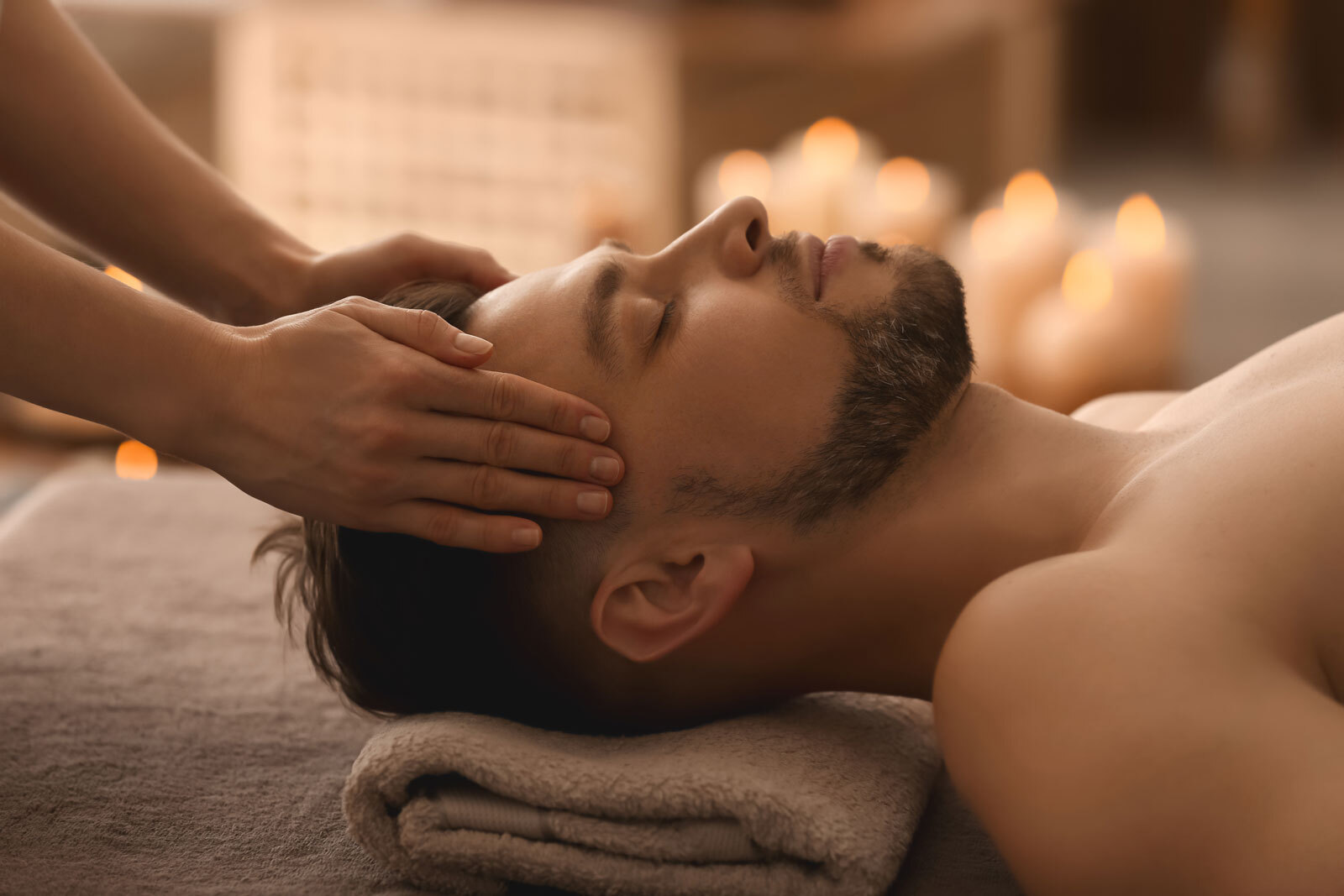
53 per cent of respondents expressed no brand preference / Shutterstock / Pixel-Shot
A prospective guest may be aware of a brand – even consider visiting it – yet decline to identify it as preferred. The fact that 53 per cent of respondents expressed no brand preference suggests that awareness does not necessarily translate into bookings.
The finding that more than half of respondents failed to express a preference for any of the presumed prominent brands aligns with earlier research conducted by the authors with spa-goers, suggesting that many wellness hospitality offerings have become commoditised, with competitive spa and wellness properties perceived as delivering similar programmes and services, offering only one real point of differentiation: the price.
Among respondents who expressed a preference, Six Senses and Canyon Ranch were cited most frequently, each by 10 per cent of respondents, positioning them as ‘reference brands’ rather than category leaders. One noteworthy variance was observed within the 25 to 44 age cohort (WELLZoomers™): Six Senses received the highest preference rating (17 per cent). While still modest, this suggests that Six Senses has achieved an early foothold with the generation that will shape future demand for much of the industry’s products, services and experiences, signalling a potential pathway to category leadership if it aligns with this cohort’s evolving expectations around integrated wellbeing.
The lack of brand leadership also reflects the industry’s rapid growth and evolution. Early destination wellness pioneers, such as Ranch, Rancho La Puerta and Golden Door, helped define the category by integrating fitness, spa therapies, nutrition and preventive health within immersive retreat environments. As consumer interest grew, many hospitality providers incorporated similar wellness programming into traditional resort experiences and their offerings converged with similar messages, comparable modalities, and services.
Even as industry organisations, such as the Global Wellness Institute and the International Spa Association, successfully emerged to advance research, education and industry development, clarity around language, taxonomies, and performance standards has remained elusive. While quality has improved and access has broadened, true brand differentiation isn’t apparent, leaving consumers with a wide array of options but few providers with sufficient distinction to emerge as category leaders.
Programme breadth has expanded meaningfully, yet differentiation often occurs at the level of menu descriptions only rather than through real programme structural identity. Without shared taxonomies, evidence hierarchies, or continuity frameworks extending beyond a guest’s stay, offerings appear interchangeable. As a result, consumers often navigate the category through personal research, distinctive programming, peer recommendations, perceived scientific credibility, attractive locations – and price – rather than brand allegiance.
But, as one would expect, geographic preferences do exist. Six Senses is preferred in Germany (16 per cent), while Canyon Ranch leads in the United States (13 per cent). Beyond these two brands, preference disperses across guest demography and regionally prominent or programme-specific operators, each cited primarily within localised or specialised contexts rather than as globally dominant wellness hospitality brands. Brand preferences are situational and diffused.

Among WELLZoomers, Six Senses received the highest preference rating / Shutterstock / Julia Amaral
This fragmentation underscores the importance of a broader evaluative shift identified in WELLSurvey 2.0: as wellbeing is increasingly understood as an integrated ecosystem – with emotional health functioning as the lived feedback signal and longevity framing the time horizon – consumers are not merely selecting resort destinations. They are evaluating whether a specific brand experience aligns within their personal wellbeing architecture. And when brands present primarily as episodic experiences or collections of programme offerings, durable brand preference becomes difficult to build and sustain.
When wellbeing is interpreted as a coordinated ecosystem influencing how one feels and how that condition may be maintained, consumers become selective about which inputs they admit into that ecosystem. Brand differentiation, therefore, becomes both a challenge and an opportunity. The opportunity lies not in building greater visibility alone, however, but in achieving credible structural coherence with a guest’s commitment to wellbeing and longevity. The host facility or destination must function as connective tissue within a guest’s broader wellbeing ecosystem, linking what precedes a visit with what follows.
Traditional wellness resorts have operated successfully for decades, offering immersive programmes built around spa therapies, fitness, nutrition, and prevention. These high-touch experiences helped establish the category and remain highly valued by participants. Yet, they are largely episodic experience environments – destinations where wellbeing practices are experienced intensively for a period of time but remain separate from the guest’s longer journey to achieve wellbeing. Much, if not all, that was experienced or learned is soon abandoned or forgotten.
Destination preferences
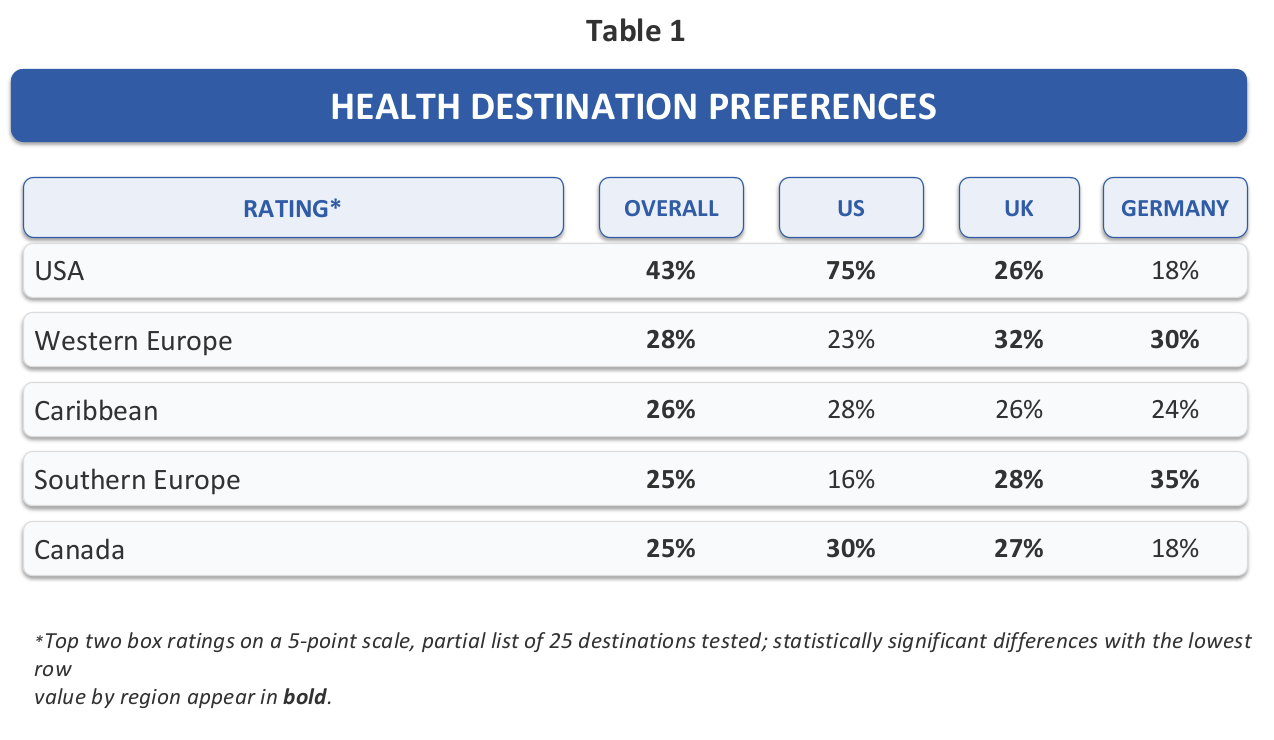
WELLSurvey 2.0 probed respondents’ interest in which regions of the world they would be interested in visiting on a holiday intended mainly to advance their wellness or wellbeing. The top five (of 25 tested) appear in Table 1 Health Destination Preferences. As one would expect, modal preferences aligned with respondents’ country of residence.
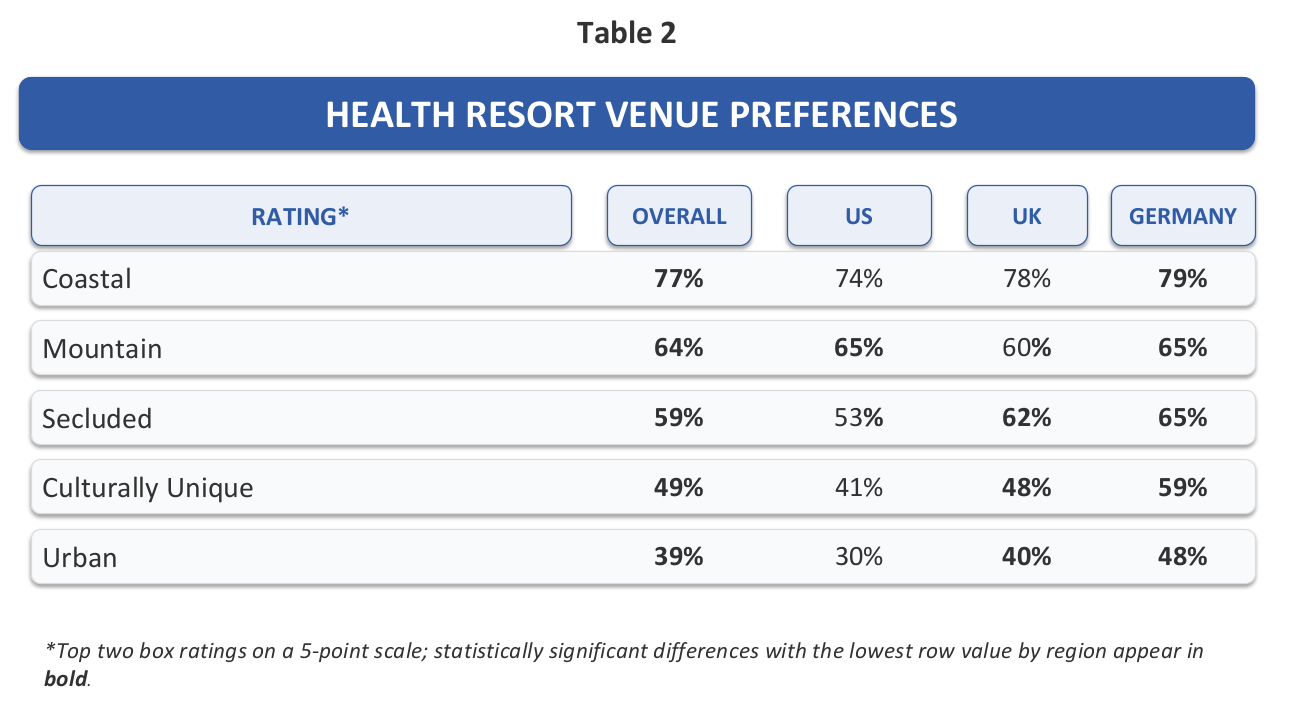
WELLSurvey 2.0 also examined respondents' preferences for five different wellness hospitality venues. Preferences were equally distributed across respondents by country of origin for the most popular venues (coastal and mountain), while German respondents expressed much higher preference for secluded, culturally unique, and urban venues. These results appear in Table 2 Health Resort Venue Preferences.
Toward brand differentiation
WELLSurvey 2.0 confirmed what many astute industry practitioners have come to realise in recent years: true brand differentiation in the category requires an understanding of the key differences between programming designed to enhance wellness and programming designed to enhance wellbeing because consumers believe these are different outcome states defined by the associated benefits.
Furthermore, each type of programming must be described and communicated in a different manner to clarify its distinction and expected outcome. To be truly differentiated, wellbeing experiences must evolve beyond the boundaries of a typical wellness resort stay, linking pre-visit assessments and preparation with immersive destination programming and post-visit continuity and guidance. When integrated successfully, these elements coalesce as part of a guest’s wellbeing ecosystem rather than a series of episodic and disconnected experiences.
While individual components – such as spa therapies, fitness programs, or biometric tracking – are widely adopted, their systematic integration within wellness hospitality brand environments is limited. Few currently integrate evidence-based programming, measurable feedback, professional guidance, and continuity beyond a guest’s stay into a unified wellbeing ecosystem.
This gap helps explain why high participation in wellness behaviours has failed to translate into meaningful brand preference. Consumers are actively engaged in the category, but it has not fully matured around a clearly differentiated structural model. The competitive opportunity that derives from this insight is evident: future offerings must be organized into an integrated, evidence-aligned wellbeing ecosystem with a coherent architecture while expanding wellness programming that confers quality and credibility.
Brands that connect destination experiences to a broader lifestyle framework, supported by evidence-based claims, shared taxonomies, professional guidance, measurable feedback, and continuity before and after the stay, will be well-positioned to avoid commoditisation. The wellness resort stay will remain a critical experiential touchpoint. Yet, as consumers increasingly evaluate wellbeing as an integrated, long-term system, resort experiences cannot function in isolation. They must connect into a broader architecture that supports sustained emotional equilibrium and long-term vitality. This dynamic is particularly important to 25 to 44-year-olds who seek the most varied and interconnected programming and show the least tolerance for fragmentation.
New category of travel
With participation high and brand preference diffuse, wellness immersion destinations and hospitality brands are gradually converging to define a new category of leisure travel, one we call WELLTravel*. But their operating models need to adapt to attract the growing share of the consumers who are interested in enhancing their wellbeing. This is not a trivial shift. Hospitality operators already manage complex systems of reservations, staffing, programming, guest experience, and luxury service delivery and their instinct is often to simplify by integrating wellness into existing hospitality service lines. Doing so risks the dilution of brand differentiation and the acceleration of commoditisation, however. But achieving category leadership will require more than delivering exceptional experiences during a hotel or resort stay. Guests must come to consider the wellness hospitality brand as part of the ecosystem that guides their journey toward wellbeing and longevity. Brands that adapt their product and service strategies to accommodate this emerging need will be rewarded with the spoils of category leadership: a greater share of consumers’ patronage and loyalty.
*WELLSurvey, WELLZoomers and WELLTravel are trademarks of Civano Advisory Services, LLC