Latest
issue
Uniting the world of spa & wellness
Get Spa Business and Spa Business insider digital magazines FREE
Sign up here ▸
News   Features   Products   Company profilesProfiles   Press releasesProfiles   Magazine   Handbook   Advertise    Subscribe  
NEWS
Benefits of aerobic exercise may be lost in those with increased blood sugar levels
POSTED 18 Aug 2020 . BY Tom Walker
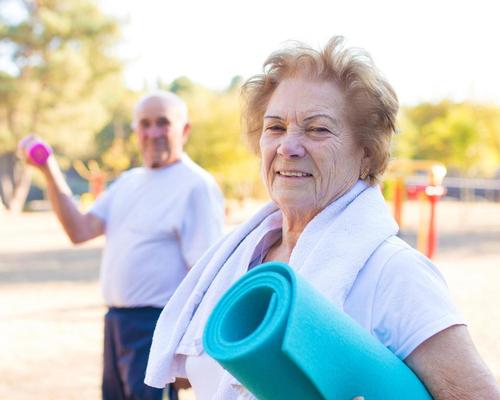
According to the researchers, the results strengthen the view that diet and exercise should not be treated as separate ways to improve health Credit: Shutterstock.com/EvMedvedeva
Research has suggested that some of the benefits of aerobic exercise may be reduced by higher-than-normal blood sugar levels – a condition known as hyperglycemia.

A team of scientists at Joslin Diabetes Center in Boston, US propose that high levels of blood sugar may prevent muscle remodeling in part by modifying the “extracellular matrix” proteins in the space between the muscle cells, where blood vessels are formed.

According to the researchers, the results strengthen the view that diet and exercise should not be treated as separate ways to improve health – as there is "more interaction between these two lifestyle factors than what was previously known".

Previous clinical studies have demonstrated that people with diabetes or chronically high levels of blood sugar struggle to improve their aerobic exercise capacity compared to people with normal blood sugar levels.

For the research, the team at Joslin studied two groups. The first consumed a Western diet, high in sugar and saturated fat, which caused some weight gain in addition to hyperglycemia.

The other group was modified to produce less insulin, which caused similar increases in blood sugar as the Western diet, even though the subjects ate a diet lower in sugar and fat and maintained normal body weight.

Both groups were subjected to a training protocol to boost their aerobic fitness.

In both hyperglycemic groups, the subjects failed to improve their aerobic exercise capacity compared to those with lower blood sugar levels.

In follow-up clinical tests with young adult volunteers, the Joslin scientists found that those who had higher blood sugar levels in response to ingesting glucose, a condition known as impaired glucose tolerance, showed the lowest aerobic exercise capacity.

The research was led by Joslin's Sarah Lessard, who has previously demonstrated that a biological pathway known as the “JNK” signaling pathway can act as a kind of molecular switch to tell muscle cells to adapt to either aerobic or strength training.

The scientists found that the JNK pathway signals were getting crossed in those with hyperglycemia, by activating pathways associated with strength training, even though they were performing aerobic exercise.

“As a result, the muscles of those with hyperglycemia have bigger fibers and fewer blood vessels, which is more typical of strength training, rather than aerobic training,” Lessard said.

Lessard's team also conducted follow-up clinical tests with young adult volunteers, which found that those who had higher blood sugar levels in response to ingesting glucose, a condition known as impaired glucose tolerance, showed the lowest aerobic exercise capacity.

“Looking at how their muscles responded to a single bout of typical aerobic exercise, we also saw that those with the lowest glucose tolerance had the highest activation of the JNK signalling pathway, which blocks aerobic adaptations,” Lessard added.

“The good news is, however, that although those with hyperglycemia failed to improve aerobic fitness with training, they still achieved other important health benefits from the exercise, including decreased fat mass and improved glucose metabolism.

“So, regular aerobic exercise is still a key recommendation for maintaining health in people with or without hyperglycemia.

"And it is important to note that people with hyperglycemia also can benefit from other forms of exercise, such as strength training, which is recommended for maintaining health."

Overall, the study suggests several approaches that might help people with chronic hyperglycemia eventually overcome the obstacles to building aerobic capacity. One is to adopt a diet designed to keep blood sugar levels low. Another is to take existing diabetes drugs designed to keep blood sugar levels in normal ranges.

“We often think of diet and exercise as separate ways to improve our health,” Lessard says.

“But our work shows that there is more interaction between these two lifestyle factors than what was previously known, and suggests that we may want to consider them together in order to maximise the health benefits of aerobic exercise.”

RELATED STORIES
  Study: aerobic exercise improves memory by boosting blood flow to the brain


Aerobic exercise boosts blood flow into two key regions of the brain associated with memory, which can result in improved cognition even in older populations.
  Research links genetic mutation with inability to exercise


Researchers have discovered a genetic mutation that could reduce a patient’s ability to exercise efficiently.
MORE NEWS
Turkey is crowned the best massage nation at world championship
Turkey came first at this year’s World Championship in Massage between 3-5 July in Copenhagen, Denmark.
The Wellness Tourism Association publishes industry framework for ethical and responsible retreats
The Wellness Tourism Association (WTA) has published a non-regulatory global industry framework designed to ensure the retreat market offers responsible experiences.
One in three spa practitioners have considered leaving the industry due to concerns about their own wellbeing
A new survey of UK and international spa practitioners shows that stress, burnout and wellbeing concerns have caused one in three respondents to consider leaving the industry.
UK updates physical activity guidelines with focus on daily movement
The UK's four Chief Medical Officers have published a refreshed edition of Physical activity guidelines: UK Chief Medical Officers' report, updating the evidence that underpins the nation's physical activity recommendations and placing greater emphasis on strength, balance, reducing sedentary behaviour and, for the first time, supporting people taking weight loss medications.
+ More news   

FEATURED SUPPLIERS

Embrace the chill: TechnoAlpin's Snowsky revolutionises post-fitness recovery with falling snow
In the fast-paced world of fitness and wellness, where high-intensity workouts push us to our limits and the sweat pours, the importance of efficient recovery cannot be overstated. [more...]

MSpa Oslo series: a timeless bestseller
The MSpa Oslo series is a perennial bestseller in global markets. With innovative engineering and premium performance, this completely portable spa line-up is expertly designed to meet the needs of customers worldwide. [more...]
+ More featured suppliers  
COMPANY PROFILES
Fenix Group srl

Founded in Italy by Gianluca Cavalletti, Fenix Group introduced Endospheres with the aim of redefini [more...]
Oakworks Inc

Oakworks is a US-based FSC-certified manufacturer of spa, massage, and medical equipment. [more...]
+ More profiles  
CATALOGUE GALLERY
 

+ More catalogues  

DIRECTORY
+ More directory  
DIARY


23-26 Aug 2026

Elevate Spa Riviera Maya Edition

The Riviera Maya Edition Kanai, Playa del Carmen, Mexico
10-12 Sep 2026

ASEAN Patio Pool Spa Expo 2026

MITEC Kuala Lumpur,Malaysia, Malaysia
+ More diary  
 
ABOUT LEISURE MEDIA
LEISURE MEDIA MAGAZINES
LEISURE MEDIA HANDBOOKS
LEISURE MEDIA WEBSITES
LEISURE MEDIA PRODUCT SEARCH
 
SPA BUSINESS
SPA OPPORTUNITIES
SPA BUSINESS HANDBOOK
PRINT SUBSCRIPTIONS
FREE DIGITAL SUBSCRIPTIONS
ADVERTISE . CONTACT US

Leisure Media
Tel: +44 (0)1462 431385

©Cybertrek 2026
Uniting the world of spa & wellness
Get Spa Business and Spa Business insider digital magazines FREE
Sign up here ▸
News   Products   Magazine   Subscribe
NEWS
Benefits of aerobic exercise may be lost in those with increased blood sugar levels
POSTED 18 Aug 2020 . BY Tom Walker
According to the researchers, the results strengthen the view that diet and exercise should not be treated as separate ways to improve health Credit: Shutterstock.com/EvMedvedeva
Research has suggested that some of the benefits of aerobic exercise may be reduced by higher-than-normal blood sugar levels – a condition known as hyperglycemia.

A team of scientists at Joslin Diabetes Center in Boston, US propose that high levels of blood sugar may prevent muscle remodeling in part by modifying the “extracellular matrix” proteins in the space between the muscle cells, where blood vessels are formed.

According to the researchers, the results strengthen the view that diet and exercise should not be treated as separate ways to improve health – as there is "more interaction between these two lifestyle factors than what was previously known".

Previous clinical studies have demonstrated that people with diabetes or chronically high levels of blood sugar struggle to improve their aerobic exercise capacity compared to people with normal blood sugar levels.

For the research, the team at Joslin studied two groups. The first consumed a Western diet, high in sugar and saturated fat, which caused some weight gain in addition to hyperglycemia.

The other group was modified to produce less insulin, which caused similar increases in blood sugar as the Western diet, even though the subjects ate a diet lower in sugar and fat and maintained normal body weight.

Both groups were subjected to a training protocol to boost their aerobic fitness.

In both hyperglycemic groups, the subjects failed to improve their aerobic exercise capacity compared to those with lower blood sugar levels.

In follow-up clinical tests with young adult volunteers, the Joslin scientists found that those who had higher blood sugar levels in response to ingesting glucose, a condition known as impaired glucose tolerance, showed the lowest aerobic exercise capacity.

The research was led by Joslin's Sarah Lessard, who has previously demonstrated that a biological pathway known as the “JNK” signaling pathway can act as a kind of molecular switch to tell muscle cells to adapt to either aerobic or strength training.

The scientists found that the JNK pathway signals were getting crossed in those with hyperglycemia, by activating pathways associated with strength training, even though they were performing aerobic exercise.

“As a result, the muscles of those with hyperglycemia have bigger fibers and fewer blood vessels, which is more typical of strength training, rather than aerobic training,” Lessard said.

Lessard's team also conducted follow-up clinical tests with young adult volunteers, which found that those who had higher blood sugar levels in response to ingesting glucose, a condition known as impaired glucose tolerance, showed the lowest aerobic exercise capacity.

“Looking at how their muscles responded to a single bout of typical aerobic exercise, we also saw that those with the lowest glucose tolerance had the highest activation of the JNK signalling pathway, which blocks aerobic adaptations,” Lessard added.

“The good news is, however, that although those with hyperglycemia failed to improve aerobic fitness with training, they still achieved other important health benefits from the exercise, including decreased fat mass and improved glucose metabolism.

“So, regular aerobic exercise is still a key recommendation for maintaining health in people with or without hyperglycemia.

"And it is important to note that people with hyperglycemia also can benefit from other forms of exercise, such as strength training, which is recommended for maintaining health."

Overall, the study suggests several approaches that might help people with chronic hyperglycemia eventually overcome the obstacles to building aerobic capacity. One is to adopt a diet designed to keep blood sugar levels low. Another is to take existing diabetes drugs designed to keep blood sugar levels in normal ranges.

“We often think of diet and exercise as separate ways to improve our health,” Lessard says.

“But our work shows that there is more interaction between these two lifestyle factors than what was previously known, and suggests that we may want to consider them together in order to maximise the health benefits of aerobic exercise.”

RELATED STORIES
Study: aerobic exercise improves memory by boosting blood flow to the brain


Aerobic exercise boosts blood flow into two key regions of the brain associated with memory, which can result in improved cognition even in older populations.
Research links genetic mutation with inability to exercise


Researchers have discovered a genetic mutation that could reduce a patient’s ability to exercise efficiently.
MORE NEWS
Turkey is crowned the best massage nation at world championship
Turkey came first at this year’s World Championship in Massage between 3-5 July in Copenhagen, Denmark.
The Wellness Tourism Association publishes industry framework for ethical and responsible retreats
The Wellness Tourism Association (WTA) has published a non-regulatory global industry framework designed to ensure the retreat market offers responsible experiences.
One in three spa practitioners have considered leaving the industry due to concerns about their own wellbeing
A new survey of UK and international spa practitioners shows that stress, burnout and wellbeing concerns have caused one in three respondents to consider leaving the industry.
UK updates physical activity guidelines with focus on daily movement
The UK's four Chief Medical Officers have published a refreshed edition of Physical activity guidelines: UK Chief Medical Officers' report, updating the evidence that underpins the nation's physical activity recommendations and placing greater emphasis on strength, balance, reducing sedentary behaviour and, for the first time, supporting people taking weight loss medications.
Sauna advocate Becky Pelkonen drafts global public sauna-bathing charter
Becky Pelkonen, the sauna advocate and researcher, has unveiled the draft of a global public sauna-bathing charter.
Marriott International partners with Fitwel for wellness solutions across its residential portfolio
Marriott International has partnered with Fitwel, a healthy building certification system that aims to optimise occupant health.
+ More news   
 
FEATURED SUPPLIERS

Embrace the chill: TechnoAlpin's Snowsky revolutionises post-fitness recovery with falling snow
In the fast-paced world of fitness and wellness, where high-intensity workouts push us to our limits and the sweat pours, the importance of efficient recovery cannot be overstated. [more...]

MSpa Oslo series: a timeless bestseller
The MSpa Oslo series is a perennial bestseller in global markets. With innovative engineering and premium performance, this completely portable spa line-up is expertly designed to meet the needs of customers worldwide. [more...]
+ More featured suppliers  
COMPANY PROFILES
Fenix Group srl

Founded in Italy by Gianluca Cavalletti, Fenix Group introduced Endospheres with the aim of redefini [more...]
+ More profiles  
CATALOGUE GALLERY
+ More catalogues  

DIRECTORY
+ More directory  
DIARY


23-26 Aug 2026

Elevate Spa Riviera Maya Edition

The Riviera Maya Edition Kanai, Playa del Carmen, Mexico
10-12 Sep 2026

ASEAN Patio Pool Spa Expo 2026

MITEC Kuala Lumpur,Malaysia, Malaysia
+ More diary  


ADVERTISE . CONTACT US

Leisure Media
Tel: +44 (0)1462 431385

©Cybertrek 2026

ABOUT LEISURE MEDIA
LEISURE MEDIA MAGAZINES
LEISURE MEDIA HANDBOOKS
LEISURE MEDIA WEBSITES
LEISURE MEDIA PRODUCT SEARCH
PRINT SUBSCRIPTIONS
FREE DIGITAL SUBSCRIPTIONS