Latest
issue
GET SPA BUSINESS
magazine
Yes! Send me the FREE digital editions of Spa Business and Spa Business insider magazines and the FREE weekly Spa Business and Spa Business insider ezines and breaking news alerts!
Not right now, thanksclose this window I've already subscribed.
Uniting the world of spa & wellness
Get Spa Business and Spa Business insider digital magazines FREE
Sign up here ▸
News   Features   Products   Company profilesProfiles   Press releasesProfiles   Magazine   Handbook   Advertise    Subscribe  
NEWS
New GWI study unveils global wellness market leaders: US, China and Germany
POSTED 30 Jan 2024 . BY Megan Whitby
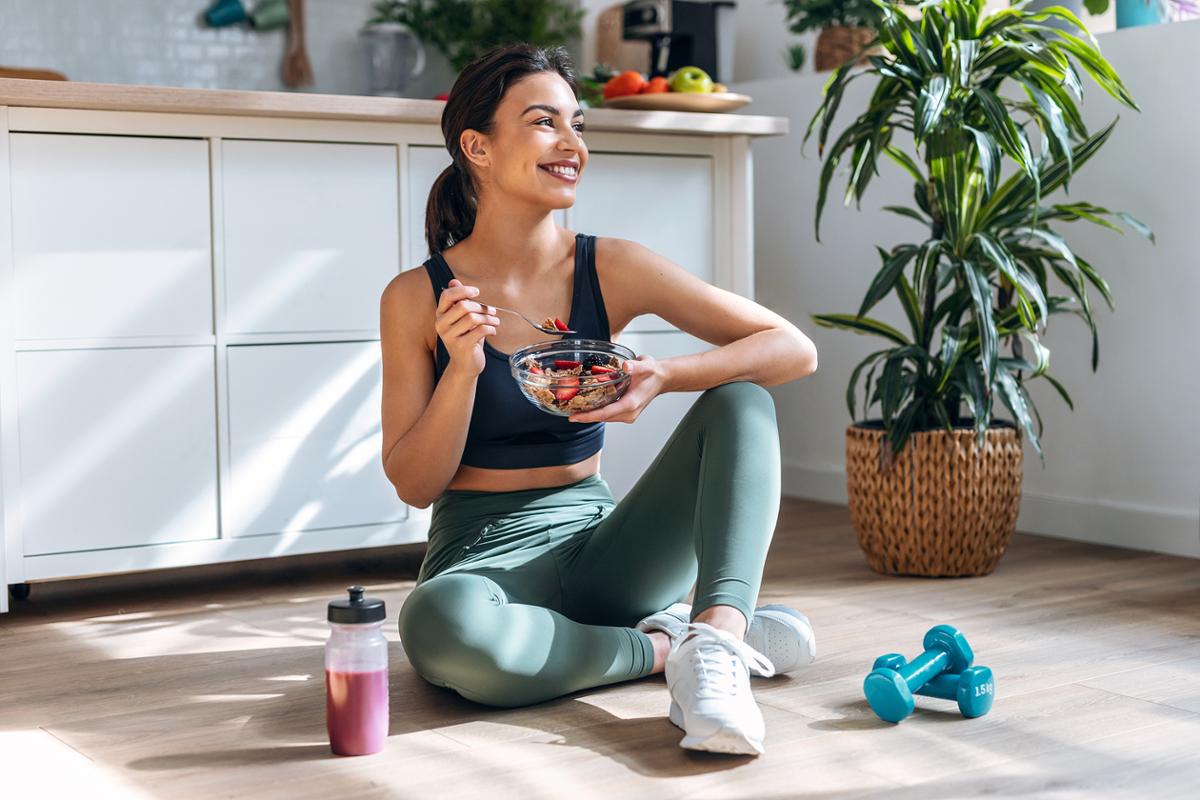
Declared the world's largest wellness market, the US' highest achieving sector is healthy eating, nutrition and weight loss Credit: Shutterstock/Josep Suria
The GWI has published new, in-depth research on 145 national wellness markets
Findings indicate the three biggest are the US (US$1.8 trillion), China (US$790 billion) and Germany (US$269 billion)
Global consumers now spend as much on wellness per capita as on healthcare
The top ten largest markets represent 70 per cent of the global wellness economy
The US, China, Germany, Japan and the UK have been identified as the world’s five largest wellness markets in new research released today by the Global Wellness Institute (GWI).

Called The Global Wellness Economy: Country Rankings, the new study provides market size, rankings, analysis and per capita wellness spending for 145 nations.

Findings show the US remains the undisputed goliath in wellness spending, with an annual market worth US$1.8 trillion, and ranking first in nine of the 11 wellness sectors measured by the GWI.

Almost all the top 25 wellness markets have seen strong growth since the pandemic, with the UK, the Netherlands, the US, Mexico, Canada and Australia as standouts, surpassing their pre-pandemic market sizes by 120 per cent or more.

Globally, the wellness economy drives 5.6 per cent of total GDP, which, according to the GWI, means one in every 20 “dollars” spent by consumers worldwide is on wellness.

To put this wellness spending in context, the research finds that annual, global per capita spending on wellness (US$706) is on par with consumer out-of-pocket spending on healthcare (US$711).

At the regional level, per capita wellness spending is higher than consumer out-of-pocket spending on healthcare across every region except North America. And wellness spending per capita is higher than spending on clothing/shoes (US$289) and hotels/restaurants (US$475) all across the world (Euromonitor data).

In countries like Switzerland, Iceland and the US, people spend far more: on average, over US$5,300 a year on wellness.

“For countries interested in growing their wellness economy, it’s crucial to know where they stand in this massive global industry,” said Ophelia Yeung and Katherine Johnston, GWI senior research fellows.

“It’s also important to see how different countries’ wellness markets have responded to the impacts of the pandemic.”

The report is a sister publication to GWI’s recent 2023 Global Wellness Economy Monitor, a complete global update on all 11 wellness sectors.

Top 25 national wellness markets

Numbers refer to market size and annual growth rate 2020-2022:

1) US – US$1.8 trillion – 14 per cent
2) China – US$790 billion – 8.9 per cent
3) Germany – US$269 billion – 16.8 per cent
4) Japan – US$241 billion – minus 3.9 per cent
5) UK – US$224 billion – 19.4 per cent
6) France – US$172 billion – 11.6 per cent
7) India – US$132.5 billion – 16.5 per cent
8) Canada – US$128 billion – 13.5 per cent
9) S. Korea – US$113 billion – 9.4 per cent
10) Italy – US$112 billion – 7.9 per cent
11) Australia – US$110 billion – 12.9 per cent
12) Brazil – US$96 billion – 18.2 per cent
13) Russia – US$94.5 billion – 13.2 per cent
14) Spain – US$83 billion – 12.4 per cent
15) Mexico – US$74 billion – 25.2 per cent
16) Netherlands – US$50 billion – 12.1 per cent
17) Switzerland – US$50 billion – 14.5 per cent
18) Indonesia – US$49 billion – 5.9 per cent
19) Turkey – US$45 billion – 14 per cent
20) Taiwan – US$43 billion – 5.1 per cent
21) Austria – US$42 billion – 13.9 per cent
22) Philippines – US$41 billion – 8.9 per cent
23) Poland – US$39 billion – 11.1 per cent
24) Thailand – US$35 billion – 8.5 per cent
25) Sweden – US$30 billion – 7.5 per cent

The top 10 largest markets represent 70 per cent of the global wellness economy, while the top 25 represent 86 per cent.

The GWI found that the vast majority of the 25 largest wellness markets have seen robust recent growth. Comparing market sizes in 2019 vs. 2022, 22 of 25 countries (except Thailand, Japan and Brazil) are now larger than pre-pandemic, as measured in US dollars.

But the GWI says it’s important to note that currency depreciation impacts data for countries like Japan, Brazil and some eurozone countries like Germany, France and Italy. For instance, the Japanese yen fell by 19.8 per cent against the US dollar in 2022, so if it looks like its wellness market shrank by 3.9 per cent annually from 2020 to 2022 in dollars, it actually grew 6.6 per cent each year when measured in yen.

Wellness spending per capita: top 12 countries

1) Seychelles – US$8,097
2) Switzerland – US$5,737
3) Iceland – US$5,523
4) Aruba – US$5,361
5) US – US$5,321
6) Austria – US$4,683
7) Australia – US$4,218
8) Norway – US$4,197
9) Denmark – US$3,846
10) New Zealand – US$3,689
11) UK – US$3,342
12)Canada – US$3,287

The GWI discovered that spending on wellness is highest in wealthy countries that also rank in the top 25 for GDP per capita, including Switzerland, Iceland, the US, Austria and Australia.

Those countries have seen significant recent growth in wellness spending (per capita): in the US that spend has risen US$1,636 – and in Switzerland US$1,365 – between 2020 and 2022.

While it may be surprising to see small countries like the Seychelles and Aruba so high on this list (the Maldives and the Bahamas also rank in the top 25), the GWI says it’s because these islands are major high-end wellness tourism destinations, with a large portion (50-90 per cent) of their wellness spending coming from inbound wellness tourists rather than locals.

The GWI describes the impact of the wellness market – heavily dominated by inbound wellness tourism – on these countries’ economies as “staggering”. In the Seychelles, the wellness market accounts for 42 per cent of the total economy, while in the Maldives that number is 22.6 per cent.

The ratio of how much the wellness economy contributes to GDP is highest in North America (6.9 per cent) and Europe (5.8 per cent) – and lowest in the Middle East-North Africa region, at 3.3 per cent.

North America and Europe’s wellness markets have been growing faster than the overall economy. Among the top 25 wellness markets, some of the countries where wellness makes up a bigger percentage of GDP are the Philippines (10.1 per cent), Austria (9 per cent), the UK (7.3 per cent), the US (7 per cent) and South Korea (6.8 per cent).

RELATED STORIES
  FEATURE: News report: Peak performance


Fresh research shows the global wellness economy is now worth US$5.6 trillion
  FEATURE: Event report: Global Wellness Summit 2023


International spa figures convened in Miami for the 15th Global Wellness Summit. Jane Kitchen reveals her top takeaways
  Global wellness economy reaches record-breaking $5.6trn – predicted to hit $8.5trn by 2027


The global wellness economy will be worth US$8.5 trillion by 2027, according to new research unveiled by the Global Wellness Institute (GWI).
  Japan named world’s third biggest wellness economy, worth US$303 billion


Japan has the third largest wellness economy globally – worth US$303 billion (£242.6 billion, €283 billion) – according to data from the Global Wellness Institute (GWI).
MORE NEWS
Sauna advocate Becky Pelkonen drafts global public sauna-bathing charter
Becky Pelkonen, the sauna advocate and researcher, has unveiled the draft of a global public sauna-bathing charter.
Marriott International partners with Fitwel for wellness solutions across its residential portfolio
Marriott International has partnered with Fitwel, a healthy building certification system that aims to optimise occupant health.
Anna Bjurstam steps down from Six Senses to build new company Wahayla
Anna Bjurstam has left her role as Wellness Pioneer at Six Senses Hotels and Resorts and launched a new wellness, longevity and “consciousness consultancy” called Wahayla.
Fairmont Cheshire, The Mere, opens with spa philosophy of ‘Wellness without Walls’
Fairmont Cheshire, The Mere, has opened today (10 July) in the Northwest of England with a 1,715sq m Fairmont Spa that has been designed using a ‘Wellness without Walls’ concept.
+ More news   

FEATURED SUPPLIERS

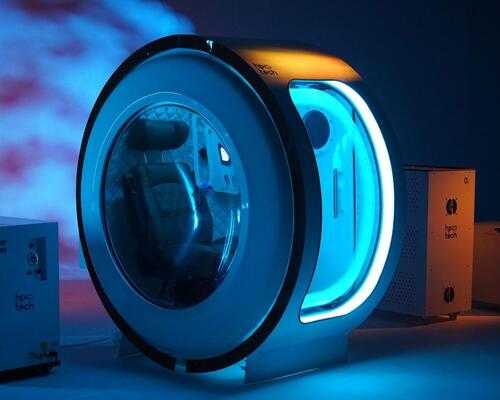
HPO Tech brings design-led hyperbaric systems to the spa floor
Hyperbaric oxygen therapy has moved well beyond the clinic and spa operators represent the fastest-growing market for the technology. [more...]

Zerobody Cryo: Starpool's contrast therapy solution
Contrast therapy, based on the alternation of hot and cold rituals, has become one of the most valued practices in the fields of wellness and recovery. [more...]
+ More featured suppliers  
COMPANY PROFILES
Comfort Zone

Comfort Zone’s comprehensive face and body professional and retail range allows clients to experien [more...]
Elemis

Elemis was founded in London in 1989 by Linda Steiner whose vision was to create a skincare range as [more...]
+ More profiles  
CATALOGUE GALLERY
 

+ More catalogues  

DIRECTORY
+ More directory  
DIARY


23-26 Aug 2026

Elevate Spa Riviera Maya Edition

The Riviera Maya Edition Kanai, Playa del Carmen, Mexico
10-12 Sep 2026

ASEAN Patio Pool Spa Expo 2026

MITEC Kuala Lumpur,Malaysia, Malaysia
+ More diary  
 
ABOUT LEISURE MEDIA
LEISURE MEDIA MAGAZINES
LEISURE MEDIA HANDBOOKS
LEISURE MEDIA WEBSITES
LEISURE MEDIA PRODUCT SEARCH
 
SPA BUSINESS
SPA OPPORTUNITIES
SPA BUSINESS HANDBOOK
PRINT SUBSCRIPTIONS
FREE DIGITAL SUBSCRIPTIONS
ADVERTISE . CONTACT US

Leisure Media
Tel: +44 (0)1462 431385

©Cybertrek 2026
Uniting the world of spa & wellness
Get Spa Business and Spa Business insider digital magazines FREE
Sign up here ▸
News   Products   Magazine   Subscribe
NEWS
New GWI study unveils global wellness market leaders: US, China and Germany
POSTED 30 Jan 2024 . BY Megan Whitby
Declared the world's largest wellness market, the US' highest achieving sector is healthy eating, nutrition and weight loss Credit: Shutterstock/Josep Suria
The GWI has published new, in-depth research on 145 national wellness markets
Findings indicate the three biggest are the US (US$1.8 trillion), China (US$790 billion) and Germany (US$269 billion)
Global consumers now spend as much on wellness per capita as on healthcare
The top ten largest markets represent 70 per cent of the global wellness economy
The US, China, Germany, Japan and the UK have been identified as the world’s five largest wellness markets in new research released today by the Global Wellness Institute (GWI).

Called The Global Wellness Economy: Country Rankings, the new study provides market size, rankings, analysis and per capita wellness spending for 145 nations.

Findings show the US remains the undisputed goliath in wellness spending, with an annual market worth US$1.8 trillion, and ranking first in nine of the 11 wellness sectors measured by the GWI.

Almost all the top 25 wellness markets have seen strong growth since the pandemic, with the UK, the Netherlands, the US, Mexico, Canada and Australia as standouts, surpassing their pre-pandemic market sizes by 120 per cent or more.

Globally, the wellness economy drives 5.6 per cent of total GDP, which, according to the GWI, means one in every 20 “dollars” spent by consumers worldwide is on wellness.

To put this wellness spending in context, the research finds that annual, global per capita spending on wellness (US$706) is on par with consumer out-of-pocket spending on healthcare (US$711).

At the regional level, per capita wellness spending is higher than consumer out-of-pocket spending on healthcare across every region except North America. And wellness spending per capita is higher than spending on clothing/shoes (US$289) and hotels/restaurants (US$475) all across the world (Euromonitor data).

In countries like Switzerland, Iceland and the US, people spend far more: on average, over US$5,300 a year on wellness.

“For countries interested in growing their wellness economy, it’s crucial to know where they stand in this massive global industry,” said Ophelia Yeung and Katherine Johnston, GWI senior research fellows.

“It’s also important to see how different countries’ wellness markets have responded to the impacts of the pandemic.”

The report is a sister publication to GWI’s recent 2023 Global Wellness Economy Monitor, a complete global update on all 11 wellness sectors.

Top 25 national wellness markets

Numbers refer to market size and annual growth rate 2020-2022:

1) US – US$1.8 trillion – 14 per cent
2) China – US$790 billion – 8.9 per cent
3) Germany – US$269 billion – 16.8 per cent
4) Japan – US$241 billion – minus 3.9 per cent
5) UK – US$224 billion – 19.4 per cent
6) France – US$172 billion – 11.6 per cent
7) India – US$132.5 billion – 16.5 per cent
8) Canada – US$128 billion – 13.5 per cent
9) S. Korea – US$113 billion – 9.4 per cent
10) Italy – US$112 billion – 7.9 per cent
11) Australia – US$110 billion – 12.9 per cent
12) Brazil – US$96 billion – 18.2 per cent
13) Russia – US$94.5 billion – 13.2 per cent
14) Spain – US$83 billion – 12.4 per cent
15) Mexico – US$74 billion – 25.2 per cent
16) Netherlands – US$50 billion – 12.1 per cent
17) Switzerland – US$50 billion – 14.5 per cent
18) Indonesia – US$49 billion – 5.9 per cent
19) Turkey – US$45 billion – 14 per cent
20) Taiwan – US$43 billion – 5.1 per cent
21) Austria – US$42 billion – 13.9 per cent
22) Philippines – US$41 billion – 8.9 per cent
23) Poland – US$39 billion – 11.1 per cent
24) Thailand – US$35 billion – 8.5 per cent
25) Sweden – US$30 billion – 7.5 per cent

The top 10 largest markets represent 70 per cent of the global wellness economy, while the top 25 represent 86 per cent.

The GWI found that the vast majority of the 25 largest wellness markets have seen robust recent growth. Comparing market sizes in 2019 vs. 2022, 22 of 25 countries (except Thailand, Japan and Brazil) are now larger than pre-pandemic, as measured in US dollars.

But the GWI says it’s important to note that currency depreciation impacts data for countries like Japan, Brazil and some eurozone countries like Germany, France and Italy. For instance, the Japanese yen fell by 19.8 per cent against the US dollar in 2022, so if it looks like its wellness market shrank by 3.9 per cent annually from 2020 to 2022 in dollars, it actually grew 6.6 per cent each year when measured in yen.

Wellness spending per capita: top 12 countries

1) Seychelles – US$8,097
2) Switzerland – US$5,737
3) Iceland – US$5,523
4) Aruba – US$5,361
5) US – US$5,321
6) Austria – US$4,683
7) Australia – US$4,218
8) Norway – US$4,197
9) Denmark – US$3,846
10) New Zealand – US$3,689
11) UK – US$3,342
12)Canada – US$3,287

The GWI discovered that spending on wellness is highest in wealthy countries that also rank in the top 25 for GDP per capita, including Switzerland, Iceland, the US, Austria and Australia.

Those countries have seen significant recent growth in wellness spending (per capita): in the US that spend has risen US$1,636 – and in Switzerland US$1,365 – between 2020 and 2022.

While it may be surprising to see small countries like the Seychelles and Aruba so high on this list (the Maldives and the Bahamas also rank in the top 25), the GWI says it’s because these islands are major high-end wellness tourism destinations, with a large portion (50-90 per cent) of their wellness spending coming from inbound wellness tourists rather than locals.

The GWI describes the impact of the wellness market – heavily dominated by inbound wellness tourism – on these countries’ economies as “staggering”. In the Seychelles, the wellness market accounts for 42 per cent of the total economy, while in the Maldives that number is 22.6 per cent.

The ratio of how much the wellness economy contributes to GDP is highest in North America (6.9 per cent) and Europe (5.8 per cent) – and lowest in the Middle East-North Africa region, at 3.3 per cent.

North America and Europe’s wellness markets have been growing faster than the overall economy. Among the top 25 wellness markets, some of the countries where wellness makes up a bigger percentage of GDP are the Philippines (10.1 per cent), Austria (9 per cent), the UK (7.3 per cent), the US (7 per cent) and South Korea (6.8 per cent).

RELATED STORIES
FEATURE: News report: Peak performance


Fresh research shows the global wellness economy is now worth US$5.6 trillion
FEATURE: Event report: Global Wellness Summit 2023


International spa figures convened in Miami for the 15th Global Wellness Summit. Jane Kitchen reveals her top takeaways
Global wellness economy reaches record-breaking $5.6trn – predicted to hit $8.5trn by 2027


The global wellness economy will be worth US$8.5 trillion by 2027, according to new research unveiled by the Global Wellness Institute (GWI).

Japan named world’s third biggest wellness economy, worth US$303 billion


Japan has the third largest wellness economy globally – worth US$303 billion (£242.6 billion, €283 billion) – according to data from the Global Wellness Institute (GWI).

MORE NEWS
Sauna advocate Becky Pelkonen drafts global public sauna-bathing charter
Becky Pelkonen, the sauna advocate and researcher, has unveiled the draft of a global public sauna-bathing charter.
Marriott International partners with Fitwel for wellness solutions across its residential portfolio
Marriott International has partnered with Fitwel, a healthy building certification system that aims to optimise occupant health.
Anna Bjurstam steps down from Six Senses to build new company Wahayla
Anna Bjurstam has left her role as Wellness Pioneer at Six Senses Hotels and Resorts and launched a new wellness, longevity and “consciousness consultancy” called Wahayla.
Fairmont Cheshire, The Mere, opens with spa philosophy of ‘Wellness without Walls’
Fairmont Cheshire, The Mere, has opened today (10 July) in the Northwest of England with a 1,715sq m Fairmont Spa that has been designed using a ‘Wellness without Walls’ concept.
'Minor wellness hotels' recorded the strongest growth across top KPIs in 2025, finds RLA Global
Wellness hotels generating less than US$1 million (€932,700, £785,200) – or 10 per cent of total revenue from wellness and leisure – recorded the strongest RevPAR and TRevPAR growth in 2025 across categories when compared with 2024, according to the latest Wellness Real Estate Report by RLA Global, produced in partnership with P and L benchmarking firm HotStats.
Lefay Resorts introduces emotional dance classes to offer experiences that foster connection
Lefay Resorts, the portfolio of two luxury wellness properties in Italy, has added emotional dance classes and group cold plunge sessions in response to market demand for social connection.
+ More news   
 
FEATURED SUPPLIERS

HPO Tech brings design-led hyperbaric systems to the spa floor
Hyperbaric oxygen therapy has moved well beyond the clinic and spa operators represent the fastest-growing market for the technology. [more...]

Zerobody Cryo: Starpool's contrast therapy solution
Contrast therapy, based on the alternation of hot and cold rituals, has become one of the most valued practices in the fields of wellness and recovery. [more...]
+ More featured suppliers  
COMPANY PROFILES
Comfort Zone

Comfort Zone’s comprehensive face and body professional and retail range allows clients to experien [more...]
+ More profiles  
CATALOGUE GALLERY
+ More catalogues  

DIRECTORY
+ More directory  
DIARY


23-26 Aug 2026

Elevate Spa Riviera Maya Edition

The Riviera Maya Edition Kanai, Playa del Carmen, Mexico
10-12 Sep 2026

ASEAN Patio Pool Spa Expo 2026

MITEC Kuala Lumpur,Malaysia, Malaysia
+ More diary  


ADVERTISE . CONTACT US

Leisure Media
Tel: +44 (0)1462 431385

©Cybertrek 2026

ABOUT LEISURE MEDIA
LEISURE MEDIA MAGAZINES
LEISURE MEDIA HANDBOOKS
LEISURE MEDIA WEBSITES
LEISURE MEDIA PRODUCT SEARCH
PRINT SUBSCRIPTIONS
FREE DIGITAL SUBSCRIPTIONS