Latest
issue
Uniting the world of spa & wellness
Get Spa Business and Spa Business insider digital magazines FREE
Sign up here ▸
News   Features   Products   Company profilesProfiles   Press releasesProfiles   Magazine   Handbook   Advertise    Subscribe  
NEWS
Asleep somewhere new, one brain hemisphere keeps watch
POSTED 29 Apr 2016 . BY Jane Kitchen
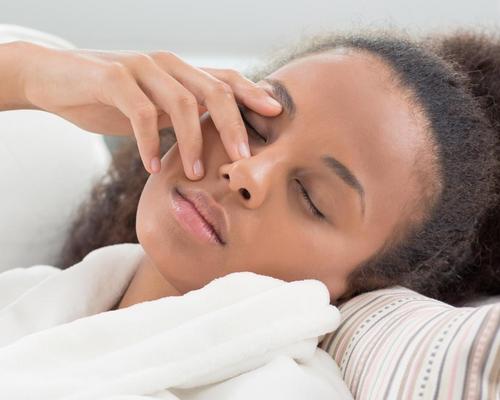
On the first night in a new place, the research suggests, one brain hemisphere remains more awake than the other during deep sleep, apparently in a state of readiness for trouble Credit: Shutterstock/LuckyImages
People who go to bed wary of potential danger sometimes pledge to sleep "with one eye open." A new Brown University study finds that isn't too far off.

On the first night in a new place, the research suggests, one brain hemisphere remains more awake than the other during deep sleep, apparently in a state of readiness for trouble.

The study in Current Biology explains what underlies the "first-night effect," a phenomenon that poses an inconvenience to business travellers and sleep researchers alike.

Sleep is often noticeably worse during the first night in, say, a hotel or a sleep lab. In the latter context, researchers usually have to build an "adaptation night" into their studies to do their experiments. This time around, the team at Brown investigated the first-night effect, rather than factoring it out.

"In Japan they say, 'if you change your pillow, you can't sleep,'" said corresponding author Yuka Sasaki, research associate professor of cognitive linguistic and psychological sciences at Brown. "You don't sleep very well in a new place. We all know about it."

Sasaki and lead author Masako Tamaki wanted to figure out why. Over the course of three experiments, their team used several methods to precisely measure brain activity during two nights of slumber, a week apart, among a total of 35 volunteers.

They consistently found that on the first night in the lab, a particular network in the left hemisphere remained more active than in the right hemisphere, specifically during a deep sleep phase known as "slow-wave" sleep.

"To our best knowledge, regional asymmetric slow-wave activity associated with the first-night effect has never been reported in humans," the authors wrote.

To make the novel findings, the researchers used electroencephalography, magnetoencephelography, and magnetic resonance imaging to make unusually high-resolution and sensitive measurements with wide brain coverage.

Sasaki said it's not known yet why the brain only maintains an alert state in just one hemisphere -- whether it's always the left or in alternation with the right.

There are many examples among animals, however, of hemispheric asymmetry during slow-wave sleep. Marine mammals exhibit it, Sasaki said, presumably because they regularly need to resurface to breathe, even during sleep.

Now it's been found in humans as a first-night phenomenon.

"The present study has demonstrated that when we are in a novel environment, inter-hemispheric asymmetry occurs in regional slow-wave activity, vigilance and responsiveness, as a night watch to protect ourselves," the study concludes.

RELATED STORIES
  Irregular sleep schedules linked to adverse metabolic health in women


A new study published in this month’s issue of Sleep magazine suggests that women with irregular sleep cycles are more likely to have a higher body mass index and an increase in insulin resistance – two indicators of adverse metabolic health.
  Time to sleep in the spa, says Wdson Brum


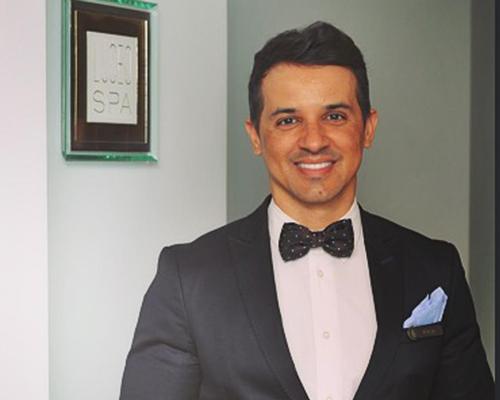
Spa clients are often so relaxed at the end of a treatment, they fall asleep, so why not incorporate that ultimate indulgence into the treatment, says Wdson Brum, director of spa at Four Seasons Hotel Lion Palace in St. Petersburg.
  Weight loss through diet changes can improve sleep at any body weight: study


Weight loss due to dietary changes can improve sleepiness at any weight, says a new study published by researchers from the Perelman School of Medicine at the University of Pennsylvania this month in the journal Sleep. The findings offer new insights into how weight fluctuations impact numerous aspects of sleep independent of body weight.
  Six Senses launching yogic sleep programme


With lack of sleep plaguing an increasing number of people, Six Senses Spas has added yogic sleep to its recently launched yogic programmes at all of its Six Senses Resorts and Six Senses Spas. Running from three to 14 nights, the programmes are designed to boost the quality of relaxation to improve sleep, and will combine yoga nidra, pranayama and gentle yoga practice in combination with relaxing spa treatments.
MORE NEWS
Hoshino Resorts combats summer heat with medically-supervised cool bathing programme for KAI onsen
Hoshino Resorts has developed a “Cool-down onsen soak” programme at properties with Japanese onsen facilities – those within the company’s KAI brand.
Rainforest immersion and mindfulness are on offer at The Ritz-Carlton, Langkawi, for Global Wellness Day
The Ritz-Carlton, Langkawi, in Malaysia, has revealed a schedule for Global Wellness Day (GWD) that includes guided rainforest walks, mindful movement and guided coastal meditation experiences.
Longevitix launches AI-powered platform to deliver longevity medicine at scale
Longevitix, a clinical platform for preventive and longevity medicine, has launched its AI- powered intelligence system to help physicians deliver continuous, personalised longevity- focused care at scale.
Atmantan Wellness Centre announces new wellness destination in Hyderabad
Atmantan Wellness Centre, an integrative wellness destination in Mulshi, near Pune in India, is expanding its portfolio by adding a new centre in Hyderabad that will launch between 2028 and 2029.
+ More news   

FEATURED SUPPLIERS

Meet Desert Therapy: Aromatherapy Associates' first new blend in seven years
There is a particular quality of stillness found only in the desert. [more...]

Introducing Silent Loads: Wildsmith’s newest advancement in personalised wellbeing
In a world where imbalance often accumulates quietly, Wildsmith unveils its newest wellbeing innovation: Silent Loads, an approach designed to meet the needs of modern spa guests with precision and depth. [more...]
+ More featured suppliers  
COMPANY PROFILES
Agilysys UK Ltd

Agilysys, Inc. (Nasdaq: AGYS), is a leading global provider of hospitality software solutions that [more...]
Kemitron GmbH

Our portfolio is divided into four product areas; Technology, Fragrances, Disinfectant and Cleaners [more...]
+ More profiles  
CATALOGUE GALLERY
 

+ More catalogues  

DIRECTORY
+ More directory  
DIARY


09-11 Jun 2026

World Sauna Forum 2026

Savutuvan Apaja, Haapaniemi, Finland
09-12 Jun 2026

W3Spa EMEA

Hotel Cascais Miragem Health & Spa, Portugal
+ More diary  
 
ABOUT LEISURE MEDIA
LEISURE MEDIA MAGAZINES
LEISURE MEDIA HANDBOOKS
LEISURE MEDIA WEBSITES
LEISURE MEDIA PRODUCT SEARCH
 
SPA BUSINESS
SPA OPPORTUNITIES
SPA BUSINESS HANDBOOK
PRINT SUBSCRIPTIONS
FREE DIGITAL SUBSCRIPTIONS
ADVERTISE . CONTACT US

Leisure Media
Tel: +44 (0)1462 431385

©Cybertrek 2026
Uniting the world of spa & wellness
Get Spa Business and Spa Business insider digital magazines FREE
Sign up here ▸
News   Products   Magazine   Subscribe
NEWS
Asleep somewhere new, one brain hemisphere keeps watch
POSTED 29 Apr 2016 . BY Jane Kitchen
On the first night in a new place, the research suggests, one brain hemisphere remains more awake than the other during deep sleep, apparently in a state of readiness for trouble Credit: Shutterstock/LuckyImages
People who go to bed wary of potential danger sometimes pledge to sleep "with one eye open." A new Brown University study finds that isn't too far off.

On the first night in a new place, the research suggests, one brain hemisphere remains more awake than the other during deep sleep, apparently in a state of readiness for trouble.

The study in Current Biology explains what underlies the "first-night effect," a phenomenon that poses an inconvenience to business travellers and sleep researchers alike.

Sleep is often noticeably worse during the first night in, say, a hotel or a sleep lab. In the latter context, researchers usually have to build an "adaptation night" into their studies to do their experiments. This time around, the team at Brown investigated the first-night effect, rather than factoring it out.

"In Japan they say, 'if you change your pillow, you can't sleep,'" said corresponding author Yuka Sasaki, research associate professor of cognitive linguistic and psychological sciences at Brown. "You don't sleep very well in a new place. We all know about it."

Sasaki and lead author Masako Tamaki wanted to figure out why. Over the course of three experiments, their team used several methods to precisely measure brain activity during two nights of slumber, a week apart, among a total of 35 volunteers.

They consistently found that on the first night in the lab, a particular network in the left hemisphere remained more active than in the right hemisphere, specifically during a deep sleep phase known as "slow-wave" sleep.

"To our best knowledge, regional asymmetric slow-wave activity associated with the first-night effect has never been reported in humans," the authors wrote.

To make the novel findings, the researchers used electroencephalography, magnetoencephelography, and magnetic resonance imaging to make unusually high-resolution and sensitive measurements with wide brain coverage.

Sasaki said it's not known yet why the brain only maintains an alert state in just one hemisphere -- whether it's always the left or in alternation with the right.

There are many examples among animals, however, of hemispheric asymmetry during slow-wave sleep. Marine mammals exhibit it, Sasaki said, presumably because they regularly need to resurface to breathe, even during sleep.

Now it's been found in humans as a first-night phenomenon.

"The present study has demonstrated that when we are in a novel environment, inter-hemispheric asymmetry occurs in regional slow-wave activity, vigilance and responsiveness, as a night watch to protect ourselves," the study concludes.

RELATED STORIES
Irregular sleep schedules linked to adverse metabolic health in women


A new study published in this month’s issue of Sleep magazine suggests that women with irregular sleep cycles are more likely to have a higher body mass index and an increase in insulin resistance – two indicators of adverse metabolic health.
Time to sleep in the spa, says Wdson Brum


Spa clients are often so relaxed at the end of a treatment, they fall asleep, so why not incorporate that ultimate indulgence into the treatment, says Wdson Brum, director of spa at Four Seasons Hotel Lion Palace in St. Petersburg.
Weight loss through diet changes can improve sleep at any body weight: study


Weight loss due to dietary changes can improve sleepiness at any weight, says a new study published by researchers from the Perelman School of Medicine at the University of Pennsylvania this month in the journal Sleep. The findings offer new insights into how weight fluctuations impact numerous aspects of sleep independent of body weight.
Six Senses launching yogic sleep programme


With lack of sleep plaguing an increasing number of people, Six Senses Spas has added yogic sleep to its recently launched yogic programmes at all of its Six Senses Resorts and Six Senses Spas. Running from three to 14 nights, the programmes are designed to boost the quality of relaxation to improve sleep, and will combine yoga nidra, pranayama and gentle yoga practice in combination with relaxing spa treatments.
MORE NEWS
Hoshino Resorts combats summer heat with medically-supervised cool bathing programme for KAI onsen
Hoshino Resorts has developed a “Cool-down onsen soak” programme at properties with Japanese onsen facilities – those within the company’s KAI brand.
Rainforest immersion and mindfulness are on offer at The Ritz-Carlton, Langkawi, for Global Wellness Day
The Ritz-Carlton, Langkawi, in Malaysia, has revealed a schedule for Global Wellness Day (GWD) that includes guided rainforest walks, mindful movement and guided coastal meditation experiences.

Longevitix launches AI-powered platform to deliver longevity medicine at scale
Longevitix, a clinical platform for preventive and longevity medicine, has launched its AI- powered intelligence system to help physicians deliver continuous, personalised longevity- focused care at scale.

Atmantan Wellness Centre announces new wellness destination in Hyderabad
Atmantan Wellness Centre, an integrative wellness destination in Mulshi, near Pune in India, is expanding its portfolio by adding a new centre in Hyderabad that will launch between 2028 and 2029.
The Retreat Costa Rica debuts Vida Mía Longevity Centre
Luxury wellness resort, The Retreat Costa Rica, has introduced its Vida Mía Longevity Centre at the property’s Vida Mía Healing Centre and Spa.
Almost half of spa survey respondents are unaware cancer is a disability and not adapting treatments is discrimination
A recent survey by the UK Spa Association (UKSA) into the industry’s approach to cancer care has revealed that almost half of participating respondents (46 per cent) are unaware that cancer is a disability and guests with a cancer diagnosis must be given
+ More news   
 
FEATURED SUPPLIERS

Meet Desert Therapy: Aromatherapy Associates' first new blend in seven years
There is a particular quality of stillness found only in the desert. [more...]

Introducing Silent Loads: Wildsmith’s newest advancement in personalised wellbeing
In a world where imbalance often accumulates quietly, Wildsmith unveils its newest wellbeing innovation: Silent Loads, an approach designed to meet the needs of modern spa guests with precision and depth. [more...]
+ More featured suppliers  
COMPANY PROFILES
Agilysys UK Ltd

Agilysys, Inc. (Nasdaq: AGYS), is a leading global provider of hospitality software solutions that [more...]
+ More profiles  
CATALOGUE GALLERY
+ More catalogues  

DIRECTORY
+ More directory  
DIARY


09-11 Jun 2026

World Sauna Forum 2026

Savutuvan Apaja, Haapaniemi, Finland
09-12 Jun 2026

W3Spa EMEA

Hotel Cascais Miragem Health & Spa, Portugal
+ More diary  


ADVERTISE . CONTACT US

Leisure Media
Tel: +44 (0)1462 431385

©Cybertrek 2026

ABOUT LEISURE MEDIA
LEISURE MEDIA MAGAZINES
LEISURE MEDIA HANDBOOKS
LEISURE MEDIA WEBSITES
LEISURE MEDIA PRODUCT SEARCH
PRINT SUBSCRIPTIONS
FREE DIGITAL SUBSCRIPTIONS