French Polynesia could host world's first floating city after signing agreement with Seasteading Institute
24 Jan 2017 . BY Kim Megson
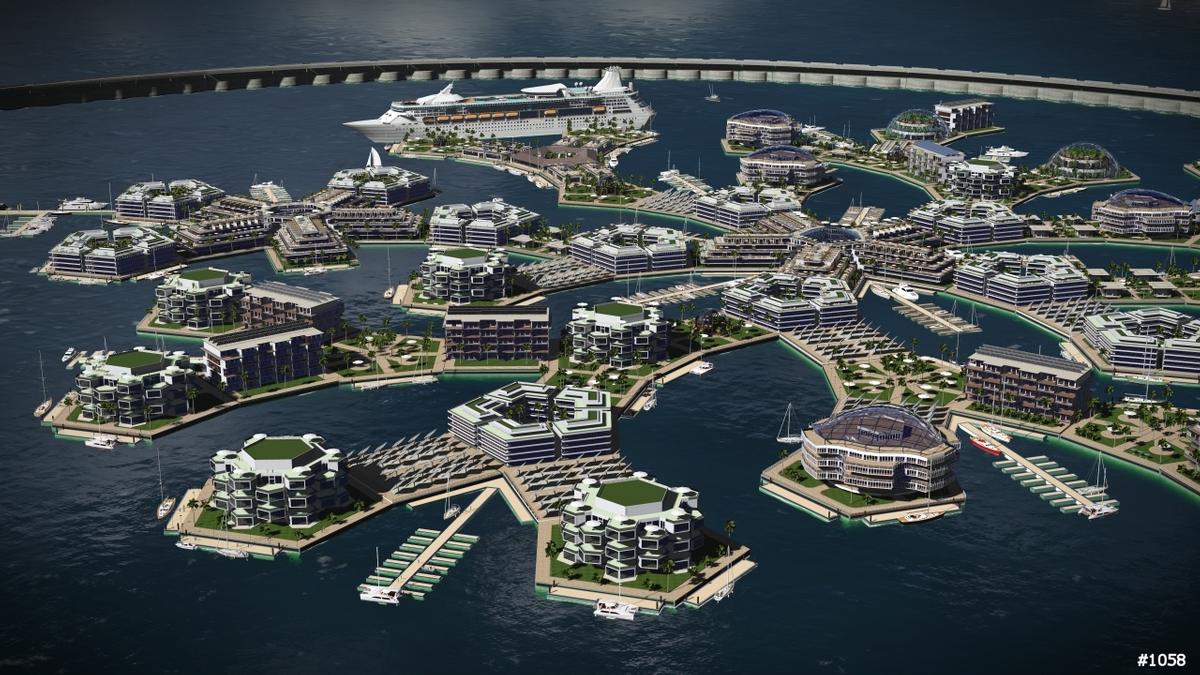
One proposed design for a seasteading settlement / The Seasteading Institute
Plans to build the world’s first fully-floating city have taken a step forward, with the French Polynesian government reaching an agreement with nonprofit The Seasteading Institute to cooperate on a legal framework for the scheme, which would be located in the country’s waters.
Seasteading is a concept for new libertarian aquine communities granted “unprecedented political autonomy” by their host nations in exchange for economic and social benefits. Billionaire PayPal founder Peter Thiel is a supporter of the idea, and was an early financial backer of the Seasteading Institute.
Critics of the model argue it will merely create a haven away from traditional laws, taxes and regulations. However, the French Polynesian government has indicated its intention to allow the first seasteading settlement in its waters in the belief it will bring jobs, economic growth and environmental resiliency to the region, without the requirement of paying subsidies.
It has signed a Memorandum of Understanding (MOU) with the institute, stating that the new water-based community, currently called the Floating Island Project, would be granted it’s own “special governing framework” and could create an “innovative special economic zone.”
The Seasteading Institute has formed a new company, Blue Frontiers, to construct the island, which will use sustainable modular platforms designed by Dutch engineering firm Blue21 that can adapt to rising water levels and rough sea conditions. A delegation has been exploring potential sites near the islands of Tahiti, Tupai, and Raiatea.
Before it reaches the building stage, it must conduct an economic analysis to demonstrate the economic benefits for French Polynesia, as well as an environmental assessment to assure the health of the ocean and seabed.
Seasteading investors will self-fund the initial studies and the construction of the floating islands. The pilot project is expected to cost between US$10m (€9.3m, £8m) and US$50m (€46.5m, £40.1m).
“Our seasteading collaboration with French Polynesia was initiated by the Tahitians themselves and will bring jobs, economic growth, and environmental resiliency to the region,” said Randolph Hencken, executive director of the Seasteading Institute. “Signing the MOU with French Polynesia is an important first step, and a huge milestone for seasteading.
“We will draw from the best practices of more than 4,000 existing Special Economic Zones around the world to create a ‘Special Economic SeaZone, which will combine the advantages of French Polynesia’s geopolitical location with unique regulatory opportunities specifically designed to attract investors.”
French Polynesia was touted as a potential destination for floating cities by the country’s former tourism minister, Marc Collins. Explaining his reasons, he said: “More than most nations, our islands are impacted by rising sea levels, and resilient floating islands could be one tangible solution for us to maintain our populations anchored to their islands. For many Polynesians, leaving our islands is not an option.”
Manduka, a leading manufacturer of premium yoga mats has launched its P/ROX hybrid fitness
mat, crafted for athletes and functional fitness practitioners who move between yoga and
fitness training.
Nilo Spa Design has launched a dry flotation bed called Marea that uses 500 litres of water
to support the body evenly in a zero-gravity-like experience.
Modern apothecary skincare brand Sweet Bee Organics has entered the spa market with its
first treatment at the hotel and members’ club The Ned London, in the UK.
Nutri-cosmeceutical beauty brand OSKIA has unveiled an eye cream called Midnight Eye Q,
which
has been designed to regenerate the delicate skin in alignment with the body’s circadian
rhythm.
Biotechnology-driven skincare company, Epicutis, has launched two new products in its mission
to deliver long-term skin health, barrier recovery and microbiome harmony.
Swiss skincare brand Cellcosmet has released its Hydra-Soothing Mask to meet what it sees as
a rise in demand for sensitive and sensitised skin products following cosmetic treatments.
Aromatherapy Associates has developed an aromatherapy ritual using its Calm Confidence blend,
designed to ease inner tension and support emotional balance.
Europe-wide distributor of non-invasive aesthetic technologies, Landsberg First Class
Aesthetic, launches EXO Regentron Eyecontour device by Thermoceutical.
French Polynesia could host world's first floating city after signing agreement with Seasteading Institute
24 Jan 2017 . BY Kim Megson
One proposed design for a seasteading settlement / The Seasteading Institute
Plans to build the world’s first fully-floating city have taken a step forward, with the French Polynesian government reaching an agreement with nonprofit The Seasteading Institute to cooperate on a legal framework for the scheme, which would be located in the country’s waters.
Seasteading is a concept for new libertarian aquine communities granted “unprecedented political autonomy” by their host nations in exchange for economic and social benefits. Billionaire PayPal founder Peter Thiel is a supporter of the idea, and was an early financial backer of the Seasteading Institute.
Critics of the model argue it will merely create a haven away from traditional laws, taxes and regulations. However, the French Polynesian government has indicated its intention to allow the first seasteading settlement in its waters in the belief it will bring jobs, economic growth and environmental resiliency to the region, without the requirement of paying subsidies.
It has signed a Memorandum of Understanding (MOU) with the institute, stating that the new water-based community, currently called the Floating Island Project, would be granted it’s own “special governing framework” and could create an “innovative special economic zone.”
The Seasteading Institute has formed a new company, Blue Frontiers, to construct the island, which will use sustainable modular platforms designed by Dutch engineering firm Blue21 that can adapt to rising water levels and rough sea conditions. A delegation has been exploring potential sites near the islands of Tahiti, Tupai, and Raiatea.
Before it reaches the building stage, it must conduct an economic analysis to demonstrate the economic benefits for French Polynesia, as well as an environmental assessment to assure the health of the ocean and seabed.
Seasteading investors will self-fund the initial studies and the construction of the floating islands. The pilot project is expected to cost between US$10m (€9.3m, £8m) and US$50m (€46.5m, £40.1m).
“Our seasteading collaboration with French Polynesia was initiated by the Tahitians themselves and will bring jobs, economic growth, and environmental resiliency to the region,” said Randolph Hencken, executive director of the Seasteading Institute. “Signing the MOU with French Polynesia is an important first step, and a huge milestone for seasteading.
“We will draw from the best practices of more than 4,000 existing Special Economic Zones around the world to create a ‘Special Economic SeaZone, which will combine the advantages of French Polynesia’s geopolitical location with unique regulatory opportunities specifically designed to attract investors.”
French Polynesia was touted as a potential destination for floating cities by the country’s former tourism minister, Marc Collins. Explaining his reasons, he said: “More than most nations, our islands are impacted by rising sea levels, and resilient floating islands could be one tangible solution for us to maintain our populations anchored to their islands. For many Polynesians, leaving our islands is not an option.”
If you would like to get each issue of Spa Business and Spa Business insider magazines sent direct to you for FREE, plus the weekly Spa Business and Spa Business insider ezines, sign up now!
Manduka, a leading manufacturer of premium yoga mats has launched its P/ROX hybrid fitness
mat, crafted for athletes and functional fitness practitioners who move between yoga and
fitness training.
Nilo Spa Design has launched a dry flotation bed called Marea that uses 500 litres of water
to support the body evenly in a zero-gravity-like experience.
Modern apothecary skincare brand Sweet Bee Organics has entered the spa market with its
first treatment at the hotel and members’ club The Ned London, in the UK.
Nutri-cosmeceutical beauty brand OSKIA has unveiled an eye cream called Midnight Eye Q,
which
has been designed to regenerate the delicate skin in alignment with the body’s circadian
rhythm.
Biotechnology-driven skincare company, Epicutis, has launched two new products in its mission
to deliver long-term skin health, barrier recovery and microbiome harmony.
Swiss skincare brand Cellcosmet has released its Hydra-Soothing Mask to meet what it sees as
a rise in demand for sensitive and sensitised skin products following cosmetic treatments.
Aromatherapy Associates has developed an aromatherapy ritual using its Calm Confidence blend,
designed to ease inner tension and support emotional balance.
Europe-wide distributor of non-invasive aesthetic technologies, Landsberg First Class
Aesthetic, launches EXO Regentron Eyecontour device by Thermoceutical.