Yes! Send me the FREE digital editions of Spa Business and Spa Business insider magazines and the FREE weekly Spa Business and Spa Business insider ezines and breaking news alerts!
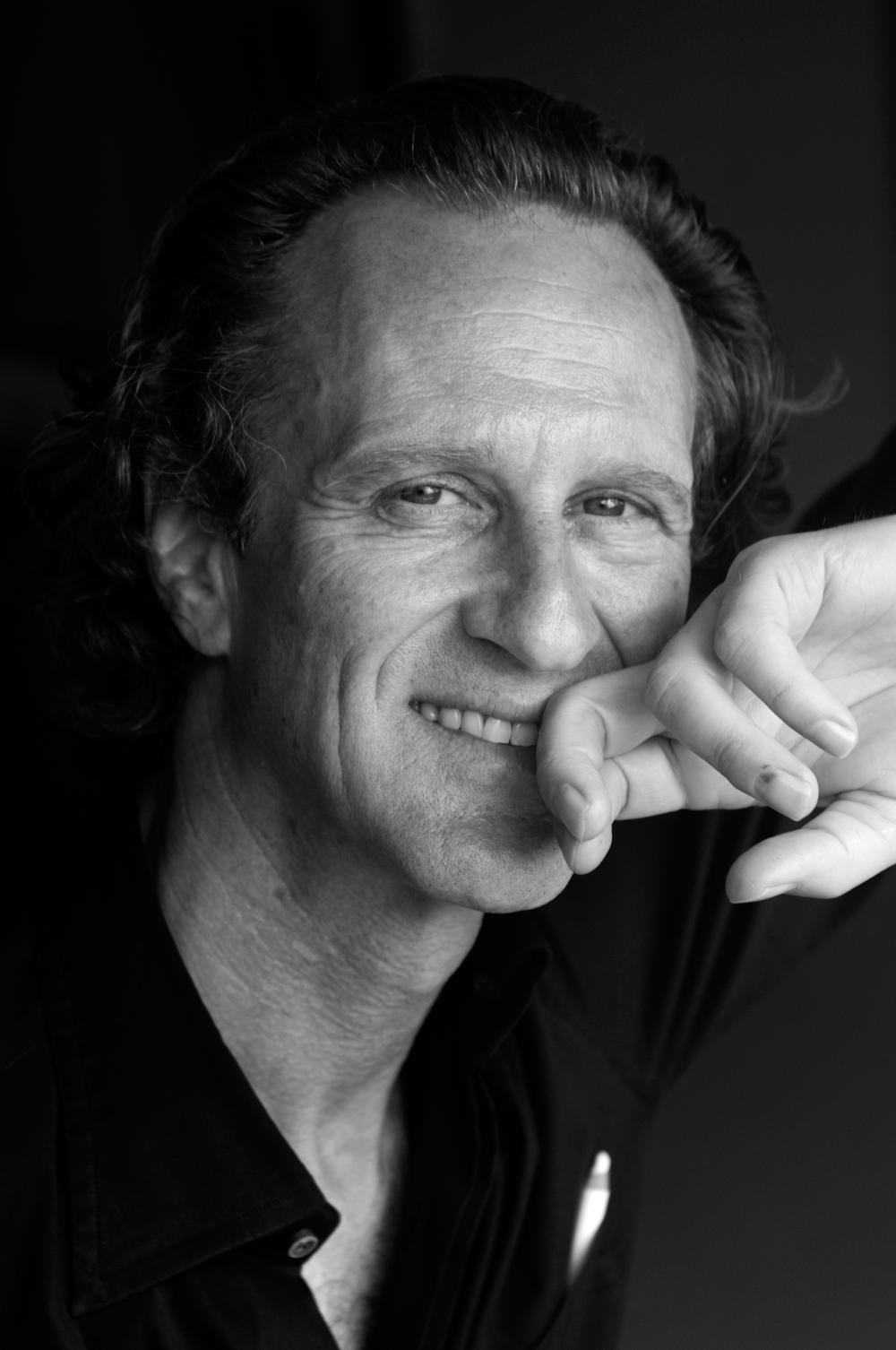
The Italian architect and interior designer tells Magali Robathan about the challenges of creating a new look for the Hilton Barcelona, and explains the thinking behind the Ecotecture movement
By Magali Robathan | Published in Leisure Management 2012 issue 3
How did your career in architecture begin? Originally, I wanted to be a doctor – but then I had the opportunity to study under [Austrian expressionist artist and draughtsman] Oskar Kokoschka at the Salzburg Academy in Austria. He taught me to really ‘see’. Afterwards, I moved to Florence and studied architecture under the Italian architect Adolfo Natalini. I later met the Italian architect and designer Ettore Sottass, and we founded the Memphis Group in Milan in 1981. [The Memphis Group comprised a group of designers that created Post Modern furniture and design objects between 1981 and 1987.] I opened my own office in Milan in 1984.
Following the principle of the Milan school, we always worked in interior design and architecture at the same time – approaching projects from a holistic standpoint.
At what point did you start to make a name for yourself? In 1993 we created the first low-energy, sustainable prefab housing system in wood. Ever since, this has been what has driven me.
Where do you get the inspiration for your designs? I travel a lot, and I meet loads of different, interesting people, I love art and visit exhibitions as much as I can. I spend my weekends surrounded by nature – always the best energiser.
Where do you work on your designs? I am a visual person – so wherever I am, I draw in my black notebook.
What did the Hilton Barcelona look like before the refurbishment? It was just looking old. The Hilton Barcelona, which was one of the city’s first branded hotels, was built for the Barcelona Olympic Games 20 years ago – it needed a fresh look. Hilton approached us to help.
What was your brief for the public areas? The hotel has an iconic lobby entrance with an abundance of natural light within the atrium.
Hilton asked us to give the space more lightness, to create something more open and inviting.
What were you trying to create with your design? We wanted to create a unique, modern and edgy lobby space that fulfils the needs of the guests and that will last effectively in the long term. We wanted to design a meeting point and create an atmosphere that is about both entertainment and business. I think this is key for a city hotel of today – especially in Barcelona, one of the most exciting cities in Europe.
How would you describe the interior design? The design concept offers extreme flexibility, allowing the structures and the furnishings in the public areas of the hotel to change in keeping with different hospitality requirements. The result is a fluid design that provides the guest with a maximum of service, function and comfort.
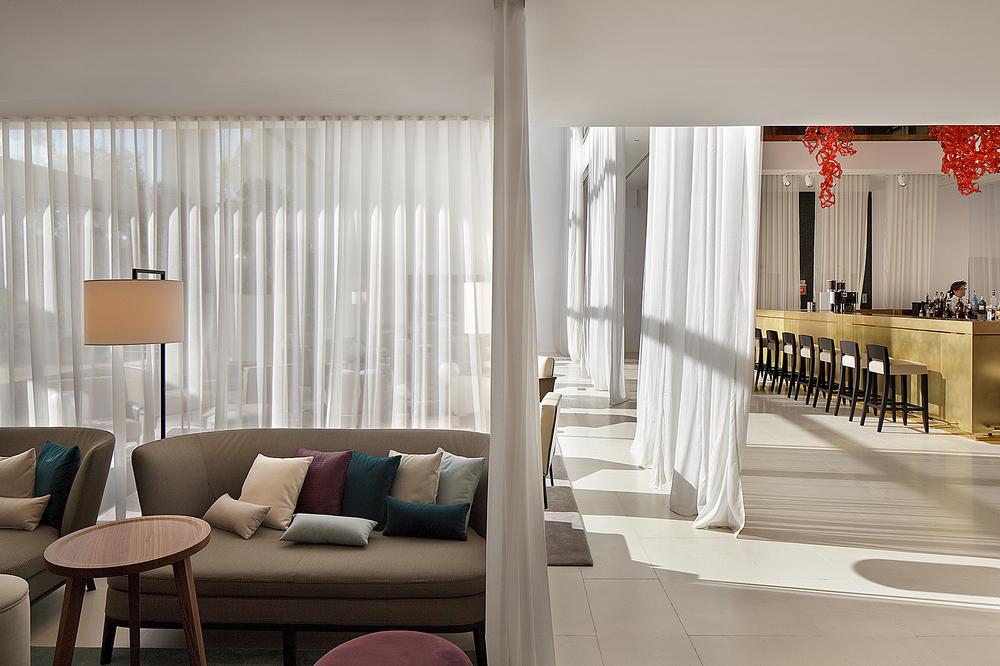
All these elements are given by the existing architecture of the hotel. The lobby is full of daylight. This is why we wanted to create a huge white space that, when separated through flexible translucent drapes, can also be divided into several private zones.
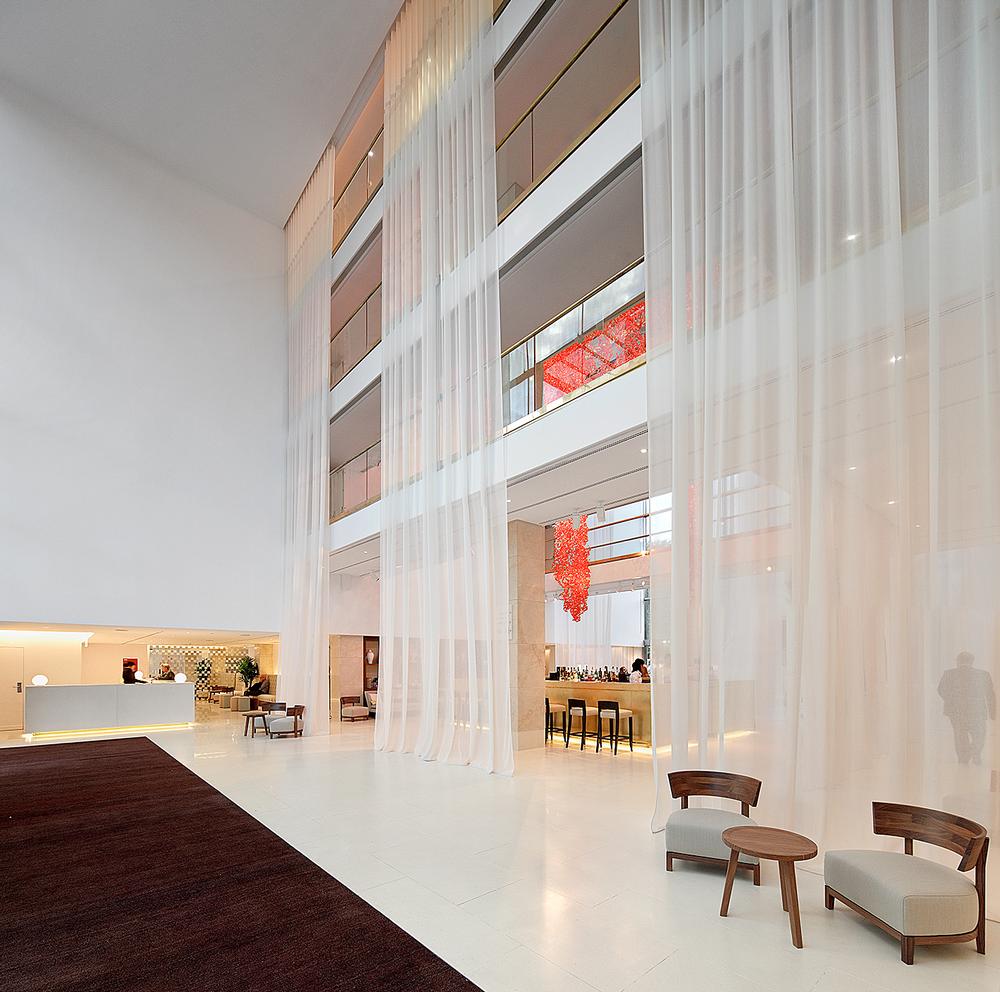
What part of the design are you most proud of? I love entering the hotel lobby in the early morning, when daylight is flooding the 15m-high space.
You are an advocate of Ecotecture. What does this mean? I want to create long-lasting projects that grow old nicely. Of course this means that we have to respect the environment. We follow the philosophy of the three zeros: Zero CO2 (CO2-neutral energy production and construction), Zero km (reduced transport routes through prefabrication and local materials) and Zero Waste (recycling of used materials).
Why is it so important to ensure that architecture is sustainable? Sustainable construction involves aesthetic, economic and technological durability. This means avoiding architectural wounds and using the right materials in the right place, finding the right configuration of the building volume. It means respecting the soul of every place you work on.
The refurbished Hilton Barcelona opened at the beginning of June, featuring 289 rooms, 13 suites, the Mosaic restaurant, a fitness centre, The Vibe Bar and an outdoor terrace.
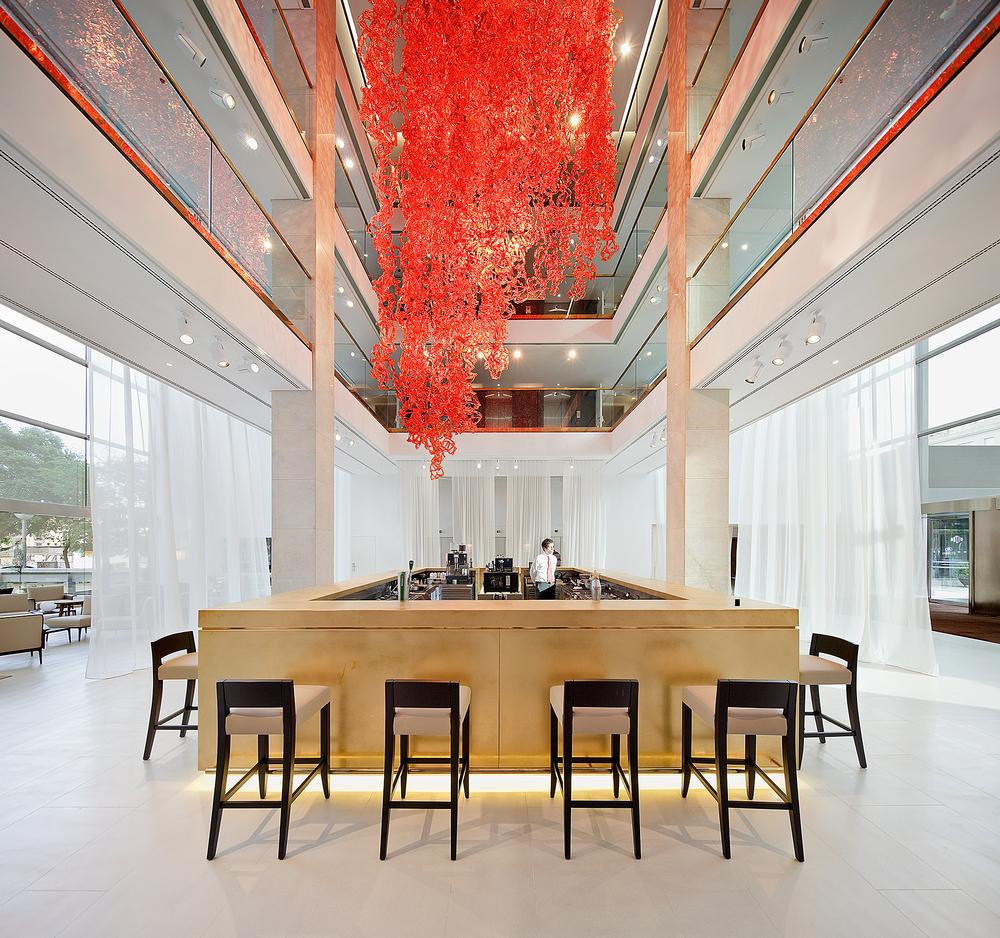
Matteo Thun and Partners were responsible for all of the public areas, including the multi-functional lobby space. The all-white lobby has been designed to be flexible so that it can be adapted for a range of events from business meetings to art exhibitions. It features a central bar that can be subdivided with transculent drapes and which features a dramatic sculpture by Milan based artist, Jacopo Foggini.
The Hilton Barcelona is the first Hilton property to be refurbished according to Hilton’s new lobby design guidelines, which are based on the idea that mobile technology means that guests increasingly want to spend time in hotel lobbies. The vision for Hilton’s new lobbies is that they should be multiple use spaces incorporate striking design, access to technology and contemporary food and beverage offerings.
Other Projects Matteo Thun designed the Vigilius Mountain Resort in Italy and Hotel Missoni, Edinburgh
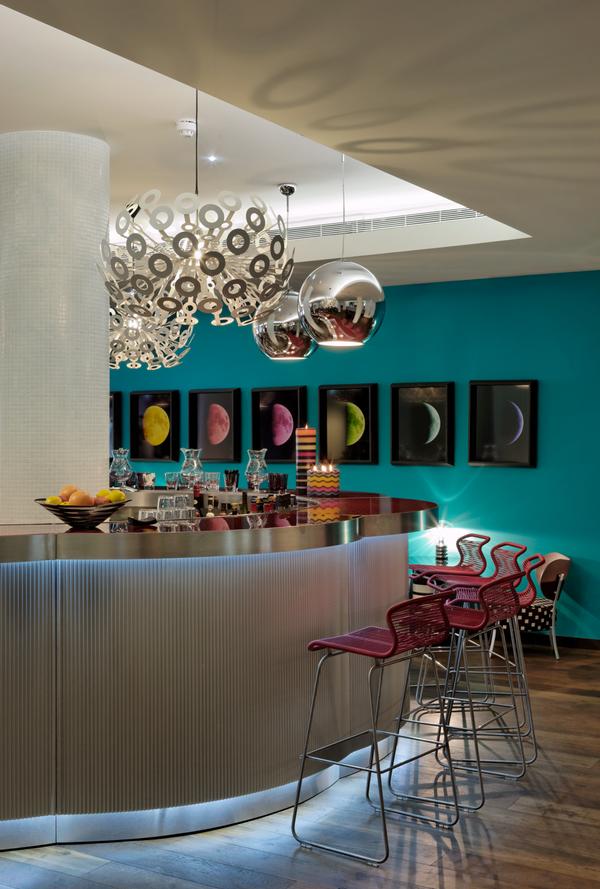
Hotel Missoni, Edinburgh
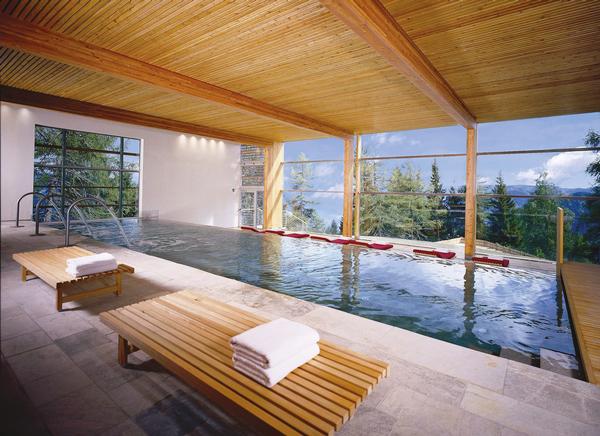
Vigilius Mountain Resort in Italy
Drapes are used to subdivide the lobby area / Photos of the Hilton Barcelona: Peguenaute
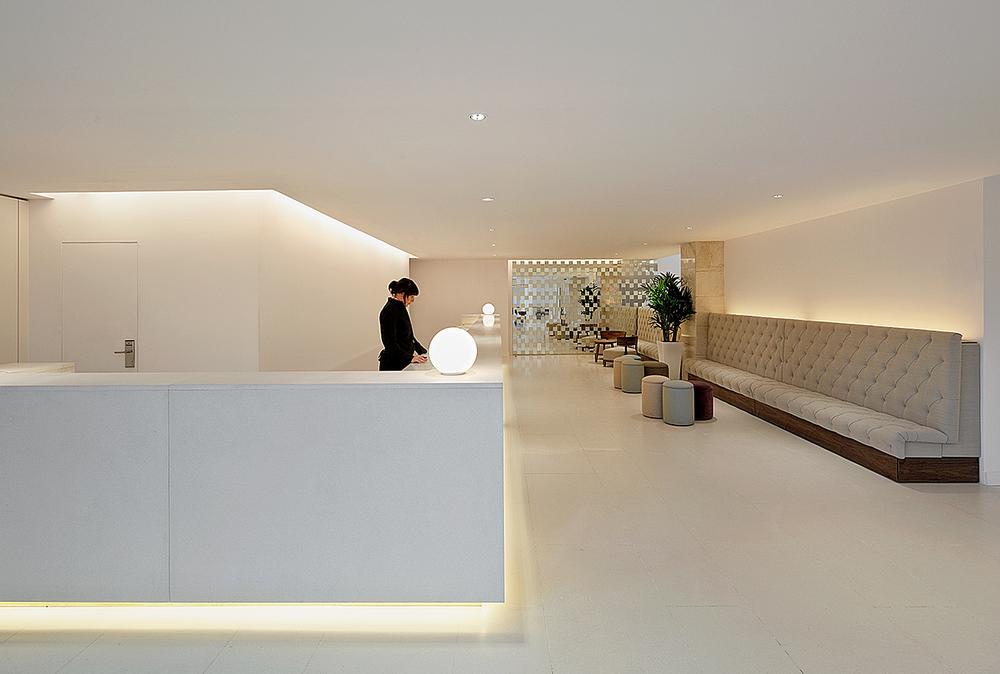
The space is flooded with natural light / Photos of the Hilton Barcelona: Peguenaute
The red ceiling sculpture by Jacopo Foggini creates a dramatic contrast to the all-white interior / Photos of the Hilton Barcelona: Peguenaute
The red ceiling sculpture by Jacopo Foggini creates a dramatic contrast to the all-white interior / Photos of the Hilton Barcelona: Peguenaute
The Italian architect and interior designer tells Magali Robathan about the challenges of creating a new look for the Hilton Barcelona, and explains the thinking behind the Ecotecture movement
By Magali Robathan | Published in Leisure Management 2012 issue 3
How did your career in architecture begin? Originally, I wanted to be a doctor – but then I had the opportunity to study under [Austrian expressionist artist and draughtsman] Oskar Kokoschka at the Salzburg Academy in Austria. He taught me to really ‘see’. Afterwards, I moved to Florence and studied architecture under the Italian architect Adolfo Natalini. I later met the Italian architect and designer Ettore Sottass, and we founded the Memphis Group in Milan in 1981. [The Memphis Group comprised a group of designers that created Post Modern furniture and design objects between 1981 and 1987.] I opened my own office in Milan in 1984.
Following the principle of the Milan school, we always worked in interior design and architecture at the same time – approaching projects from a holistic standpoint.
At what point did you start to make a name for yourself? In 1993 we created the first low-energy, sustainable prefab housing system in wood. Ever since, this has been what has driven me.
Where do you get the inspiration for your designs? I travel a lot, and I meet loads of different, interesting people, I love art and visit exhibitions as much as I can. I spend my weekends surrounded by nature – always the best energiser.
Where do you work on your designs? I am a visual person – so wherever I am, I draw in my black notebook.
What did the Hilton Barcelona look like before the refurbishment? It was just looking old. The Hilton Barcelona, which was one of the city’s first branded hotels, was built for the Barcelona Olympic Games 20 years ago – it needed a fresh look. Hilton approached us to help.
What was your brief for the public areas? The hotel has an iconic lobby entrance with an abundance of natural light within the atrium.
Hilton asked us to give the space more lightness, to create something more open and inviting.
What were you trying to create with your design? We wanted to create a unique, modern and edgy lobby space that fulfils the needs of the guests and that will last effectively in the long term. We wanted to design a meeting point and create an atmosphere that is about both entertainment and business. I think this is key for a city hotel of today – especially in Barcelona, one of the most exciting cities in Europe.
How would you describe the interior design? The design concept offers extreme flexibility, allowing the structures and the furnishings in the public areas of the hotel to change in keeping with different hospitality requirements. The result is a fluid design that provides the guest with a maximum of service, function and comfort.
All these elements are given by the existing architecture of the hotel. The lobby is full of daylight. This is why we wanted to create a huge white space that, when separated through flexible translucent drapes, can also be divided into several private zones.
What part of the design are you most proud of? I love entering the hotel lobby in the early morning, when daylight is flooding the 15m-high space.
You are an advocate of Ecotecture. What does this mean? I want to create long-lasting projects that grow old nicely. Of course this means that we have to respect the environment. We follow the philosophy of the three zeros: Zero CO2 (CO2-neutral energy production and construction), Zero km (reduced transport routes through prefabrication and local materials) and Zero Waste (recycling of used materials).
Why is it so important to ensure that architecture is sustainable? Sustainable construction involves aesthetic, economic and technological durability. This means avoiding architectural wounds and using the right materials in the right place, finding the right configuration of the building volume. It means respecting the soul of every place you work on.
The refurbished Hilton Barcelona opened at the beginning of June, featuring 289 rooms, 13 suites, the Mosaic restaurant, a fitness centre, The Vibe Bar and an outdoor terrace.
Matteo Thun and Partners were responsible for all of the public areas, including the multi-functional lobby space. The all-white lobby has been designed to be flexible so that it can be adapted for a range of events from business meetings to art exhibitions. It features a central bar that can be subdivided with transculent drapes and which features a dramatic sculpture by Milan based artist, Jacopo Foggini.
The Hilton Barcelona is the first Hilton property to be refurbished according to Hilton’s new lobby design guidelines, which are based on the idea that mobile technology means that guests increasingly want to spend time in hotel lobbies. The vision for Hilton’s new lobbies is that they should be multiple use spaces incorporate striking design, access to technology and contemporary food and beverage offerings.
Other Projects Matteo Thun designed the Vigilius Mountain Resort in Italy and Hotel Missoni, Edinburgh
Hotel Missoni, Edinburgh
Vigilius Mountain Resort in Italy
Drapes are used to subdivide the lobby area / Photos of the Hilton Barcelona: Peguenaute
The space is flooded with natural light / Photos of the Hilton Barcelona: Peguenaute
The red ceiling sculpture by Jacopo Foggini creates a dramatic contrast to the all-white interior / Photos of the Hilton Barcelona: Peguenaute
The red ceiling sculpture by Jacopo Foggini creates a dramatic contrast to the all-white interior / Photos of the Hilton Barcelona: Peguenaute
The UK spa review and discovery platform for consumers, the Good Spa Guide, has announced
it will host the Good Spa Guide Awards 2026 during an event on 16 November at Sopwell House
Hotel in St Albans, UK.
Eighty-four per cent of consumers now say wellness is a top priority in their lives, with this
percentage increasing year on year, according to a preview presentation of McKinsey’s Future of
Wellness 2026 research report.
Mass protests have been taking place since Monday 1 June in Albania over the development of
a luxury resort by Donald Trump’s daughter Ivanka Trump and her husband Jared Kushner.
Global Wellness Day (GWD) marked its 15th anniversary on Saturday 13 June 2026, with the
theme: #JoyMagenta – a celebration of the healing qualities of simple gestures and activities
that spark joy.
Global luxury hospitality brand, Six Senses, has partnered with longevity healthcare provider,
HUM2N, to launch a clinic at Six Senses London, at The Whiteley.
As part of its first hotel partnership, Mayrlife – the medical health resort company known for its
site in Altaussee, Austria – has launched a day clinic at the Rosewood Vienna.
Premium London health club, KX Chelsea, will imminently unveil its most significant
redevelopment since its launch in 2002 to create an integrated wellness model combining
training, recovery and relaxation.
Rosewood Le Guanahani St Barth, on the northeast coast of Saint Barthélemy in the French
West Indies, is offering a programme of ocean-inspired yoga classes between 8-14 June to
celebrate Global Wellness Day (GWD).
Hotel de France, located on the British Isle of Jersey, has created a wellness retreat package
that includes a hot yoga session that will take place in Jersey Zoo’s butterfly sanctuary.
The Ritz-Carlton, Langkawi, in Malaysia, has revealed a schedule for Global Wellness Day
(GWD) that includes guided rainforest walks, mindful movement and guided coastal meditation
experiences.