Yes! Send me the FREE digital editions of Spa Business and Spa Business insider magazines and the FREE weekly Spa Business and Spa Business insider ezines and breaking news alerts!
A record number of anti-depressants were issued in 2012. Is exercise a better drug? / photo: shutterstock.com
If you were asked to list the most compelling reasons to exercise, you’d likely come up with factors like weight loss, improved cardiovascular fitness, lower blood pressure and cholesterol, and better muscle tone. And rightly so: all of these factors are proven benefits of regular physical activity.
However, with one in four people in the UK experiencing some kind of mental health issue, and a substantive body of evidence showing a link between physical and mental health (see HCM March 11, p36), many experts would like to see more emphasis on the value of exercise for mental wellbeing.
“There’s a clear and strong association between mental health and physical activity, including a positive effect on depression, stress, low self-esteem and even cognitive function,” says professor Stuart Biddle, an exercise psychologist at Loughborough University in the UK. ??
Debbie Lawrence, a qualification development manager for Active IQ and author of The Complete Guide to Physical Activity and Mental Health (Bloomsbury), agrees: “Two things are clear from the research,” she says. “Firstly, that people with mental health issues tend to have poorer physical health. And secondly, that exercise can help to prevent or alleviate many mental health symptoms.”
Physical activity, then, could be an important part of the jigsaw when it comes to prevention and treatment. But statistics suggest it’s still undervalued: 50 million prescriptions for anti-depressants were issued in 2012 – the highest number ever – while a report in 2013 from healthcare charity Nuffield Health found that GPs were 46 times more likely to prescribe medication than explore evidence-based alternatives like exercise. The charity calculated that, if we each did just 12 additional minutes of daily activity, we could save £6.3bn in costs to the NHS, welfare, and loss of earnings related to mental health issues.
Dr Davina Deniszczyc, wellbeing medical director at Nuffield Health, comments: “We encourage all GPs to prescribe exercise, refer patients to support services that can help them exercise and ensure exercise, where applicable, is a central part of the treatment a patient receives.”
Addressing the stigma But what role could fitness operators play in promoting exercise for mental health? Lawrence believes the industry should shift its message. “The emphasis should be on exercise to feel good, rather than to not feel bad,” she says.
Harriet Heal, a clinical psychologist with an interest in the interaction between physical and mental health, agrees: “Gyms and health clubs tend to focus too much on the physical pay-offs: lose weight, tone up, get fit,” she says. “There needs to be more attention given to the mental benefits. Think of it this way: one in four of the people who walk through the door of your health club or leisure centre has, or has had, a mental health condition.”
It’s hardly a minority group, then. Yet while gyms and health clubs routinely offer classes for pregnant women or for the over-50s, it’s rare to find sessions aimed specifically at those with mental health problems.
“There’s still a long way to go in breaking down the stigma surrounding mental ill health,” says Mark Owen, who led the pioneering Bristol Active Life Project (BALP – see briefing, p58) in his role as physical activity development officer for mental health at Bristol City Council. “Many people aren’t comfortable being ‘labelled’ in public.”
Heal, who co-founded Up and Running – a running group for women in Kent with mental health issues (see briefing, p60) – agrees: “Our poster says ‘Do you suffer from anxiety or depression?’ But I sometimes worry that it puts off as many people as it attracts. I don’t want to avoid terms like ‘depression’ or ‘mental health’, but I also want don’t want to alienate people. We’ve had people enquiring about the group who say: ‘I don’t know if I’m ‘bad enough’ to join...”
When Up and Running launched in 2010, the Sevenoaks Chronicle, in which Heal had placed an ad, published a mocking piece describing the prospect of an exercise and mutual support group for depression and anxiety as “a barrel of laughs”. While the newspaper later issued a written apology, it shows just the sort of negative reaction that might hold people back from seeking support.
A warm welcome Projects like BALP and Up and Running demonstrate that specifically targeting a mental health market can be successful. But it’s not the only way. “The right approach and attitude can make any exercise environment more welcoming and inclusive,” says Heal.
In 2000, a study conducted by the YMCA in the US set out to identify what kept people coming back to their gyms. After analysing more than 150,000 member satisfaction surveys, they concluded that it wasn’t fancy machines or yoga studios but the human factor: staff knowing members’ names and greeting them with a friendly smile. The research didn’t specifically address a mental health population, but as Heal points out, this positive social interaction would be even more crucial for someone feeling anxious or depressed, or lacking self-esteem.
Owen believes there needs to be more commitment from operators to train staff on mental health: “When we were running BALP, none of the local clubs or leisure centres came to ask us for training – it was always us going to them to offer it,” he says. “Better mental health awareness and education give staff more confidence. And it’s not just the instructors and coaches – it’s all staff. If someone’s been brave enough to take a step through the door, every staff member they encounter could make or break whether they come back.”
Dr Kitrina Douglas, a researcher in exercise, health and sport at the University of Bristol, was involved in evaluating BALP, interviewing participants and staff. “Education is really important,” she agrees. “For many of those we interviewed, medication made morning classes difficult – just getting up and out was a much bigger deal than it is for most of us. Staff didn’t always understand what a big effort it could be even to get to the venue.”
Many of the instructors connected to BALP took the exercise referral course Physical Activity for Persons with Mental Health Conditions, which looks in depth at specific conditions such as bipolar disorder, schizophrenia and post-traumatic stress disorder. “The education we delivered helped practitioners understand what life is like living with long-term mental illnesses,” says Douglas.
So how might a fitness session for a mental health population differ from other sessions? “It’s not so much the format or structure as the atmosphere and approach,” says Owen. Heal agrees: “You might need to take more time over things and focus on the process, rather than the outcome. You don’t want exercise to become another stress for someone.”
Those involved with delivering BALP sessions were taught the importance of creating a safe, supportive environment. “As an instructor or coach, it’s less about knowing all the answers regarding any given mental health condition and more about focusing on the individual’s needs at that time,” says Owen.
Universal benefits Heal wonders whether gyms would benefit from a resident or attached mental health expert: “You’d expect there to be professionals in physical health – why not in mental health?” she asks. “They could be there to advise the health club users, but also be a point of contact for other staff at the facility.”
Douglas believes the real solution lies in being able to break down the barriers and stigma surrounding mental health issues. “Even the terms we use – ‘people with mental health problems’ – create a rift that makes it seem ‘they’ aren’t normal, and ‘we’ are, when of course all of us, regardless of our mental health status, want to have fun, enjoy social activities and have access to exercise and work opportunities,” she says.
Heal agrees. “We tend to medicalise mental illness, but the truth is that many people slide in and out of depression and anxiety disorders,” she says. “Physical activity has the same benefits for everyone – and while many of these are long-term, perhaps what’s more useful in terms of mental health is to focus on the immediate payoffs. ‘Feel better this afternoon than you did this morning’ is a very powerful message for health clubs to get across.”
See p30 for a discussion on whether the fitness sector is geared up to deal with mental health issues.
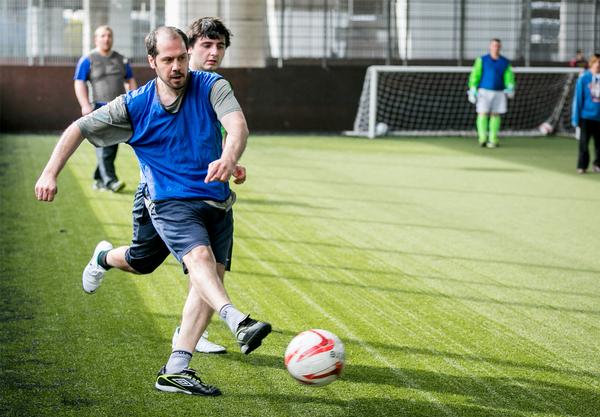
Case study: Healthy Kickers Every Thursday lunchtime, men and women of all ages and abilities with mental health issues gather at the Westway Sports Centre in London to play football. Each session begins with a warm-up and skills practice, followed by a number of seven-a-side football matches.
The Healthy Kickers project is a joint initiative by SMART and London Cyrenians Housing – charities that provide support to people with mental health problems through physical activity – and there are staff on-hand to offer motivation and advice, and to ensure participants develop the confidence to engage fully with the sessions. Coaching is provided by Queens Park Rangers Football Club and sessions are adapted to meet the fitness and support needs of everyone who attends.
Healthy Kickers is open to anyone with a mental health diagnosis who is referred by an approved organisation or charity within the London tri-borough area of Kensington and Chelsea, Westminster and Hammersmith and Fulham.
The Healthy Kickers scheme is open to anyone with a mental health diagnosis
Case study: The Bristol Active Life Project The Bristol Active Life Project (BALP) was set up in 2005 to bring the benefits of physical activity to those with severe and enduring mental health problems. The idea was sparked when mental health staff within a Bristol hospital began providing gym sessions for people hospitalised with conditions such as bipolar disorder and schizophrenia.
“Originally, it was more about occupying time than any perceived health benefits,” says Mark Owen, former physical activity development officer for mental health at Bristol City Council. “But when reductions in BMI, increases in lean body mass and a reduction in medication were noted, it was clear that extending its provision would be worthwhile.” The project received local authority support and funding from the Football Foundation to provide facilities and coaches, and train those involved in delivering the exercise sessions. In the three years between 2009 and 2012, more than 900 referrals were made and BALP was running 20 sessions a week, from five-a-side football to martial arts, gym classes and badminton. The project’s funding ceased in 2013, but many of the classes it spawned now run independently. There’s still a referral process – not anyone can turn up at one of the sessions – but the ‘net’ of referrals is much wider, including GPs and mental health support workers.
“We succeeded in getting people out of their homes and into the sessions,” says Owen. “When you think of the barriers that exist for people with mental health issues – poor self-esteem, bad experiences of sport/exercise in the past, lack of energy – it demonstrates the impact of what we provided.”
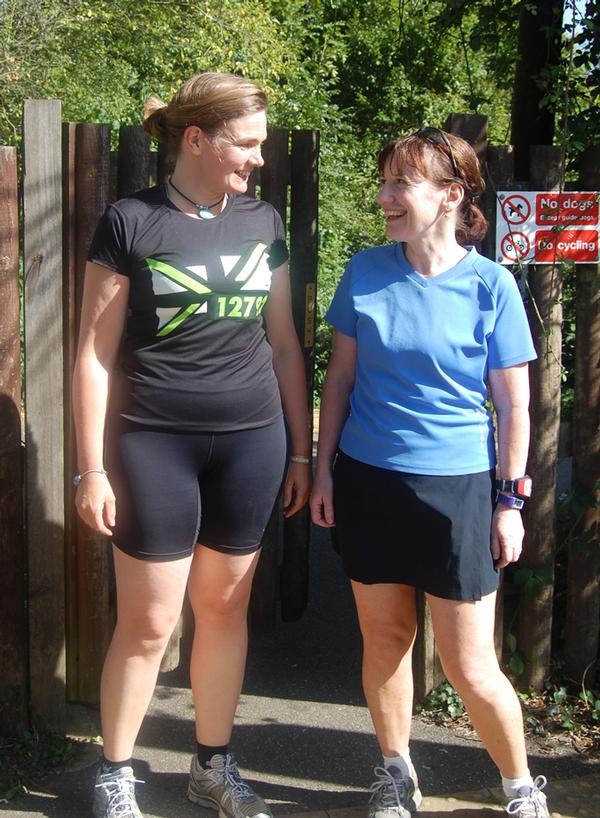
Up and Running In 2010, clinical psychologist Harriet Heal and running coach Shona Campbell founded Up and Running, a 10-week running programme specifically geared towards women suffering mental health problems.
Through her own experience of depression, Campbell had seen first-hand the difference lacing up her trainers could make, and Heal needed little convincing: “I don’t know any runner who doesn’t believe it helps their mental health,” she says.
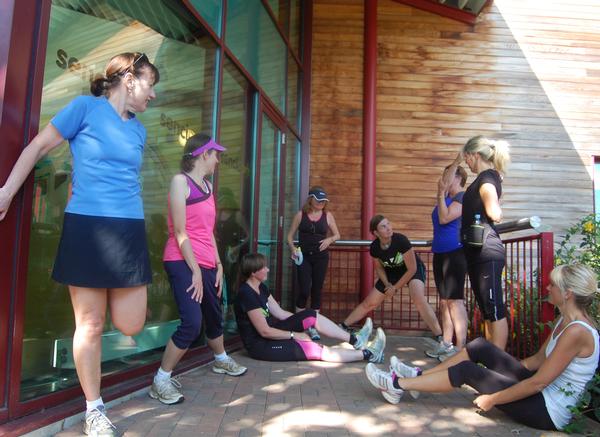
But Up and Running isn’t just about getting the miles in. “Many of the benefits come from the social and mutually supportive aspect of being with people who have experienced similar problems,” says Heal. “People don’t have to discuss their mental health if they don’t want to, but know they’re in a safe, non-judgmental place to do so.”
Participant feedback thus far shows that 90 per cent of women believe it has had a positive impact on their mood and mental health; 100 per cent would recommend it to others. “There are former Up and Running course participants who still meet up once a week to have a walk and a coffee together,” says Heal. She and Campbell have been approached by other groups and individuals interested in setting up similar schemes.
Le Atelier by C.O.D.E. doesn't offer a standard bespoke service, it provides a highly
customised approach to designing massage beds and loungers in high-end wellness
environments. [more...]
+ More featured suppliers
COMPANY PROFILES
Seed To Skin
Founded by Jeanette Thottrup in 2018, in Tuscany, Seed to Skin is an award winning skincare line. [more...]
Borghese Roma
Borghese is an Italian luxury skincare brand founded in 1957 by Princess Marcella Borghese. [more...]
A record number of anti-depressants were issued in 2012. Is exercise a better drug? / photo: shutterstock.com
If you were asked to list the most compelling reasons to exercise, you’d likely come up with factors like weight loss, improved cardiovascular fitness, lower blood pressure and cholesterol, and better muscle tone. And rightly so: all of these factors are proven benefits of regular physical activity.
However, with one in four people in the UK experiencing some kind of mental health issue, and a substantive body of evidence showing a link between physical and mental health (see HCM March 11, p36), many experts would like to see more emphasis on the value of exercise for mental wellbeing.
“There’s a clear and strong association between mental health and physical activity, including a positive effect on depression, stress, low self-esteem and even cognitive function,” says professor Stuart Biddle, an exercise psychologist at Loughborough University in the UK. ??
Debbie Lawrence, a qualification development manager for Active IQ and author of The Complete Guide to Physical Activity and Mental Health (Bloomsbury), agrees: “Two things are clear from the research,” she says. “Firstly, that people with mental health issues tend to have poorer physical health. And secondly, that exercise can help to prevent or alleviate many mental health symptoms.”
Physical activity, then, could be an important part of the jigsaw when it comes to prevention and treatment. But statistics suggest it’s still undervalued: 50 million prescriptions for anti-depressants were issued in 2012 – the highest number ever – while a report in 2013 from healthcare charity Nuffield Health found that GPs were 46 times more likely to prescribe medication than explore evidence-based alternatives like exercise. The charity calculated that, if we each did just 12 additional minutes of daily activity, we could save £6.3bn in costs to the NHS, welfare, and loss of earnings related to mental health issues.
Dr Davina Deniszczyc, wellbeing medical director at Nuffield Health, comments: “We encourage all GPs to prescribe exercise, refer patients to support services that can help them exercise and ensure exercise, where applicable, is a central part of the treatment a patient receives.”
Addressing the stigma But what role could fitness operators play in promoting exercise for mental health? Lawrence believes the industry should shift its message. “The emphasis should be on exercise to feel good, rather than to not feel bad,” she says.
Harriet Heal, a clinical psychologist with an interest in the interaction between physical and mental health, agrees: “Gyms and health clubs tend to focus too much on the physical pay-offs: lose weight, tone up, get fit,” she says. “There needs to be more attention given to the mental benefits. Think of it this way: one in four of the people who walk through the door of your health club or leisure centre has, or has had, a mental health condition.”
It’s hardly a minority group, then. Yet while gyms and health clubs routinely offer classes for pregnant women or for the over-50s, it’s rare to find sessions aimed specifically at those with mental health problems.
“There’s still a long way to go in breaking down the stigma surrounding mental ill health,” says Mark Owen, who led the pioneering Bristol Active Life Project (BALP – see briefing, p58) in his role as physical activity development officer for mental health at Bristol City Council. “Many people aren’t comfortable being ‘labelled’ in public.”
Heal, who co-founded Up and Running – a running group for women in Kent with mental health issues (see briefing, p60) – agrees: “Our poster says ‘Do you suffer from anxiety or depression?’ But I sometimes worry that it puts off as many people as it attracts. I don’t want to avoid terms like ‘depression’ or ‘mental health’, but I also want don’t want to alienate people. We’ve had people enquiring about the group who say: ‘I don’t know if I’m ‘bad enough’ to join...”
When Up and Running launched in 2010, the Sevenoaks Chronicle, in which Heal had placed an ad, published a mocking piece describing the prospect of an exercise and mutual support group for depression and anxiety as “a barrel of laughs”. While the newspaper later issued a written apology, it shows just the sort of negative reaction that might hold people back from seeking support.
A warm welcome Projects like BALP and Up and Running demonstrate that specifically targeting a mental health market can be successful. But it’s not the only way. “The right approach and attitude can make any exercise environment more welcoming and inclusive,” says Heal.
In 2000, a study conducted by the YMCA in the US set out to identify what kept people coming back to their gyms. After analysing more than 150,000 member satisfaction surveys, they concluded that it wasn’t fancy machines or yoga studios but the human factor: staff knowing members’ names and greeting them with a friendly smile. The research didn’t specifically address a mental health population, but as Heal points out, this positive social interaction would be even more crucial for someone feeling anxious or depressed, or lacking self-esteem.
Owen believes there needs to be more commitment from operators to train staff on mental health: “When we were running BALP, none of the local clubs or leisure centres came to ask us for training – it was always us going to them to offer it,” he says. “Better mental health awareness and education give staff more confidence. And it’s not just the instructors and coaches – it’s all staff. If someone’s been brave enough to take a step through the door, every staff member they encounter could make or break whether they come back.”
Dr Kitrina Douglas, a researcher in exercise, health and sport at the University of Bristol, was involved in evaluating BALP, interviewing participants and staff. “Education is really important,” she agrees. “For many of those we interviewed, medication made morning classes difficult – just getting up and out was a much bigger deal than it is for most of us. Staff didn’t always understand what a big effort it could be even to get to the venue.”
Many of the instructors connected to BALP took the exercise referral course Physical Activity for Persons with Mental Health Conditions, which looks in depth at specific conditions such as bipolar disorder, schizophrenia and post-traumatic stress disorder. “The education we delivered helped practitioners understand what life is like living with long-term mental illnesses,” says Douglas.
So how might a fitness session for a mental health population differ from other sessions? “It’s not so much the format or structure as the atmosphere and approach,” says Owen. Heal agrees: “You might need to take more time over things and focus on the process, rather than the outcome. You don’t want exercise to become another stress for someone.”
Those involved with delivering BALP sessions were taught the importance of creating a safe, supportive environment. “As an instructor or coach, it’s less about knowing all the answers regarding any given mental health condition and more about focusing on the individual’s needs at that time,” says Owen.
Universal benefits Heal wonders whether gyms would benefit from a resident or attached mental health expert: “You’d expect there to be professionals in physical health – why not in mental health?” she asks. “They could be there to advise the health club users, but also be a point of contact for other staff at the facility.”
Douglas believes the real solution lies in being able to break down the barriers and stigma surrounding mental health issues. “Even the terms we use – ‘people with mental health problems’ – create a rift that makes it seem ‘they’ aren’t normal, and ‘we’ are, when of course all of us, regardless of our mental health status, want to have fun, enjoy social activities and have access to exercise and work opportunities,” she says.
Heal agrees. “We tend to medicalise mental illness, but the truth is that many people slide in and out of depression and anxiety disorders,” she says. “Physical activity has the same benefits for everyone – and while many of these are long-term, perhaps what’s more useful in terms of mental health is to focus on the immediate payoffs. ‘Feel better this afternoon than you did this morning’ is a very powerful message for health clubs to get across.”
See p30 for a discussion on whether the fitness sector is geared up to deal with mental health issues.
Case study: Healthy Kickers Every Thursday lunchtime, men and women of all ages and abilities with mental health issues gather at the Westway Sports Centre in London to play football. Each session begins with a warm-up and skills practice, followed by a number of seven-a-side football matches.
The Healthy Kickers project is a joint initiative by SMART and London Cyrenians Housing – charities that provide support to people with mental health problems through physical activity – and there are staff on-hand to offer motivation and advice, and to ensure participants develop the confidence to engage fully with the sessions. Coaching is provided by Queens Park Rangers Football Club and sessions are adapted to meet the fitness and support needs of everyone who attends.
Healthy Kickers is open to anyone with a mental health diagnosis who is referred by an approved organisation or charity within the London tri-borough area of Kensington and Chelsea, Westminster and Hammersmith and Fulham.
The Healthy Kickers scheme is open to anyone with a mental health diagnosis
Case study: The Bristol Active Life Project The Bristol Active Life Project (BALP) was set up in 2005 to bring the benefits of physical activity to those with severe and enduring mental health problems. The idea was sparked when mental health staff within a Bristol hospital began providing gym sessions for people hospitalised with conditions such as bipolar disorder and schizophrenia.
“Originally, it was more about occupying time than any perceived health benefits,” says Mark Owen, former physical activity development officer for mental health at Bristol City Council. “But when reductions in BMI, increases in lean body mass and a reduction in medication were noted, it was clear that extending its provision would be worthwhile.” The project received local authority support and funding from the Football Foundation to provide facilities and coaches, and train those involved in delivering the exercise sessions. In the three years between 2009 and 2012, more than 900 referrals were made and BALP was running 20 sessions a week, from five-a-side football to martial arts, gym classes and badminton. The project’s funding ceased in 2013, but many of the classes it spawned now run independently. There’s still a referral process – not anyone can turn up at one of the sessions – but the ‘net’ of referrals is much wider, including GPs and mental health support workers.
“We succeeded in getting people out of their homes and into the sessions,” says Owen. “When you think of the barriers that exist for people with mental health issues – poor self-esteem, bad experiences of sport/exercise in the past, lack of energy – it demonstrates the impact of what we provided.”
Up and Running In 2010, clinical psychologist Harriet Heal and running coach Shona Campbell founded Up and Running, a 10-week running programme specifically geared towards women suffering mental health problems.
Through her own experience of depression, Campbell had seen first-hand the difference lacing up her trainers could make, and Heal needed little convincing: “I don’t know any runner who doesn’t believe it helps their mental health,” she says.
But Up and Running isn’t just about getting the miles in. “Many of the benefits come from the social and mutually supportive aspect of being with people who have experienced similar problems,” says Heal. “People don’t have to discuss their mental health if they don’t want to, but know they’re in a safe, non-judgmental place to do so.”
Participant feedback thus far shows that 90 per cent of women believe it has had a positive impact on their mood and mental health; 100 per cent would recommend it to others. “There are former Up and Running course participants who still meet up once a week to have a walk and a coffee together,” says Heal. She and Campbell have been approached by other groups and individuals interested in setting up similar schemes.
The UK spa review and discovery platform for consumers, the Good Spa Guide, has announced
it will host the Good Spa Guide Awards 2026 during an event on 16 November at Sopwell House
Hotel in St Albans, UK.
Eighty-four per cent of consumers now say wellness is a top priority in their lives, with this
percentage increasing year on year, according to a preview presentation of McKinsey’s Future of
Wellness 2026 research report.
Mass protests have been taking place since Monday 1 June in Albania over the development of
a luxury resort by Donald Trump’s daughter Ivanka Trump and her husband Jared Kushner.
Global Wellness Day (GWD) marked its 15th anniversary on Saturday 13 June 2026, with the
theme: #JoyMagenta – a celebration of the healing qualities of simple gestures and activities
that spark joy.
Global luxury hospitality brand, Six Senses, has partnered with longevity healthcare provider,
HUM2N, to launch a clinic at Six Senses London, at The Whiteley.
As part of its first hotel partnership, Mayrlife – the medical health resort company known for its
site in Altaussee, Austria – has launched a day clinic at the Rosewood Vienna.
Premium London health club, KX Chelsea, will imminently unveil its most significant
redevelopment since its launch in 2002 to create an integrated wellness model combining
training, recovery and relaxation.
Rosewood Le Guanahani St Barth, on the northeast coast of Saint Barthélemy in the French
West Indies, is offering a programme of ocean-inspired yoga classes between 8-14 June to
celebrate Global Wellness Day (GWD).
Hotel de France, located on the British Isle of Jersey, has created a wellness retreat package
that includes a hot yoga session that will take place in Jersey Zoo’s butterfly sanctuary.
The Ritz-Carlton, Langkawi, in Malaysia, has revealed a schedule for Global Wellness Day
(GWD) that includes guided rainforest walks, mindful movement and guided coastal meditation
experiences.
Le Atelier by C.O.D.E. doesn't offer a standard bespoke service, it provides a highly
customised approach to designing massage beds and loungers in high-end wellness
environments. [more...]
+ More featured suppliers
COMPANY PROFILES
Seed To Skin Founded by Jeanette Thottrup in 2018, in Tuscany, Seed to Skin is an award winning skincare line. [more...]