Yes! Send me the FREE digital editions of Spa Business and Spa Business insider magazines and the FREE weekly Spa Business and Spa Business insider ezines and breaking news alerts!
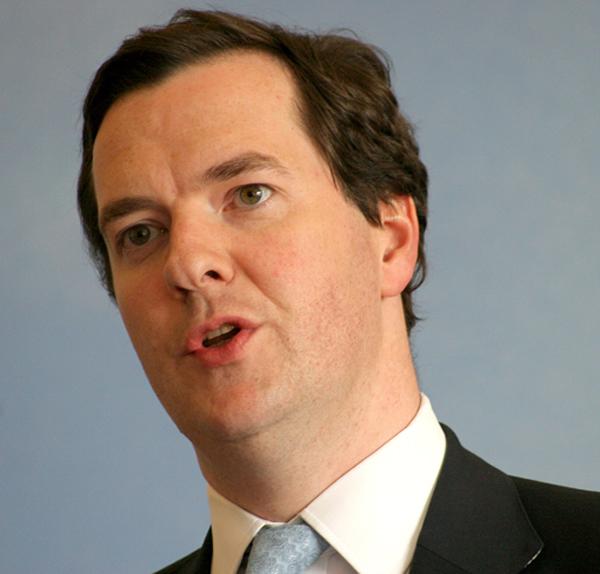
Osborne first announced the scheme as part of his Autumn Statement
Is the government finally wising up to the power of sport? Amid foreign policy challenges in the Middle East and the launch of a transformational new education strategy – not to mention the fast-approaching EU referendum – it’s hard to know where sport sits in terms of priority in 10 Downing Street.
However, one thing is clear – the government now appears to recognise the importance of physical activity in the context of wider priorities, such as healthcare, a more inclusive society and – during a time of austerity – the economy.
Since the government came to power last May it has launched a comprehensive blueprint for the sport sector in its 10-year plan, Sporting Future: A New Strategy for an Active Nation. While the industry generally welcomed the document’s vision and objectives, lots of the detail – particularly in terms of measurement – still needs to be thrashed out.
However, before sports minister Tracey Crouch delivered the strategy last December, her Conservative colleague, chancellor George Osborne, used his Autumn Statement in November to announce that the Treasury would launch a consultation on whether grassroots sports clubs, which are company-owned and generating profit, should become exempt from paying corporation tax.
That consultation paper was published during the back end of last month and drew cautious acclaim for potentially giving grassroots sport the support it needs during difficult economic times.
Emma Boggis, chief executive of the Sport and Recreation Alliance, says the consultation represents a “very welcome financial boost to grassroots sport and the 150,000 sports clubs up and down the country”.
“The new scheme will help grassroots sport to flourish by simplifying the treatment of national governing bodies’ grassroots expenditure and supporting clubs to lever in additional investment from private companies,” she adds.
The chancellor must be reasonably confident that whatever the Treasury loses in corporation tax, it will make up in tax receipts from spending by clubs and private sector funders on sports equipment and potentially new facilities. Osborne’s colleagues at the DCMS will also have one eye on the potential knock on effect on participation rates, as well as societal and health targets set out in Sporting Future.
Rob Wilson, principal lecturer in Sports Management at Sheffield Hallam University, suggests that the tax relief would stimulate private sector investment in social enterprises. He pointed to De Hood – a community boxing group set up in a deprived area of Sheffield – which has helped to lower crime and levels of obesity as the type of sporting organisation which could benefit.
Wilson added that money saved could be spent by clubs on hiring facilities for longer periods, potentially increasing classes and reaching different age groups and demographics, thus giving a boost to participation numbers.
“I hope this will lead to more grassroots clubs popping up, particularly for minority sports. This may be the catalyst they need,” said Wilson.
Stimulating private sector investment is a key pillar of the consultation, particularly in terms of facilities provision, volunteer training and support and coaching. The document’s introduction acknowledges the “need to reduce the over-reliance of some organisations on the public sector and move to a mixed funding model” in times of “continued pressure on public finances”.
“In the time of pressure on the government finances, it is crucial that government, the private sector, and the sport industry work together to consider new ways of ensuring the long-term financial sustainability of the sector,” said David Gauke, financial secretary to the Treasury overseeing the consultation.
That said, exchequer and National Lottery funding for Sport England is guaranteed at £1.4bn until the end of the current parliament in 2020.
While cautiously welcoming the move, Sport England and other NGBs are keeping their powder dry until the consultation period closes on 15 June 2016. Following that, the government will comb through the responses and make a formal response during the 2016 Autumn Statement – a response which may go a long way towards demonstrating its appreciation of the sport and physical activity sector.
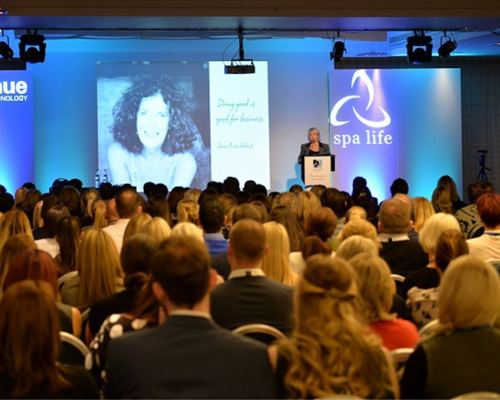
The Spa Life UK Convention returns from 21–23 June 2026 at Whittlebury Park Hotel, Spa &
Golf Resort, bringing together spa managers, directors and owners for two days of focused
education, meaningful connection and commercial insight. [more...]
Le Atelier by C.O.D.E. doesn't offer a standard bespoke service, it provides a highly
customised approach to designing massage beds and loungers in high-end wellness
environments. [more...]
Osborne first announced the scheme as part of his Autumn Statement
Is the government finally wising up to the power of sport? Amid foreign policy challenges in the Middle East and the launch of a transformational new education strategy – not to mention the fast-approaching EU referendum – it’s hard to know where sport sits in terms of priority in 10 Downing Street.
However, one thing is clear – the government now appears to recognise the importance of physical activity in the context of wider priorities, such as healthcare, a more inclusive society and – during a time of austerity – the economy.
Since the government came to power last May it has launched a comprehensive blueprint for the sport sector in its 10-year plan, Sporting Future: A New Strategy for an Active Nation. While the industry generally welcomed the document’s vision and objectives, lots of the detail – particularly in terms of measurement – still needs to be thrashed out.
However, before sports minister Tracey Crouch delivered the strategy last December, her Conservative colleague, chancellor George Osborne, used his Autumn Statement in November to announce that the Treasury would launch a consultation on whether grassroots sports clubs, which are company-owned and generating profit, should become exempt from paying corporation tax.
That consultation paper was published during the back end of last month and drew cautious acclaim for potentially giving grassroots sport the support it needs during difficult economic times.
Emma Boggis, chief executive of the Sport and Recreation Alliance, says the consultation represents a “very welcome financial boost to grassroots sport and the 150,000 sports clubs up and down the country”.
“The new scheme will help grassroots sport to flourish by simplifying the treatment of national governing bodies’ grassroots expenditure and supporting clubs to lever in additional investment from private companies,” she adds.
The chancellor must be reasonably confident that whatever the Treasury loses in corporation tax, it will make up in tax receipts from spending by clubs and private sector funders on sports equipment and potentially new facilities. Osborne’s colleagues at the DCMS will also have one eye on the potential knock on effect on participation rates, as well as societal and health targets set out in Sporting Future.
Rob Wilson, principal lecturer in Sports Management at Sheffield Hallam University, suggests that the tax relief would stimulate private sector investment in social enterprises. He pointed to De Hood – a community boxing group set up in a deprived area of Sheffield – which has helped to lower crime and levels of obesity as the type of sporting organisation which could benefit.
Wilson added that money saved could be spent by clubs on hiring facilities for longer periods, potentially increasing classes and reaching different age groups and demographics, thus giving a boost to participation numbers.
“I hope this will lead to more grassroots clubs popping up, particularly for minority sports. This may be the catalyst they need,” said Wilson.
Stimulating private sector investment is a key pillar of the consultation, particularly in terms of facilities provision, volunteer training and support and coaching. The document’s introduction acknowledges the “need to reduce the over-reliance of some organisations on the public sector and move to a mixed funding model” in times of “continued pressure on public finances”.
“In the time of pressure on the government finances, it is crucial that government, the private sector, and the sport industry work together to consider new ways of ensuring the long-term financial sustainability of the sector,” said David Gauke, financial secretary to the Treasury overseeing the consultation.
That said, exchequer and National Lottery funding for Sport England is guaranteed at £1.4bn until the end of the current parliament in 2020.
While cautiously welcoming the move, Sport England and other NGBs are keeping their powder dry until the consultation period closes on 15 June 2016. Following that, the government will comb through the responses and make a formal response during the 2016 Autumn Statement – a response which may go a long way towards demonstrating its appreciation of the sport and physical activity sector.
Global Wellness Day (GWD) marked its 15th anniversary on Saturday 13 June 2026, with the
theme: #JoyMagenta – a celebration of the healing qualities of simple gestures and activities
that spark joy.
Global luxury hospitality brand, Six Senses, has partnered with longevity healthcare provider,
HUM2N, to launch a clinic at Six Senses London, at The Whiteley.
As part of its first hotel partnership, Mayrlife – the medical health resort company known for its
site in Altaussee, Austria – has launched a day clinic at the Rosewood Vienna.
Premium London health club, KX Chelsea, will imminently unveil its most significant
redevelopment since its launch in 2002 to create an integrated wellness model combining
training, recovery and relaxation.
Rosewood Le Guanahani St Barth, on the northeast coast of Saint Barthélemy in the French
West Indies, is offering a programme of ocean-inspired yoga classes between 8-14 June to
celebrate Global Wellness Day (GWD).
Hotel de France, located on the British Isle of Jersey, has created a wellness retreat package
that includes a hot yoga session that will take place in Jersey Zoo’s butterfly sanctuary.
The Ritz-Carlton, Langkawi, in Malaysia, has revealed a schedule for Global Wellness Day
(GWD) that includes guided rainforest walks, mindful movement and guided coastal meditation
experiences.
Longevitix, a clinical platform for preventive and longevity medicine, has launched its AI-
powered intelligence system to help physicians deliver continuous, personalised longevity-
focused care at scale.
Atmantan Wellness Centre, an integrative wellness destination in Mulshi, near Pune in India, is
expanding its portfolio by adding a new centre in Hyderabad that will launch between 2028 and
2029.
The Spa Life UK Convention returns from 21–23 June 2026 at Whittlebury Park Hotel, Spa &
Golf Resort, bringing together spa managers, directors and owners for two days of focused
education, meaningful connection and commercial insight. [more...]
Le Atelier by C.O.D.E. doesn't offer a standard bespoke service, it provides a highly
customised approach to designing massage beds and loungers in high-end wellness
environments. [more...]