Yes! Send me the FREE digital editions of Spa Business and Spa Business insider magazines and the FREE weekly Spa Business and Spa Business insider ezines and breaking news alerts!
The RFU is spending £50m on 100 artificial pitches to create a legacy after hosting the 2015 Rugby World Cup. Matthew Campelli talks to development director Steve Grainger
By Matthew Campelli | Published in Sports Management Nov Dec 2016 issue 128
Steve Grainger believes the installation of artificial pitches is the only way to accommodate increased participation
Last month, the Rugby Football Union (RFU) published its 2015/16 annual report, with the document painting a picture of an organisation that is surprisingly healthy from a financial point of view – particularly for a sports governing body.
While England was dumped out of last year’s Rugby World Cup during the early stages, hosting the competition contributed to record revenues for the RFU.
The NGB banked £407.1m over the year, almost doubling last year’s revenue. Of that total, £228.1m can be directly attributed to hosting the World Cup.
As a result of the bulging coffers and the imperative to create a legacy after the tournament, the grassroots of the game is due to benefit. The RFU increased its rugby development fund by 5 per cent to £34.1m, and has just started the rollout on its ambitious £50m artificial grass pitch programme for clubs and community sites.
World Cup legacy Steve Grainger, the RFU’s director of rugby development, is overseeing the project – the largest-ever infrastructure programme for the grassroots game.
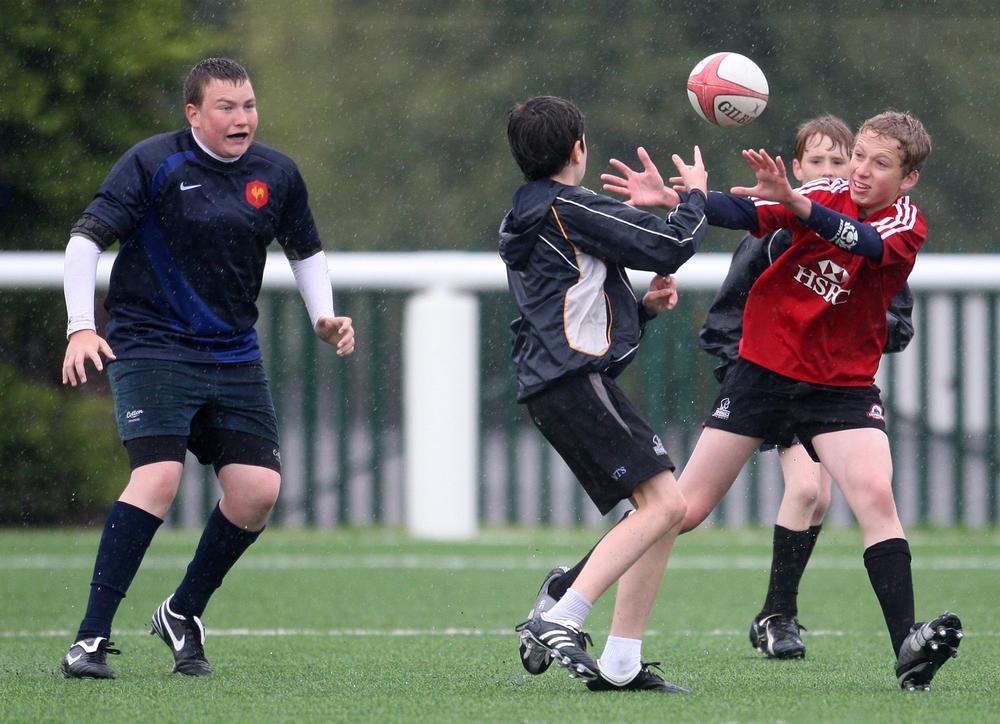
While there will always be some debate over the playability of artificial grass over natural turf, Grainger is in no doubt that the installation of the former at several sites around the country is the only way to accommodate the RFU’s goals for increased participation and counter the “Great British weather”, which is predicted to become wetter in the upcoming years.
“We were looking to do something fairly major on the back of staging the Rugby World Cup, and we did a lot of lead-up work and attempts to grow participation,” he tells Sports Management. “We wanted to put down some foundations now for what we hope will be an extended development period over the next four years.
“Winters will be warmer and wetter, and after assessing natural turf pitches across the country we found we’re struggling to cope with current participation levels. We’re determined to grow the game, but we need to think differently about where we play the game.”
The £50m pot will go towards two types of pitch: 60 club pitches that the RFU will fund completely, and 40 community pitches to be jointly funded by the RFU and a partner, either a local authority or other governing body.
Construction on the first three club pitches has begun in Preston, Aylesbury and Weston-super-Mare, and Grainger reveals that the RFU has now identified locations for the second round of club sites.
“We have an idea of where we think demand is, based on population, and also things like the volume of local schools that are either playing rugby now or that we are targeting to get involved in the next few years. The bigger the volume in schools, the greater the demand to play outside of schools in the surrounding clubs.
“There’s no point going into an area where there is no rugby culture and no history. But the perfect site for us would be an area where there is a new level of interest in rugby and quite a lot of latent demand.”
Investment criteria However, not just any club is able to throw its hat into the ring. Clubs will have to own their piece of land – or at least have a very long lease – so the RFU can “take a sub-lease and capitalise the investment”. They also need to have “ancillary facilities”, such as a reasonably-sized car park and basic clubhouse and changing facilities.
Community reach The community pitch scheme – dubbed the rugby share model by the RFU – will work slightly differently, and is not in such an advanced stage as the club pitch initiative.
Grainger says the RFU will search for places where exposure to rugby “hasn’t been huge”, but where the game still holds enough interest to attract local people to get involved and join their local club.
Finding the right partner is also crucial, as the RFU will only lay down a third of the investment, with the rest coming from other organisations.
Local authorities, higher education institutes, professional clubs and other governing bodies are expected to take an interest in the scheme – although for its investment the RFU expects at least a third of all playing time to be devoted to rugby.
The RFU is in the process of developing an agreement with the Football Association to partner on the latter’s Parklife artificial grass pitch hub project, which will see a number of facilities built in inner city areas to stimulate football participation. The pair are working on a project in Liverpool, which will see a purpose-built rugby pitch grouped together with football surfaces to capitalise on the high volume of people it is expected to attract.
Grainger is keen to stress, however, that local authorities, who are having their budgets cut would potentially have the most to gain from partnering.
“I think the partnership is probably very attractive to local authorities,” he suggests. “Those who perhaps can’t afford the cost of a pitch, but may be looking at putting a third of the cost in themselves, and finding other local organisations to contribute the final third.”
Attracting different demographics is an important factor in the RFU’s strategy, and the body is expecting to gain an extra 16,000 participants as a result of the increased playing opportunities the new artificial pitches will bring. Of that impressive figure, Grainger is confident that a significant number will come from ethnic minority or deprived backgrounds, and that a significant number will be female.
Increasing the number of playing rugby is of paramount importance to the grassroots chief, who is aiming to double the current number of 26,000 regular female participants over the next couple of years.
“We have a number of target groups,” says Grainger. “We have a significant number of women and girls playing in certain areas of the country, but we also hope to retain a lot more players in the 16-24 year-old bracket. That age group is critical for us to engage with.”
Retaining players and limiting drop-out rates is seen by many as the most challenging element of managing participation, and Grainger is convinced that the nature of artificial grass pitches – which can be played on with greater frequency than grass pitches – will allow players to take part at different times of the week that suit them, rather than being limited to weekend matches.
Great British weather Weather also has a bearing, and Grainger is quick to point out that research done by the RFU is not limited to population demographics, but also focuses on the weather conditions of different parts of the country.
“If you look at the statistics coming out of the Met Office it’s probably no surprise that the west of the country is receiving significantly more rainfall. This can be seen from the rugby heartlands of Devon and Cornwall all the way to the north-west.
“One thing we tend to get in the north is a greater percentage of one-pitch clubs, whereas down south you tend to get more two-, three- and four-pitch clubs. If we want to grow in the north and grow around a club with only one pitch, then opportunities surrounding this are going to be much more limited.”
The first round of artificial pitches located in Preston, Aylesbury and Weston-super-Mare are scheduled to open for the end of November/early-December, and Grainger is confident that the increase in artificial surfaces, and their perceived benefits, will be accepted and taken on board by the wider rugby community.
“If this investment proves successful we’ll do more,” he explains. “This is a long-term aim to see a greater spread of rugby played on both natural turf and artificial pitches.
“In the future, when clubs start to think about resurfacing or expanding and enhancing their pitches and facilities, they’ll think of artificial turf or some of the hybrids coming onto the market. It’s part of the transformation programme which is inevitably going to happen over the next couple of decades.”
Le Atelier by C.O.D.E. doesn't offer a standard bespoke service, it provides a highly
customised approach to designing massage beds and loungers in high-end wellness
environments. [more...]
In a world where imbalance often accumulates quietly, Wildsmith unveils its newest
wellbeing innovation: Silent Loads, an approach designed to meet the needs of modern spa
guests with precision and depth. [more...]
+ More featured suppliers
COMPANY PROFILES
Swissline by Dermalab
Inspired by the science of cellular rejuvenation and driven by the desire to optimise skin health an [more...]
The RFU is spending £50m on 100 artificial pitches to create a legacy after hosting the 2015 Rugby World Cup. Matthew Campelli talks to development director Steve Grainger
By Matthew Campelli | Published in Sports Management Nov Dec 2016 issue 128
Steve Grainger believes the installation of artificial pitches is the only way to accommodate increased participation
Last month, the Rugby Football Union (RFU) published its 2015/16 annual report, with the document painting a picture of an organisation that is surprisingly healthy from a financial point of view – particularly for a sports governing body.
While England was dumped out of last year’s Rugby World Cup during the early stages, hosting the competition contributed to record revenues for the RFU.
The NGB banked £407.1m over the year, almost doubling last year’s revenue. Of that total, £228.1m can be directly attributed to hosting the World Cup.
As a result of the bulging coffers and the imperative to create a legacy after the tournament, the grassroots of the game is due to benefit. The RFU increased its rugby development fund by 5 per cent to £34.1m, and has just started the rollout on its ambitious £50m artificial grass pitch programme for clubs and community sites.
World Cup legacy Steve Grainger, the RFU’s director of rugby development, is overseeing the project – the largest-ever infrastructure programme for the grassroots game.
While there will always be some debate over the playability of artificial grass over natural turf, Grainger is in no doubt that the installation of the former at several sites around the country is the only way to accommodate the RFU’s goals for increased participation and counter the “Great British weather”, which is predicted to become wetter in the upcoming years.
“We were looking to do something fairly major on the back of staging the Rugby World Cup, and we did a lot of lead-up work and attempts to grow participation,” he tells Sports Management. “We wanted to put down some foundations now for what we hope will be an extended development period over the next four years.
“Winters will be warmer and wetter, and after assessing natural turf pitches across the country we found we’re struggling to cope with current participation levels. We’re determined to grow the game, but we need to think differently about where we play the game.”
The £50m pot will go towards two types of pitch: 60 club pitches that the RFU will fund completely, and 40 community pitches to be jointly funded by the RFU and a partner, either a local authority or other governing body.
Construction on the first three club pitches has begun in Preston, Aylesbury and Weston-super-Mare, and Grainger reveals that the RFU has now identified locations for the second round of club sites.
“We have an idea of where we think demand is, based on population, and also things like the volume of local schools that are either playing rugby now or that we are targeting to get involved in the next few years. The bigger the volume in schools, the greater the demand to play outside of schools in the surrounding clubs.
“There’s no point going into an area where there is no rugby culture and no history. But the perfect site for us would be an area where there is a new level of interest in rugby and quite a lot of latent demand.”
Investment criteria However, not just any club is able to throw its hat into the ring. Clubs will have to own their piece of land – or at least have a very long lease – so the RFU can “take a sub-lease and capitalise the investment”. They also need to have “ancillary facilities”, such as a reasonably-sized car park and basic clubhouse and changing facilities.
Community reach The community pitch scheme – dubbed the rugby share model by the RFU – will work slightly differently, and is not in such an advanced stage as the club pitch initiative.
Grainger says the RFU will search for places where exposure to rugby “hasn’t been huge”, but where the game still holds enough interest to attract local people to get involved and join their local club.
Finding the right partner is also crucial, as the RFU will only lay down a third of the investment, with the rest coming from other organisations.
Local authorities, higher education institutes, professional clubs and other governing bodies are expected to take an interest in the scheme – although for its investment the RFU expects at least a third of all playing time to be devoted to rugby.
The RFU is in the process of developing an agreement with the Football Association to partner on the latter’s Parklife artificial grass pitch hub project, which will see a number of facilities built in inner city areas to stimulate football participation. The pair are working on a project in Liverpool, which will see a purpose-built rugby pitch grouped together with football surfaces to capitalise on the high volume of people it is expected to attract.
Grainger is keen to stress, however, that local authorities, who are having their budgets cut would potentially have the most to gain from partnering.
“I think the partnership is probably very attractive to local authorities,” he suggests. “Those who perhaps can’t afford the cost of a pitch, but may be looking at putting a third of the cost in themselves, and finding other local organisations to contribute the final third.”
Attracting different demographics is an important factor in the RFU’s strategy, and the body is expecting to gain an extra 16,000 participants as a result of the increased playing opportunities the new artificial pitches will bring. Of that impressive figure, Grainger is confident that a significant number will come from ethnic minority or deprived backgrounds, and that a significant number will be female.
Increasing the number of playing rugby is of paramount importance to the grassroots chief, who is aiming to double the current number of 26,000 regular female participants over the next couple of years.
“We have a number of target groups,” says Grainger. “We have a significant number of women and girls playing in certain areas of the country, but we also hope to retain a lot more players in the 16-24 year-old bracket. That age group is critical for us to engage with.”
Retaining players and limiting drop-out rates is seen by many as the most challenging element of managing participation, and Grainger is convinced that the nature of artificial grass pitches – which can be played on with greater frequency than grass pitches – will allow players to take part at different times of the week that suit them, rather than being limited to weekend matches.
Great British weather Weather also has a bearing, and Grainger is quick to point out that research done by the RFU is not limited to population demographics, but also focuses on the weather conditions of different parts of the country.
“If you look at the statistics coming out of the Met Office it’s probably no surprise that the west of the country is receiving significantly more rainfall. This can be seen from the rugby heartlands of Devon and Cornwall all the way to the north-west.
“One thing we tend to get in the north is a greater percentage of one-pitch clubs, whereas down south you tend to get more two-, three- and four-pitch clubs. If we want to grow in the north and grow around a club with only one pitch, then opportunities surrounding this are going to be much more limited.”
The first round of artificial pitches located in Preston, Aylesbury and Weston-super-Mare are scheduled to open for the end of November/early-December, and Grainger is confident that the increase in artificial surfaces, and their perceived benefits, will be accepted and taken on board by the wider rugby community.
“If this investment proves successful we’ll do more,” he explains. “This is a long-term aim to see a greater spread of rugby played on both natural turf and artificial pitches.
“In the future, when clubs start to think about resurfacing or expanding and enhancing their pitches and facilities, they’ll think of artificial turf or some of the hybrids coming onto the market. It’s part of the transformation programme which is inevitably going to happen over the next couple of decades.”
Premium London health club, KX Chelsea, will imminently unveil its most significant
redevelopment since its launch in 2002 to create an integrated wellness model combining
training, recovery and relaxation.
Rosewood Le Guanahani St Barth, on the northeast coast of Saint Barthélemy in the French
West Indies, is offering a programme of ocean-inspired yoga classes between 8-14 June to
celebrate Global Wellness Day (GWD).
Hotel de France, located on the British Isle of Jersey, has created a wellness retreat package
that includes a hot yoga session that will take place in Jersey Zoo’s butterfly sanctuary.
The Ritz-Carlton, Langkawi, in Malaysia, has revealed a schedule for Global Wellness Day
(GWD) that includes guided rainforest walks, mindful movement and guided coastal meditation
experiences.
Longevitix, a clinical platform for preventive and longevity medicine, has launched its AI-
powered intelligence system to help physicians deliver continuous, personalised longevity-
focused care at scale.
Atmantan Wellness Centre, an integrative wellness destination in Mulshi, near Pune in India, is
expanding its portfolio by adding a new centre in Hyderabad that will launch between 2028 and
2029.
A recent survey by the UK Spa Association (UKSA) into the industry’s approach to cancer care
has revealed that almost half of participating respondents (46 per cent) are unaware that
cancer is a disability and guests with a cancer diagnosis must be given
Mexican operator, Solmar Hotels and Resorts, is hosting a series of events in celebration of
Global Wellness Day, including a Temazcal ceremony at its Playa Grande Resort and Spa in Los
Cabos.
Mandarin Oriental has announced a standalone residence brand, Mansions, which will debut at
Emirates Palace, Mandarin Oriental Mansions, Abu Dhabi, in 2029.
Le Atelier by C.O.D.E. doesn't offer a standard bespoke service, it provides a highly
customised approach to designing massage beds and loungers in high-end wellness
environments. [more...]
In a world where imbalance often accumulates quietly, Wildsmith unveils its newest
wellbeing innovation: Silent Loads, an approach designed to meet the needs of modern spa
guests with precision and depth. [more...]
+ More featured suppliers
COMPANY PROFILES
Swissline by Dermalab Inspired by the science of cellular rejuvenation and driven by the desire to optimise skin health an [more...]