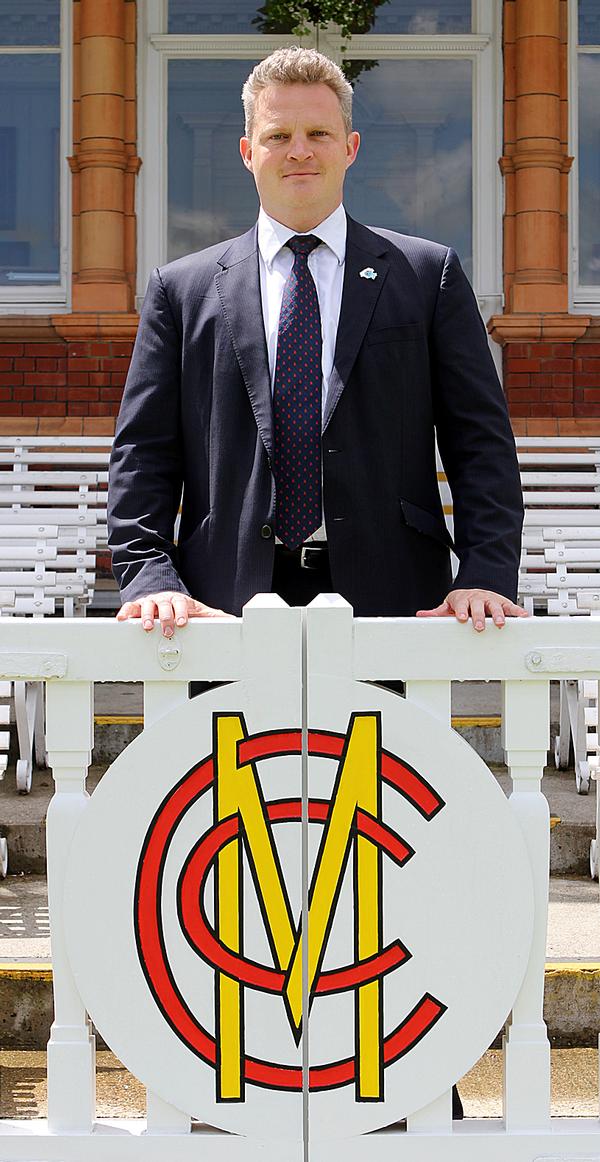
Russell Seymour was one of sport’s first dedicated sustainability managers
When governments and professional sports clubs decide to make a large investment to build a shiny brand spanking new stadium, increasingly the subject of sustainability and eco-friendliness will crop up at the planning stage. But what happens when you have a venue that is 200 years old?
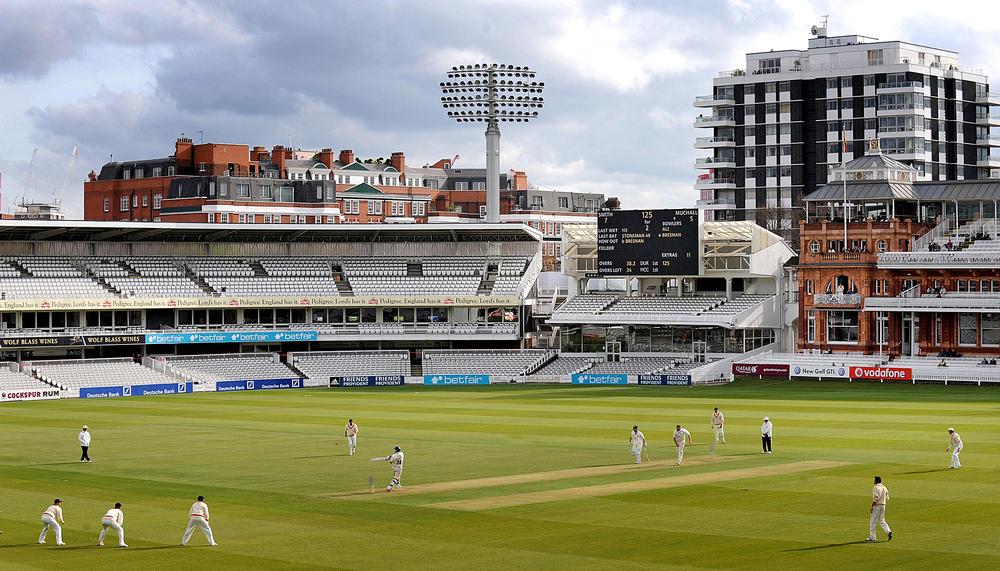
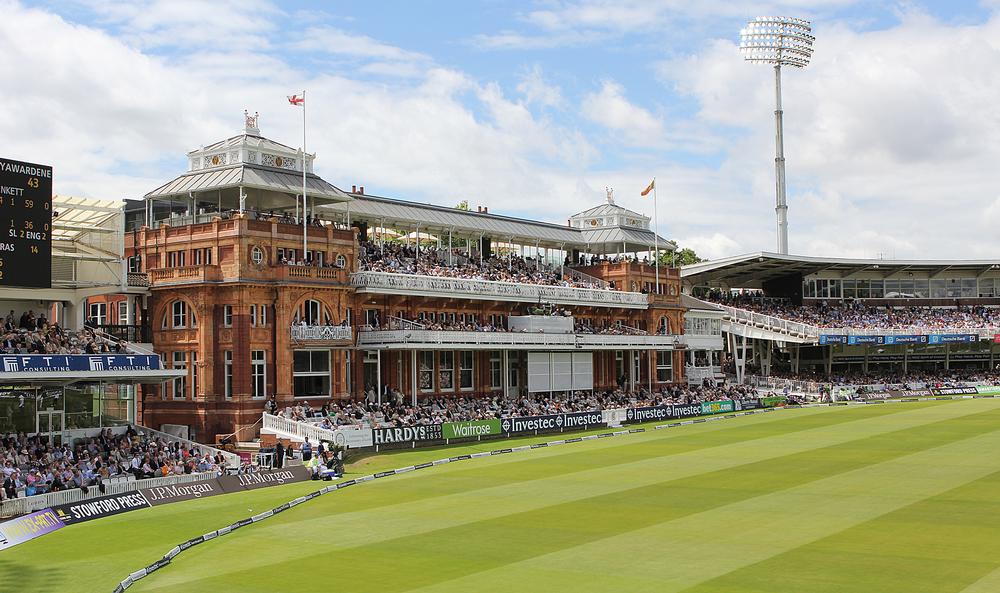
Well, the age of the facilities is no obstacle to sustainability, as Marylebone Cricket Club (MCC) – the owner of legendary cricket ground Lord’s – has proven. The famous old ground in north-west London has in fact become the first British cricket venue to run on 100 per cent renewable electricity.
Add to this the fact that its new Populous-designed Warner Stand includes photovoltaic roof panels for electricity generation and a water collection and recycling system, and you can see that MCC boasts some impressive sustainability credentials.
Industry pioneer MCC also boasts one of the only dedicated sustainability managers in British sport. While a number of other UK sports clubs and national governing bodies have facility-focused executives who look after sustainability, Russell Seymour was the first person with his title in British sport when he was bestowed it in 2009. He is also the chair of the British Association of Sustainable Sport, which promotes best practice.
Seymour tells Sports Management that MCC has been “pushing the agenda forward ever since” he was appointed. “We set some sustainability targets and in 2013 we formed a sustainability policy that was designed to reduce energy use and carbon emissions, and it just developed from that,” says Seymour.
The organisation originally set the target to reduce carbon emissions by 20 per cent by 2020, but that target was smashed. Electricity use has also declined by seven per cent and gas use by 25 per cent since 2010.
Seymour – who has an academic background in the environment and ecology – explains that the Warner Stand will add weight to Lord’s already impressive track record with sustainability, adding that he wants the other parts of the ground to “at least emulate” the Warner Stand and keep on improving.
He says: “We’re just being more efficient generally. We do lots of things when we have refurbishments but we’re looking to be more proactive, for example: by replacing all light bulbs with energy efficient units.”
However, for a popular venue that regularly welcomes thousands of people, staying sustainable remains a gargantuan task, particularly during major England Test matches when the ground’s capacity of 28,000 is stretched to the limit.
“We recycle as much as we can in the office – there are no rubbish bins at desks. A huge amount of the operation happens on a non-match day,” explains Seymour.
“However, on a match day you have to deliver and it’s certainly not as easy to. It’s a lot easier to do it when there aren’t 30,000 people around. You really need cooperation on something like recycling.”
But it is a balancing act, Seymour explains. “People come to sporting events for enjoyment – they want a release from everyday life. They don’t want someone preaching at them and telling them which bin to put their rubbish in. But we also need to make sure we manage it in the most sustainable way we can – it’s cheaper to recycle than throw away general waste.”
A supportive board The England and Wales Cricket Board (ECB) has been really supportive of the MCC’s concerted effort to be sustainable, says Seymour. The governing body used its latest strategy, Cricket Unleashed, to stress the importance of being eco-friendly, particularly in light of the damage caused to grassroots cricket pitches, some of which have been flooded or severely waterlogged due to changes in weather caused by climate change.
While the ECB has made no hard and fast targets for sustainability, Seymour believes the fact that it was referenced in the strategy is the “clearest statement that any governing body has made around environmental sustainability”.
“It will take time to embed, and a couple of years for other first-class counties to really get into it, although that’s not to say that they aren’t doing stuff already.”
While Lord’s sets the tone in terms of British cricket venues, Seymour says that the nation should be proud of its stadium sustainability achievements when looking at national stadiums such as Wembley, Twickenham and the Principality Stadium in Cardiff, Wales – all of which are 100 per cent renewable.
Seymour also expresses his admiration for a number of the newer stadiums across the pond, as well as work in France and Australia.
“There are some amazing venues in the world,” he explains. “There’s the Levi’s Stadium in San Francisco and then there’s the Sacramento Kings’ Golden 1 Center, which was the first sports venue to receive a LEED Platinum rating.”
Russell Seymour was one of sport’s first dedicated sustainability managers
When governments and professional sports clubs decide to make a large investment to build a shiny brand spanking new stadium, increasingly the subject of sustainability and eco-friendliness will crop up at the planning stage. But what happens when you have a venue that is 200 years old?
Well, the age of the facilities is no obstacle to sustainability, as Marylebone Cricket Club (MCC) – the owner of legendary cricket ground Lord’s – has proven. The famous old ground in north-west London has in fact become the first British cricket venue to run on 100 per cent renewable electricity.
Add to this the fact that its new Populous-designed Warner Stand includes photovoltaic roof panels for electricity generation and a water collection and recycling system, and you can see that MCC boasts some impressive sustainability credentials.
Industry pioneer MCC also boasts one of the only dedicated sustainability managers in British sport. While a number of other UK sports clubs and national governing bodies have facility-focused executives who look after sustainability, Russell Seymour was the first person with his title in British sport when he was bestowed it in 2009. He is also the chair of the British Association of Sustainable Sport, which promotes best practice.
Seymour tells Sports Management that MCC has been “pushing the agenda forward ever since” he was appointed. “We set some sustainability targets and in 2013 we formed a sustainability policy that was designed to reduce energy use and carbon emissions, and it just developed from that,” says Seymour.
The organisation originally set the target to reduce carbon emissions by 20 per cent by 2020, but that target was smashed. Electricity use has also declined by seven per cent and gas use by 25 per cent since 2010.
Seymour – who has an academic background in the environment and ecology – explains that the Warner Stand will add weight to Lord’s already impressive track record with sustainability, adding that he wants the other parts of the ground to “at least emulate” the Warner Stand and keep on improving.
He says: “We’re just being more efficient generally. We do lots of things when we have refurbishments but we’re looking to be more proactive, for example: by replacing all light bulbs with energy efficient units.”
However, for a popular venue that regularly welcomes thousands of people, staying sustainable remains a gargantuan task, particularly during major England Test matches when the ground’s capacity of 28,000 is stretched to the limit.
“We recycle as much as we can in the office – there are no rubbish bins at desks. A huge amount of the operation happens on a non-match day,” explains Seymour.
“However, on a match day you have to deliver and it’s certainly not as easy to. It’s a lot easier to do it when there aren’t 30,000 people around. You really need cooperation on something like recycling.”
But it is a balancing act, Seymour explains. “People come to sporting events for enjoyment – they want a release from everyday life. They don’t want someone preaching at them and telling them which bin to put their rubbish in. But we also need to make sure we manage it in the most sustainable way we can – it’s cheaper to recycle than throw away general waste.”
A supportive board The England and Wales Cricket Board (ECB) has been really supportive of the MCC’s concerted effort to be sustainable, says Seymour. The governing body used its latest strategy, Cricket Unleashed, to stress the importance of being eco-friendly, particularly in light of the damage caused to grassroots cricket pitches, some of which have been flooded or severely waterlogged due to changes in weather caused by climate change.
While the ECB has made no hard and fast targets for sustainability, Seymour believes the fact that it was referenced in the strategy is the “clearest statement that any governing body has made around environmental sustainability”.
“It will take time to embed, and a couple of years for other first-class counties to really get into it, although that’s not to say that they aren’t doing stuff already.”
While Lord’s sets the tone in terms of British cricket venues, Seymour says that the nation should be proud of its stadium sustainability achievements when looking at national stadiums such as Wembley, Twickenham and the Principality Stadium in Cardiff, Wales – all of which are 100 per cent renewable.
Seymour also expresses his admiration for a number of the newer stadiums across the pond, as well as work in France and Australia.
“There are some amazing venues in the world,” he explains. “There’s the Levi’s Stadium in San Francisco and then there’s the Sacramento Kings’ Golden 1 Center, which was the first sports venue to receive a LEED Platinum rating.”
Global Wellness Day (GWD) will mark its 15th anniversary on Saturday 13 June 2026, with the
theme: #JoyMagenta – a celebration of the healing qualities of simple gestures and activities
that spark joy.
Global luxury hospitality brand, Six Senses, has partnered with longevity healthcare provider,
HUM2N, to launch a clinic at Six Senses London, at The Whiteley.
As part of its first hotel partnership, Mayrlife – the medical health resort company known for its
site in Altaussee, Austria – has launched a day clinic at the Rosewood Vienna.
Premium London health club, KX Chelsea, will imminently unveil its most significant
redevelopment since its launch in 2002 to create an integrated wellness model combining
training, recovery and relaxation.
Rosewood Le Guanahani St Barth, on the northeast coast of Saint Barthélemy in the French
West Indies, is offering a programme of ocean-inspired yoga classes between 8-14 June to
celebrate Global Wellness Day (GWD).
Hotel de France, located on the British Isle of Jersey, has created a wellness retreat package
that includes a hot yoga session that will take place in Jersey Zoo’s butterfly sanctuary.
The Ritz-Carlton, Langkawi, in Malaysia, has revealed a schedule for Global Wellness Day
(GWD) that includes guided rainforest walks, mindful movement and guided coastal meditation
experiences.
Longevitix, a clinical platform for preventive and longevity medicine, has launched its AI-
powered intelligence system to help physicians deliver continuous, personalised longevity-
focused care at scale.
Atmantan Wellness Centre, an integrative wellness destination in Mulshi, near Pune in India, is
expanding its portfolio by adding a new centre in Hyderabad that will launch between 2028 and
2029.
A recent survey by the UK Spa Association (UKSA) into the industry’s approach to cancer care
has revealed that almost half of participating respondents (46 per cent) are unaware that
cancer is a disability and guests with a cancer diagnosis must be given