Around 22 per cent of UK people have trouble sleeping, and this can negatively affect health. Kath Hudson asks if health clubs can and should remedy the problem by offering on-site sleep services
By Kath Hudson | Published in Health Club Management 2017 issue 9
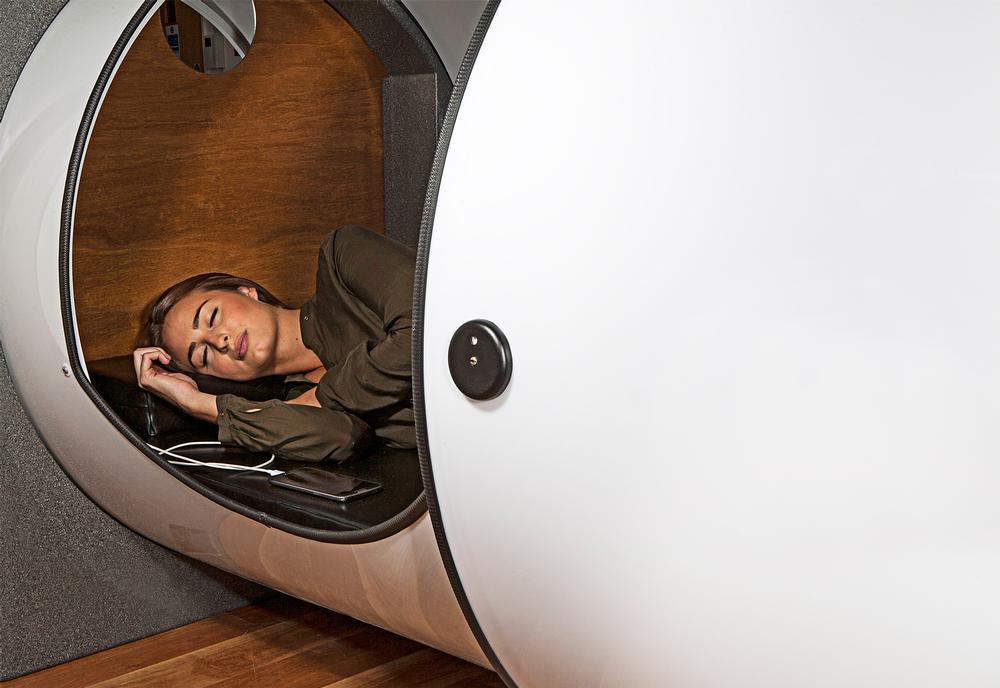
Several fitness studios in the US have added sleep pods to their facilities
Image courtesy of Podtime.
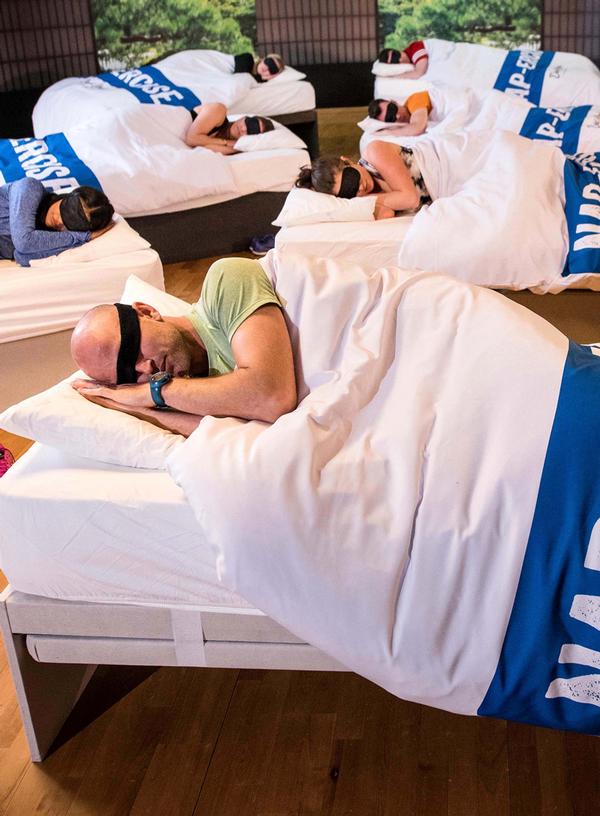
In an unusual move, David Lloyd Leisure (DLL) is swapping spin bikes for single beds at some of its clubs. It wants to give exhausted members somewhere to have a nap during the day.
Inspired by academic research that shows the benefits of napping during the day, and after a member survey revealed that 86 per cent are exhausted (see ‘David Lloyd Leisure survey results’ below), the premium operator decided to trial the concept in April at its Sidcup club. The trial was a success and, at the time of going to print, DLL had trialled its Nappercise class at three more clubs.
The 45 minute sessions take place in a studio, accompanied by music designed to encourage people to drift off. Feedback has been enthusiastic, with one member saying: “I didn’t think I’d be able to fall asleep in a room with other people, but it was surprisingly relaxing. The room is set out in such a way that you have your own personal space, plus the mood is very relaxing. I don’t have time to relax at home with the family around, so to be able to get a break, with no distractions, was really nice. I fell asleep and felt revived after the class.”
DLL isn’t the only operator investing in sleep facilities. Podtime, which supplied its sleep capsules to the Olympic Village, recently sold two of its sleep pods to New York PT studio, Focus Fitness, and five more to Trainerspace in Florida.
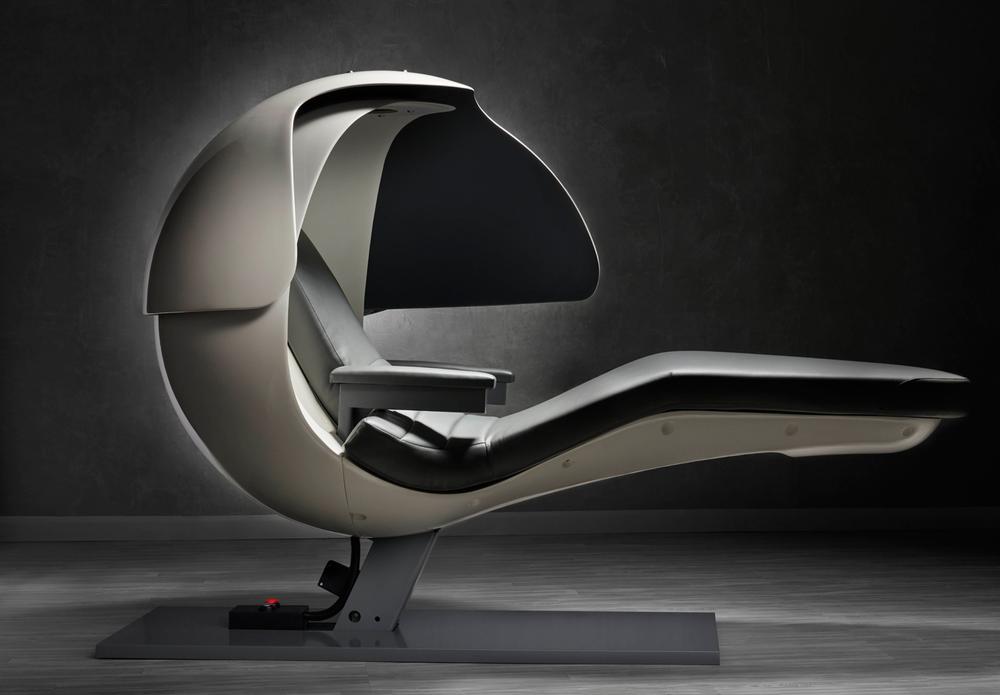
Similarly, VirginActive’s Melbourne, Australia and Broadgate, London clubs have invested in an EnergyPod – a chair-in-a-pod specifically designed for napping. It’s a move that Virgin Active’s UK product and fitness director Andy Birch says was inspired by the “increasing interest in mindfulness across the industry”.
“As a business in the UK we are focused on delivering that as well as mind-body restoration. We’ve seen this trend prevalent in our members,” he adds.
Insomnia epidemic The addition of sleep services to health clubs may appear surplus to requirements, but a recent survey by The Sleep Council found that lack of good quality sleep is a growing problem. One in four people have trouble sleeping – either with getting to sleep, waking too early, or not being able to stay asleep. Kathryn Pinkham, founder of The Insomnia Clinic, believes the growing use of technology is partly to blame. “People are connected for so much of the day that their brains are staying activated,” she says. “The blue light technology, used in phones and laptops, inhibits melatonin development which you need in order to go to sleep.”
Less than six hours of sleep a night can lead to sleep deprivation, which causes health problems. According to the Institute of Medicine (US) Committee on Sleep Medicine and Research, regularly getting less than seven hours of sleep per night can increase a person’s risk of serious medical conditions, including heart disease, obesity, diabetes, anxiety and depression. But is daytime napping the answer to sleep problems, and is the gym the best place to do it?
Despite DLL’s belief that its 45-minute mid-afternoon sleep sessions are ideal for “reinvigorating the mind”, Pinkham isn’t convinced. She believes sleeping during the day impacts negatively on nighttime sleep. However, sleep coach to elite athletes and author of Sleep, Nick Littlehales, believes daytime naps can be useful. He says that humans are programmed to recover through 24 hours and not just at night. However, he warns that daytime naps should be taken at the right time of day – between 1pm and 3pm, if you’re an early riser, or 5pm and 7pm, for night owls.
“In the 24/7 world we live in, it’s good to give employees the flexibility to nap during the day,” says Littlehales. “However, we also have to look at the underlying cause of why people are fatigued and not sleeping well. Health clubs are well placed to offer education in this area.”
Find the root cause “Rather than run sessions where people sleep, health club operators would be better off educating their clients on how to improve the quality of their rest, as well as running classes to help people wind down and sleep better at night,” he says.
Pinkham agrees that helping people to improve their headspace, either through meditation, yoga or pilates is also useful. Some operators are already doing this: VirginActive runs Calm by Candlelight – designed to quieten the mind in the lead up to sleep – at many of its central London clubs.
Probably the best intervention that health club operators can make is to keep people exercising regularly and support them in managing their stresses and anxieties, as this should naturally lead to better sleep. “Not having enough sleep can make everything worse, but getting 10 hours sleep a night is not a cure for stress in itself,” says Pinkham. “We help our clients to manage their stress and anxieties by looking at their work/life balance. If you don’t manage your stress, you will always feel tired.”
Research shows that certain populations, including shift workers and the elderly, may find naps help to enhance their learning, memory and mental alertness. Furthermore, many cultures have long embraced an afternoon nap as a natural human activity. However, for health club operators, the best place to start may be helping people to improve the quality of their nighttime sleep, before heavily investing in single beds or sleep pods.
David Lloyd Leisure survey results 43% said stress and anxiety led to insomnia
86% of parents say they suffer from fatigue
26% have poor sleep due to children/babies
26% regularly get less than five hours sleep a night
19% of parents admit to napping at work
11% have found themselves drifting off while driving
DLL’s Nappercise class is designed to recharge body and mind in 45 minutes
Nic Ronco: the business of SLEEP
The CEO of YeloSpa, a pay-as-you-go sleep service that was founded in New York, says sleep is a valuable commodity, which underpins all other aspects of health
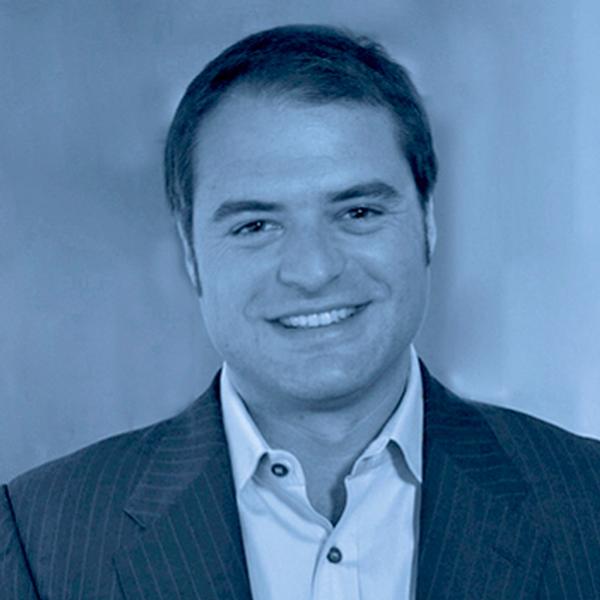
Nic Ronco, YeloSpa
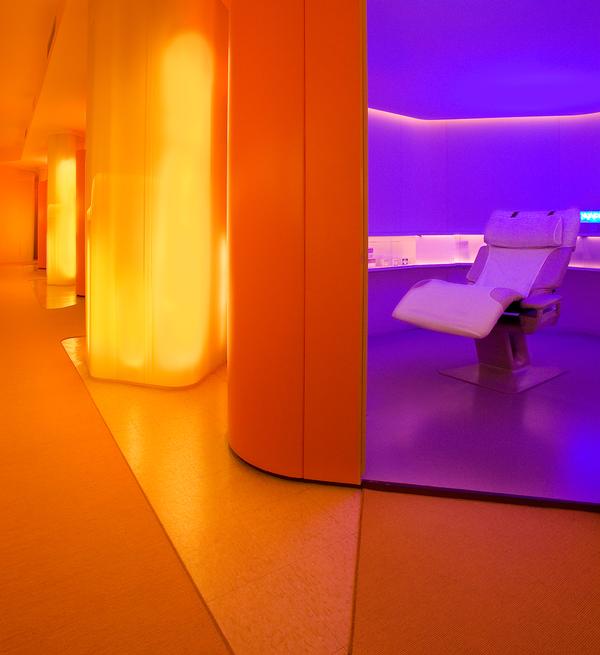
YeloSpa, a sanctuary of zero gravity sleep pods within midtown Manhattan, New York, was created by Nicolas Ronco in 2007.
Faced with constant jetlag from frequent business travel, Ronco founded YeloSpa after witnessing the restorative powers of short naps while working in Japan.
The concept is growing through franchising, with additional locations in Sao Paolo and San Juan.
Ronco says: “Sleep has been an undervalued commodity for the past 30 years, as we’ve sacrificed it to accommodate our increasingly busy lives. However, things are now moving – slowly but surely – in an encouraging direction.
“We’re finally realising there’s no point in exercising if we don’t let our bodies recuperate, no point in juicing if we can’t absorb the nutrients.”
He adds: “Naively people have assumed that sleep is a free commodity. It’s not. In fact, unless you’re homeless, you pay for sleep either through your rent, your mortgage, your hotel room charge or your plane or train tickets.
“Now that people understand the health value of proper sleep, they’re willing to pay for it at places, such as YeloSpa in New York City, and at their sport and fitness clubs.
“If anybody has any doubts about the commercial value of sleep, just think about why travellers are willing to pay five times more for a business class plane ticket than an economy one. Is it the free champagne or the gourmet meal?
No, it’s the flat bed.”
In addition to the original sleep pods, YeloSpa now also offers detox treatments, massages, reflexology and facials.
"Sleep has been an undervalued commodity for the past 30 years, as we’ve sacrificed it to accommodate our increasingly busy lives" - Nic Ronco, YeloSpa
The YeloSpa sites have been designed to create tranquility
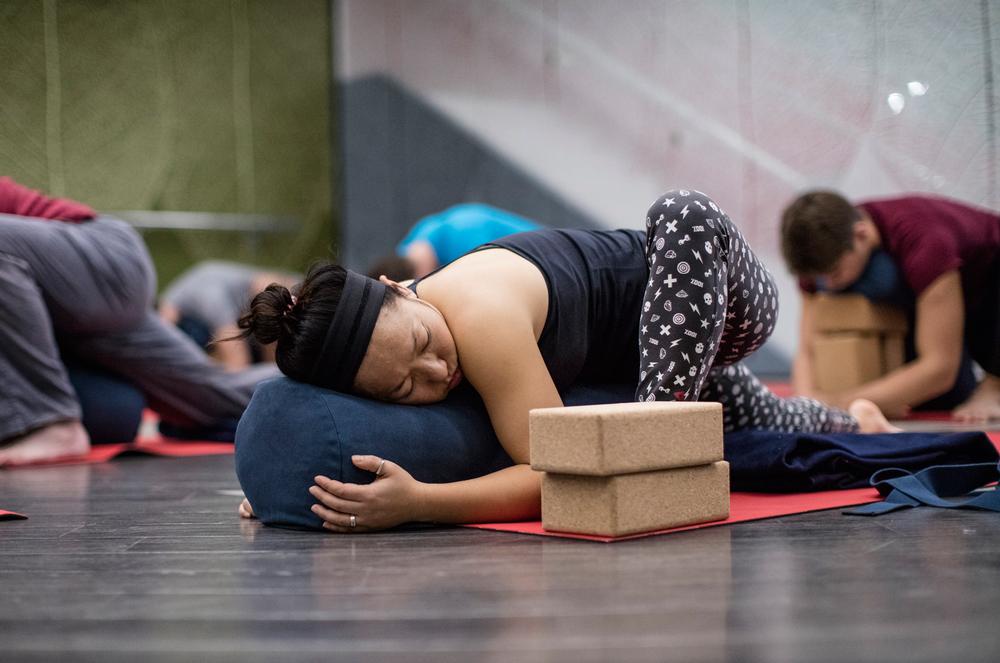
Virgin Active’s Calm by Candlelight class uses deep stretching to calm and de-stress
Users of the zero gravity EnergyPod can recharge with a 20-minute nap
Around 22 per cent of UK people have trouble sleeping, and this can negatively affect health. Kath Hudson asks if health clubs can and should remedy the problem by offering on-site sleep services
By Kath Hudson | Published in Health Club Management 2017 issue 9
Several fitness studios in the US have added sleep pods to their facilities
Image courtesy of Podtime.
In an unusual move, David Lloyd Leisure (DLL) is swapping spin bikes for single beds at some of its clubs. It wants to give exhausted members somewhere to have a nap during the day.
Inspired by academic research that shows the benefits of napping during the day, and after a member survey revealed that 86 per cent are exhausted (see ‘David Lloyd Leisure survey results’ below), the premium operator decided to trial the concept in April at its Sidcup club. The trial was a success and, at the time of going to print, DLL had trialled its Nappercise class at three more clubs.
The 45 minute sessions take place in a studio, accompanied by music designed to encourage people to drift off. Feedback has been enthusiastic, with one member saying: “I didn’t think I’d be able to fall asleep in a room with other people, but it was surprisingly relaxing. The room is set out in such a way that you have your own personal space, plus the mood is very relaxing. I don’t have time to relax at home with the family around, so to be able to get a break, with no distractions, was really nice. I fell asleep and felt revived after the class.”
DLL isn’t the only operator investing in sleep facilities. Podtime, which supplied its sleep capsules to the Olympic Village, recently sold two of its sleep pods to New York PT studio, Focus Fitness, and five more to Trainerspace in Florida.
Similarly, VirginActive’s Melbourne, Australia and Broadgate, London clubs have invested in an EnergyPod – a chair-in-a-pod specifically designed for napping. It’s a move that Virgin Active’s UK product and fitness director Andy Birch says was inspired by the “increasing interest in mindfulness across the industry”.
“As a business in the UK we are focused on delivering that as well as mind-body restoration. We’ve seen this trend prevalent in our members,” he adds.
Insomnia epidemic The addition of sleep services to health clubs may appear surplus to requirements, but a recent survey by The Sleep Council found that lack of good quality sleep is a growing problem. One in four people have trouble sleeping – either with getting to sleep, waking too early, or not being able to stay asleep. Kathryn Pinkham, founder of The Insomnia Clinic, believes the growing use of technology is partly to blame. “People are connected for so much of the day that their brains are staying activated,” she says. “The blue light technology, used in phones and laptops, inhibits melatonin development which you need in order to go to sleep.”
Less than six hours of sleep a night can lead to sleep deprivation, which causes health problems. According to the Institute of Medicine (US) Committee on Sleep Medicine and Research, regularly getting less than seven hours of sleep per night can increase a person’s risk of serious medical conditions, including heart disease, obesity, diabetes, anxiety and depression. But is daytime napping the answer to sleep problems, and is the gym the best place to do it?
Despite DLL’s belief that its 45-minute mid-afternoon sleep sessions are ideal for “reinvigorating the mind”, Pinkham isn’t convinced. She believes sleeping during the day impacts negatively on nighttime sleep. However, sleep coach to elite athletes and author of Sleep, Nick Littlehales, believes daytime naps can be useful. He says that humans are programmed to recover through 24 hours and not just at night. However, he warns that daytime naps should be taken at the right time of day – between 1pm and 3pm, if you’re an early riser, or 5pm and 7pm, for night owls.
“In the 24/7 world we live in, it’s good to give employees the flexibility to nap during the day,” says Littlehales. “However, we also have to look at the underlying cause of why people are fatigued and not sleeping well. Health clubs are well placed to offer education in this area.”
Find the root cause “Rather than run sessions where people sleep, health club operators would be better off educating their clients on how to improve the quality of their rest, as well as running classes to help people wind down and sleep better at night,” he says.
Pinkham agrees that helping people to improve their headspace, either through meditation, yoga or pilates is also useful. Some operators are already doing this: VirginActive runs Calm by Candlelight – designed to quieten the mind in the lead up to sleep – at many of its central London clubs.
Probably the best intervention that health club operators can make is to keep people exercising regularly and support them in managing their stresses and anxieties, as this should naturally lead to better sleep. “Not having enough sleep can make everything worse, but getting 10 hours sleep a night is not a cure for stress in itself,” says Pinkham. “We help our clients to manage their stress and anxieties by looking at their work/life balance. If you don’t manage your stress, you will always feel tired.”
Research shows that certain populations, including shift workers and the elderly, may find naps help to enhance their learning, memory and mental alertness. Furthermore, many cultures have long embraced an afternoon nap as a natural human activity. However, for health club operators, the best place to start may be helping people to improve the quality of their nighttime sleep, before heavily investing in single beds or sleep pods.
David Lloyd Leisure survey results 43% said stress and anxiety led to insomnia
86% of parents say they suffer from fatigue
26% have poor sleep due to children/babies
26% regularly get less than five hours sleep a night
19% of parents admit to napping at work
11% have found themselves drifting off while driving
DLL’s Nappercise class is designed to recharge body and mind in 45 minutes
Nic Ronco: the business of SLEEP
The CEO of YeloSpa, a pay-as-you-go sleep service that was founded in New York, says sleep is a valuable commodity, which underpins all other aspects of health
Nic Ronco, YeloSpa
YeloSpa, a sanctuary of zero gravity sleep pods within midtown Manhattan, New York, was created by Nicolas Ronco in 2007.
Faced with constant jetlag from frequent business travel, Ronco founded YeloSpa after witnessing the restorative powers of short naps while working in Japan.
The concept is growing through franchising, with additional locations in Sao Paolo and San Juan.
Ronco says: “Sleep has been an undervalued commodity for the past 30 years, as we’ve sacrificed it to accommodate our increasingly busy lives. However, things are now moving – slowly but surely – in an encouraging direction.
“We’re finally realising there’s no point in exercising if we don’t let our bodies recuperate, no point in juicing if we can’t absorb the nutrients.”
He adds: “Naively people have assumed that sleep is a free commodity. It’s not. In fact, unless you’re homeless, you pay for sleep either through your rent, your mortgage, your hotel room charge or your plane or train tickets.
“Now that people understand the health value of proper sleep, they’re willing to pay for it at places, such as YeloSpa in New York City, and at their sport and fitness clubs.
“If anybody has any doubts about the commercial value of sleep, just think about why travellers are willing to pay five times more for a business class plane ticket than an economy one. Is it the free champagne or the gourmet meal?
No, it’s the flat bed.”
In addition to the original sleep pods, YeloSpa now also offers detox treatments, massages, reflexology and facials.
"Sleep has been an undervalued commodity for the past 30 years, as we’ve sacrificed it to accommodate our increasingly busy lives" - Nic Ronco, YeloSpa
The YeloSpa sites have been designed to create tranquility
Virgin Active’s Calm by Candlelight class uses deep stretching to calm and de-stress
Users of the zero gravity EnergyPod can recharge with a 20-minute nap
A recent survey by the UK Spa Association (UKSA) into the industry’s approach to cancer care
has revealed that almost half of participating respondents (46 per cent) are unaware that
cancer is a disability and guests with a cancer diagnosis must be given
Mexican operator, Solmar Hotels and Resorts, is hosting a series of events in celebration of
Global Wellness Day, including a Temazcal ceremony at its Playa Grande Resort and Spa in Los
Cabos.
Mandarin Oriental has announced a standalone residence brand, Mansions, which will debut at
Emirates Palace, Mandarin Oriental Mansions, Abu Dhabi, in 2029.
Four Seasons Resort The Nam Hai in Hoi An, Vietnam, has put together a Global Wellness Day
(GWD) agenda with activations rooted in nature and shaped by four pillars of Joy – in
alignment with the day’s theme #JoyMagenta.
The Global Wellness Summit (GWS) will celebrate its 20th anniversary at the 2026 event in
Phuket, Thailand, later this year with the theme: The Science, Art and Soul of Wellness.
Auko, an all-inclusive development, is opening in Phong Nha in Vietnam in Q3 2026, with a
series of 30 tented eco-lodges and wellness hospitality operations by Lumina Wellbeing.
Therme Manchester’s 28-acre development, which will include interconnected glass pavilions
that measure 65,000sq m, will be the largest bathing and wellbeing attraction in the world once
complete, according to prof David Russell, CEO of Therme UK.
Naples Beach Club, a Four Seasons Resort, has opened a 2,800sq m spa called The Sanctuary,
with the design and concept inspired by the Native American people that populated Florida’s
Southwest coast – the Calusa.