Yes! Send me the FREE digital editions of Spa Business and Spa Business insider magazines and the FREE weekly Spa Business and Spa Business insider ezines and breaking news alerts!
Associated with urban culture and fast-paced entertainment, basketball is particularly popular with young people. CEO Stewart Kellett tells Steph Eaves how Basketball England is working to make the sport accessible to everyone
By Steph Eaves | Published in Sports Management 2018 issue 2
What’s the unique appeal of the sport? Basketball is a sport everyone can play informally. In fact, most kids play it at home when they start to throw, catch and run with a ball. It’s a multi-generational opportunity for fun, and we want to convert this simple part of a child’s physical literacy into playing basketball as they get older. There are thousands of outdoor courts that are free to use.
It’s a sport that has scoring action around every 20-24 seconds, so it’s never dull. It incorporates dimensions of music, fashion and celebrity interest. It’s got a unique urban culture and reaches diverse communities.
What’s the current level of participation? The latest Sport England data shows 306,400 adults aged 16-plus play basketball at least twice a month. It’s the third most popular team sport in the country, after football and cricket. And it’s even more popular among young people – one in four teenagers has played basketball at least once a month in the last year.
Basketball participation numbers have remained static over the last decade, but now we’re seeing an increase in our membership, with more people playing for fun, as well as seeking competitive opportunities. There was a rise from 30,000 to 33,000 over the last two seasons, and data for this season suggests another rise for 2017/18 of 3,000 participants.
This is great news for us, particularly as the majority of the growth is among young players.
How are you growing the grassroots? We have a number of initiatives in place. Our most successful is the Satellite Clubs programme. This is funded by Sport England and we work with registered clubs and deliverers to provide basketball training and playing opportunities at a time and venue convenient to casual players. Maybe they can’t travel to a traditional club training session or maybe club training isn’t what they want – this gives them an opportunity to play basketball in a welcoming, relaxed environment.
As part of our Satellite Clubs provision, we’re one of the leading governing bodies making our game accessible to young people with disabilities. Over 680 players with a disability accessed the programme in 2016/17 across 38 sites in England. The best part is that with all the sessions, the Satellite Club programme offers another avenue for clubs to increase their participation base.
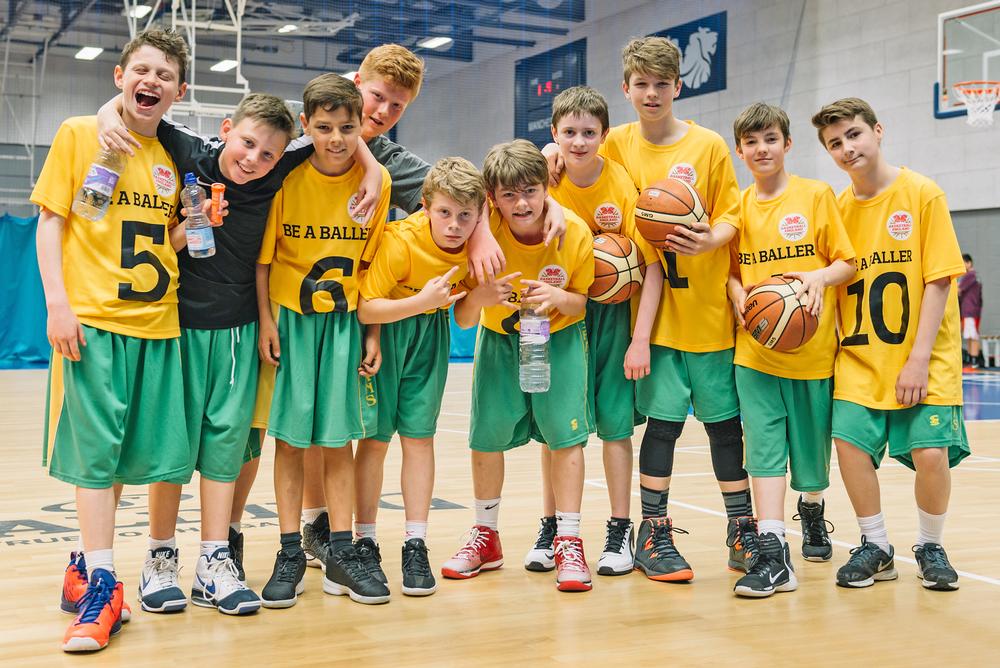
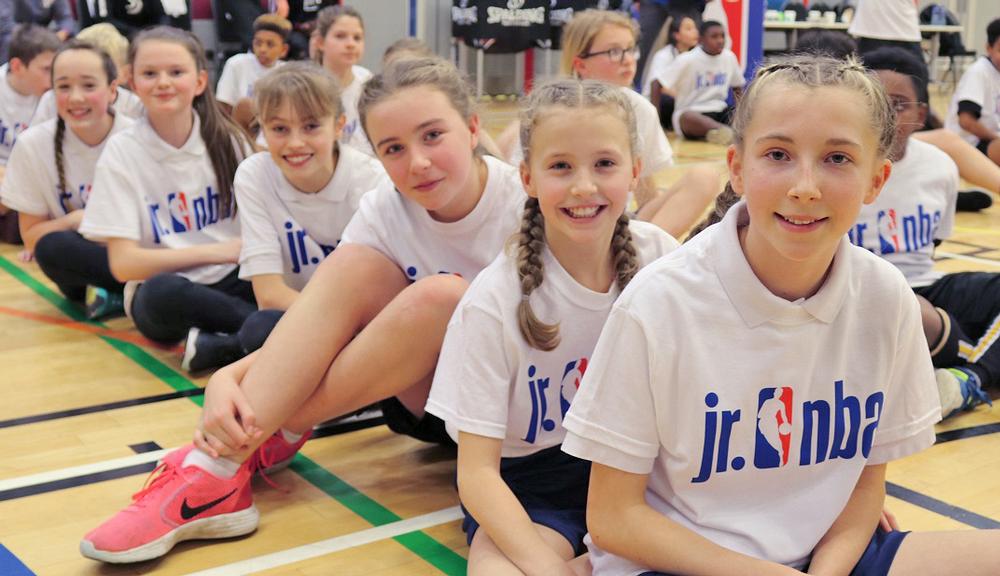
How are you getting more young people involved in the sport? We run a youth participation competition in partnership with the National Basketball Association (NBA) called the Jr. NBA Basketball England Leagues. We currently run four leagues – Manchester and Birmingham and two in London: a co-ed and a female-only league.
There are 30 schools in each league at Year 7 age (11-12-year-olds) and each school is ‘drafted’ to one of the 30 NBA teams. They get a playing strip for their drafted club and play their season in it. Each league has a series of play-offs and finals that make the competition special. In addition, a handful of lucky schools can access the NBA London Game or attend clinics that feature NBA Legends like Andre Miller, Dikembe Mutombo and John Amaechi. It’s an exciting programme that introduces young people to basketball in an engaging way.
Alongside NBA commissioner Adam Silver, we announced an expansion to the leagues in January, allowing us to grow the programme. We’ll be widening our footprint to incorporate leagues elsewhere in the country and leagues for Year 8 pupils, as well as working with select primary schools. By 2021, expansion should be in full swing with the programme reaching 8,000 children.
How do you plan to grow participation? Over our current four-year funding cycle, our target is to increase the number of people playing regularly by 10,000, with 8,000 of those playing weekly. We’re doing this in a number of ways; firstly, by improving competitions to ensure players have an enjoyable, accessible and competitive experience that’s affordable and manageable. We’re reviewing the travel involved for junior leagues to make them more appealing to young people (and parents). We’re also looking to make games more competitive, to ensure people aren’t put off by one-sided games. In addition, we’re working with Walking Basketball to engage older people returning to the sport.
Are you building more facilities? Yes, investing in facilities will ensure everyone can access basketball. Over the past two years we’ve seen enquiries relating to new facility build and investment increase, which is a good sign of potential growth.
Our National Basketball Performance Centre in Manchester, completed in 2016, is a world-class environment for the sport and new arenas have been or are being built in conjunction with professional clubs including Leicester, Worcester, Essex and Newcastle.
We’re working on a facility strategy with a number of stakeholders to ensure that we have the right standards of, and access to, facilities at recreational, club, talent and performance levels. The strategy will highlight technical guidance for investors and providers, along with a framework for how Basketball England and our partners are working to build a better infrastructure and leverage resources in each English region. We’ll be publishing the strategy this summer.
How is talent identified and nurtured from grassroots to elite? We’ve recently completed a global research programme – the Basketball Development Model – to identify the best ways to introduce people to the competitive game and to develop their talent.
Over 100 experts have contributed to the research and we’re now preparing to implement a new talent system to take people from clubs to elite level. It will reflect best practice in the sport while accommodating cultural factors that can affect participation and development. We’ll be making this change over the next two years.
How accessible is basketball? We promote basketball as a sport accessible to everyone. It’s particularly popular among lower socio-economic groups when compared with many other sports, and we’re really keen to grow this aspect of the sport even further, particularly among young people.
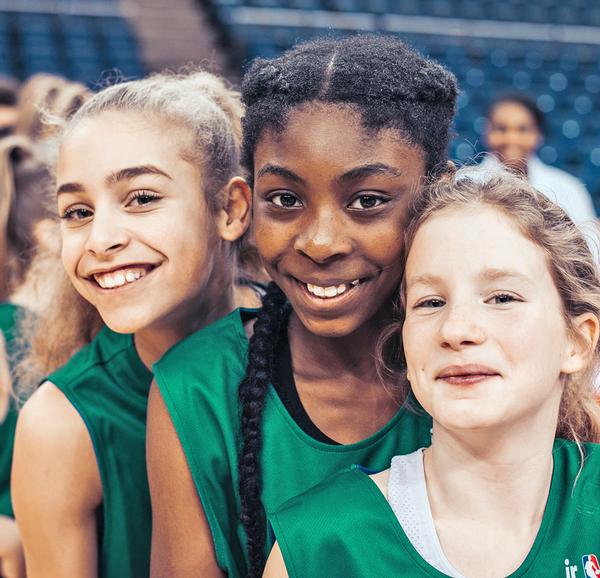
We make sure our programmes are taking place in areas where young people from all backgrounds have the chance to take part. Over the next four years, we’re looking to increase the proportion of members who come from the 20 per cent most deprived areas from 17 to 20 per cent, and the percentage of women and girls playing from 20 to 25 per cent.
How are you overcoming challenges to participation? We have a two-pronged strategy to grow participation. The first part is retention. Around 1 million children play basketball regularly in school, and around 25 per cent of these also play outside school. However, by the age of 16 many of these young people have stopped playing, with many more dropping out by 21.
We’re looking at finding ways to tap into their motivations and reduce the barriers that create drop-out so we can keep people in the sport for longer. We know sometimes life gets in the way, particularly when young people leave school, so we need to support them to keep playing when they no longer have that education support system around them. We also know cost can be a barrier, so we’re keen to ensure basketball remains affordable for all who would like to play.
To attract new participants, we want to create more awareness of the fun and benefits of the sport and make it easier to join in at a recreational level. We also want to renew interest if people have played before. We’ve added a new club finder feature to our website, and are promoting more recreational and outdoor basketball, including the relatively new 3x3 format, which involves two teams of three playing on one hoop.
Tell us about your partnership working We have an excellent partnership with the NBA, with which we deliver the Junior NBA leagues. We also work closely with AoC Sport and BUCS to deliver competition opportunities in further and higher education.
We’re strengthening our partnerships with colleges and universities across the country to help build and sustain our new talent and enterprise hubs. We plan to establish a hub in each of our 10 designated regions over the next two years. These hubs will give the student workforce a chance to contribute to the sport and gain experience for their own career development, while helping to grow the game at a grassroots level.
Our next partnership development phase is to secure additional income, including sponsorship, to support growth in the community game, and to help us upgrade the technical, tactical, coaching and sports science/sports medicine aspects of basketball.
How do major events affect participation? We’re excited about April’s Commonwealth Games in Australia and the opportunities it presents. For the first time since 2006, basketball is on the Games’ framework. We’re working hard to ensure teams are well prepared, and to give all 24 players the opportunity to increase their profiles and become role models and ambassadors.
The Commonwealth Games coming to Birmingham in 2022 is also a massive opportunity for the sport. For the first time ever, the 3x3 format of the game has been included. This gives us three years to develop our 3x3 offer to increase interest and understanding of the game. Hopefully this will help to make 3x3 one of the hottest tickets at the Commonwealth Games!
In the fast-paced world of fitness and wellness, where high-intensity workouts push us to
our limits and the sweat pours, the importance of efficient recovery cannot be overstated. [more...]
+ More featured suppliers
COMPANY PROFILES
Sommerhuber GmbH
Sommerhuber specialises in the manufacturing of heat-storing ceramics for spas. [more...]
Charme D'Orient
Charme d’Orient is a cosmetics and wellness brand deeply inspired by the ancestral beauty and wellne [more...]
Associated with urban culture and fast-paced entertainment, basketball is particularly popular with young people. CEO Stewart Kellett tells Steph Eaves how Basketball England is working to make the sport accessible to everyone
By Steph Eaves | Published in Sports Management 2018 issue 2
What’s the unique appeal of the sport? Basketball is a sport everyone can play informally. In fact, most kids play it at home when they start to throw, catch and run with a ball. It’s a multi-generational opportunity for fun, and we want to convert this simple part of a child’s physical literacy into playing basketball as they get older. There are thousands of outdoor courts that are free to use.
It’s a sport that has scoring action around every 20-24 seconds, so it’s never dull. It incorporates dimensions of music, fashion and celebrity interest. It’s got a unique urban culture and reaches diverse communities.
What’s the current level of participation? The latest Sport England data shows 306,400 adults aged 16-plus play basketball at least twice a month. It’s the third most popular team sport in the country, after football and cricket. And it’s even more popular among young people – one in four teenagers has played basketball at least once a month in the last year.
Basketball participation numbers have remained static over the last decade, but now we’re seeing an increase in our membership, with more people playing for fun, as well as seeking competitive opportunities. There was a rise from 30,000 to 33,000 over the last two seasons, and data for this season suggests another rise for 2017/18 of 3,000 participants.
This is great news for us, particularly as the majority of the growth is among young players.
How are you growing the grassroots? We have a number of initiatives in place. Our most successful is the Satellite Clubs programme. This is funded by Sport England and we work with registered clubs and deliverers to provide basketball training and playing opportunities at a time and venue convenient to casual players. Maybe they can’t travel to a traditional club training session or maybe club training isn’t what they want – this gives them an opportunity to play basketball in a welcoming, relaxed environment.
As part of our Satellite Clubs provision, we’re one of the leading governing bodies making our game accessible to young people with disabilities. Over 680 players with a disability accessed the programme in 2016/17 across 38 sites in England. The best part is that with all the sessions, the Satellite Club programme offers another avenue for clubs to increase their participation base.
How are you getting more young people involved in the sport? We run a youth participation competition in partnership with the National Basketball Association (NBA) called the Jr. NBA Basketball England Leagues. We currently run four leagues – Manchester and Birmingham and two in London: a co-ed and a female-only league.
There are 30 schools in each league at Year 7 age (11-12-year-olds) and each school is ‘drafted’ to one of the 30 NBA teams. They get a playing strip for their drafted club and play their season in it. Each league has a series of play-offs and finals that make the competition special. In addition, a handful of lucky schools can access the NBA London Game or attend clinics that feature NBA Legends like Andre Miller, Dikembe Mutombo and John Amaechi. It’s an exciting programme that introduces young people to basketball in an engaging way.
Alongside NBA commissioner Adam Silver, we announced an expansion to the leagues in January, allowing us to grow the programme. We’ll be widening our footprint to incorporate leagues elsewhere in the country and leagues for Year 8 pupils, as well as working with select primary schools. By 2021, expansion should be in full swing with the programme reaching 8,000 children.
How do you plan to grow participation? Over our current four-year funding cycle, our target is to increase the number of people playing regularly by 10,000, with 8,000 of those playing weekly. We’re doing this in a number of ways; firstly, by improving competitions to ensure players have an enjoyable, accessible and competitive experience that’s affordable and manageable. We’re reviewing the travel involved for junior leagues to make them more appealing to young people (and parents). We’re also looking to make games more competitive, to ensure people aren’t put off by one-sided games. In addition, we’re working with Walking Basketball to engage older people returning to the sport.
Are you building more facilities? Yes, investing in facilities will ensure everyone can access basketball. Over the past two years we’ve seen enquiries relating to new facility build and investment increase, which is a good sign of potential growth.
Our National Basketball Performance Centre in Manchester, completed in 2016, is a world-class environment for the sport and new arenas have been or are being built in conjunction with professional clubs including Leicester, Worcester, Essex and Newcastle.
We’re working on a facility strategy with a number of stakeholders to ensure that we have the right standards of, and access to, facilities at recreational, club, talent and performance levels. The strategy will highlight technical guidance for investors and providers, along with a framework for how Basketball England and our partners are working to build a better infrastructure and leverage resources in each English region. We’ll be publishing the strategy this summer.
How is talent identified and nurtured from grassroots to elite? We’ve recently completed a global research programme – the Basketball Development Model – to identify the best ways to introduce people to the competitive game and to develop their talent.
Over 100 experts have contributed to the research and we’re now preparing to implement a new talent system to take people from clubs to elite level. It will reflect best practice in the sport while accommodating cultural factors that can affect participation and development. We’ll be making this change over the next two years.
How accessible is basketball? We promote basketball as a sport accessible to everyone. It’s particularly popular among lower socio-economic groups when compared with many other sports, and we’re really keen to grow this aspect of the sport even further, particularly among young people.
We make sure our programmes are taking place in areas where young people from all backgrounds have the chance to take part. Over the next four years, we’re looking to increase the proportion of members who come from the 20 per cent most deprived areas from 17 to 20 per cent, and the percentage of women and girls playing from 20 to 25 per cent.
How are you overcoming challenges to participation? We have a two-pronged strategy to grow participation. The first part is retention. Around 1 million children play basketball regularly in school, and around 25 per cent of these also play outside school. However, by the age of 16 many of these young people have stopped playing, with many more dropping out by 21.
We’re looking at finding ways to tap into their motivations and reduce the barriers that create drop-out so we can keep people in the sport for longer. We know sometimes life gets in the way, particularly when young people leave school, so we need to support them to keep playing when they no longer have that education support system around them. We also know cost can be a barrier, so we’re keen to ensure basketball remains affordable for all who would like to play.
To attract new participants, we want to create more awareness of the fun and benefits of the sport and make it easier to join in at a recreational level. We also want to renew interest if people have played before. We’ve added a new club finder feature to our website, and are promoting more recreational and outdoor basketball, including the relatively new 3x3 format, which involves two teams of three playing on one hoop.
Tell us about your partnership working We have an excellent partnership with the NBA, with which we deliver the Junior NBA leagues. We also work closely with AoC Sport and BUCS to deliver competition opportunities in further and higher education.
We’re strengthening our partnerships with colleges and universities across the country to help build and sustain our new talent and enterprise hubs. We plan to establish a hub in each of our 10 designated regions over the next two years. These hubs will give the student workforce a chance to contribute to the sport and gain experience for their own career development, while helping to grow the game at a grassroots level.
Our next partnership development phase is to secure additional income, including sponsorship, to support growth in the community game, and to help us upgrade the technical, tactical, coaching and sports science/sports medicine aspects of basketball.
How do major events affect participation? We’re excited about April’s Commonwealth Games in Australia and the opportunities it presents. For the first time since 2006, basketball is on the Games’ framework. We’re working hard to ensure teams are well prepared, and to give all 24 players the opportunity to increase their profiles and become role models and ambassadors.
The Commonwealth Games coming to Birmingham in 2022 is also a massive opportunity for the sport. For the first time ever, the 3x3 format of the game has been included. This gives us three years to develop our 3x3 offer to increase interest and understanding of the game. Hopefully this will help to make 3x3 one of the hottest tickets at the Commonwealth Games!
The UK spa review and discovery platform for consumers, the Good Spa Guide, has announced
it will host the Good Spa Guide Awards 2026 during an event on 16 November at Sopwell House
Hotel in St Albans, UK.
Eighty-four per cent of consumers now say wellness is a top priority in their lives, with this
percentage increasing year on year, according to a preview presentation of McKinsey’s Future of
Wellness 2026 research report.
Mass protests have been taking place since Monday 1 June in Albania over the development of
a luxury resort by Donald Trump’s daughter Ivanka Trump and her husband Jared Kushner.
Global Wellness Day (GWD) marked its 15th anniversary on Saturday 13 June 2026, with the
theme: #JoyMagenta – a celebration of the healing qualities of simple gestures and activities
that spark joy.
Global luxury hospitality brand, Six Senses, has partnered with longevity healthcare provider,
HUM2N, to launch a clinic at Six Senses London, at The Whiteley.
As part of its first hotel partnership, Mayrlife – the medical health resort company known for its
site in Altaussee, Austria – has launched a day clinic at the Rosewood Vienna.
Premium London health club, KX Chelsea, will imminently unveil its most significant
redevelopment since its launch in 2002 to create an integrated wellness model combining
training, recovery and relaxation.
Rosewood Le Guanahani St Barth, on the northeast coast of Saint Barthélemy in the French
West Indies, is offering a programme of ocean-inspired yoga classes between 8-14 June to
celebrate Global Wellness Day (GWD).
Hotel de France, located on the British Isle of Jersey, has created a wellness retreat package
that includes a hot yoga session that will take place in Jersey Zoo’s butterfly sanctuary.
The Ritz-Carlton, Langkawi, in Malaysia, has revealed a schedule for Global Wellness Day
(GWD) that includes guided rainforest walks, mindful movement and guided coastal meditation
experiences.
In the fast-paced world of fitness and wellness, where high-intensity workouts push us to
our limits and the sweat pours, the importance of efficient recovery cannot be overstated. [more...]
+ More featured suppliers
COMPANY PROFILES
Sommerhuber GmbH Sommerhuber specialises in the manufacturing of heat-storing ceramics for spas. [more...]