Designer Adria Lake delves into her personal experiences of building a new home and company headquarters to explain her thinking on how resilient design can help us assimilate disruptions, unpredictability, and instability into our lives… and thrive
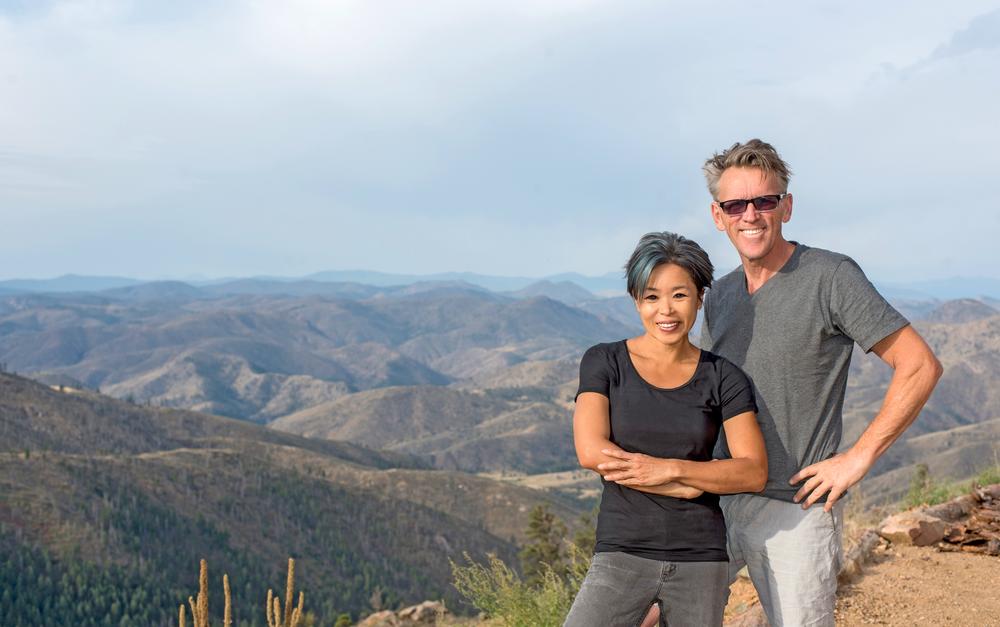
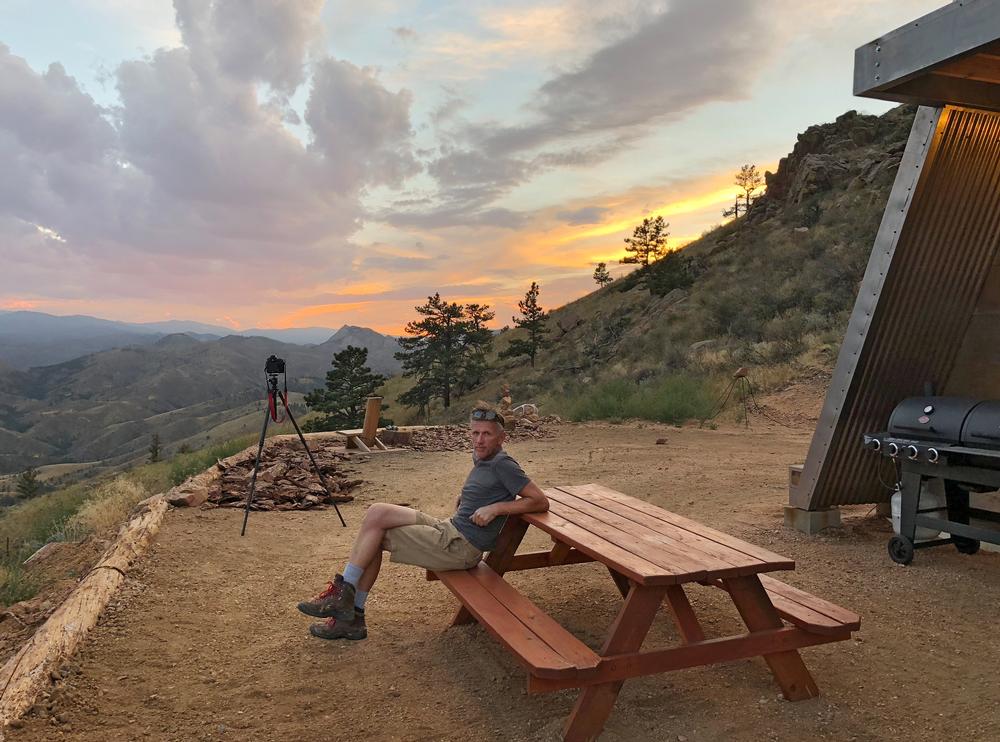
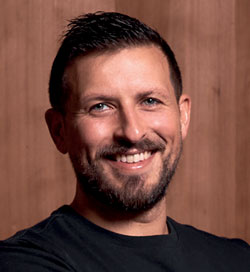
Adria Lake and her partner Marc Gerritsen, photographed at their home in Colorado for Well Home. September 2018
We spend most of our time in built environments. Our homes, places of work, public spaces – even parks and outdoor spaces we retreat or escape to – are designed and built for our comfort and safety.
Yet the rise of auto-immune and lifestyle diseases and sick building syndrome indicate that we’re not built for the constant homeostasis of modern living. Our muscles, heart, lungs and immune system evolved to respond and adapt to internal and external threats and changes. While we may prefer comfort and stability, our biological systems require a degree of unpredictability or stress to remain healthy and strong.
Resilience is hard wired in all of us and bolstering our resilience – the ability to adapt and thrive in any environment – is the aim of Resilience-based Wellness® (RbW®), a concept and approach we launched in 2016.
Discovering ways to define and apply resilience in our design and lives became the driving force behind the creation of our new home and company headquarters. This is our story …
LEARNING TO ADAPT Building on a mountain peak in northern Colorado was never originally on the agenda. But now that we’re here, there’s no other place in the world we’d rather be.
Looking out of the panoramic windows of our home and taking in the unobstructed views of the majestic Rocky mountains reminds us that we’re but a small, insignificant speck on this vast landscape.
How we designed and built our home and headquarters made a huge difference to the way we live and work (See Living with Resilient Design on page 139).
Marc Gerritsen, my partner and principal architect of MAAD Design, explains: “Finding a suitable location on which to build was a challenge, as the steep, rocky mountain slope offered limited construction space.
“There were many factors to consider. The building site we chose, while sheltered on the north side, is exposed to high winds, hail and snow storms on the other three, and is also vulnerable to wild fire, water shortages, intense year-round sun exposure and massive snow loads in winter.”
Safeguarding the buildings from all unpredictable conditions and threats in such a location would have been impossible. Instead, Marc designed robust structures that adapt to their surrounding and will continue to function in the face of all types of disruptions.
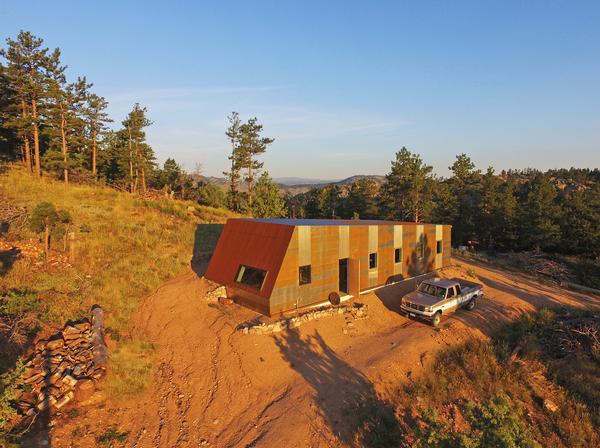
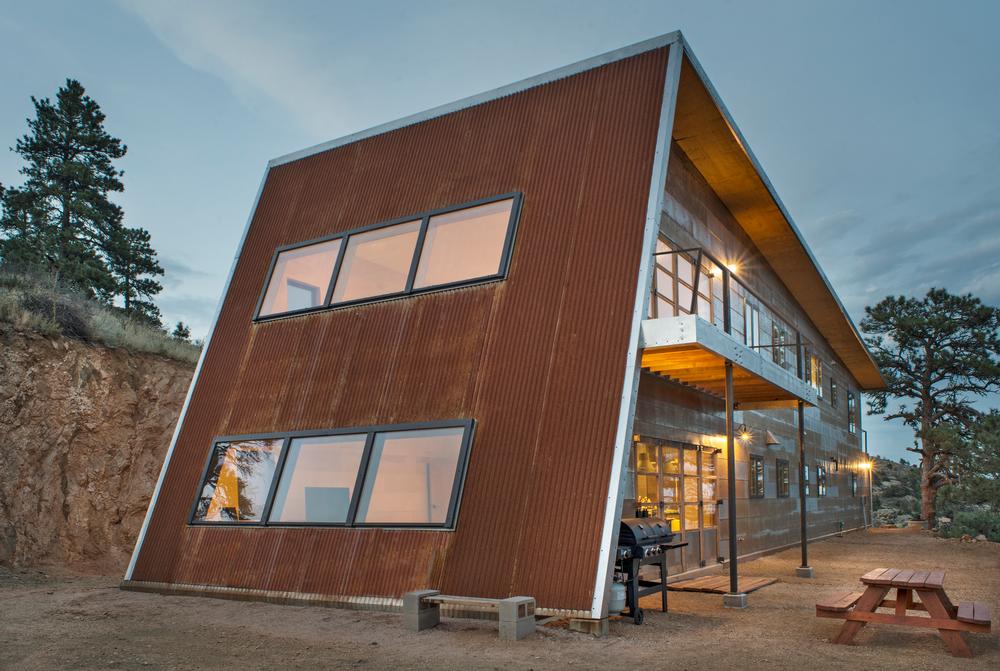
Take the monolithic, ark-like shape of the main building, for example. “Having spent time in the Alps, I knew a massive slanted wall with large panoramic windows would allow the sunlight to heat the building in the winter and give it an aerodynamic form that allowed 150 mile-an-hour winds to glide over it,” he says.
Adaptability also meant choosing durable materials for the build, such as copper, raw untreated steel and hardwood, which require low maintenance and will age beautifully when exposed to extreme weather. Marc also used a hybrid construction method and installed both simple and redundant systems to supply heat, water, and power to the site (See Resilient Methods on page 141).
Far from taming the forces of nature or mitigating disasters, Resilient Design is about understanding, working with, and utilising what we cannot predict or control to create diverse, dynamic environments which accommodate nature and in which we can thrive.
The common misconception that resilient design is about being ‘indestructible’ has led to the proliferation of products made of materials that will outlast us and continue to pollute and poison the planet.
An important aspect of resilient design is understanding the brevity of our existence and our part in the endless cycle of life all around us.
We recognise that the structures we built will one day outlast their use and for that reason, we built the entire complex using the deconstruction method (See Resilient Methods and Materials on page 141) so one day, the buildings can be removed from the site completely, to allow total regeneration to take place, or for something else to take its place.
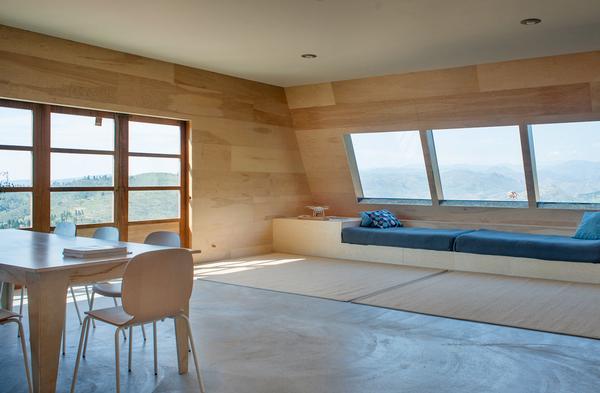
Eighty-five percent of materials, fixtures and finishes we used can be re-used or repurposed without any additional processing and by using birch plywood to cover 90 per cent of our interior walls, we also eliminated the need to use primer, paint, varnish and other toxic chemicals. We now have walls that can be completely disassembled and re-used in the future if needed.
It’s a sobering thought that in the US alone, more than 100 million tons of building-related construction and demolition debris are sent to landfill each year, and most of these materials are difficult or costly to recycle, which is why they make up about 40 per cent of the overall waste stream generated in the US every year.
The deconstruction method avoids costly demolition or building removal that further damages the environment.
THE LATEST BUZZWORD The words ‘resilient design’ are more likely to conjure up images of underground bunkers than beautiful design, and lack the sex appeal of organic architecture, with its curvaceous forms. Also, unlike their eco-driven counterparts, resilient buildings forgo the glowing halo. But increasingly unpredictable weather patterns as a result of climate change are compelling architects to create structures that can withstand extreme conditions.
In his recent article ‘The race to codify resilience design’, John Caulfield, senior editor of Building Design + Construction, noted that just about everyone in the industry is adding a resilience component to their standards. This includes the International Code Council, BREEAM, the Institute for Sustainable Infrastructure, American Society of Civil Engineers, IBHS and the US Green Building Council.
Suddenly, resilience is becoming the latest buzzword, but resilient design isn’t new – as nature’s own blueprint, it’s found everywhere, including the structural design of all living things. Resilience is nature’s answer to entropy: ice melts, iron rusts and we age, but although entropy is universal and irreversible, nature has found ways to adapt and flourish by using chaos as a building block and throughout 4.5 billion years of evolution, living things have adapted and survived in the face of disorder.
“There is no better designer than nature,” said Alexander McQueen – an observation that has been echoed for millennia by artists and architects. But while we’re eager to mimic nature’s aesthetics using biomimicry, we’re less inclined to adapt its methods of assimilating disorder. This is because as humans, we seek to bring order to chaos and to maintain equilibrium as if we were exempt from the most basic laws of the universe.
The truth is that without adaptation, nature’s astonishing diversity and beauty would never have emerged and without resilience, life itself would have perished long ago.
Instead, life, in all its splendour, is thriving. This thriving mindset is the foundation of Resilient Design.
Sustainable design focuses on conservation and scarcity, while resilient design is interested in scalability and growth. Sustainability sees a shrinking pie. Resilience learns to bake.
About the author Adria Lake is owner and MD of AW Lake, a wellness design and consultancy firm that works with some of the world’s top hotel brands, designing spa and wellness facilities.
The company – which has been based in Asia for 20 years – relocated to the US in 2017 to a new base in Colorado.
Lake plans to offer the Resilience Living programme, which exposes participants to unfamiliar situations in order to strengthen body and mind.
She says: “With our move to Colorado, we’re exploring a different approach to wellness. We believe creating places and experiences that strengthen our resilience and liberate our imagination, creativity and curiosity will have a greater and more lasting impact on our wellbeing and the future of our species – as well as our planet.”
She became interested in the idea of resiliency after being diagnosed with early onset MS in 2014.
“As someone who has been extremely active and physical my whole life, the possibility of losing my mobility and neurological functions was unthinkable,” says Lake. She took a six-month break from work, and headed to southern Chile in the dead of winter to see how her body would cope with the harsh Patagonian winter and the extreme heat and dryness of the Atacama Desert.
“My exposure to extreme cold, heat and isolation and unfamiliar surroundings, strengthened my nervous system, re-calibrated my immune system, and restored my health,” she says.
“Our wellbeing is encoded in our DNA and we are inherently resilient, but our dependence on modern comforts has weakened our immune systems, undermined our vitality and – frankly – made us fat and lazy.
“When we expose ourselves to varying conditions and live in spaces that connect us to, rather than insulate us from, our surroundings, we feel stronger and happier, and that is the very definition of being well.”
Lake also plans to launch a plant-based ketogenic functional food range under the brand S.M.R.T. Body Fuel.
Living with Resilient Design What is it like to live and work in a resilient designed building? You stay alert and engaged, as the same approach we use in our design – adaptability to unpredictable conditions and disruptions – applies to how we live and work. A few examples: • Our sunset deck features a ‘Cold Exposure Circuit’, consisting of a steel and glass enclosed wood-fired steam/sauna, a polar plunge pool and an Artic hydro-jet shower, equipped with its own recyclable water system.
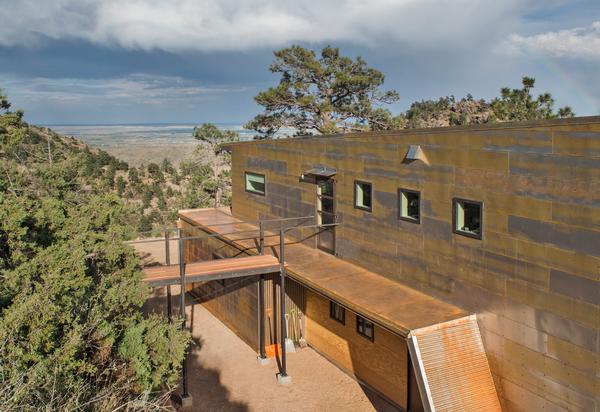
• A bridge from our second floor offices provides direct access to decks that are used as outdoor work and meeting spaces.
• We have a makers’ studio equipped to enable people to produce prototypes, create works of art, or learn simple woodworking and welding techniques.
• Everyone who visits for our Resilient Living Program will be encouraged to acquire new skills. To cultivate curiosity, for example, we have a professional kitchen, where cooking classes are conducted and everyone is expected to participate in meal preparation.
• Instead of air-conditioning, we opted for windows and doors for ventilation.
• Hydronic radiant floor heating is set at 50 degrees Fahrenheit or 10 degrees Celsius in the winter, when the outside temperature often drops below zero.
• A wood-fired stove and fireplaces provide additional warmth, using kindling and wood gathered from fallen trees on the property.
• With vast swathes of forest land and the Rocky Mountain wilderness on our doorstep, miles of walking and foraging trails offer daily adventure and exploration, both for ourselves and for our guests.
• And soon, we will also complete our Resilient Living and Wilderness Camp which will have access to more than 350 miles of hiking trails, white water rafting, canoeing, skiing, snowboarding, swimming, rock climbing, fishing, forest foraging, and wildlife tracking.
The makers’ studio is equipped to enable people who attend the Resilience-based Wellness courses to create and innovate
Adria Lake was diagnosed with early-onset MS and turned to the philosophy of resilience to heal
Resilient Methods and Materials While the need for adaptability and reusability shaped our vision, the real challenge was deciding on actual methods and materials. Once we decided on the following three methods, we were off 1. Deconstruction method • Use simple, open-span structural systems and standard sizes, modular building components and assemblies.
• We chose wood framing with heavy timbers, beams and stick-by-stick construction.
• Opt for durable materials that can be reused or have high re-sale value, such as hardwood flooring, multi-paned windows, unique doors and custom electrical fixtures.
• Minimise the use of different types of materials, make connections visible and accessible and use mechanical fasteners, such as screws, instead of sealants or adhesives.
2. Hybrid construction • We used a combination of wood framing and metal roofing and cladding for greater protection, longevity, flexibility, efficiency and value.
• This combination of materials has resulted in high levels of thermal insulation that drastically reduce energy consumption, while the metal roof and exterior cladding allow the building to withstand wild fire, high winds, uplift and water penetration.
• Corrugated steel roof and gutter systems provide an impervious, stable surface for collecting rainwater, inhibiting the growth of algae and shedding rain and snow, minimising the risk of moisture damage.
3. Simple and redundant systems • We used an ICF foundation (Insulating Concrete Form), whereby concrete is poured into forms that serve as insulation layers and remain in place as permanent parts of the structure.
• Continuous insulation on both sides of the wall virtually eliminates thermal bridging and energy loss, while an ICF foundation can cut energy bills in half and achieve a HERS index in the 40-50 range. It’s 50-60 per cent more efficient than existing standards.
• Rigid foam insulation offers high moisture and heat resistance, as well as protection against mould and pests. It also has a higher R-value than fiberglass or polystyrene.
• We chose redundant heat, water and power sources, including hydronic radiant floor heating, a gas fireplace and a wood burning stove.
• A 200m (680 ft) groundwater well produces two litres of water a minute. A 2,000-gallon underground cistern stores backup water, and the house also has a 1,200-gallon rainwater/snowmelt collection tank.
• Power is provided by gas, solar, electricity and a generator.
Birch plywood interior walls eliminate the need for primer or paint
The bridge leads to outdoor meeting and work spaces
The slanted wall of the main building allows 150 mile-an-hour winds to glide over it
Marc Gerritsen: “Resilient Design acknowledges we have finite resources, but also recognises we’re infinitely adaptable.”
The Spa Life UK Convention returns from 21–23 June 2026 at Whittlebury Park Hotel, Spa &
Golf Resort, bringing together spa managers, directors and owners for two days of focused
education, meaningful connection and commercial insight. [more...]
Designer Adria Lake delves into her personal experiences of building a new home and company headquarters to explain her thinking on how resilient design can help us assimilate disruptions, unpredictability, and instability into our lives… and thrive
Adria Lake and her partner Marc Gerritsen, photographed at their home in Colorado for Well Home. September 2018
We spend most of our time in built environments. Our homes, places of work, public spaces – even parks and outdoor spaces we retreat or escape to – are designed and built for our comfort and safety.
Yet the rise of auto-immune and lifestyle diseases and sick building syndrome indicate that we’re not built for the constant homeostasis of modern living. Our muscles, heart, lungs and immune system evolved to respond and adapt to internal and external threats and changes. While we may prefer comfort and stability, our biological systems require a degree of unpredictability or stress to remain healthy and strong.
Resilience is hard wired in all of us and bolstering our resilience – the ability to adapt and thrive in any environment – is the aim of Resilience-based Wellness® (RbW®), a concept and approach we launched in 2016.
Discovering ways to define and apply resilience in our design and lives became the driving force behind the creation of our new home and company headquarters. This is our story …
LEARNING TO ADAPT Building on a mountain peak in northern Colorado was never originally on the agenda. But now that we’re here, there’s no other place in the world we’d rather be.
Looking out of the panoramic windows of our home and taking in the unobstructed views of the majestic Rocky mountains reminds us that we’re but a small, insignificant speck on this vast landscape.
How we designed and built our home and headquarters made a huge difference to the way we live and work (See Living with Resilient Design on page 139).
Marc Gerritsen, my partner and principal architect of MAAD Design, explains: “Finding a suitable location on which to build was a challenge, as the steep, rocky mountain slope offered limited construction space.
“There were many factors to consider. The building site we chose, while sheltered on the north side, is exposed to high winds, hail and snow storms on the other three, and is also vulnerable to wild fire, water shortages, intense year-round sun exposure and massive snow loads in winter.”
Safeguarding the buildings from all unpredictable conditions and threats in such a location would have been impossible. Instead, Marc designed robust structures that adapt to their surrounding and will continue to function in the face of all types of disruptions.
Take the monolithic, ark-like shape of the main building, for example. “Having spent time in the Alps, I knew a massive slanted wall with large panoramic windows would allow the sunlight to heat the building in the winter and give it an aerodynamic form that allowed 150 mile-an-hour winds to glide over it,” he says.
Adaptability also meant choosing durable materials for the build, such as copper, raw untreated steel and hardwood, which require low maintenance and will age beautifully when exposed to extreme weather. Marc also used a hybrid construction method and installed both simple and redundant systems to supply heat, water, and power to the site (See Resilient Methods on page 141).
Far from taming the forces of nature or mitigating disasters, Resilient Design is about understanding, working with, and utilising what we cannot predict or control to create diverse, dynamic environments which accommodate nature and in which we can thrive.
The common misconception that resilient design is about being ‘indestructible’ has led to the proliferation of products made of materials that will outlast us and continue to pollute and poison the planet.
An important aspect of resilient design is understanding the brevity of our existence and our part in the endless cycle of life all around us.
We recognise that the structures we built will one day outlast their use and for that reason, we built the entire complex using the deconstruction method (See Resilient Methods and Materials on page 141) so one day, the buildings can be removed from the site completely, to allow total regeneration to take place, or for something else to take its place.
Eighty-five percent of materials, fixtures and finishes we used can be re-used or repurposed without any additional processing and by using birch plywood to cover 90 per cent of our interior walls, we also eliminated the need to use primer, paint, varnish and other toxic chemicals. We now have walls that can be completely disassembled and re-used in the future if needed.
It’s a sobering thought that in the US alone, more than 100 million tons of building-related construction and demolition debris are sent to landfill each year, and most of these materials are difficult or costly to recycle, which is why they make up about 40 per cent of the overall waste stream generated in the US every year.
The deconstruction method avoids costly demolition or building removal that further damages the environment.
THE LATEST BUZZWORD The words ‘resilient design’ are more likely to conjure up images of underground bunkers than beautiful design, and lack the sex appeal of organic architecture, with its curvaceous forms. Also, unlike their eco-driven counterparts, resilient buildings forgo the glowing halo. But increasingly unpredictable weather patterns as a result of climate change are compelling architects to create structures that can withstand extreme conditions.
In his recent article ‘The race to codify resilience design’, John Caulfield, senior editor of Building Design + Construction, noted that just about everyone in the industry is adding a resilience component to their standards. This includes the International Code Council, BREEAM, the Institute for Sustainable Infrastructure, American Society of Civil Engineers, IBHS and the US Green Building Council.
Suddenly, resilience is becoming the latest buzzword, but resilient design isn’t new – as nature’s own blueprint, it’s found everywhere, including the structural design of all living things. Resilience is nature’s answer to entropy: ice melts, iron rusts and we age, but although entropy is universal and irreversible, nature has found ways to adapt and flourish by using chaos as a building block and throughout 4.5 billion years of evolution, living things have adapted and survived in the face of disorder.
“There is no better designer than nature,” said Alexander McQueen – an observation that has been echoed for millennia by artists and architects. But while we’re eager to mimic nature’s aesthetics using biomimicry, we’re less inclined to adapt its methods of assimilating disorder. This is because as humans, we seek to bring order to chaos and to maintain equilibrium as if we were exempt from the most basic laws of the universe.
The truth is that without adaptation, nature’s astonishing diversity and beauty would never have emerged and without resilience, life itself would have perished long ago.
Instead, life, in all its splendour, is thriving. This thriving mindset is the foundation of Resilient Design.
Sustainable design focuses on conservation and scarcity, while resilient design is interested in scalability and growth. Sustainability sees a shrinking pie. Resilience learns to bake.
About the author Adria Lake is owner and MD of AW Lake, a wellness design and consultancy firm that works with some of the world’s top hotel brands, designing spa and wellness facilities.
The company – which has been based in Asia for 20 years – relocated to the US in 2017 to a new base in Colorado.
Lake plans to offer the Resilience Living programme, which exposes participants to unfamiliar situations in order to strengthen body and mind.
She says: “With our move to Colorado, we’re exploring a different approach to wellness. We believe creating places and experiences that strengthen our resilience and liberate our imagination, creativity and curiosity will have a greater and more lasting impact on our wellbeing and the future of our species – as well as our planet.”
She became interested in the idea of resiliency after being diagnosed with early onset MS in 2014.
“As someone who has been extremely active and physical my whole life, the possibility of losing my mobility and neurological functions was unthinkable,” says Lake. She took a six-month break from work, and headed to southern Chile in the dead of winter to see how her body would cope with the harsh Patagonian winter and the extreme heat and dryness of the Atacama Desert.
“My exposure to extreme cold, heat and isolation and unfamiliar surroundings, strengthened my nervous system, re-calibrated my immune system, and restored my health,” she says.
“Our wellbeing is encoded in our DNA and we are inherently resilient, but our dependence on modern comforts has weakened our immune systems, undermined our vitality and – frankly – made us fat and lazy.
“When we expose ourselves to varying conditions and live in spaces that connect us to, rather than insulate us from, our surroundings, we feel stronger and happier, and that is the very definition of being well.”
Lake also plans to launch a plant-based ketogenic functional food range under the brand S.M.R.T. Body Fuel.
Living with Resilient Design What is it like to live and work in a resilient designed building? You stay alert and engaged, as the same approach we use in our design – adaptability to unpredictable conditions and disruptions – applies to how we live and work. A few examples: • Our sunset deck features a ‘Cold Exposure Circuit’, consisting of a steel and glass enclosed wood-fired steam/sauna, a polar plunge pool and an Artic hydro-jet shower, equipped with its own recyclable water system.
• A bridge from our second floor offices provides direct access to decks that are used as outdoor work and meeting spaces.
• We have a makers’ studio equipped to enable people to produce prototypes, create works of art, or learn simple woodworking and welding techniques.
• Everyone who visits for our Resilient Living Program will be encouraged to acquire new skills. To cultivate curiosity, for example, we have a professional kitchen, where cooking classes are conducted and everyone is expected to participate in meal preparation.
• Instead of air-conditioning, we opted for windows and doors for ventilation.
• Hydronic radiant floor heating is set at 50 degrees Fahrenheit or 10 degrees Celsius in the winter, when the outside temperature often drops below zero.
• A wood-fired stove and fireplaces provide additional warmth, using kindling and wood gathered from fallen trees on the property.
• With vast swathes of forest land and the Rocky Mountain wilderness on our doorstep, miles of walking and foraging trails offer daily adventure and exploration, both for ourselves and for our guests.
• And soon, we will also complete our Resilient Living and Wilderness Camp which will have access to more than 350 miles of hiking trails, white water rafting, canoeing, skiing, snowboarding, swimming, rock climbing, fishing, forest foraging, and wildlife tracking.
The makers’ studio is equipped to enable people who attend the Resilience-based Wellness courses to create and innovate
Adria Lake was diagnosed with early-onset MS and turned to the philosophy of resilience to heal
Resilient Methods and Materials While the need for adaptability and reusability shaped our vision, the real challenge was deciding on actual methods and materials. Once we decided on the following three methods, we were off 1. Deconstruction method • Use simple, open-span structural systems and standard sizes, modular building components and assemblies.
• We chose wood framing with heavy timbers, beams and stick-by-stick construction.
• Opt for durable materials that can be reused or have high re-sale value, such as hardwood flooring, multi-paned windows, unique doors and custom electrical fixtures.
• Minimise the use of different types of materials, make connections visible and accessible and use mechanical fasteners, such as screws, instead of sealants or adhesives.
2. Hybrid construction • We used a combination of wood framing and metal roofing and cladding for greater protection, longevity, flexibility, efficiency and value.
• This combination of materials has resulted in high levels of thermal insulation that drastically reduce energy consumption, while the metal roof and exterior cladding allow the building to withstand wild fire, high winds, uplift and water penetration.
• Corrugated steel roof and gutter systems provide an impervious, stable surface for collecting rainwater, inhibiting the growth of algae and shedding rain and snow, minimising the risk of moisture damage.
3. Simple and redundant systems • We used an ICF foundation (Insulating Concrete Form), whereby concrete is poured into forms that serve as insulation layers and remain in place as permanent parts of the structure.
• Continuous insulation on both sides of the wall virtually eliminates thermal bridging and energy loss, while an ICF foundation can cut energy bills in half and achieve a HERS index in the 40-50 range. It’s 50-60 per cent more efficient than existing standards.
• Rigid foam insulation offers high moisture and heat resistance, as well as protection against mould and pests. It also has a higher R-value than fiberglass or polystyrene.
• We chose redundant heat, water and power sources, including hydronic radiant floor heating, a gas fireplace and a wood burning stove.
• A 200m (680 ft) groundwater well produces two litres of water a minute. A 2,000-gallon underground cistern stores backup water, and the house also has a 1,200-gallon rainwater/snowmelt collection tank.
• Power is provided by gas, solar, electricity and a generator.
Birch plywood interior walls eliminate the need for primer or paint
The bridge leads to outdoor meeting and work spaces
The slanted wall of the main building allows 150 mile-an-hour winds to glide over it
Marc Gerritsen: “Resilient Design acknowledges we have finite resources, but also recognises we’re infinitely adaptable.”
Global Wellness Day (GWD) marked its 15th anniversary on Saturday 13 June 2026, with the
theme: #JoyMagenta – a celebration of the healing qualities of simple gestures and activities
that spark joy.
Global luxury hospitality brand, Six Senses, has partnered with longevity healthcare provider,
HUM2N, to launch a clinic at Six Senses London, at The Whiteley.
As part of its first hotel partnership, Mayrlife – the medical health resort company known for its
site in Altaussee, Austria – has launched a day clinic at the Rosewood Vienna.
Premium London health club, KX Chelsea, will imminently unveil its most significant
redevelopment since its launch in 2002 to create an integrated wellness model combining
training, recovery and relaxation.
Rosewood Le Guanahani St Barth, on the northeast coast of Saint Barthélemy in the French
West Indies, is offering a programme of ocean-inspired yoga classes between 8-14 June to
celebrate Global Wellness Day (GWD).
Hotel de France, located on the British Isle of Jersey, has created a wellness retreat package
that includes a hot yoga session that will take place in Jersey Zoo’s butterfly sanctuary.
The Ritz-Carlton, Langkawi, in Malaysia, has revealed a schedule for Global Wellness Day
(GWD) that includes guided rainforest walks, mindful movement and guided coastal meditation
experiences.
Longevitix, a clinical platform for preventive and longevity medicine, has launched its AI-
powered intelligence system to help physicians deliver continuous, personalised longevity-
focused care at scale.
Atmantan Wellness Centre, an integrative wellness destination in Mulshi, near Pune in India, is
expanding its portfolio by adding a new centre in Hyderabad that will launch between 2028 and
2029.
The Spa Life UK Convention returns from 21–23 June 2026 at Whittlebury Park Hotel, Spa &
Golf Resort, bringing together spa managers, directors and owners for two days of focused
education, meaningful connection and commercial insight. [more...]