We know that where we live affects how healthy we are, but never before have they been prescribed quite like this. Stu Robarts walks the streets of the Healthy New Towns initiative to find out more about its prognosis
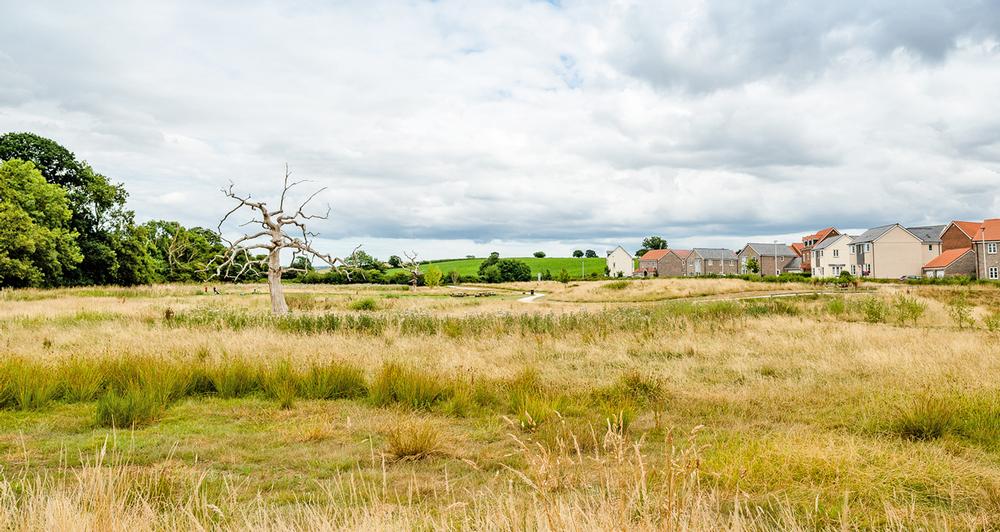
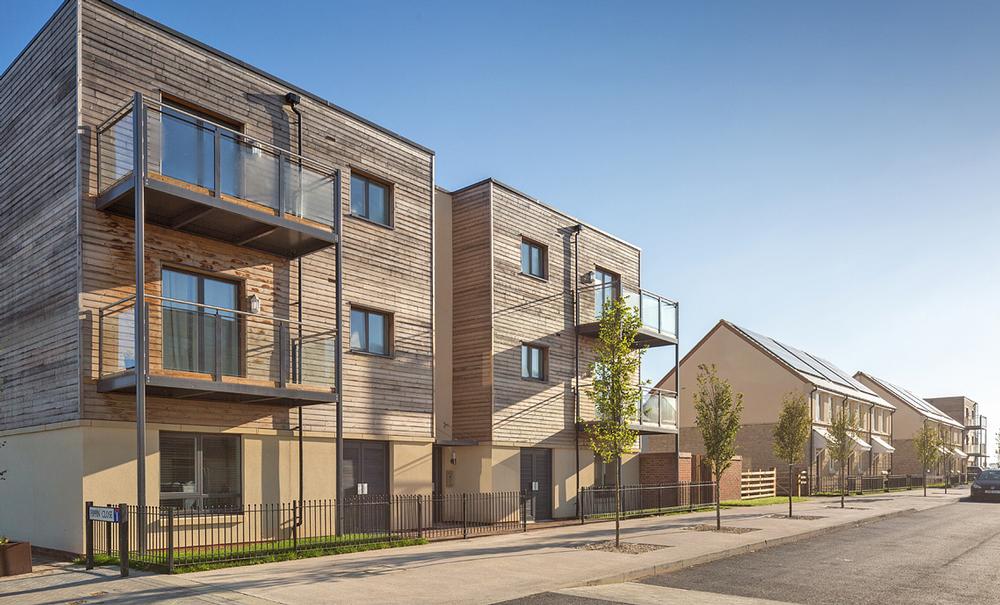
Cranbrook in Devon is one of the 10 Healthy New Town sites
It’s perhaps unsurprising that the National Health Service (NHS) has never got involved with building a town before. Coughs and colds have naturally taken precedence over homes and roads.
But there’s an increasing recognition that fixing people can only go so far in progressing public health. Instead, the NHS is seeking a more proactive, preventative approach to healthcare. The thinking goes that fewer people will need fixing if health is embedded more fundamentally into our lifestyles. And where better to embed it than the places we live? The Healthy New Towns initiative, which is being driven by the NHS, seeks to do just that. It will see 10 new towns designed around the healthy lifestyles of residents.
Making health a local business The Healthy New Towns scheme was launched in March 2016, with NHS chief executive Simon Stevens talking of an opportunity to ‘design out’ obesogenic environments, and ‘design in’ health and wellbeing. Expressions of interest had been sought the previous summer, resulting in a remarkable 114 responses from the likes of local authorities, housing associations and developers.
Responses were whittled down to 10 and “demonstrator sites” were chosen to be built across the country.
The developments range in size from 800 to 15,000 homes and there was no blueprint provided as to how they should be built. The developers of each site simply had to show an understanding of their own wellness priorities and provide rationales for radical new approaches to address them.
Ideas to spark wellbeing The proposed ideas for promoting healthy lifestyles at the various sites range from the obvious and practical – such as the provision of ample green space – to the more considered and involved, like building multidisciplinary health and wellness centres and designing their operations from the ground up to ensure people can be seen for multiple different, but related, appointments all on the same day. To enable people to see a doctor, for example, and then to get exercise prescription.
Other features include infrastructure for children to walk or cycle to school and to encourage play along the way, fast-food-free zones near schools and dementia-friendly street design. Each set of features reflects the unique health and wellness challenges that the different sites will be tackling.
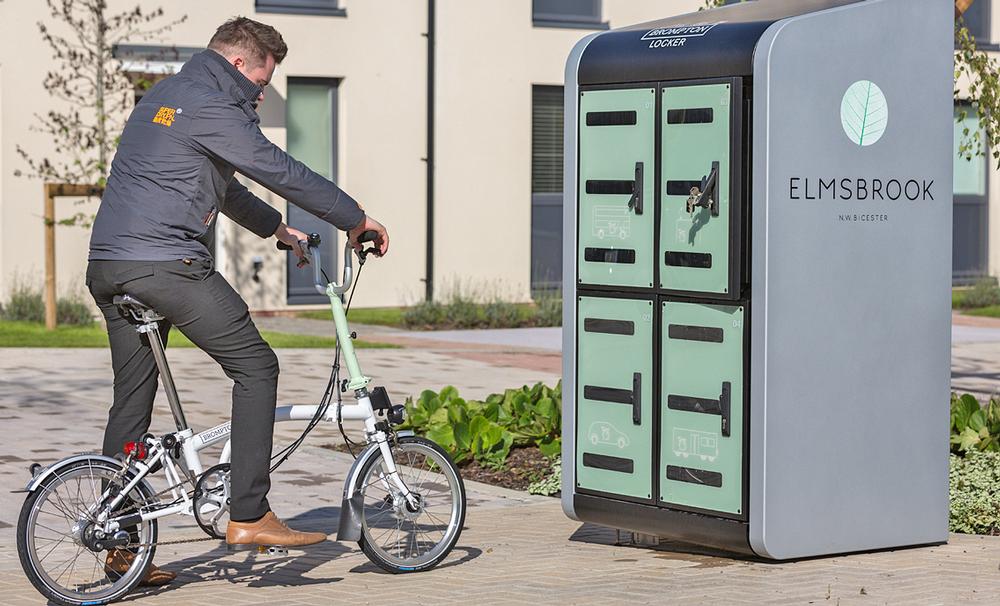
Healthy place plans Perhaps the most notable of the demonstrator sites is Halton Lea – the first location to be chosen. Its “Halton Connected” concept will see health-focused ideas integrated into the new development with a view to supporting people of all ages. Amongst them are a mobile app that will reward users for walking by giving discounts at local shops, an urban obstacle course connecting sports facilities around the town and free bikes at new housing developments.
A community kitchen will serve healthy food to local schools and hospitals, as well as offering healthy cooking lessons for all residents.
Building a legacy Buoyed by the positive response to Healthy New Towns, the NHS is laying the groundwork for the scheme’s legacy. In the belief that housing developers and associations have a big part to play in shaping the health of new communities, it has assembled a network of 12 organisations to implement and promote the principles on which it is based. As the network grows, it’s hoped that the approach to building healthy new towns becomes a healthy habit within the industry.
In the fast-paced world of fitness and wellness, where high-intensity workouts push us to
our limits and the sweat pours, the importance of efficient recovery cannot be overstated. [more...]
We know that where we live affects how healthy we are, but never before have they been prescribed quite like this. Stu Robarts walks the streets of the Healthy New Towns initiative to find out more about its prognosis
Cranbrook in Devon is one of the 10 Healthy New Town sites
It’s perhaps unsurprising that the National Health Service (NHS) has never got involved with building a town before. Coughs and colds have naturally taken precedence over homes and roads.
But there’s an increasing recognition that fixing people can only go so far in progressing public health. Instead, the NHS is seeking a more proactive, preventative approach to healthcare. The thinking goes that fewer people will need fixing if health is embedded more fundamentally into our lifestyles. And where better to embed it than the places we live? The Healthy New Towns initiative, which is being driven by the NHS, seeks to do just that. It will see 10 new towns designed around the healthy lifestyles of residents.
Making health a local business The Healthy New Towns scheme was launched in March 2016, with NHS chief executive Simon Stevens talking of an opportunity to ‘design out’ obesogenic environments, and ‘design in’ health and wellbeing. Expressions of interest had been sought the previous summer, resulting in a remarkable 114 responses from the likes of local authorities, housing associations and developers.
Responses were whittled down to 10 and “demonstrator sites” were chosen to be built across the country.
The developments range in size from 800 to 15,000 homes and there was no blueprint provided as to how they should be built. The developers of each site simply had to show an understanding of their own wellness priorities and provide rationales for radical new approaches to address them.
Ideas to spark wellbeing The proposed ideas for promoting healthy lifestyles at the various sites range from the obvious and practical – such as the provision of ample green space – to the more considered and involved, like building multidisciplinary health and wellness centres and designing their operations from the ground up to ensure people can be seen for multiple different, but related, appointments all on the same day. To enable people to see a doctor, for example, and then to get exercise prescription.
Other features include infrastructure for children to walk or cycle to school and to encourage play along the way, fast-food-free zones near schools and dementia-friendly street design. Each set of features reflects the unique health and wellness challenges that the different sites will be tackling.
Healthy place plans Perhaps the most notable of the demonstrator sites is Halton Lea – the first location to be chosen. Its “Halton Connected” concept will see health-focused ideas integrated into the new development with a view to supporting people of all ages. Amongst them are a mobile app that will reward users for walking by giving discounts at local shops, an urban obstacle course connecting sports facilities around the town and free bikes at new housing developments.
A community kitchen will serve healthy food to local schools and hospitals, as well as offering healthy cooking lessons for all residents.
Building a legacy Buoyed by the positive response to Healthy New Towns, the NHS is laying the groundwork for the scheme’s legacy. In the belief that housing developers and associations have a big part to play in shaping the health of new communities, it has assembled a network of 12 organisations to implement and promote the principles on which it is based. As the network grows, it’s hoped that the approach to building healthy new towns becomes a healthy habit within the industry.
Global Wellness Day (GWD) marked its 15th anniversary on Saturday 13 June 2026, with the
theme: #JoyMagenta – a celebration of the healing qualities of simple gestures and activities
that spark joy.
Global luxury hospitality brand, Six Senses, has partnered with longevity healthcare provider,
HUM2N, to launch a clinic at Six Senses London, at The Whiteley.
As part of its first hotel partnership, Mayrlife – the medical health resort company known for its
site in Altaussee, Austria – has launched a day clinic at the Rosewood Vienna.
Premium London health club, KX Chelsea, will imminently unveil its most significant
redevelopment since its launch in 2002 to create an integrated wellness model combining
training, recovery and relaxation.
Rosewood Le Guanahani St Barth, on the northeast coast of Saint Barthélemy in the French
West Indies, is offering a programme of ocean-inspired yoga classes between 8-14 June to
celebrate Global Wellness Day (GWD).
Hotel de France, located on the British Isle of Jersey, has created a wellness retreat package
that includes a hot yoga session that will take place in Jersey Zoo’s butterfly sanctuary.
The Ritz-Carlton, Langkawi, in Malaysia, has revealed a schedule for Global Wellness Day
(GWD) that includes guided rainforest walks, mindful movement and guided coastal meditation
experiences.
Longevitix, a clinical platform for preventive and longevity medicine, has launched its AI-
powered intelligence system to help physicians deliver continuous, personalised longevity-
focused care at scale.
Atmantan Wellness Centre, an integrative wellness destination in Mulshi, near Pune in India, is
expanding its portfolio by adding a new centre in Hyderabad that will launch between 2028 and
2029.
In the fast-paced world of fitness and wellness, where high-intensity workouts push us to
our limits and the sweat pours, the importance of efficient recovery cannot be overstated. [more...]